
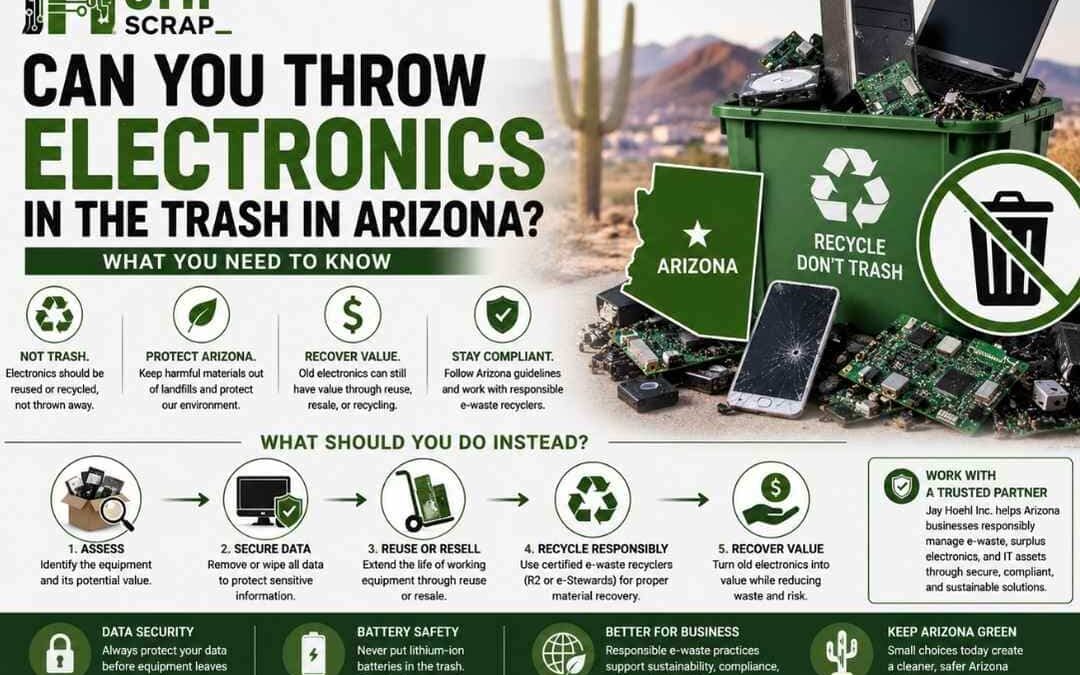
Can You Throw Electronics in the Trash in Arizona? What You Need to Know
Old computers, servers, circuit boards, monitors, phones, networking equipment, and other electronics eventually reach the end of their useful life. When that happens, many Arizona residents and businesses have the same question: Can you throw electronics in the trash in Arizona?
The best answer is that electronics should generally be reused or recycled rather than thrown in the regular trash, especially when they contain batteries or valuable electronic components. The Arizona Department of Environmental Quality (ADEQ) actively promotes diverting used electronics from Arizona landfills and encourages the use of qualified e-waste recyclers.
For Phoenix businesses with larger quantities of computers, servers, circuit boards, industrial electronics, electronic components, and other e-waste, proper disposal can also create opportunities to recover value from equipment that might otherwise be discarded.
At Jay Hoehl Inc., we help businesses manage electronic scrap, surplus electronic inventory, IT equipment, and other electronics through responsible asset recovery and recycling solutions.
What Is Considered E-Waste?
Electronic waste, or e-waste, is a broad term covering electronic devices, equipment, and components that are unwanted, obsolete, damaged, or no longer useful.
Common examples include:
- Desktop computers
- Laptops
- Servers
- Hard drives
- Circuit boards
- Processors
- Integrated circuits
- Networking equipment
- Telecommunications equipment
- Industrial electronics
- Electronic test equipment
- Cables and wiring
- Computer components
- Surplus electronic components
- Data center equipment
Some electronics may be completely obsolete, while others could still have reuse, resale, or material-recovery value.
That’s why throwing electronics directly into the trash may mean throwing away potentially recoverable resources.
Can You Legally Throw Electronics Away in Arizona?
Arizona’s rules can vary depending on the specific electronic item, its components, who generated the waste, and local waste-management requirements. Rather than assuming every electronic device can simply go into a dumpster, businesses should identify what they have and determine the appropriate disposal method.
ADEQ has actively worked to divert e-waste from landfills since 2009. Through community recycling efforts, the agency reports that more than 2.7 million pounds of e-waste have been recycled. ADEQ also identifies R2 and e-Stewards as voluntary certification programs for electronics recyclers.
For businesses generating significant quantities of electronic equipment, the better question is often not simply “Can we throw this away?” but rather:
“Does this equipment still have reuse, resale, recycling, or recovery value?”
Why Shouldn’t Electronics Go in the Trash?
Electronics aren’t the same as ordinary office or household garbage.
Electronic devices can contain metals, plastics, glass, circuit boards, batteries, and numerous other materials. The U.S. Environmental Protection Agency notes that electronics contain valuable resources and materials and recommends donation or recycling as a way to conserve those resources.
Recycling electronics can help:
- Recover valuable materials
- Reduce unnecessary landfill waste
- Conserve natural resources
- Keep reusable equipment in circulation
- Recover value from electronic components
- Properly manage end-of-life technology
- Reduce risks associated with batteries
- Support more responsible business waste practices
For businesses, recycling can also become part of a larger IT asset disposition or surplus inventory management strategy.
Never Put Lithium-Ion Batteries in Regular Trash
One category deserves particular attention: lithium-ion batteries.
According to the EPA, lithium-ion batteries and devices containing them should not be placed in household garbage or ordinary recycling bins. These batteries can become damaged or crushed during transportation and processing, creating a potential fire hazard.
Lithium-ion batteries are commonly found in:
- Laptops
- Smartphones
- Tablets
- Rechargeable tools
- Portable electronics
- Battery backup equipment
- Wireless devices
- Other rechargeable electronic equipment
The EPA recommends taking these batteries to appropriate battery recycling or household hazardous-waste collection locations instead.
What Should You Do With Old Computers in Arizona?
If you have old computers, throwing them directly into a dumpster isn’t usually the best first option.
Start by determining whether the computers can be:
Reused: Working equipment could potentially continue serving a useful purpose.
Resold: Certain computers and components may retain secondary-market value.
Harvested for components: Memory, processors, boards, drives, and other components may have reuse or recovery value.
Recycled: Equipment without viable reuse potential can be processed through an appropriate electronics recycling stream.
Businesses should also address data security before computers leave their control.
The EPA recommends deleting personal information from computers and laptops before donating or recycling them.
For businesses, this becomes especially important when devices contain customer records, employee information, financial documents, intellectual property, passwords, or other sensitive information.
Can You Throw Away Old Servers?
Businesses replacing server infrastructure should avoid automatically treating retired servers as ordinary trash.
Servers can contain potentially reusable or recyclable:
- CPUs
- Memory
- Hard drives
- SSDs
- Circuit boards
- Network cards
- Power supplies
- Copper
- Aluminum
- Other electronic components
Depending on the equipment’s age, specifications, condition, and demand, some servers may have secondary-market value.
Older servers that no longer have practical reuse value may still contain materials suitable for electronic scrap recovery.
Before disposing of servers, businesses should also establish procedures for managing or destroying data stored on hard drives and other storage devices.
Can Circuit Boards Go in the Trash?
Printed circuit boards are another category businesses should consider recycling instead of throwing away.
Circuit boards can be found inside almost every category of electronic equipment, including:
- Computers
- Servers
- Telecommunications equipment
- Industrial controls
- Manufacturing equipment
- Medical electronics
- Laboratory equipment
- Networking devices
- Test equipment
Depending on their type, circuit boards can contain copper and other recoverable materials. Certain boards and electronic components may also have reuse or secondary-market potential.
For companies with larger quantities, having circuit boards evaluated by an electronic scrap buyer or recycler may make more sense than simply disposing of them.
Your Old Electronics Could Be Worth Money
One of the biggest reasons businesses shouldn’t immediately throw away electronics is that obsolete does not necessarily mean worthless.
Some electronics may retain value because another business needs the equipment or components.
This is especially relevant for industrial and commercial electronics.
Potentially valuable electronic surplus may include:
- Integrated circuits
- Semiconductors
- Processors
- Printed circuit boards
- Electronic test equipment
- Industrial controls
- Servers
- Networking hardware
- Specialized electronics
- New-old-stock components
- Excess manufacturing inventory
Value depends on factors such as manufacturer, part number, quantity, condition, age, specifications, and current market demand.
If you have pallets, shelves, or a warehouse filled with electronic components, consider having the material evaluated before sending everything to recycling.
What About Obsolete Electronic Components?
Arizona manufacturers and technology businesses sometimes accumulate thousands of electronic components that are no longer needed.
Production may have changed. A product may have been discontinued. A facility could have closed. Components may simply have remained in storage for years.
However, those components may still be needed by businesses maintaining older industrial equipment.
This creates an important distinction between electronic recycling and electronic asset recovery.
Recycling focuses on recovering materials from equipment that has reached the end of its useful life.
Asset recovery first considers whether equipment or components have greater value through reuse or resale.
Whenever practical, businesses should evaluate electronic inventory before automatically recycling it.
Electronics Recycling for Arizona Businesses
Commercial e-waste projects can be considerably larger and more complicated than recycling a household laptop.
Businesses may need to manage:
- Hundreds of computers
- Retired servers
- Data center equipment
- Pallets of circuit boards
- Industrial controls
- Test equipment
- Electronic manufacturing equipment
- Excess components
- Telecommunications hardware
- Warehouse inventory
These projects can result from office relocations, technology upgrades, mergers, facility closures, manufacturing changes, data center decommissioning, or warehouse cleanouts.
Having a plan in place makes it easier to separate reusable equipment, potentially valuable inventory, data-bearing devices, and true end-of-life electronics.
What Should You Do Before Recycling Electronics?
Before recycling a large quantity of business electronics, create a basic inventory.
Record information such as:
- Equipment type
- Manufacturer
- Model number
- Part number
- Quantity
- Condition
- Approximate age
- Whether the equipment contains data
- Whether original packaging is available
Photos can also be extremely useful.
For very large inventories, you don’t necessarily need to catalog every component before requesting an initial evaluation. Photos, pallet counts, equipment descriptions, and existing inventory spreadsheets can provide a good starting point.
Electronics Recycling vs. Throwing Electronics Away
Throwing an old electronic device into a dumpster may seem easier, but recycling provides opportunities that ordinary disposal doesn’t.
Throwing electronics away can permanently remove potentially reusable equipment and valuable materials from circulation.
Recycling electronics can recover materials from devices that have reached the end of their useful life.
Asset recovery goes another step by determining whether equipment or components may have reuse or resale value before they’re recycled.
A practical hierarchy for businesses is:
Reuse → Resell → Recover → Recycle
This approach can help maximize the remaining value of electronic assets while minimizing unnecessary waste.
Why Responsible E-Waste Recycling Matters in Arizona
Arizona businesses continually replace computers, servers, electronics, manufacturing equipment, and other technology.
Over time, that creates a significant stream of electronic waste.
ADEQ’s efforts to divert electronics from landfills demonstrate the importance of proper e-waste management within Arizona. The agency also encourages people to use qualified electronics recyclers when disposing of used equipment.
The EPA similarly recommends recycling or donating electronics because these products contain valuable materials such as metals, plastics, and glass.
For businesses, responsible electronics management can simultaneously support waste reduction, asset recovery, data security, and better use of warehouse space.
Frequently Asked Questions About Electronics Disposal in Arizona
Can you throw electronics in the trash in Arizona?
Requirements can depend on the device, components, waste generator, and local rules. However, ADEQ promotes diverting used electronics from landfills, and recycling is generally a better option for computers, servers, circuit boards, and other electronic equipment.
Can lithium-ion batteries go in the trash?
No. The EPA says lithium-ion batteries and devices containing them should not go in household garbage or ordinary recycling bins because damaged batteries can create fire hazards.
Can old computers be recycled?
Yes. Computers and many of their components can be recycled. Before recycling data-bearing devices, businesses should make sure sensitive information is properly managed.
Are old circuit boards worth anything?
Potentially. Value varies based on the type of board, components, quantity, condition, and market demand. Larger commercial quantities should be evaluated before disposal.
What should a business do with old servers?
Start by evaluating servers for potential reuse or resale. Data-bearing storage devices should be properly managed, and equipment without remaining reuse value can be directed toward electronics recycling.
Where can businesses recycle electronics in Phoenix?
Businesses with electronic scrap, surplus components, servers, circuit boards, industrial electronics, and other technology can work with a specialized Phoenix-area electronics recycling and asset recovery company such as Jay Hoehl Inc.
Recycle Your Electronics With Jay Hoehl Inc.
If your Phoenix-area business has old electronics taking up valuable warehouse or office space, don’t automatically throw them away.
Jay Hoehl Inc. helps businesses manage electronic scrap, circuit boards, servers, surplus electronic components, industrial electronics, IT equipment, and other e-waste. Before equipment is treated solely as scrap, it may be worth determining whether it has reuse, resale, or material-recovery potential.
Whether you’re completing an IT upgrade, clearing a warehouse, decommissioning equipment, or dealing with obsolete electronic inventory, contact Jay Hoehl Inc. at (602) 272-4033 to discuss your electronics and determine the appropriate next step.