Selling Full Reels, Partial Reels, Trays, and Cut Tape
OEM & EMS Surplus Components Guide Selling Full Reels, Partial Reels, Trays, and Cut Tape A clear inventory and honest condition notes help buyers evaluate component surplus. Separate packages, preserve labels, and verify quantities before requesting an offer....Surplus Component Inventory Template for OEM and EMS Sellers
Laboratory Asset Disposition Laboratory Test Equipment Sale Case Study A practical guide to evaluating surplus laboratory instruments, preparing a clear inventory, and choosing a responsible disposition route. Quick answer: Before selling or recycling surplus test...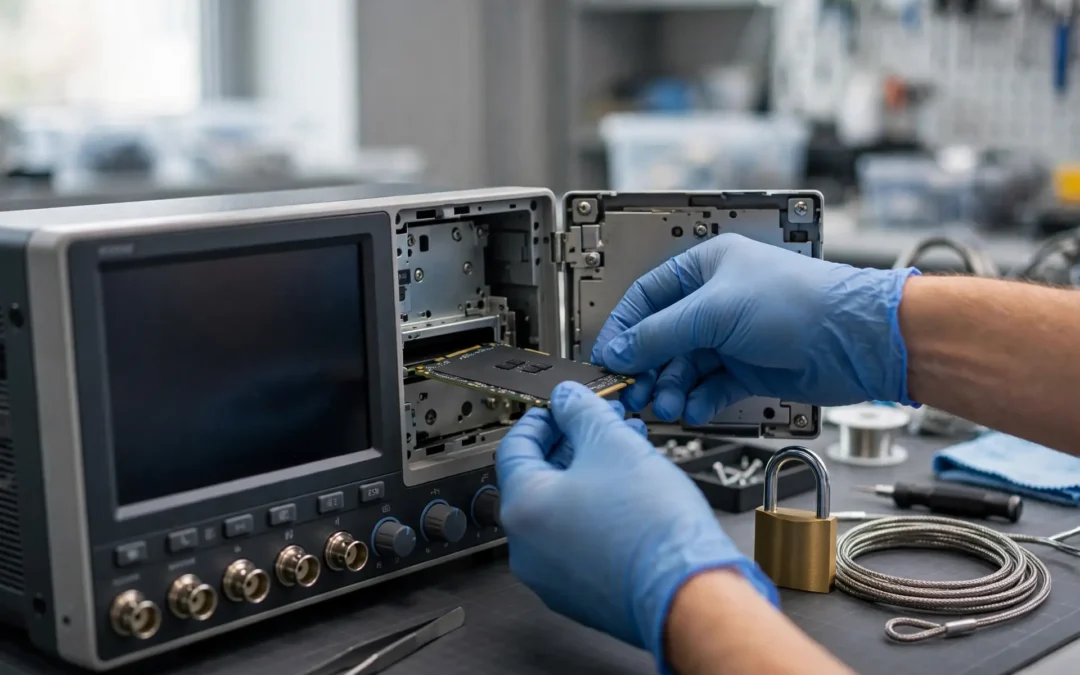
Test Instrument Data and IP Disposal Guide
Test Instrument Data and IP Disposal Guide Quick answer: Treat every modern test instrument as a possible data system. Identify internal, removable, networked, and cloud-connected storage. Classify test data and intellectual property. Preserve required records....
Bench Test Instrument Selling Checklist
Quick answer: Identify every instrument by its exact model and serial number. Record functions, ranges, options, condition, calibration history, test results, and included accessories. Separate power-on evidence from full verification. Photograph labels, screens,...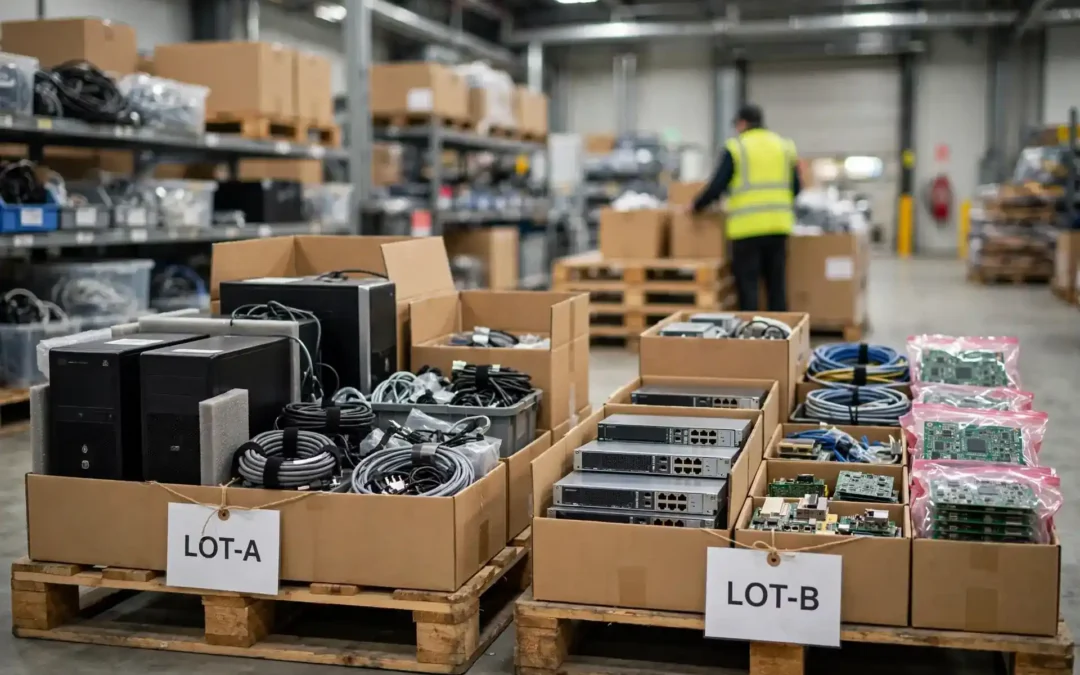
What counts as a mixed surplus electronics lot?
Quick answer: Divide a mixed electronics lot into clear equipment families, record make and model, flag data-bearing devices, isolate damaged batteries, and photograph the groups. Keep working resale candidates separate from scrap. Send the resulting inventory to a...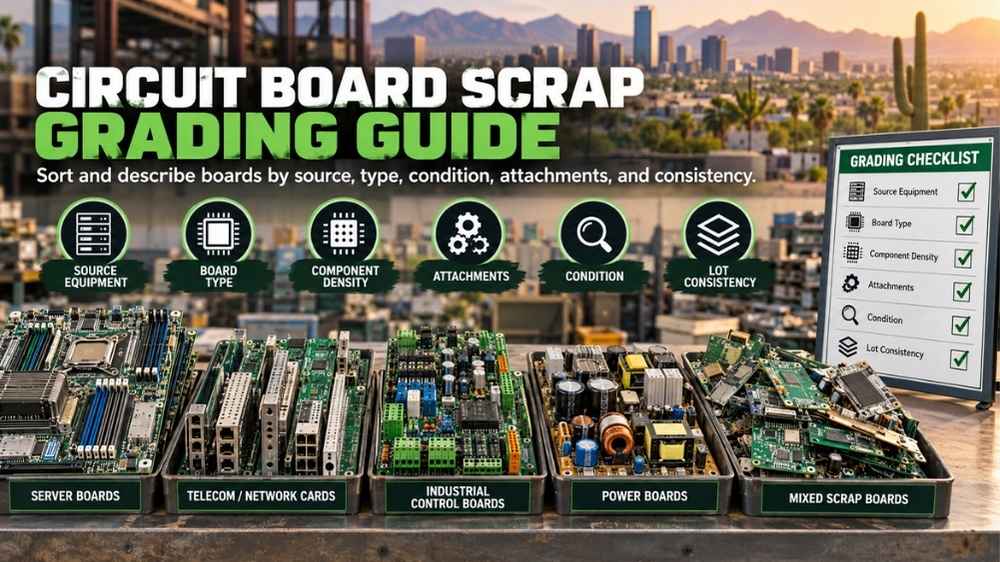
Circuit Board Scrap Grading Guide
Quick answer: Separate boards by reuse potential, source equipment, board type, component density, attachments, condition, and lot consistency. Then ask the buyer to define its grades. Never assume a universal category or promise metal content, pricing, or recovery....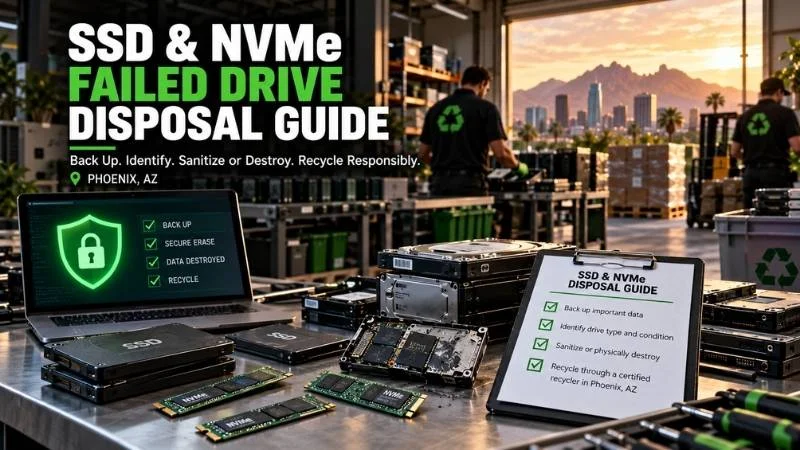
SSD, NVMe, and Failed Drive Disposal Guide
SSD, NVMe, and Failed Drive Disposal Guide Quick answer: Back up anything you need, identify every data-bearing drive, and choose a verified sanitization or destruction method before recycling. An SSD or NVMe drive may hold data even when a computer will not start. If...
Certificate of Data Sanitization and Destruction Checklist
Certificate of Data Sanitization and Destruction Checklist An old laptop can leave your office in five minutes. Its data can follow you for years. That is why a certificate of data sanitization or destruction matters when Phoenix businesses retire computers, drives,...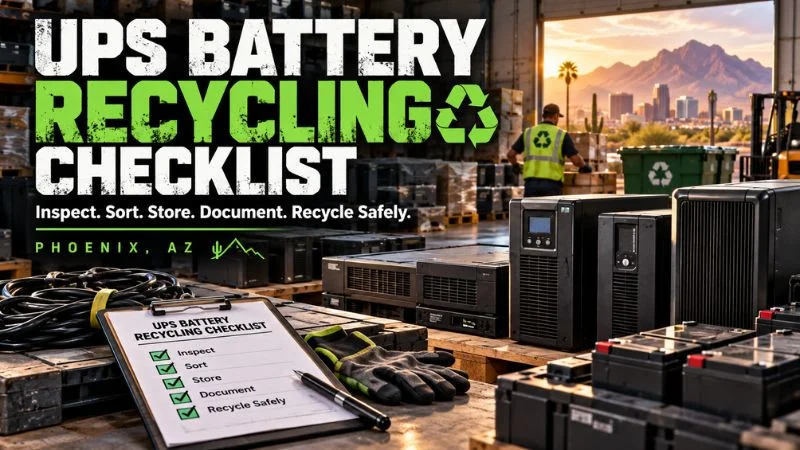
UPS and Battery-Backed Equipment Recycling Checklist
UPS and Battery-Backed Equipment Recycling Checklist Retired UPS units and battery-backed equipment need more care than ordinary office electronics. The batteries may still hold energy, while attached devices may contain sensitive business data. This checklist helps...