
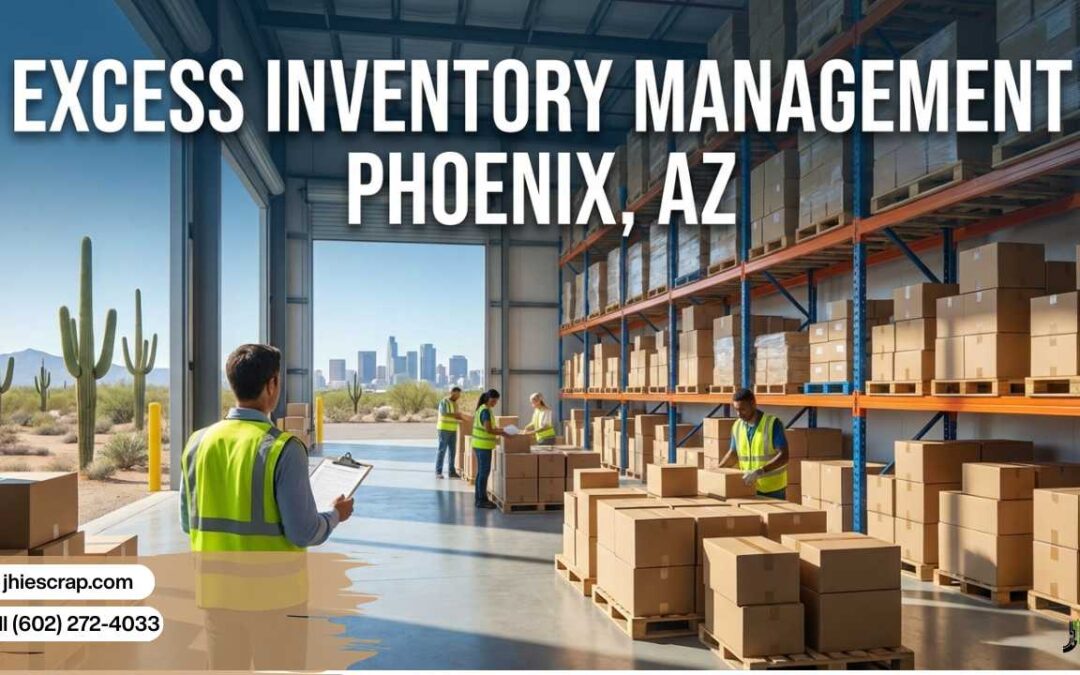
Excess inventory management is the process of identifying, reducing, and recovering value from stock that exceeds current demand. It covers everything from root-cause analysis to liquidation. Done well, it protects cash flow, frees warehouse space, and keeps your operations lean.
Why Excess Inventory Happens for Phoenix, AZ Businesses
Most businesses don’t plan for excess inventory. It creeps in anyway. The gap between what you forecast and what actually sells is where overstock inventory is born. And in Phoenix’s fast-moving market, that gap closes faster than you’d expect.
Inaccurate Forecasting
Forecasting errors don’t start big. They start with outdated assumptions. When your planning models rely on old sales data, they miss recent market shifts. The result is buying more than the market needs. Over time, those small gaps in inventory control stack into surplus inventory that’s hard to move.
Forecasts fail most often when historical data ignores recent demand trends.
Inaccurate Demand Forecasting
Demand forecasting errors are more subtle than general forecasting mistakes. They happen when teams rely on assumptions instead of signals. A product that sold well last spring may not repeat this year. When demand planning errors go unchecked, overstock inventory builds quietly. Demand errors grow fastest during promotions, season changes, and new product launches.
Long Lead Times and Minimum Order Quantities (MOQs)
Suppliers set the rules on lead times and MOQs. You don’t always get to choose. When lead times stretch to 12 or 16 weeks, you’re forced to order far ahead of demand. MOQs then turn small forecast errors into large inventory problems. You ordered what the contract required, not what the market confirmed.
Supply Chain Disruptions (The Bullwhip Effect)
Think of a bullwhip. A small flick of the wrist sends a massive snap down the line. That’s the bullwhip effect in supply chains. A tiny dip in retail demand gets amplified as it moves upstream. Suppliers overproduce. Distributors overbuy. By the time goods arrive, demand has already shifted. The result is inventory volatility no one planned for.
Product Lifecycle Changes
Products don’t fail overnight. They fade. A product that was moving well six months ago may be slowing now. When businesses don’t track inventory lifecycle management closely, they keep ordering past the peak. Inventory outlives demand more often than expected. And by the time it’s obvious, there’s already a surplus problem to solve.
Product Lifecycle End (End-of-Life Management)
End-of-life inventory is time-sensitive. Every day a discontinued or outdated product sits in your warehouse, it loses value. End-of-life management means acting fast: marking items down, bundling, or liquidating before the window closes. The longer obsolete inventory sits, the faster its value drops. Waiting costs money you won’t get back.
Poor Inventory Visibility and Data Silos
Most excess inventory hides in disconnected systems, not warehouses. When your sales data lives in one platform and your warehouse data lives in another, no one sees the full picture. Real-time inventory data breaks those silos. Without it, teams keep ordering stock that’s already sitting in a facility across town.
Why Excess Inventory Is a Problem in Phoenix, AZ, Warehousing and Retail
Overstock isn’t just a space problem. It’s a cash problem. Most businesses feel the visible costs first: packed shelves, rising storage bills. But the real danger of excess inventory is the silent cash drain happening across multiple line items at once.
Risks of Holding Excess Stock
Excess stock stacks risk fast. It starts with storage pressure. Then it moves to cash flow strain. Then it hits product value as items age. Each week of inaction adds a new layer. Inventory holding risks compound faster than most businesses realize. What starts as a manageable overstock problem can quickly become a serious financial one.
The Impact on Working Capital and Cash Flow
Cash tied to unsold inventory is cash you can’t deploy anywhere else. You can’t restock fast-moving products. You can’t invest in growth. The cash flow impact of excess inventory is immediate, even if it doesn’t show up on a profit-and-loss statement right away. Inventory is one of the easiest ways to quietly choke working capital.
Storage and Warehousing Fees
Storage costs rise even when sales slow. Every pallet of excess inventory costs money every month, whether it moves or not. Warehouse storage fees add up fast for Phoenix businesses dealing with hot-weather carrying costs on top of standard fees. The longer stock sits, the more the cumulative inventory storage fees eat into your margin.
Depreciation and Obsolescence
Inventory doesn’t hold its value on a shelf. Electronics, seasonal goods, and trend-driven products depreciate quickly. The longer inventory sits untouched, the faster its value drops. Inventory depreciation is both a financial reality and a tax consideration. Acting early keeps recovery higher. Waiting for ‘the right time’ usually means settling for less.
Insurance and Taxes
Inventory has a cost beyond storage. Insurance premiums are calculated partly on inventory value. More stock means more exposure. On the tax side, excess inventory can show up as an asset on your balance sheet, which can increase your tax liability without adding real operating value. Excess inventory can increase insurance exposure without improving the business.
Opportunity Cost of Tied-Up Capital
Capital locked in unsold goods isn’t just sitting still. It’s missing opportunities. Money tied to overstock can’t fund new product lines, marketing campaigns, or operational upgrades. The biggest loss from excess inventory is often not the holding cost. It’s what that capital could have earned elsewhere. Free the capital and put it to work.
How to Identify Excess Inventory in Phoenix, AZ Operations
You can’t fix what you can’t measure. The good news is that identifying excess inventory is straightforward once you know which metrics to watch. Excess inventory reveals itself in trends, not single reports. Start with the numbers below and you’ll have a clear picture fast.
Calculating Inventory Turnover Ratio
Inventory turnover ratio measures how often you sell and replace stock in a period. The formula is simple: Cost of Goods Sold divided by Average Inventory Value. A low ratio means stock is sitting too long. A high ratio means healthy movement. Compare turnover by product category, not just overall, to find where the slowdowns are hiding.
Analyzing Days Sales of Inventory (DSI)
Days Sales of Inventory tells you how many days it takes to sell your current stock. A rising DSI is an early warning sign. It means demand is slowing or supply outpaced it. For Phoenix businesses with heat-sensitive or trend-driven products, a high DSI number signals it’s time to act before slow-moving inventory becomes dead stock.
Conducting Inventory Aging Reports (30, 60, 90+ Days)
Aging reports sort inventory by how long it’s been sitting. Items in the 30-day bucket are still fresh. Items in the 60-day bucket need attention. Items stuck beyond 90 days are the priority. Focus there first. These are the products most likely to become dead stock if no action is taken soon. Run this report monthly at minimum.
ABC Analysis (Prioritizing High-Value Items)
ABC inventory analysis splits products into three tiers. A items drive most of your revenue. B and C items fill the gaps. But excess inventory often hides in B and C tiers, where attention is lowest. High-value A items usually turn fast. It’s the lower-priority items that quietly pile up. ABC analysis tells you where to focus your reduction efforts first.
Key Excess Inventory Management Strategies in Phoenix, AZ
There’s no single fix for excess inventory. The best strategy depends on the type of stock, how long it’s been sitting, and what recovery outcome you need. The tactics below give you a range of options, from quick cash recovery to long-term prevention.
Discounting and Promotions
Clearance promotions move inventory fast. But blanket discounts erode margin quickly. Use discounts selectively, targeting the slowest-moving items first. Pair discounts with urgency signals like ‘limited stock’ to drive faster conversions. A controlled discount strategy protects your brand while clearing overstock without sacrificing profitability across your full catalog.
Strategic Discounting and Flash Sales
Flash sales create urgency that standard promotions can’t. A well-timed 48-hour event on specific SKUs can clear backlog without training customers to expect discounts. Time limits protect brand value. Plan flash sales around natural demand spikes like weekends or paydays to maximize conversion. Strategy beats reaction every time.
Bundling Products
Product bundling is a smart way to move slow items alongside fast sellers. Pair a high-demand product with a stagnant one at a combined price. Customers feel they’re getting value. You’re clearing inventory without slashing individual prices. Bundles hide slow movers effectively and keep your average order value healthy at the same time.
Product Kitting and Bundling
Product kitting takes bundling a step further. Instead of pairing items loosely, you create a packaged kit with a new SKU. Kits work best for complementary SKUs that naturally belong together. A kitted product often commands a higher perceived value than its parts sold separately. That means better margins and faster movement on stuck inventory.
Improve Forecasting
The best way to manage excess inventory is to create less of it. Forecast often, not just annually. Review projections quarterly or even monthly for fast-moving categories. Use real sales data, not gut instinct. Better forecasting means ordering closer to actual demand. That prevents overstock from building before it becomes a problem.
Inventory Analysis
Regular inventory analysis keeps you ahead of accumulation. Trends beat snapshots. A single report tells you where you are. Monthly trend data tells you where you’re heading. Use your inventory analysis tools to track turnover rates, DSI changes, and aging patterns. Catching a slowdown early gives you options. Catching it late limits them.
Demand Forecasting
Accurate demand forecasting blends data and context. Pull from historical sales. Layer in seasonal patterns. Then balance that with input from your sales team on market shifts. Demand forecasting methods work best when you don’t rely on any one signal alone. Combine data sources to align supply with real demand and reduce overstock before it starts.
Process Improvements
Tactics fix the current problem. Process improvements prevent the next one. Review your ordering workflows, approval thresholds, and reorder triggers. Small changes to how inventory decisions get made create lasting results. Process fixes prevent repeat problems. Build regular review checkpoints into your operations so overstock doesn’t quietly build between cycles.
Selling and Liquidating Excess Inventory in Phoenix, AZ
Sometimes the fastest path forward is a clean exit. Selling and liquidating excess inventory isn’t a failure. It’s a smart financial move. Speed often matters more than price in liquidation decisions. The longer you wait, the less you recover. Here are the options Phoenix businesses use most.
Liquidation and Resellers
Third-party resellers buy excess inventory in bulk and handle the redistribution. This is one of the fastest ways to convert stuck stock into cash. When evaluating resellers, vet them by payment speed, not just promises. A buyer who offers more but pays slowly can damage your cash flow more than a slightly lower offer settled quickly.
Liquidation and B2B Bulk Sales
B2B bulk sales move volume fast and reduce your handling costs. Instead of selling unit by unit, you sell pallets or truckloads to a single business buyer. Bulk inventory sales simplify logistics and free warehouse space quickly. For Phoenix businesses with high-volume overstock, B2B liquidation is often the most efficient recovery path available.
Returns and Liquidation
Customer returns spike inventory distortion. A sudden surge in returns can create unexpected overstock that wasn’t part of any forecast. Building a returns-to-liquidation pipeline means returned goods move out of your warehouse systematically, not randomly. Connect your returns process to your liquidation channels so excess stock clears on a regular cadence.
Return to Vendor (RTV)
Return to vendor agreements let you send unsold inventory back to the supplier for credit or refund. RTV works best when negotiated early, ideally before products go stale. If your vendor contracts allow it, activate RTV as soon as you identify excess. Waiting until stock is aged reduces your leverage and limits the credit you’ll recover.
Remarketing and Repositioning
Not every piece of excess inventory needs to be liquidated. Some just needs a new audience. Inventory remarketing means taking a product to a different channel, region, or customer segment. A slow mover in one market can be a strong seller in another. New channels unlock new buyers. Repositioning often recovers more value than liquidation.
Excess Inventory Resale Programs For Rapid Asset Recovery
Structured resale programs outperform one-off sales. Instead of scrambling to find buyers each time inventory builds up, a resale program creates a repeatable exit channel. You know the process. You know the timeline. You know the recovery rate. For Phoenix businesses with recurring overstock, setting up an asset recovery inventory program turns a reactive problem into a managed process with predictable results.
Monetizing Overstock and Asset Recovery in Phoenix, AZ
Excess inventory isn’t a write-off waiting to happen. It’s an asset waiting to be recovered. The mindset shift from ‘stuck stock’ to ‘recoverable value’ changes how you act and how fast you act.
Value recovery is highest when action is early. Every week of delay reduces your options and your return. The businesses that recover the most are the ones that treat liquidation as a strategy, not a last resort.
Turning Overstock into Opportunity: Managing Excess Inventory
Overstock only loses value when it’s ignored. The moment you start actively managing it, you’re already recovering more than the business that waits. Manage excess inventory as a living category with its own goals and timelines. The right partner, the right channel, and the right timing can turn a cash drain into a cash recovery with room to reinvest.
Recycling, Repurposing, and Donation Options in Phoenix, AZ
Not all excess inventory can be sold. Some products are too old, too damaged, or too niche for the market. That doesn’t mean they have no value. Responsible inventory disposal options include repurposing, recycling, and donation, each with its own operational and financial benefits.
Internal Repurposing or Donation
Before writing off inventory, look inside the business first. Can unsold products be repurposed for internal use, employee programs, or operational needs? Internal inventory reuse reduces waste and may offset purchasing costs elsewhere. Repurpose before writing off. It’s the most efficient first step before considering external donation or disposal options.
Charitable Donations and Tax Write-offs
Donating excess inventory to qualifying charities can generate a tax deduction that offsets the cost of carrying that stock. But documentation protects deductions. Every charitable inventory donation needs proper records: item descriptions, quantities, fair market value, and proof of transfer. Work with your tax advisor to make sure donations are structured to capture the full deduction benefit available under current IRS rules.
Preventing Future Excess Inventory in Phoenix, AZ
The goal isn’t just clearing today’s overstock. It’s building a system that creates less of it. Prevention beats liquidation every time, both in cost and in time. These tactics help you build the kind of inventory operation that stays lean without constant firefighting.
Tools for Prevention
Visibility tools matter most. Inventory management software, demand planning platforms, and connected warehouse systems give you the data to act before problems build. The right tools don’t just report on what’s happened. They signal what’s about to happen so you can adjust before overstock locks in.
Implementing Just-in-Time (JIT) Inventory
Just-in-time inventory systems reduce stock levels by ordering only what’s needed, when it’s needed. JIT eliminates the buffer-stock habit that creates excess. But JIT fails without supplier alignment. Your vendors need to be reliable, fast, and flexible. If lead times are long or unpredictable, JIT creates risk instead of reducing it.
Improving Demand Planning with AI/ML Tools
AI inventory forecasting tools learn from patterns that human analysts miss. They detect seasonal shifts, demand clusters, and supply anomalies faster than manual methods. AI improves patterns, not intuition. Use machine learning tools to sharpen your demand planning, but pair them with human judgment. The combination outperforms either one alone.
Strengthening Supplier Relationships and Lead Times
Good supplier relationship management reduces the need for buffer stock. When your vendors communicate proactively about delays or shortages, you can adjust orders before problems cascade. Build relationships where information flows both ways. Communication reduces buffer stock. Shorter, more reliable lead times mean you can order closer to demand with less risk.
Regular Inventory Audits and Cycle Counts
Small audits prevent big surprises. Regular inventory audits and cycle counts catch discrepancies before they grow. Counting a portion of inventory each week is more effective than an annual full count. It keeps your records accurate, surfaces slow movers early, and gives your team consistent visibility into what’s moving and what isn’t.
Benefits of Proper Excess Inventory Management in Phoenix, AZ
Getting inventory management right doesn’t just solve today’s problem. It builds a stronger operation for tomorrow. The benefits compound over time, not overnight. But they start showing up quickly once you have the right systems and habits in place.
Improved Cash Flow
Less excess inventory means more available cash. When stock moves efficiently, capital cycles back into the business faster. Improved cash flow from better inventory management gives you flexibility to invest, restock top sellers, and respond to market opportunities without scrambling for working capital at the wrong moment.
Reduced Operational Costs
Lean inventory means lower storage costs, lower insurance exposure, and less labor spent managing stock that isn’t moving. Reduced inventory costs have a direct impact on your operating margin. Businesses that keep inventory tight consistently outperform those carrying excess on nearly every cost-efficiency metric that matters.
Increased Efficiency
Warehouse efficiency improves when there’s less clutter to work around. Teams pick faster, locate products easier, and process orders with fewer errors when your facility isn’t overpacked. Streamlined inventory also simplifies receiving and shipping workflows, reducing the operational friction that slows fulfillment and increases labor costs over time.
Benefits of Managing Excess Inventory Well
Long-term inventory control means you’re always in a position to act, not react. Businesses that manage excess inventory well carry the right stock, at the right time, in the right quantities. That leads to better vendor relationships, stronger margins, and a leaner balance sheet. It’s not just inventory management. It’s a competitive advantage.
Stop Letting Excess Inventory Cost You Money
Excess inventory is one of the most common and most expensive problems Phoenix businesses face. It drains cash. It eats warehouse space. It quietly erodes your margins every single day it sits untouched.
But it doesn’t have to stay that way.
You now know the root causes. You know how to measure the problem. And you know the strategies that actually move the needle, from smarter forecasting to structured liquidation programs.
The businesses that come out ahead aren’t the ones with the most inventory. They’re the ones that move inventory with purpose. They track aging stock before it becomes dead stock. They act early, recover more, and reinvest faster.
Whether you need to clear overstock today or build a long-term system that prevents it, the path forward starts with one decision: stop waiting.
JHIE Scrap has been helping Phoenix, AZ businesses recover value from excess inventory, surplus stock, and end-of-life goods. We make it fast, fair, and simple. No red tape. No lowball offers. Just a straightforward way to turn stuck inventory into working capital.
| Ready to Clear Your Excess Inventory? Jay Hohel inc Scrap helps Phoenix, AZ businesses turn overstock into fast cash. We buy excess inventory, surplus stock, and end-of-life goods. No hassle. No waiting. Just results. [ GET A FREE QUOTE TODAY ] Visit: https://jhiescrap.com/Call: (602) 272-4033 | Email: JayHoehlinc@gmail.com3334 W McDowell Rd Unit 17, Phoenix, AZ 85009 |