
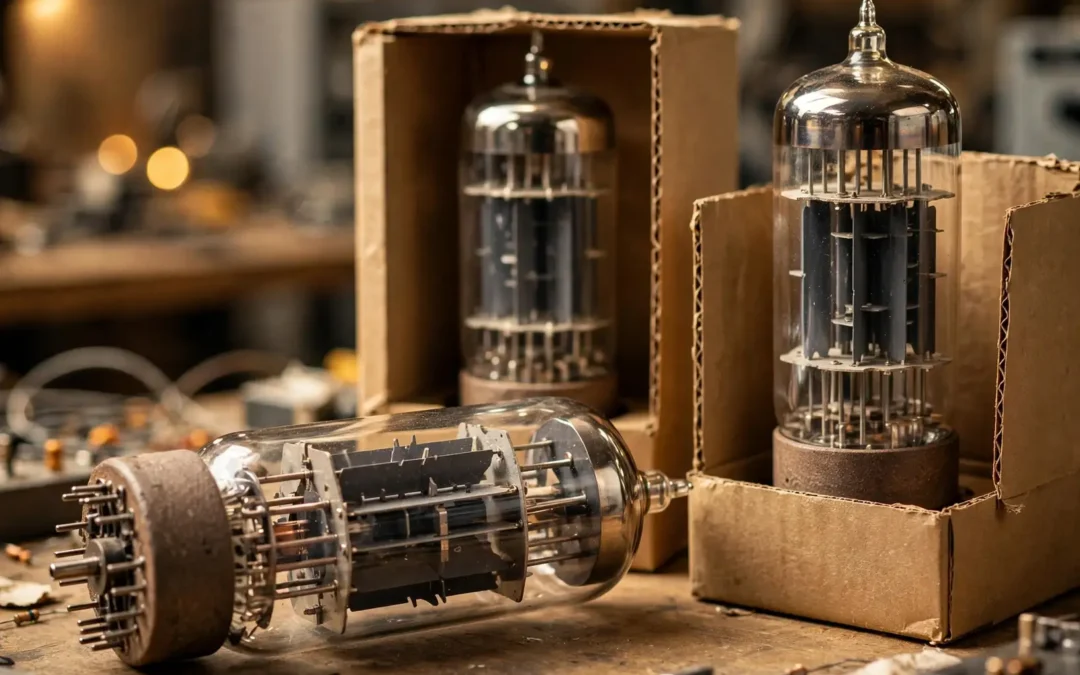
High-Power Tubes in Electronics Surplus
High-power tubes in electronics surplus deserve identification before you sell, recycle, or move them. Their next use depends on the exact model, condition, history, and buyer demand. Keep intact tubes protected, preserve their records, and confirm acceptance before arranging transport.
Maybe you’re clearing a Phoenix stockroom after a production change. You’ve found boxed spares, loose tubes, and equipment nobody has touched in years. Some labels make sense. Others raise more questions than they answer. You need a practical plan, without turning the cleanout into a research project.
Start with the model number, not the scrap weight. A usable replacement part and a damaged tube need different decisions. Their size alone won’t settle the question. A little homework now can prevent expensive mistakes later. Around the Valley, that means looking before you leap.
What are high-power tubes in electronics surplus?
High-power tubes are electronic devices used to amplify, generate, or switch substantial electrical power. Many belong to the vacuum tube family. Others, including certain switching tubes, contain gas. The exact design matters more than the broad label on a storage shelf.
Industrial surplus can include unused spares, removed components, and complete assemblies containing these devices. You might encounter radio transmitters, industrial heating equipment, or specialized laboratory systems. Each has its own service history. Avoid assuming every tube came from the same application.
Think of the model number as the tube’s fingerprint. It helps identify the device and locate the correct manufacturer’s information. Its shape can suggest a category. Its marking provides a stronger starting point. Even then, verify the full suffix and manufacturer.
A surplus label describes ownership and availability, not performance. A company may retire working equipment after replacing a production line. Another may remove a failed component during maintenance. Both can enter the surplus stream. Only the records explain which situation you’re facing.
For a Phoenix business, separating these cases can save everyone time. You won’t ask a buyer to guess from a blurry pallet photo. You can discuss specific parts and realistic next steps. That’s how you get your ducks in a row before seeking an offer.
Which tube types might appear in a surplus lot?
Surplus lots can contain power triodes, tetrodes, microwave tubes, and specialized switching tubes. Those names describe different device families. They don’t establish interchangeability. Keep each model separate until someone checks its intended application and specifications. Close enough isn’t good enough here.
Power triodes and tetrodes can appear in radio-frequency amplifiers and industrial equipment. Radio frequency is often shortened to RF. These devices may use glass or ceramic-and-metal construction. Record the markings before making assumptions about their materials or remaining service life.
Traveling-wave tubes and klystrons are other families used in microwave amplification. Magnetrons generate microwave energy in applications such as radar and industrial systems. Treat these as separate categories. A buyer seeking one family may have no use for another.
Thyratrons are switching devices rather than ordinary RF amplifier replacements. Teledyne e2v describes applications involving fast, high-voltage switching. Its CX1159G, for example, is a deuterium-filled thyratron. That specific example shows why calling every surplus tube a vacuum device can mislead.
Use these categories to organize questions, not approve replacements. Have an equipment specialist confirm any proposed substitution. A similar base, matching size, or familiar brand isn’t enough. Compatibility depends on the complete specification and the equipment’s requirements.
Don’t combine these parts with fluorescent lamps or display tubes just because names overlap. Those products can follow different collection routes. Label your inquiry clearly as industrial electron tubes. Include photos so the receiving business understands what you actually have.
How do you identify a tube without damaging it?
Identify a tube through visible markings, existing records, and its manufacturer’s documentation. Begin with photographs while the item remains safely supported. Capture the entire label and any warning symbols. Don’t scrape coatings or remove covers merely to get a better picture.
Record the manufacturer, complete part number, and serial number when present. Include every suffix and revision mark. Add the original equipment model if known. Note whether the tube remains installed or sits loose in packaging. Keep those facts attached to the same inventory entry.
Matching the box matters too. A marked carton might contain an older removed tube. Compare the visible device marking with the packaging label. If they disagree, record both. Don’t quietly choose whichever description seems more valuable. The buyer needs the discrepancy explained.
An unreadable label doesn’t justify an invented identification. Mark the item as unidentified and provide clear views. Existing purchase orders, maintenance logs, and manuals may help. Ask the former equipment owner before widening the search. Someone may remember why that part was stored.
Avoid using appearance to declare internal condition. Clean metal doesn’t prove electrical performance. Dust doesn’t prove failure either. Identification and testing answer different questions. Treating them separately keeps the discussion accurate and prevents a visual guess becoming a sales claim.
Keep the tube intact during identification. Don’t break, drill, sand, or cut it to inspect materials. If a marking mentions a hazard, pause handling and get qualified advice. Measure twice, cut once applies here. In practice, there’s usually no reason to cut at all.
What records should go into your tube inventory?
A useful tube inventory connects each physical item with its identity, condition, and history. Give every unit or matched group a simple reference. Use that reference on the photo filenames and packing list. The goal is easy checking, not a complicated database.
Start with these fields for each entry:
- Inventory reference and storage location.
- Manufacturer and complete model number.
- Serial number or batch marking, when available.
- Quantity, with individual units distinguished when needed.
- Condition description and known damage.
- Equipment source and reason for removal.
- Test records, service notes, and packaging details.
- Warning labels and questions needing review.
Choose descriptions that say what you know. “Unused according to purchasing records” is more helpful than “looks new.” “Removed during equipment retirement” explains context without promising function. “Untested, service history unavailable” gives an honest starting point. Buyers can evaluate uncertainty when you identify it.
Treat your inventory as a passport traveling with the lot. It should explain where the parts came from and what accompanies them. Keep the same references through quotes and pickup. Otherwise, a useful spreadsheet can become disconnected from the actual cartons.
For example, consider three boxed units with identical model numbers. Two have service records. One has an unrelated handwritten note. Give them separate entries until you’ve resolved that difference. A shared part number doesn’t make their condition or history identical.
Our guide to how to sell surplus items covers the wider preparation process. Apply that organization to the surrounding inventory too. Keep tube records specific and easy to check. When several departments contribute information, getting everyone on the same page prevents duplicate work.
How should you describe new, used, and untested tubes?
Describe tube condition through evidence rather than optimistic labels. “New old stock” usually means older inventory represented as unused. It doesn’t automatically establish storage quality, warranty coverage, or current performance. Explain why you believe a part is unused and what records support that claim.
A used tube needs a clear account of its last known role. Record when it was removed, if known. Explain whether removal followed a fault, scheduled maintenance, or equipment retirement. Those facts give a buyer context. None alone proves how much useful life remains.
Untested means you lack suitable evidence of present performance. It shouldn’t serve as a softer label for a known failure. If a maintenance note identifies a fault, disclose it. Buyers should see the same important information your team already has.
Tested condition needs more than a handwritten “good” sticker. Keep the dated report, equipment details, and measured results when available. Identify the unit tested through its serial number. Let the buyer assess whether that evidence answers their application requirements. Don’t expand limited test results into a broad guarantee.
Keep uncertain condition separate from confirmed damage. A visibly cracked unit needs a handling review before further sorting. An intact unit with missing history needs identification and evaluation. Those aren’t the same problem. Honest descriptions help avoid disputes after collection or delivery.
When a lot contains mixed conditions, say so early. You can request separate estimates for documented spares and uncertain units. A clear split may also reveal which records deserve recovery. Calling a spade a spade saves time for your team and the buyer.
What makes a surplus high-power tube valuable?
A surplus tube’s value depends on demand, exact identity, credible condition, and sale costs. Original purchase price provides background but doesn’t establish today’s offer. A specialized part needs a suitable buyer. Without that match, a once-expensive spare may have limited resale options.
Model accuracy comes first because buyers usually need a specific replacement. Small differences can change suitability. Preserve the full marking instead of grouping similar-looking parts under one name. Why turn a potentially useful spare into an unidentified box of scrap?
Evidence can make an evaluation easier. Original records, traceable ownership, and relevant test results reduce unanswered questions. They don’t guarantee a sale. They help a buyer judge the part with fewer assumptions. Missing evidence may lead to a more cautious offer.
Accessories can matter when they belong to the same assembly. Preserve identified sockets, mounting hardware, and shipping fixtures when practical. List them separately so the buyer knows what’s included. Don’t combine unrelated accessories simply to make a package appear complete.
Price context also matters. An online asking price is only a seller’s request. A completed sale may still involve different condition or terms. Compare like with like when evidence exists. Avoid presenting a single listing as the market value for your entire lot.
There isn’t one reliable dollar-per-pound rate for all high-power tubes. Reuse potential and handling requirements can outweigh bulk material weight. Don’t count your chickens before they hatch. Ask for a model-specific evaluation before planning around a recovery amount.
Should you sell, retain, or recycle the tubes?
Choose a route by weighing usable demand, documented condition, internal need, and handling requirements. Selling makes sense when a buyer wants the specific parts. Retaining may suit an approved maintenance need. Recycling deserves consideration when reuse isn’t practical and an appropriate processor accepts the material.
Start with your own operations team. A spare may still support active equipment at another location. Ask who owns the decision and whether retention has approval. Don’t keep everything indefinitely “just in case.” Set a named owner and a future review date.
For resale candidates, gather the identification and history before requesting an offer. Describe the quantity and available records accurately. Ask whether the buyer wants individual units or a complete lot. Confirm whether an initial estimate requires later inspection. Get that condition in writing.
For uncertain units, ask whether further evaluation could change the outcome. Testing has a cost and may require specialized facilities. Agree who authorizes and pays for it. An evaluation only helps when its likely benefit justifies the time, expense, and handling involved.
For damaged or unwanted tubes, confirm the receiver’s exact acceptance rules. General electronics recycling doesn’t establish acceptance of every industrial device. Provide known warnings before shipping or scheduling pickup. A receiver may need a specialist route. That conversation belongs before the material leaves your site.
Our surplus electronics service provides a starting point for discussing a mixed industrial lot. Tube acceptance and the next steps require review of your specific items. Put first things first. Identify what you have, then agree on a suitable route.
Request a free evaluation: Call JHI at (602) 272-4033 with your inventory and photos. Ask us to review the tubes and confirm possible next steps. Discuss acceptance, costs, and timing before arranging collection. That first conversation doesn’t require you to guess a selling price.
What safety issues need attention before handling?
Safety depends on the tube model, its condition, and the equipment around it. Installed equipment can involve high voltage and stored electrical energy. Disconnecting a plug doesn’t establish safe access. Have qualified personnel follow the equipment’s isolation and verification procedures before removal.
Manufacturer precautions are specific for a reason. Teledyne e2v’s CX1159G documentation addresses high voltage and operational X-ray hazards. It also warns against bypassing protective interlocks. That doesn’t mean an unpowered spare produces operating X-rays. It means powered testing requires suitable expertise and protective equipment design.
Materials need their own review. OSHA’s beryllium guidance explains hazards associated with beryllium and its compounds. Some electronic ceramics contain beryllium oxide. You cannot identify every ceramic’s composition by its color. Use the model documentation and warning labels instead of guessing.
Don’t create dust by crushing or grinding unknown ceramic components. If a unit is broken, keep others away and contact your safety lead. Avoid improvised cleanup or compressed air. Qualified personnel should decide the handling method based on the actual material and condition.
Other concerns can include sharp fragments, awkward weight, or contamination from the original process. Record visible warnings and known exposure history. Don’t assume every tube contains the same substances. Don’t assume an intact appearance resolves all concerns either. The documentation should guide the review.
This cleanout doesn’t need an improvised power-up test. Your facilities team can gather records without energizing unknown equipment. Let qualified specialists decide whether testing is appropriate. An ounce of prevention is worth a pound of cure when unfamiliar industrial equipment is involved.
What can testing prove before a sale?
Testing can provide evidence about specific performance under defined conditions. It can’t promise unlimited future life. A useful report states what was measured and how. It should identify the tested unit. Ask the buyer which evidence would actually affect their decision before commissioning work.
A basic meter reading doesn’t establish full operating performance. A technician may use it for a limited check. That result doesn’t prove rated output, stability, or suitability for another system. Be clear about the test’s scope. Avoid advertising a narrow check as full certification.
Existing equipment logs may answer useful questions without new testing. They can show removal dates, operating notes, and recorded faults. Keep those records with their original context. Don’t describe an entire system’s successful operation as a recent individual tube test.
For a larger cleanout, list associated used electronic test equipment separately. Instruments have their own condition and calibration questions. They may deserve an evaluation alongside the tubes. Their presence doesn’t prove anyone tested the tubes properly. Keep the evidence for each asset distinct.
Agree on test responsibility before moving material. Clarify whether testing could be destructive and how rejected items will be handled. Identify any fees and return arrangements. Trust, but verify. A written scope protects both sides from different assumptions about what “tested” means.
How should you store and package intact tubes?
Store and package intact tubes according to the manufacturer’s instructions and the receiver’s requirements. Keep original protective packaging when it’s suitable and undamaged. Preserve fixtures designed for that model. Confirm the correct orientation and support points rather than borrowing instructions from another tube family.
Keep individual units from striking one another during ordinary movement. Protect vulnerable parts using an approved packing method. Don’t let loose accessories move against the tube. Heavy or unusual assemblies may need a specialist packing plan. Ask before choosing a carton based only on size.
In Phoenix, plan the staging area as carefully as the pickup window. Avoid leaving valuable inventory exposed on an outdoor loading dock. Check the maker’s storage limits for your exact models. A shaded location alone doesn’t prove suitable storage conditions. Keep packaging dry and markings readable.
Photograph each unit before closing its package. Add the matching inventory reference to the outside. Keep warning labels visible where required. Record what’s inside without forcing the receiver to unpack everything immediately. A clear packing list helps resolve missing-item questions later.
Don’t apply this ordinary packing advice to a broken or potentially contaminated unit. Have qualified personnel determine the correct containment and transport arrangements. The receiver needs those details in advance. Better safe than sorry is a useful rule when packaging requirements remain unclear.
How do you compare offers and avoid surprise costs?
Compare offers by the amount you’ll receive after all agreed charges. Ask each buyer to quote the same inventory and condition information. Otherwise, different assumptions can make the numbers misleading. The largest headline offer may not produce the best final outcome.
Ask about inspection adjustments, testing, packing, loading, freight, and rejected material. Not every project involves every charge. The point is to identify what applies before approving collection. Confirm who pays each cost and when payment becomes due. Keep the answers with the quote.
Here’s a fictional example, not a market price or JHI offer. Buyer A offers $900 before $200 freight and $150 evaluation charges. The remaining amount is $550. Buyer B offers $650 with those costs included. Under those stated assumptions, Buyer B returns $100 more.
The example changes if either offer includes other conditions. One might allow rejection after inspection. Another might require the seller to handle unwanted units. Compare those terms alongside the amount. A cleaner agreement can matter as much as the initial number.
Ask how the buyer will document any price adjustment. Photos, serial numbers, and written findings make disagreements easier to resolve. Set an approval process before the lot leaves. Don’t let a vague “subject to inspection” clause replace a shared understanding of the process.
When reviewing industrial surplus buyers near Phoenix, discuss your actual tube inventory. A nearby address doesn’t establish technical suitability or acceptance. Compare the scope carefully and read the fine print. Clear terms make a local transaction easier to manage.
What should you ask before arranging Phoenix pickup?
Arrange pickup only after the receiver confirms the inventory, access requirements, and handling plan. Explain whether the tubes are loose, packed, palletized, or still installed. State who handles removal and loading. Don’t assume a collection crew will dismantle specialized equipment on arrival.
Share practical site details that affect the visit. These can include dock height, stairs, parking restrictions, and appointment windows. For a Tempe lab or Mesa warehouse, security check-in may also matter. Name one site contact who can resolve questions that day.
Confirm the material list before the truck is scheduled. If you add other equipment, send an updated inventory. A few unexpected items can change loading needs or acceptance decisions. Keep the receiver informed instead of assuming the original quote covers everything nearby.
Agree on the paperwork you’ll receive and the timing. You may need an item receipt, purchase record, or processing documentation. Specify whether records identify individual units or only the overall lot. Don’t request a document name without explaining what your team needs it to show.
Set the pickup window around your site’s actual readiness. Packaging, internal approval, and safe removal should already be resolved. Who wants a truck waiting while someone searches for the stockroom key? A stitch in time saves nine, especially when several departments share responsibility.
Does tube disposal require data destruction or special documentation?
A standalone electron tube doesn’t store files like a hard drive. However, the surrounding equipment may contain computers, drives, or controllers. Review the complete system separately for stored information. Don’t confuse a tube inventory with a full data-security review of the equipment.
Keep records that explain ownership, approved disposition, and the receiving party. Add model and serial details where practical. Retain any agreed condition statements and acceptance limits. Your purchasing, facilities, and safety teams may need different parts of that record. Decide the scope together.
Waste handling also depends on the actual material and applicable requirements. A generic electronics label doesn’t settle a hazardous-waste determination. Have your environmental lead or qualified provider review uncertain material. Don’t substitute a general recycling receipt for a required waste record.
Specialized equipment may carry ownership, contractual, or transfer restrictions. Flag those questions before offering the parts for sale. Ask the responsible company team to review them. This matters particularly when records show government ownership or controlled use. Don’t assume surplus status cancels existing restrictions.
Keep the paperwork connected to what actually happened. A sales receipt records a sale. A recycling record describes its stated processing scope. Neither automatically proves data destruction for an attached computer. Crossing your t’s and dotting your i’s means matching each record to its purpose.
What does a practical stockroom cleanout look like?
A practical cleanout separates decisions before it combines material for collection. Consider this fictional Phoenix manufacturer with twelve surplus tubes. Six have purchasing records identifying them as unused spares. Four are intact but lack service histories. Two show visible damage and need a safety review.
The team gives every unit an inventory reference. It photographs markings and checks packaging labels. Maintenance reviews whether any spares still support active equipment. Purchasing finds records for the six documented units. Nobody changes the four uncertain descriptions to “working” just to simplify the spreadsheet.
The damaged units stay outside the routine sorting workflow. The safety lead determines the next handling steps. The buyer receives the complete inventory with the condition groups identified. The team asks which items qualify for evaluation. No one assumes all twelve will share one outcome.
The buyer may offer on some units and decline others. That isn’t necessarily a failed cleanout. It gives the team separate questions to resolve. They can compare the proposed sale with other options. They can also arrange an appropriate route for the remaining material.
The useful result is control over the process. Each item has an owner, a description, and a next step. A partial sale may be better than an unclear bulk promise. You don’t have to put all your eggs in one basket to clear the stockroom.
What mistakes should your team avoid?
The biggest mistakes erase useful information or commit the lot before key questions are answered. Removing labels, mixing condition groups, and discarding records make evaluation harder. Rushing collection before acceptance creates another problem. Keep the process simple, but don’t skip the details that guide decisions.
Avoid cleaning for appearance without checking the manufacturer’s advice. Aggressive cleaning can damage markings or create exposure concerns. Good photographs matter more than polished surfaces. If ordinary dust obscures identification, ask for a safe approach. Don’t improvise around unknown materials.
Don’t strip a complete assembly before asking what the buyer needs. Separate components may be easier to move, but context can help evaluation. Record connections and included accessories through appropriate documentation. Let qualified personnel handle any removal. Inventory work doesn’t authorize equipment disassembly.
Finally, don’t mistake urgency for permission to make unsupported claims. A deadline doesn’t turn untested stock into tested stock. A clean box doesn’t prove a valid warranty. Slow and steady wins the race when accuracy prevents returns, disputes, and repeated handling.
Common questions about surplus high-power tubes
The most useful answers depend on the exact tube and its documented condition. General labels can’t replace those details. Use these questions to prepare your inquiry and identify missing information. When you’re unsure, don’t shoot from the hip. Record the uncertainty and ask.
Are old high-power tubes always worth money?
No. Age and original cost don’t guarantee current demand or a positive offer. Some parts may suit a buyer’s replacement needs. Others may require recycling or further review. Ask for an evaluation before counting on revenue from a cleanout.
Can I sell a tube without testing it first?
Possibly, if a buyer accepts its stated condition and uncertainty. Disclose known faults and missing records. Agree on inspection, returns, and payment terms before shipping. Don’t claim performance you haven’t established. Acceptance depends on the individual buyer and the specific lot.
Does every ceramic tube contain beryllium oxide?
No. Ceramic appearance alone doesn’t identify its composition. Check the specific manufacturer’s information and warning labels. If damage creates uncertainty, involve qualified safety personnel before further handling. Avoid turning a broad materials concern into a claim about every tube on your shelf.
Can I use a regular electronics drop-off service?
Only after that receiver confirms acceptance of your specific industrial tubes. Its general electronics list may not cover them. Send model details, photos, and known warnings beforehand. Confirm appointment and packaging requirements too. A quick call can prevent an unnecessary trip.
Should I keep the original boxes?
Keep them when they’re useful, correctly matched, and suitable for continued use. Original labels can support identification. Protective fixtures may also help with packing. Damaged packaging still needs review. Don’t treat a branded carton as proof that its contents are unused.
Will JHI buy every tube in my inventory?
Acceptance and any purchase offer depend on the specific material review. Start with the model list and condition details. Ask which items can be evaluated and what options are available. Don’t transport the lot until the acceptance and handling arrangements are confirmed.
Plan your next step with JHI in Phoenix
Start with a clear inventory and ask JHI to review your surplus material. Jay Hoehl Inc. serves businesses managing industrial electronics surplus and e-scrap. We’ve served this market since 1980. For unusual tube lots, the details determine the conversation and the available next steps.
You don’t need to know every technical answer before reaching out. You do need to separate facts from guesses. Send readable markings, quantities, condition notes, and photos. Include any known warnings. We’ll have a clearer starting point for discussing your material.
Our Phoenix address is 3334 W McDowell Rd, Unit 17, Phoenix, AZ 85009-2414. Listed hours are Monday through Friday, 8:00 a.m. to 4:30 p.m. Visits are by appointment only. Call before bringing tubes or related equipment. Confirm acceptance and any transport instructions first.
Request your free evaluation or discuss pickup at (602) 272-4033. Bring your questions about value, timing, and costs to that conversation. Get the agreed scope before making arrangements. Taking the first step with good information helps you clear space with greater confidence.