
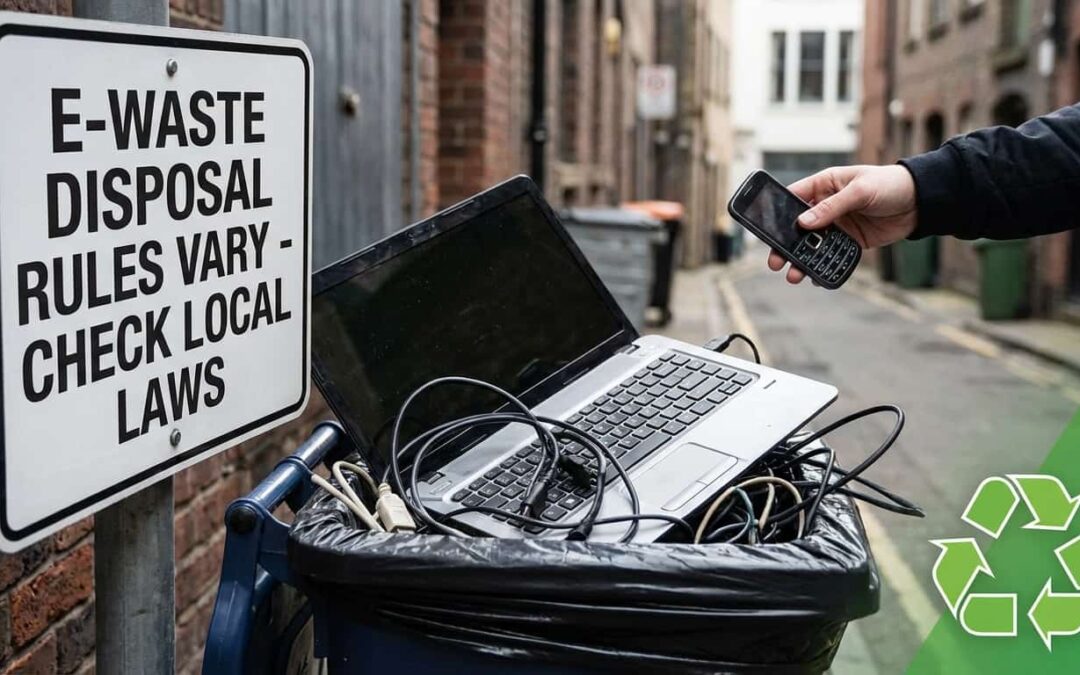
Is It Illegal to Throw Away Electronics? A Complete Guide to E-Waste Laws in Phoenix, AZ
Executive Summary- Is It Illegal to Throw Away Electronics?
Yes, in most states, including Arizona, throwing electronics in regular trash is banned.
Your old laptop, phone, or TV can’t just go in the bin. They contain hazardous materials like lead, mercury, and cadmium. These toxins leak into soil and water when dumped in landfills.
Arizona law requires proper electronics disposal. You must use certified recyclers or authorized collection events. Breaking this rule can result in fines.
The good news? Phoenix makes legal disposal easy. Certified recyclers, retailer take-back programs, and community events give you safe options.
Don’t guess — dispose responsibly.
Why Is Electronics Disposal Regulated? (Classification Data)
Not all waste is equal — electronics are special.
Your devices contain heavy metals, flame retardants, and toxic batteries. Lead in circuit boards poisons groundwater. Mercury in screens damages nervous systems. Cadmium from batteries causes kidney damage.
Regulators classify e-waste by risk level:
High-Risk Items:
- CRT monitors and TVs (lead, phosphor)
- Batteries (lithium, cadmium, mercury)
- Circuit boards (precious metals, toxins)
Moderate-Risk Items:
- Smartphones and tablets
- Printers and scanners
- Audio equipment
Lower-Risk Items:
- Keyboards and mice
- Cables and chargers
- Cases and peripherals
Even “lower-risk” items still need proper recycling. Plastics don’t decompose. Metals can be recovered and reused.
That’s why laws exist to protect people and the planet.
United States Regulatory Resource Data
For exact legal text, see these official resources.
A. Federal Regulations (Business Focus)
Federal rules don’t ban electronics outright — but they shape how states and businesses comply.
The EPA oversees hazardous waste under the Resource Conservation and Recovery Act (RCRA). Electronics containing toxic materials fall under these guidelines. The EPA doesn’t mandate consumer recycling, but it sets standards for disposal facilities.
Federal laws mainly target businesses:
- Large generators must track hazardous waste
- Recycling facilities need proper permits
- Export of certain e-waste requires documentation
For businesses handling bulk electronics, EPA compliance is critical. Visit epa.gov/recycle for official guidance.
B. State-Level Regulations (The “Patchwork”)
One country — many rules.
Each state writes its own e-waste laws. Some ban all electronics from landfills. Others target specific items like TVs and monitors.
States with comprehensive bans:
- California: All electronics are banned from trash
- New York: Computers, TVs, and small electronics
- Washington: Covered electronics must be recycled
Arizona’s approach:
- Electronics restricted in Phoenix and Maricopa County
- Hazardous components require special handling
- Municipal programs supplement state rules
Which states ban what? The landscape keeps evolving. Most states now restrict some form of e-waste disposal.
Check your state’s environmental agency for current laws.
Check Local Electronics Disposal Regulations in Phoenix, AZ
Not sure which trash rule applies to you — Phoenix or county? Here’s how to check.
Phoenix sits within Maricopa County. Both have rules about electronics disposal. Sometimes, city rules are stricter than county rules.
Why this matters: You avoid fines by knowing which rules apply to your address. Local programs also give you the best recycling options.
County and Municipal E-Waste Rules
Know your zone before you throw.
City of Phoenix Rules:
Phoenix bans electronics from regular trash pickup. You can’t put phones, computers, or TVs in your black bin.
The city offers:
- Quarterly collection events at designated sites
- Year-round drop-off locations
- Partnership with certified recyclers
Call Phoenix Public Works at (602) 262-7251 for event schedules.
Maricopa County Rules:
County guidelines apply to unincorporated areas. They align with city rules but offer different collection points.
Maricopa County provides:
- Mobile recycling events throughout the year
- Permanent household hazardous waste facilities
- Special waste calendar online
Visit maricopa.gov/recycle for dates and locations.
City law? County law? Here’s which one applies to your bin. Check your address against Phoenix city limits. If you’re inside city boundaries, follow Phoenix rules. Outside the city? Follow county guidelines.
International Laws on Throwing Away Electronics
Across the world, governments are taking electronics disposal seriously — and you’ll see why.
How does Europe handle electronics waste differently — and why does it work?
European Union WEEE Directive Explained
Europe’s WEEE Directive treats electronics like hazardous assets — not trash.
The Waste Electrical and Electronic Equipment (WEEE) Directive was launched in 2003. It covers almost all electronic devices sold in EU countries.
Key features:
- Manufacturers must fund collection and recycling
- Retailers must take back old devices when selling new ones
- Recycling targets set minimum recovery rates
- Devices must be designed for easier recycling
The WEEE Directive works because it shifts responsibility to manufacturers. They pay for end-of-life management. This incentivizes better design.
Results? EU countries now recycle over 40% of electronics waste. That’s double the U.S. rate.
Manufacturer and Consumer Responsibilities Under WEEE
Manufacturers must design for recycling. Consumers must return end-of-life devices.
What manufacturers do:
- Register products with national authorities
- Fund collection and recycling infrastructure
- Meet annual recycling targets
- Remove hazardous substances from designs
What consumers do:
- Return old electronics to designated collection points
- Never put electronics in household trash
- Use retailer take-back when buying replacements
Many European retailers offer free take-back. You bring your old phone when buying a new one. The store handles recycling.
This shared responsibility keeps millions of tons out of landfills.
International Regulatory Standards
Once electronics cross borders, new rules apply.
A. European Union (EU)
EU leads. Others follow.
The European Union sets the global standard for electronics regulation. Countries worldwide copy EU frameworks. Japan, South Korea, and Taiwan adopted similar laws.
Why? EU rules work. They create markets for recycled materials. They reduce toxic exports to developing nations.
B. International Trade
Are your old electronics ending up across the globe?
The Basel Convention controls international movement of hazardous waste. This 1989 treaty restricts e-waste exports from developed to developing countries.
Key provisions:
- Exporters need prior written consent from receiving countries
- Many developing nations ban e-waste imports entirely
- Illegal exports face criminal penalties
Unfortunately, enforcement is weak. Millions of tons of e-waste still reach Africa and Asia illegally. Informal recyclers there face toxic conditions.
That’s why proper local recycling matters — it keeps waste from becoming someone else’s problem.
Electronics Disposal Laws in Developing Countries
Strong laws in one country, weak enforcement in another but both affect the planet.
Overview of E-Waste Regulations in Phoenix, Arizona
What does Phoenix do when tech ends up in the trash?
Phoenix is one of the fastest-growing cities in the U.S., and with more residents comes more technology — and more electronic waste (e-waste). Old laptops, broken phones, outdated TVs, and unused printers don’t just disappear when they stop working. If they’re not handled properly, they can end up in landfills where hazardous materials leak into the environment.
Unlike many countries that are still building their regulatory systems, the United States has a mix of federal guidance and state-level rules. In Arizona, e-waste is managed through a combination of solid waste laws, recycling programs, and local city initiatives, including services offered directly through the City of Phoenix.
While Arizona does not have a single statewide “E-Waste Act” like California, Phoenix still takes e-waste seriously — especially because electronics often contain materials like lead, mercury, cadmium, and lithium batteries, which can become dangerous when dumped or crushed.
Current Situation in Phoenix How E-Waste is Handled Today
Where do old electronics go in Phoenix?
Phoenix residents have several options for safely disposing of electronics, but many devices still end up stored in closets, tossed in the trash, or handled through informal disposal routes.
Here’s what the e-waste landscape looks like in Phoenix today:
1. City-supported drop-off and recycling programs
Phoenix provides recycling support through its public works and waste management systems, offering residents guidance and opportunities to recycle electronics instead of throwing them away.
2. Household Hazardous Waste (HHW) services
Certain electronic components—especially batteries and items with hazardous metals—fall under hazardous waste categories. Phoenix encourages residents to use HHW programs rather than placing electronics in curbside trash.
3. Retail take-back programs
Many national retailers operating in Phoenix (electronics stores and big-box chains) offer take-back programs for items like:
-
old cell phones
-
batteries
-
printers
-
cables and chargers
-
TVs and monitors (some restrictions apply)
4. Private recycling companies
Phoenix has multiple private recycling firms that offer:
-
pickup services
-
drop-off recycling
-
corporate e-waste collection
-
data destruction services
This is especially common for businesses, schools, hospitals, and tech companies that generate large volumes of outdated equipment.
5. Landfill risk still exists
Despite the availability of recycling options, some residents still dispose of electronics in regular trash due to:
-
lack of awareness
-
convenience
-
confusion about what counts as e-waste
-
limited time or transport access
When e-waste reaches landfills, it creates long-term environmental risks.
Why E-Waste Is a Serious Issue in Phoenix
What’s inside your old devices?
Most electronics contain both valuable and toxic materials. In Phoenix’s desert climate, landfills already face unique environmental pressure, and improper disposal makes things worse.
Common hazardous materials in electronics include:
-
Lead (older TVs, monitors, circuit boards)
-
Mercury (some screens and bulbs)
-
Cadmium (batteries, chips)
-
Lithium-ion batteries (phones, laptops, tablets)
These materials can leak into soil and groundwater over time, while batteries can cause fires if damaged.
At the same time, electronics contain recoverable resources such as:
-
copper
-
aluminum
-
gold and silver
-
rare earth elements
Proper recycling helps recover these materials and reduces the need for destructive mining.
Enforcement Challenges in Growing Cities Like Phoenix
With programs in place, what still hinders progress?
Phoenix has more structure than many emerging markets, but enforcement and participation challenges still exist — especially as the city grows and technology use increases.
Major barriers include:
1. Limited awareness and confusion
Many residents still don’t know:
-
where to recycle electronics
-
Which items are accepted
-
How to safely remove batteries
-
Whether e-waste is illegal to dump
Some assume electronics belong in regular trash, especially small devices.
2. Convenience beats compliance
Even if recycling is available, people choose the fastest option. If the nearest drop-off is too far or hours are limited, e-waste ends up in:
-
curbside bins
-
dumpsters
-
illegal dumping areas
3. Illegal dumping
Like many large cities, Phoenix faces dumping issues in vacant lots and desert areas. Electronics are sometimes dumped alongside furniture and construction waste.
4. Business disposal gaps
Small businesses may avoid professional recycling because:
-
certified recycling costs money
-
they lack compliance knowledge
-
they’re unaware of data security risks
This creates opportunities for unsafe handling or disposal.
5. Data privacy concerns
People often keep old devices because they worry about:
-
identity theft
-
photos and personal data
-
banking info
Without education about secure recycling and data destruction, many devices never get recycled at all.
What Phoenix Residents Can Do With Old Electronics
Don’t trash it — recycle it responsibly
If you’re in Phoenix, here are safe and responsible ways to handle e-waste:
✅ Use local drop-off programs
City drop-off sites and special collection events are ideal for residents.
✅ Use certified recycling companies
Look for recyclers that follow standards like:
-
Jay Hohel inc (Responsible Recycling)
-
e-Stewards certification
These ensure safe handling and ethical recycling.
✅ Remove batteries when possible
Batteries should never go in trash due to fire risk.
✅ Choose repair and reuse
If your device still works:
-
donate it
-
sell it
-
refurbish it
-
repair it
Reuse is always better than recycling.
The Bigger Picture: What Phoenix Needs for the Future
Can Phoenix keep up with rising e-waste?
Phoenix is expanding fast — and so is tech consumption. More households, more gadgets, and more upgrades mean e-waste will rise sharply in coming years.
To stay ahead, Phoenix will benefit from:
1. Expanded e-waste collection infrastructure
More drop-off points, longer hours, and neighborhood-level options make recycling easier.
2. Stronger public education
Clear messaging through:
-
schools
-
community centers
-
utility mailers
-
local media
People recycle more when they understand the risk.
3. Corporate responsibility
Manufacturers and retailers should play a bigger role in:
-
take-back programs
-
repairability
-
recycling funding
-
eco-design
4. Stronger enforcement and tracking
Illegal dumping prevention and better monitoring can reduce environmental damage and cleanup costs.
How Can Consumers Recycle Their E-Waste?
Recycling is not only greener — it keeps you out of legal trouble.
Think trashing an old phone is harmless? Here’s why recycling matters — and why the law cares.
Is it Illegal to Throw Away Electronics? Here’s Why You Should Recycle Electronics
Illegal to toss. Legal and smart to recycle.
In Arizona, disposing of electronics in regular trash violates environmental regulations. Phoenix specifically prohibits it.
Legal reasons to recycle:
- Avoid potential fines from improper disposal
- Comply with local and state waste laws
- Protect yourself from liability if toxins leak
Environmental reasons to recycle:
- Prevent heavy metals from contaminating groundwater
- Reduce demand for mining rare earth minerals
- Keep toxic materials out of landfills
Before you recycle:
- Wipe personal data from devices
- Remove batteries if possible
- Keep charging cables with devices
When in doubt — recycle it out!
Best Practices for Electronics Disposal
You don’t have to figure this out alone — here are the best ways people handle old electronics.
Got old gadgets piling up? Where should they go?
Not in the trash. Not in a drawer. Recycle or donate it.
Recycling
Recycle it right — don’t recycle it wrong.
Certified recycling protects your data and ensures proper handling. Not all recyclers follow safe practices.
How to recycle electronics safely:
- Find R2 or e-Stewards certified recyclers
- Check what items they accept before you go
- Wipe data using factory reset or software tools
- Remove batteries and store separately
What happens during recycling: Materials get sorted by type. Metals get melted down and reused. Plastics become new products. Hazardous components receive special treatment.
Before recycling, check if your recycler is certified — this protects your data and ensures proper handling.
Donation
Why recycle it when you can help someone use it?
Working electronics can get a second life. Local charities, schools, and nonprofits often need devices.
Where to donate:
- Goodwill and Salvation Army locations
- Local schools and libraries
- Senior centers and community programs
- Nonprofit refurbishers
Before donating, ensure the device is functional or disclose any issues — many charities can’t accept non-functional tech.
Give it a second life — or let someone else use it.
Manufacturer Take-Back Programs
Got old gear? Send it back the right way.
Many brands offer free or low-cost recycling programs. They handle shipping and ensure proper disposal.
Popular programs:
- Apple: Free recycling for any brand, trade-in credit for Apple devices
- Dell: Free mail-back recycling for Dell products
- HP: Free return shipping labels for HP equipment
- Samsung: Mail-back or in-store recycling
Many programs are free, but some require shipping fees — double-check before you send it.
Safe and Legal Electronics Disposal Options in Phoenix, AZ
We get it — figuring out where to take old electronics isn’t easy. Here’s the safe way.
Got a box of old phones? Where should you take them?
Don’t toss. Don’t dump. Take back.
Retailer Takeback and Manufacturer Recycling Programs
Big box stores and brands often take back your old tech — and sometimes for free.
Major retailers offering recycling:
- Best Buy: Accepts up to three items per day, TVs for $30 fee
- Staples: Free recycling for small electronics, fee for monitors
- Office Depot: Free recycling for batteries and small devices
- Target: Accepts phones, MP3 players, and ink cartridges
Check store websites for current policies. Some items require purchase for free recycling.
Retailer Take-Back and Recycling Programs
Recycle at the place you shop.
Best Buy runs the largest retail e-waste program in America. Their Phoenix locations accept almost all electronics.
What Best Buy takes:
- TVs and monitors (fee applies)
- Computers and laptops
- Phones and tablets
- Appliances and cables
Limits: Three items per household per day. Large items may need scheduled pickup.
Municipal Electronics Recycling Events
Once a month, Phoenix accepts old electronics.
The City of Phoenix hosts quarterly e-waste collection events. These free drives accept all household electronics.
Typical schedule:
- January: North Phoenix location
- April: Central Phoenix location
- July: South Phoenix location
- October: West Phoenix location
Dates change yearly. Sign up for email alerts at phoenix.gov/publicworks. They’ll notify you about upcoming events.
Local Electronic Recycling Events
Looking for a no-cost way to recycle? Try these local events.
Community groups and nonprofits run seasonal recycling drives. Earth Day (April) and spring cleanup weeks (March-May) often include electronics collection.
Where to find events:
- Maricopa County website events calendar
- Local library bulletin boards
- Nextdoor neighborhood announcements
- Environmental nonprofit newsletters
These events complement city programs and offer convenient neighborhood options.
Recycle right in the Valley of the Sun!
How to Properly Dispose of Electronics in Phoenix, AZ
You can dispose of old electronics safely — here’s exactly how Phoenix makes it easy.
Got an old laptop gathering dust? Where should it actually go?
The trash bin is easy — recycling is smart.
Certified E-Waste Recyclers
Not all recyclers are created equal — certified ones keep your data safe and the planet cleaner.
Certification proves recyclers follow environmental and security standards. Look for R2 (Responsible Recycling) or e-Stewards certification.
Phoenix-area certified recyclers:
- Jay Hoehl Inc: Address: 3334 W McDowell Rd Ste 17, Phoenix, AZ 85009
https://maps.app.goo.gl/Pj9o4QzCMTenRwXQ7
- Total Asset Recovery: Accepts computers, servers, and networking equipment
- E Waste Recycling: 1330 E Watkins St, Phoenix — free drop-off
Call ahead to confirm accepted items. Some recyclers don’t take TVs or charge fees for certain electronics.
Certified Electronics Recycling Facilities
Recycling facilities are like drop centers for tech — they know where each part goes next.
Certified facilities follow strict protocols. They separate materials properly. They wipe data securely. They prevent toxic releases.
What to look for:
- R2 or e-Stewards certification badge
- Clear hours and contact info
- List of accepted items
- Data destruction services
Do I need an appointment? Most facilities accept walk-ins during business hours. Call ahead for large loads or business drop-offs.
Don’t dump it — drop it off!
Essential Guide to Electronics Recycling in Phoenix AZ
Your old devices deserve a second life, and Phoenix makes it easy.
Got an old laptop lying around? Here’s where it should go.
Not in the trash. Not in storage. Recycled the right way.
Your step-by-step recycling guide:
- Identify what you have: Computers, phones, TVs, printers, cables, batteries
- Wipe your data: Use factory reset or data-wiping software
- Remove batteries: Take out rechargeable batteries and bag separately
- Choose your option: Certified recycler, retail drop-off, or city event
- Drop it off: Bring items during operating hours
Quick checklist before you go: ✓ Data wiped or device reset to factory settings ✓ Batteries removed and stored safely ✓ Know facility name, address, and hours ✓ Check if appointment needed for large items
Phoenix accepts electronics year-round at certified facilities. You don’t need to wait for special events.
Recycle right in the Valley of the Sun!
Why Electronics Recycling Matters
What good is sitting in a drawer when it could help the planet?
Every phone, laptop, and TV contains valuable materials. Gold, silver, copper, and rare earth elements sit inside your old devices.
Environmental benefits:
- Prevents toxic metals from poisoning soil and water
- Reduces mining for new raw materials
- Saves energy compared to virgin material production
- Keeps hazardous waste out of landfills
Economic benefits:
- Creates green jobs in recycling industry
- Recovers valuable metals for reuse
- Reduces manufacturing costs for new electronics
Community benefits:
- Donated devices help schools and nonprofits
- Safer neighborhoods with less illegal dumping
- Phoenix leadership in sustainability
One ton of recycled electronics recovers more gold than 17 tons of mined ore. Recycling one million laptops saves energy equal to powering 3,500 homes for a year.
Your small action creates real impact.
How to Prepare Your Electronics for Recycling
Clean data. Clean conscience.
Preparing devices properly protects your privacy and helps recyclers work efficiently.
Step-by-step preparation:
1. Back up important data
- Save photos, documents, and files to cloud or external drive
- Export contacts and passwords
- Download purchase receipts
2. Sign out of accounts
- Remove device from Apple ID or Google account
- Log out of email, social media, banking apps
- Deactivate activation locks
3. Wipe the device
- Factory reset phones and tablets
- Use data destruction software for computers
- Remove SIM cards and memory cards
4. Remove batteries
- Take out rechargeable batteries if accessible
- Bag batteries separately
- Check for swollen or damaged batteries
5. Gather accessories
- Include charging cables when possible
- Keep original boxes for easier transport
- Remove cases and screen protectors
Most recyclers provide data destruction services. But wiping devices yourself offers extra peace of mind.
Common Myths About Electronics Recycling
Think recycling is too hard? What if it were easier than you thought?
Myth 1 – Recycling is Too Complicated
The myth: Recycling electronics requires special knowledge and effort. It’s easier to just throw them away.
The reality: Phoenix makes recycling simple. Drop-off locations accept items year-round. Many retailers take devices for free. City events require no appointment.
You don’t need technical skills. Just wipe your data and bring items to any certified recycler.
Myth 2 – All Electronics Can Be Recycled
The myth: Every electronic device gets recycled the same way.
The reality: Not all electronics go through identical processes. CRT monitors need special handling. Batteries require separate treatment. Some small items aren’t economical to recycle.
However, certified recyclers accept nearly all consumer electronics. They know how to handle each type safely.
Check with your recycler about specific items. Most say yes to computers, phones, TVs, and printers.
Myth 3 – Recycling Doesn’t Make a Difference
The myth: One person’s recycling won’t change anything. The impact is too small to matter.
The reality: Americans generate 6.9 million tons of e-waste annually. If everyone recycled just their phones, we’d recover 35,000 pounds of copper and 772 pounds of silver each year.
Phoenix recycling programs divert thousands of tons from landfills. Your participation adds up.
Every device recycled is one less in the landfill — and one more source of recovered materials.
How to Reduce Electronic Waste in Phoenix, AZ
Reducing e-waste doesn’t require drastic change — it starts with simple everyday choices.
Don’t just recycle. Reduce before you recycle.
Here Are Some Easy Tips on How to Reduce E-Waste
Why toss it when you could fix it?
Practical reduction strategies:
Buy quality, not quantity: Invest in durable devices that last longer. Cheap electronics break faster and create more waste.
Repair instead of replace: Cracked screens, dead batteries, and slow performance often have simple fixes. Local repair shops can extend device life for less than replacement cost.
Upgrade selectively: You don’t need the newest model every year. Wait until your current device truly can’t meet your needs.
Sell or trade in: Working devices have resale value. Apple, Samsung, and carriers offer trade-in credits.
Choose repairable brands: Some manufacturers design products for easier repair. Look for modular designs and available spare parts.
Use protective cases: A good case prevents damage and extends device lifespan.
The greenest device is the one you already own.
Industrial Metal Recycling in Phoenix, AZ: Why Consolidated Resources Inc. is Your Trusted Partner
Recycle more than gadgets — recycle metals responsibly.
Consolidated Resources Inc. serves Phoenix-area businesses with specialized industrial recycling. They handle large-scale electronics salvage and precious metal recovery.
Services include:
- Bulk electronics recycling for businesses
- Server and networking equipment disposal
- Precious metal extraction from circuit boards
- Secure data destruction for enterprise hardware
Industrial recycling differs from consumer recycling. Volumes are higher. Security requirements are stricter. Consolidated Resources meets these needs with certified processes.
Recycling Titanium Metal Scrap in Phoenix
Not all e-waste is small — metal scrap adds value.
Titanium appears in aerospace electronics, medical devices, and high-end consumer tech. This valuable metal deserves proper recycling.
Phoenix aerospace industry generates significant titanium scrap. Local recyclers recover this material for reuse in new manufacturing.
Titanium recycling benefits:
- High resale value offsets recycling costs
- Reduces mining environmental impact
- Supports the local aerospace industry
Contact specialized industrial recyclers for titanium scrap services.
Elevate Your Business with Sustainable Solutions: Nickel Alloy Recycling in Chandler, Arizona
Sustainable business is smart business.
Nickel alloys appear in electronics, batteries, and industrial equipment. Chandler-area businesses can recycle these materials locally.
Why recycle nickel alloys:
- Environmental compliance and corporate responsibility
- Revenue from recovered valuable metals
- Reduced disposal costs versus landfill fees
- Support for circular economy initiatives
Chandler’s tech sector generates nickel-rich e-waste. Partnering with certified recyclers turns waste into resource.
Key Takeaways on Electronics Disposal Laws
Illegal to trash — legal to recycle.
When Throwing Away Electronics Is Illegal
Arizona law and Phoenix ordinances ban electronics from regular trash. Violations can result in fines.
Items you cannot trash:
- Computers and laptops
- Monitors and TVs
- Phones and tablets
- Printers and copiers
- Batteries of all types
The rules protect groundwater from toxic contamination. They also promote resource recovery.
What to Do Instead of Putting Electronics in the Trash
You have multiple legal disposal options in Phoenix:
Option 1: Certified recyclers Year-round drop-off at licensed facilities. Data destruction included.
Option 2: Retail take-back Free recycling at Best Buy, Staples, and other major retailers.
Option 3: City collection events Quarterly free events throughout Phoenix.
Option 4: Manufacturer programs Mail-back recycling from Apple, Dell, HP, Samsung, and others.
Option 5: Donation Working devices to charities, schools, and nonprofits.
Choose the option that fits your schedule and needs. All comply with Arizona law.
Compliance & Certification Resources
When you’re unsure, go to the certified source.
Finding certified recyclers:
- R2 (Responsible Recycling) certified facilities: sustainableelectronics.org
- e-Stewards certified recyclers: e-stewards.org
- EPA’s Electronics Donation and Recycling: epa.gov/recycle
Government resources:
- Arizona Department of Environmental Quality: azdeq.gov
- City of Phoenix Public Works: phoenix.gov/publicworks
- Maricopa County Recycling: maricopa.gov/recycle
- EPA WasteWise Program: epa.gov/wastewise
International frameworks:
- Basel Convention on Hazardous Wastes: Basel.int
- WEEE Directive (EU): ec. europa.eu/environment
- Global E-waste Statistics: ewastemonitor.info
What certifications mean:
R2 (Responsible Recycling): Ensures proper environmental handling, data security, and downstream tracking. Facilities must pass annual audits.
e-Stewards: The highest standard for electronics recycling. Prohibits export to developing countries. Requires worker safety protections.
Both certifications guarantee your electronics won’t end up in overseas dumps.
Electronics disposal isn’t optional anymore; it’s the law. But beyond legal compliance, it’s the right thing to do.
Phoenix gives you easy, convenient recycling options. Certified facilities operate year-round. City events happen quarterly. Retailers accept items for free.
Your old devices contain toxic materials and valuable resources. Proper recycling protects the environment and recovers materials for new products.
The process is simple:
- Wipe your data
- Choose a certified recycler or collection event
- Drop off your electronics
That’s it. No complicated forms. No fees at most locations. Just responsible disposal that helps Phoenix stay clean and green.
Don’t let old electronics gather dust or risk illegal disposal.
Recycle them today, the Valley of the Sun will thank you.