
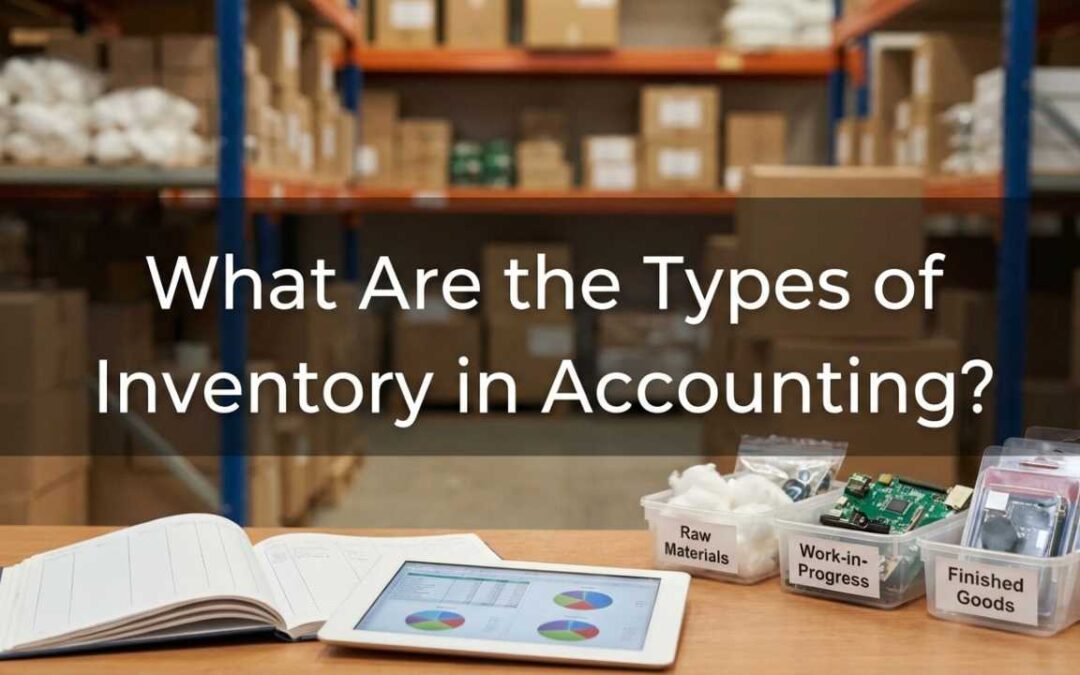
You run a business. Inventory sits on your balance sheet. But do you really know how it’s classified?
Inventory isn’t just “stuff in the warehouse.” It’s a moving target that changes value as it moves through your operation. Phoenix businesses lose money every day because they misunderstand inventory categories.
The types matter. Raw materials behave differently than finished goods on your books. Work-in-progress follows different rules than safety stock. Get the classification wrong and your cost of goods sold gets distorted.
Don’t dig a well when you’re already thirsty.
This guide breaks down every inventory type Phoenix accountants track. You’ll learn what belongs where. You’ll understand how each category impacts your financial statements. And you’ll stop wondering if your books actually reflect reality.
Not tracking inventory creates confusion. Tracking it properly creates control.
Inventory Fundamentals for Accounting in Phoenix, AZ Businesses
Inventory works like the engine of your financial statements. It powers your balance sheet. It drives your profit calculations. And when it breaks down, everything else stalls.
Phoenix businesses deal with inventory across industries. Manufacturers track raw materials. Retailers manage merchandise. Service companies maintain MRO supplies. Each type follows specific accounting rules.
Here’s what matters: Inventory classification determines when costs hit your income statement. Misclassify something and your gross margin looks wrong. Your taxes get calculated incorrectly. Your financial reports mislead investors.
The fundamentals aren’t complicated. But they’re precise.
Let’s break down the core categories. Each one plays a different role in your cost of goods sold. Each one affects your bottom line differently.
Raw Materials
Raw materials are purchased items waiting to enter production. They sit as assets on your balance sheet until you actually use them.
Think of a Phoenix furniture maker. The lumber they buy is raw material. The hardware and fasteners count too. Everything stays classified as raw materials until it moves to the production floor.
Here’s the key rule: Purchased but unused, it’s an asset. Used but unsold, it becomes something else.
Raw materials protect your manufacturing capacity. They let you respond to orders without delays. And they represent real money tied up in your operation.
Arizona manufacturers should track raw materials carefully. The value sits there until production begins. After that, accounting treatment changes completely.
Work-in-Progress (WIP)
Ever wonder where unfinished projects sit on your books?
WIP inventory captures partially completed goods. It includes three cost components: direct materials, direct labor, and manufacturing overhead. All three accumulate as production moves forward.
A Phoenix electronics assembler might have circuit boards in various stages. Some just started. Others nearly finished. All of them land in WIP until completion.
This category requires precision. You’re tracking costs that haven’t become revenue yet. You’re measuring value that keeps changing. And you’re building the foundation for accurate gross margin calculations.
WIP tells you what’s happening between raw materials and finished goods. It shows where your production dollars actually sit.
Finished Goods
Finished goods are ready for sale. Production is complete. Quality checks passed. The product just needs a customer.
These items represent your most liquid inventory. They’re closest to generating revenue. One sale and they convert from asset to cost of goods sold.
Finished goods directly tie to revenue timing. You can’t recognize revenue until you sell them. You can’t remove them from inventory until ownership transfers. The classification matters for both your balance sheet and income statement.
Phoenix retailers and manufacturers watch this number closely. It shows production capacity meeting market demand. It reveals how efficiently you’re converting work into sales.
Maintenance, Repair, and Operations (MRO)
MRO inventory supports production but never becomes the product. It includes:
- Cleaning supplies and safety equipment
- Replacement parts for machinery
- Office supplies and packaging materials
- Tools and maintenance items
Here’s what makes MRO different: It enables operations without adding direct value to finished goods. A Phoenix manufacturer might stock forklift parts and lubricants. Essential for running the plant. Never part of the final product.
MRO prevents production delays. It keeps equipment running. But it requires different accounting treatment than raw materials or finished goods.
Don’t let these costs hide in your books. Track them separately to understand your true operational overhead.
Specialized Inventory Categories Used by Phoenix, AZ Companies
A chain is only as strong as its weakest link. Your supply chain depends on understanding every inventory type you manage.
Standard categories cover most businesses. But Phoenix companies often deal with specialized classifications. Retailers face different inventory challenges than manufacturers. Distributors track items that manufacturers never touch.
These specialized categories matter for risk management. They affect ownership timing. They change balance sheet classification. And they impact how you report inventory value.
Let’s examine the categories that separate basic bookkeeping from strategic inventory accounting.
Merchandise Inventory
Merchandise inventory is finished goods purchased for resale. Retailers buy it complete. They sell it without modification. Value stays constant until the sale.
Phoenix retail operations typically use perpetual inventory systems. Every sale updates the count automatically. Every purchase gets recorded immediately.
The accounting stays simpler than manufacturing inventory. No work-in-progress to track. No raw materials to convert. Just purchase cost flowing to cost of goods sold at the point of sale.
Merchandise inventory represents the entire business model for most retailers. Buy low. Sell higher. Track the difference.
Consignment Inventory
Consignment creates confusion because possession doesn’t equal ownership. You might hold inventory physically without owning it financially.
Here’s the critical rule: Ownership determines reporting, not physical possession.
A Phoenix art gallery might display consignment pieces. The artwork sits in their space. But it stays on the artist’s balance sheet until it sells. The gallery never records it as their inventory.
This matters during audits. It affects liability insurance. And it changes how you calculate inventory turnover ratios.
Many businesses think they should record inventory they physically control. That’s wrong. Record what you own, regardless of where it sits.
Pipeline (In-Transit) Inventory
Pipeline inventory is goods currently shipping between locations. It left the supplier but hasn’t reached you yet. Or it left your warehouse but hasn’t reached the customer.
FOB shipping terms determine recognition. FOB shipping point means you own it the moment it ships. FOB destination means you don’t own it until delivery.
Phoenix distributors deal with this constantly. Inventory sits on trucks. It moves through logistics networks. But accounting needs to know who owns it right now.
Get the timing wrong and your inventory count misses items completely. Or double-counts them. Either mistake distorts your financial position.
Safety Stock
Safety stock acts like an umbrella before the storm. You hold extra inventory to prevent stockouts during demand spikes or supply delays.
Phoenix businesses in seasonal industries rely on safety stock heavily. Summer months create demand surges. Supply chains sometimes hiccup. Safety stock provides a buffer.
This inventory costs money to hold. It ties up cash. It requires warehouse space. But it protects revenue when unexpected situations hit.
Account for safety stock separately. It helps you understand carrying costs. It shows how much capital you’re dedicating to risk mitigation rather than direct sales.
Dead Stock
Inventory can protect profits. Or quietly drain them.
Dead stock is inventory you can’t sell at normal prices. It’s obsolete. It’s damaged. Or demand simply disappeared. The item sits there losing value.
The accounting impact hits immediately. You write down dead stock to net realizable value. That write-down flows straight to your income statement. It reduces net income right now.
Phoenix businesses should identify dead stock quickly. The longer it sits, the more value you lose. And the harder it becomes to recover any money from it.
Mark it clearly. Write it down promptly. Then decide whether to liquidate, donate, or dispose of it.
Manufacturing Inventory Types Common in Phoenix, AZ Operations
If you run a manufacturing operation in Phoenix, you already know inventory doesn’t sit in one place. It moves through stages. It accumulates costs. And it transforms from raw inputs to finished products.
Each transformation stage requires different accounting treatment. Understanding these layers protects your margins. It strengthens business stability. And it gives you the data you need for strategic decisions.
Inventory in manufacturing works like a moving assembly line. Each stage changes its value.
Let’s break down the specific categories Phoenix manufacturers track daily.
Direct Raw Materials
Direct raw materials are items you can trace directly to finished products. They become part of the final item. You can measure exactly how much goes into each unit.
A Phoenix aerospace parts manufacturer uses aluminum sheets and titanium fasteners. Both are direct materials. Both get measured per part produced. Both affect the cost of each finished component.
Measured precisely, margins improve. Estimated loosely, margins shrink.
Direct materials create the clearest cost-to-product relationship. When aluminum prices rise, you see exactly how it impacts product cost. When you negotiate better rates, savings flow directly to gross margin.
Track these materials carefully. Your bill of materials depends on accuracy here.
Indirect Raw Materials
Indirect materials support production but can’t be traced to specific units. They’re consumed during manufacturing. But measuring exactly how much goes into each product isn’t practical.
Think about lubricants for machinery. Sandpaper for finishing. Cleaning supplies for the production floor. All necessary. None directly traceable to individual products.
These materials get allocated through overhead. The cost gets spread across production volume. It becomes part of your manufacturing burden rate.
Phoenix manufacturers should track indirect materials separately. It helps you understand true overhead costs. It reveals opportunities to reduce waste without impacting product quality.
Don’t let indirect materials hide in miscellaneous expenses. Categorize them properly for accurate cost accounting.
Work-in-Progress (WIP)
Where do unfinished orders belong on your balance sheet?
WIP shows cost accumulation during production. It includes direct materials already added. It captures direct labor hours applied. And it carries allocated manufacturing overhead.
All three components build up as production progresses. A partially assembled product might have $50 in materials, $30 in labor, and $20 in overhead. That’s $100 sitting in WIP.
This category requires strong internal controls. You’re tracking costs that keep changing. You’re measuring value that hasn’t generated revenue yet. And you’re building the data that determines gross profit.
Phoenix manufacturers use WIP to monitor production efficiency. High WIP might signal bottlenecks. Low WIP might indicate smooth flow. The number tells a story about your operations.
Finished Goods Inventory
Finished goods represent completed products ready for sale. Production is done. Quality passed. The item just needs a customer to generate revenue.
The classification directly ties to revenue timing rules. You can’t recognize revenue until you transfer ownership. Until then, the cost sits in finished goods inventory.
A Phoenix medical device manufacturer might have sterilized products in sealed packaging. They’re finished. They’re perfect. But they’re still inventory until they ship to a customer.
This category shows your production capacity meeting market demand. Rising finished goods might mean slow sales. Falling finished goods might signal strong demand or production problems.
Watch the balance. Too much ties up capital. Too little risks stockouts.
Maintenance, Repair, and Operations (MRO) Inventory
MRO inventory keeps the engine running even though it never becomes the product. It includes:
- Spare parts for production equipment
- Safety gear and protective equipment
- Cleaning and maintenance supplies
- Tools and testing equipment
Phoenix manufacturers need MRO to prevent downtime. A broken machine stops production. Having the replacement part on hand means minutes of delay instead of days.
But MRO doesn’t add direct value to products. It supports production capability. It protects operational continuity. And it requires separate tracking from production materials.
Account for MRO in your overhead structure. Don’t bury these costs where you can’t analyze them.
Packaging Inventory
Packaging materials protect finished goods during storage and shipment. They include boxes, labels, protective wrap, and shipping supplies.
Here’s where classification gets interesting: Some packaging is direct cost. Some is indirect cost. It depends on traceability.
Custom boxes designed for a specific product? Direct packaging cost. Generic shipping supplies used across all products? Indirect overhead cost.
Phoenix manufacturers should clarify which packaging materials trace directly to products. It affects how costs flow to cost of goods sold. It impacts gross margin calculations.
Don’t assume all packaging gets treated the same way. The accounting treatment depends on how you use it.
Inventory Valuation Methods Used by Phoenix, AZ Accountants
Your inventory method doesn’t just affect accounting. It affects taxes and profit visibility.
Different method. Different profit. Different tax outcome.
Phoenix accountants choose from several cost flow assumptions. Each one produces different results when prices change. Each one impacts financial statements differently.
The method you select matters more during inflation. Rising costs hit different methods in different ways. Your choice affects reported earnings, tax liability, and investor perception.
Let’s examine the four main valuation methods and when each makes sense.
FIFO (First-In, First-Out)
FIFO assumes you sell the oldest inventory first. The first units purchased become the first units sold. It matches the physical flow for most businesses.
FIFO is the most common method under GAAP and IFRS. It’s simple to understand. It’s accepted globally. And it typically produces financial statements that reflect current values.
During inflation, FIFO shows higher profits. Older, cheaper costs hit cost of goods sold. Newer, expensive inventory stays on the balance sheet at current prices.
Phoenix retailers often use FIFO. It makes sense when products move in chronological order. And it provides balance sheet values that approximate replacement cost.
LIFO (Last-In, First-Out)
LIFO assumes you sell the newest inventory first. Recent purchases hit cost of goods sold immediately. Older costs stay on the balance sheet.
During inflation, which costs should hit first?
LIFO lets rising costs flow to expenses quickly. This reduces taxable income during inflationary periods. Many U.S. companies use LIFO specifically for tax benefits.
But LIFO isn’t permitted under IFRS. International businesses can’t use it. And balance sheet values can become badly outdated when using LIFO for years.
Phoenix manufacturers sometimes choose LIFO for tax planning. The method defers tax liability when costs rise steadily.
Weighted Average Cost
Weighted average smooths price volatility. You calculate an average cost per unit. Every sale uses that average. Every purchase updates it.
The method is simple. It eliminates the need to track specific cost layers. And it produces results between FIFO and LIFO outcomes.
Phoenix businesses use weighted average when inventory is homogeneous. Commodities work well. Bulk materials make sense. Products with stable pricing benefit.
The method won’t maximize tax benefits like LIFO. But it won’t distort balance sheet values either. It sits comfortably in the middle.
Specific Identification
Specific identification tracks the actual cost of each individual item. You know exactly what you paid for the unit you just sold.
This method is ideal for high-value serialized inventory. Phoenix auto dealers use it. Jewelry stores rely on it. Custom manufacturers need it.
Each item gets tracked separately. Each sale matches the precise cost to revenue. No assumptions required.
But specific identification only works when units are distinguishable. You can’t use it for fungible inventory. And the tracking burden makes it impractical for high-volume operations.
Accounting Regulations Governing Inventory in Phoenix, AZ
You don’t want inventory mistakes discovered during an audit. An ounce of prevention is worth a pound of cure.
Phoenix businesses follow federal accounting standards under GAAP. These rules determine how you recognize inventory. How you measure it. And how you report it on financial statements.
Compliance isn’t optional. Auditors check inventory treatment carefully. Lenders review your methods. Investors expect proper classification. Getting it wrong creates serious problems.
Let’s examine the two main regulatory frameworks governing inventory accounting.
Financial Accounting Standards Board (U.S. GAAP – ASC 330 Inventory)
ASC 330 provides the authoritative guidance for inventory accounting under U.S. GAAP. It covers recognition, measurement, and disclosure requirements.
The core principle is lower of cost or market. You report inventory at whichever is less: historical cost or current market value. When market value drops below cost, you write inventory down immediately.
ASC 330 also defines what costs belong in inventory. Product costs get capitalized. Period costs get expensed. The standard draws clear lines between the two.
Phoenix businesses operating in the U.S. follow ASC 330. It governs how you classify inventory categories. It determines when write-downs are required. And it establishes disclosure requirements for financial statement notes.
The standard protects investors by preventing overstated asset values. It ensures balance sheets reflect economic reality.
International Accounting Standards Board (IFRS – IAS 2 Inventories)
IAS 2 governs inventory accounting under international financial reporting standards. It shares many similarities with GAAP. But key differences exist.
The biggest difference: IFRS prohibits LIFO. Companies reporting under IFRS must use FIFO, weighted average, or specific identification. LIFO isn’t an option.
IAS 2 uses “net realizable value” instead of “market value” for write-downs. The concept is similar. But the calculation differs slightly.
Phoenix companies with international operations often report under IFRS. Multinational corporations need consolidated statements. Foreign subsidiaries might require IFRS compliance.
Local compliance protects today. Global alignment prepares for tomorrow.
Understanding both frameworks helps Phoenix businesses navigate complex reporting requirements. It positions you for growth beyond U.S. markets.
Professional Inventory Accounting Resources for Phoenix, AZ Businesses
Smart business owners don’t rely on guesswork. They verify information from trusted sources.
Before you adjust your books, have you confirmed the rule?
Professional accounting platforms provide detailed guidance on inventory treatment. They explain concepts clearly. They cite authoritative standards. And they help you understand complex rules.
But here’s what matters: Reading builds knowledge. Proper application builds compliance.
Educational resources explain what the rules say. Professional accountants apply those rules to your specific situation. Use both for best results.
Let’s examine three trusted platforms Phoenix businesses reference regularly.
Investopedia
Investopedia offers accessible financial definitions and conceptual explanations. It breaks down complex accounting topics into plain language. And it provides examples that clarify abstract concepts.
Key strengths:
- Clear definitions without excessive jargon
- Practical examples from real business situations
- Regular updates reflecting current practices
Think of Investopedia as a financial dictionary, not a legal manual. It helps you understand terminology. It clarifies basic concepts. But it doesn’t provide the technical depth needed for complex accounting decisions.
Phoenix business owners use Investopedia to eliminate financial confusion. It answers “what does this mean” questions quickly. Then you can dig deeper with more technical resources.
AccountingTools
AccountingTools provides deeper technical references for accounting professionals. The platform explains GAAP nuances clearly. It covers specific accounting standards in detail. And it addresses practical implementation questions.
Key strengths:
- Detailed explanations of accounting standards
- Practical guidance on complex transactions
- Regular updates tracking standard changes
Basic blogs explain. Technical platforms clarify.
AccountingTools goes beyond definitions. It shows how standards apply to specific scenarios. It addresses edge cases. And it provides the technical foundation accountants need.
Phoenix CPAs often reference AccountingTools when interpreting complex inventory situations. It bridges the gap between conceptual understanding and proper application.
Corporate Finance Institute
Corporate Finance Institute offers structured learning and certification pathways. The platform provides comprehensive courses on financial accounting, cost accounting, and financial modeling.
Want to go beyond bookkeeping and into strategy?
Key strengths:
- Structured curriculum building from basics to advanced
- Real-world modeling and analysis tools
- Professional certification programs
CFI focuses on financial analysis and strategic decision-making. It’s designed for professionals moving beyond day-to-day transactions. Controllers, CFOs, and financial analysts use it to sharpen analytical skills.
Phoenix businesses use CFI for professional development. It strengthens business stability by building your team’s capabilities.
Academic References for Inventory Accounting in Phoenix, AZ
Inventory rules don’t change overnight. They’re grounded in decades of accounting theory.
A house built on strong foundations stands longer.
Academic textbooks provide the theoretical framework for inventory accounting. They explain why rules exist. They show how principles connect. And they give accountants the foundation to interpret standards correctly.
Major accounting firms rely on authoritative textbooks for technical interpretation. When ambiguous situations arise, theory helps determine proper treatment.
Phoenix accounting professionals reference academic sources regularly. The books establish credibility. They provide citation-worthy explanations. And they connect daily practice to fundamental principles.
Practice makes records accurate. Theory makes records defensible.
Let’s examine the two academic reference categories that shape inventory accounting knowledge.
Financial Accounting
Financial accounting textbooks cover the foundational treatment of inventory in basic accounting courses. They explain recognition and measurement basics. They introduce the accounting equation. And they show how inventory flows through financial statements.
What qualifies as an asset?
These texts answer fundamental questions. They establish core concepts like historical cost, matching principle, and conservatism. And they show how inventory fits into the broader financial reporting framework.
Key focus areas:
- Basic inventory recognition rules
- Simple valuation methods
- Financial statement presentation
Phoenix bookkeepers and entry-level accountants start here. The content builds essential knowledge. It creates the foundation for more advanced inventory topics.
Financial accounting texts focus on understanding what inventory is and how it gets reported. They don’t dive deep into complex valuation or industry-specific scenarios.
Intermediate Accounting
Intermediate accounting textbooks provide advanced coverage of inventory valuation, impairment, and disclosure rules. They explain lower of cost or market calculations. They detail inventory write-down procedures. And they cover complex scenarios like purchase commitments and consignment arrangements.
Basic knowledge explains inventory. Advanced knowledge protects it.
These texts go deeper into GAAP requirements. They cite specific accounting standards. They provide detailed examples of complex transactions. And they prepare accountants for professional certification exams.
Key focus areas:
- Advanced valuation methods and cost flow assumptions
- Inventory estimation techniques (gross profit method, retail method)
- Lower of cost or market and net realizable value calculations
- Detailed disclosure requirements
Phoenix CPAs reference intermediate accounting texts regularly. The books provide authoritative explanations. They offer citation support for technical positions. And they help accountants navigate ambiguous situations with confidence.
Conclusion
You can ignore inventory. Or you can master it. One protects survival. The other builds growth.
Inventory classification isn’t just accounting busywork. It determines when costs hit your income statement. It affects tax liability. It shapes investor perception. And it reveals whether your financial reports actually reflect reality.
Phoenix businesses that understand inventory types gain strategic advantages. They make smarter purchasing decisions. They identify profit leaks faster. They plan more accurately. And they sleep better knowing their books are defensible.
The categories matter. Raw materials behave differently than finished goods. WIP requires different treatment than MRO supplies. Consignment inventory follows different rules than merchandise inventory.
Your inventory method shapes your financial story. FIFO, LIFO, weighted average, and specific identification each produce different results. Each one affects taxes differently. Each one sends different signals to stakeholders.
Don’t wait for an audit to discover inventory mistakes. Build accuracy into your system from the start. Classify properly. Track carefully. Review periodically.
Need clarity? Speak with a Phoenix inventory accounting specialist. Professional guidance costs less than fixing preventable errors.