
Ever feel like your warehouse is full, but your cash flow feels empty?
You’re not alone. Most Phoenix businesses struggle not from weak sales. They struggle from excess inventory tying up capital. That silent stockpile eats into profits every single day.
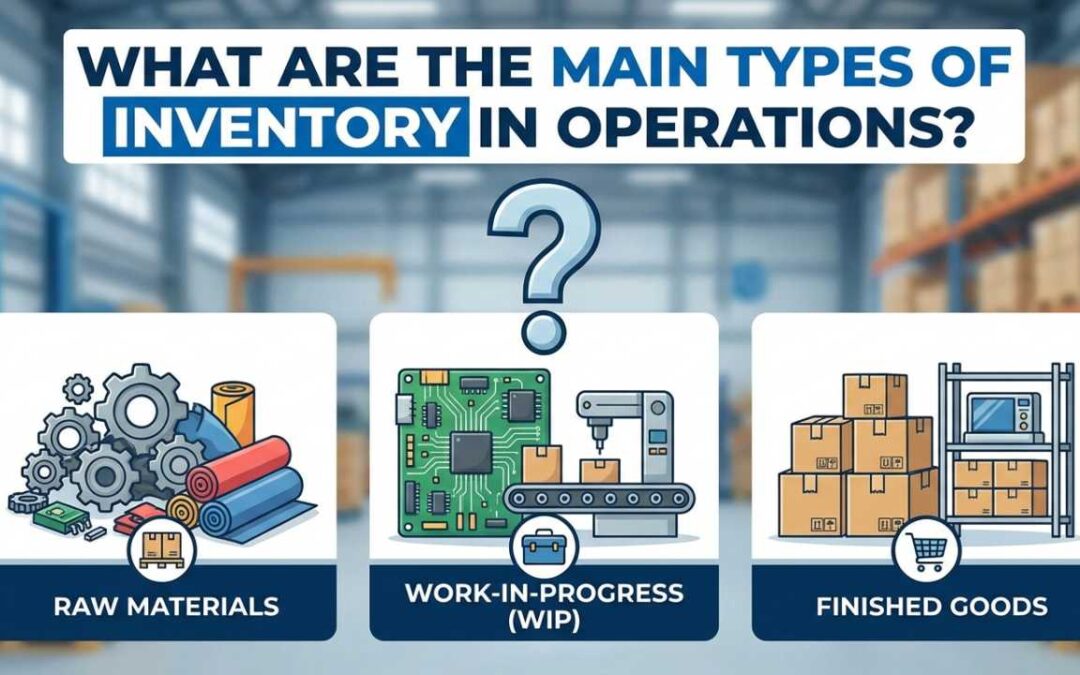
Understanding inventory types isn’t just warehouse trivia. It’s the key to operational control and stronger cash flow. Raw materials, work-in-progress, finished goods, and MRO supplies all serve different roles. Each type affects your supply chain in unique ways.
The old saying holds true: “Don’t dig a well when you’re already thirsty.” Smart inventory management starts with knowing what you have and why you have it.
Too much stock creates problems. Too little creates chaos. The balance is everything.
Excess Inventory and Inventory Operations Overview for Phoenix, AZ Businesses
Excess inventory is silent capital sitting on a shelf. It doesn’t complain. It just drains your budget month after month.
For Phoenix businesses, inventory carrying costs hit harder than most realize. You pay for warehouse storage costs, insurance, and handling. Then there’s the hidden risk of product decay. Arizona’s extreme heat can damage certain stock categories fast.
What causes excess inventory in Arizona distribution centers?
- Overbuying to hit supplier discounts
- Poor demand forecasting
- Canceled orders or returns
- Seasonal misjudgments
Trapped cash hurts growth. It blocks new investments and slows hiring. But there’s relief. With the right excess inventory solutions in Phoenix, you can free up capital and eliminate stock headaches for good.
Your stock should serve your business. It should never control it.
Definition and Purpose of Excess Inventory Management
Excess inventory management is the practice of identifying, reducing, and preventing stock that exceeds demand needs. It’s about keeping just enough inventory to serve customers without drowning in surplus.
Why does this matter? Because inventory waste prevention protects your margins. Every dollar locked in dead stock is a dollar not working for you. Smart inventory cost reduction strategies improve your turnover rate and strengthen your balance sheet.
The goal is clarity and control. Know what’s moving. Know what’s sitting. Then act fast.
Raw Materials Inventory in Phoenix, AZ Manufacturing Operations
Raw materials inventory is the foundation of every product you make. Without it, production stops. With too much, your cash sits idle.
Phoenix manufacturers face unique challenges. Supply chain disruptions at Arizona ports can delay deliveries for weeks. Procurement planning becomes critical when lead times stretch unexpectedly.
Too little raw stock kills production. Too much raw stock kills cash flow. The answer lies in smarter supplier materials inventory control.
What It Includes
Raw materials inventory covers everything needed before production starts.
- Steel, aluminum, and metals
- Plastics and polymers
- Textiles and fabrics
- Electronic components
- Chemicals and compounds
Know the difference between direct materials (become part of the product) and indirect materials (support production but don’t end up in the final item).
Purpose
The core purpose is production stability. Raw materials ensure your manufacturing supply flow never stops. They act as a buffer against supplier delays.
Linking raw materials to demand forecasting keeps stock lean. You buy what you need when you need it. This protects cash while maintaining continuity.
Key Risks
Raw materials come with real dangers.
- Supplier delays in Phoenix can stall entire production lines
- Raw material shortages spike prices overnight
- Price volatility erodes planned margins
- Heat exposure degrades sensitive materials
Think of bottlenecks like traffic jams. One blocked lane slows everything behind it.
Work-in-Progress (WIP) Inventory in Phoenix, AZ Production Facilities
WIP inventory is everything between raw materials and finished products. It’s partially completed goods moving through your production workflow.
Phoenix production facilities often struggle with WIP buildup. Too much WIP means money stuck in limbo. Too little means production gaps. The balance requires careful workflow monitoring.
Lean manufacturing principles teach us to minimize WIP. Keep items moving. Reduce wait times between stages. Every hour a product sits unfinished is an hour of lost value.
Without flow, nothing finishes. With flow, everything moves forward.
What It Includes
- Unfinished goods on the assembly line
- Products waiting for next production stage
- Items in quality inspection queues
- Subassemblies awaiting final integration
Purpose
WIP inventory enables smooth production flow. It bridges the gap between stages. It keeps workers busy while previous stages catch up.
Workflow balance matters most. The right amount of WIP prevents idle machines and workers. It absorbs small delays without stopping everything.
Key Risks
Are your production bottlenecks costing you more than you realize?
- Excess WIP costs tie up working capital
- Production bottlenecks create cascading delays
- Quality issues hide in large WIP piles
- Warehouse congestion increases handling costs
Finished Goods Inventory in Phoenix, AZ Warehousing and Distribution
Finished goods inventory represents completed products ready for customers. This is where production meets revenue. This is where all your work pays off.
Phoenix holds a strategic advantage. The city serves as a regional shipping hub linking West Coast ports to major markets. Your distribution center inventory can reach customers faster than competitors.
But finished goods carry risk. Stock that sits too long loses value. The old proverb warns: “A bird in hand is worth two in the bush.” Products sold today beat promises of tomorrow.
Move inventory fast. Protect revenue. Keep customers happy.
What It Includes
- Completed products inventory packaged for shipping
- Ready for sale stock in warehouse zones
- Items staged for retail distribution
- E-commerce orders awaiting fulfillment
Purpose
Finished goods exist for one reason: demand fulfillment. Every unit represents potential revenue waiting to convert.
Customer satisfaction depends on availability. When orders come in, products must ship fast. Stockouts damage relationships and push buyers to competitors.
Key Risks
Is unsold inventory quietly draining your profits?
- Product obsolescence destroys value
- Storage cost increases eat margins
- Fashion and tech items age fast
- Markdown pressure forces profit sacrifices
Finished goods are like ripe fruit. Wait too long and they spoil.
MRO Inventory in Phoenix, AZ Industrial Operations (Maintenance, Repair, and Operations)
MRO inventory is the heartbeat behind your machines. It keeps equipment running. It prevents costly downtime. It protects business stability.
Phoenix facilities often overstock MRO supplies. Why? Fear of heat-related equipment failure. Arizona summers push machinery hard. When temperatures soar, parts fail faster.
But overstocking MRO creates waste. Parts expire. Technology changes. That insurance inventory becomes dead weight.
Protect operations without overbuying. Stock smart, not scared.
What It Includes
- Spare parts inventory for critical equipment
- Safety equipment stock (PPE, fire supplies)
- Maintenance supplies (lubricants, filters)
- Repair tools and hardware
- Office and facility supplies
Know the difference between consumables (used regularly) and critical spares (rarely needed but essential).
Purpose
The primary goal is operational uptime. When machines break, MRO inventory gets them running again. Preventive maintenance inventory reduces surprise failures.
Equipment reliability depends on having the right parts at the right time. Track mean time between failures to predict needs accurately.
What does one hour of downtime really cost your operation?
Key Risks
- Emergency repair costs spike when critical parts run out
- Excess spare parts lock up capital
- Obsolete MRO stock wastes storage space
- Shelf-life degradation in extreme Arizona heat
Insurance turns into waste when parts expire before use.
Buffer and Safety Stock Inventory for Phoenix, AZ Supply Chains
Ever faced a stockout when demand spikes without warning?
Safety stock inventory acts as your insurance policy. It protects against demand fluctuation control issues and supply chain disruption. It keeps service levels high when chaos strikes.
Phoenix supply chains face unique pressures. West Coast port delays ripple through Arizona. Weather disrupts trucking. Safety stock absorbs these shocks.
Calculate safety stock using demand variability and lead time. The formula protects without over-investing. Strong supply chain confidence starts with smart buffers.
Without buffers, surprises become emergencies. With buffers, surprises stay manageable.
What It Includes
- Extra stock reserves beyond normal demand
- Emergency inventory supply for critical SKUs
- Lead time buffer stock
- Demand variability cushion
Purpose
Safety stock provides demand spike protection. It prevents stockouts during unexpected surges. It maintains service levels when suppliers fail.
Think of it like shock absorbers on a car. They smooth out the bumps so the ride stays comfortable.
Key Risks
- Overstock risk from excessive buffer levels
- Inaccurate forecasting leads to wrong amounts
- Tied-up capital reduces financial flexibility
- Storage costs multiply with excess buffers
The proverb says: “Hope for the best, prepare for the worst.” But don’t over-prepare.
Transit (Pipeline) Inventory Across Phoenix, AZ Logistics Networks
Pipeline inventory represents goods in motion. It’s inventory traveling between locations. It’s out of your hands but still on your books.
Phoenix serves as a critical logistics hub. West Coast ports connect to distribution centers here before reaching customers nationwide. Your transit inventory management affects delivery speed and customer satisfaction.
Visibility is everything. You can’t control what you can’t see. Modern freight inventory tracking closes these gaps and boosts operational control.
Inventory moving is inventory working. Inventory invisible is inventory at risk.
What It Includes
- Shipments in transit from suppliers
- Goods between warehouses
- Products in customs clearance
- Freight moving to distribution points
Purpose
Pipeline inventory enables delivery scheduling and distribution coordination. It fills the gap between order placement and arrival.
Tracking transit inventory improves planning. You know what’s coming and when. You prepare warehouse space and labor accordingly.
Key Risks
Do you really know where your inventory is right now?
- Shipping delays in Phoenix disrupt schedules
- Lost freight inventory creates financial losses
- Inventory visibility gaps cause planning failures
- Damage during transit requires claims and replacements
Anticipation Inventory for Seasonal Demand in Phoenix, AZ
Have you ever stocked up for peak season only to be stuck with leftovers?
Anticipation inventory planning means building stock before expected demand surges. It prepares you for holiday inventory management and seasonal peaks.
Phoenix sees unique seasonal patterns. Winter tourism brings demand spikes. Summer cooling products surge. Spring training baseball draws crowds. Each cycle requires different stock strategies.
The opportunity is real. The risk is equally real. Build too much, and you’re stuck with markdowns. Build too little, and competitors win.
Timing is a tightrope. One side is profit. The other is loss.
What It Includes
- Seasonal stock buildup before peak periods
- Peak inventory levels for high-demand windows
- Event-based inventory for local happenings
- Promotional stock for planned campaigns
Purpose
The goal is to meet seasonal demand without stockouts. Capture every sale during high-traffic periods. Maximize sales periods while competitors scramble.
Prevention beats reaction. Stock early and avoid rush shipping costs.
Key Risks
- Leftover seasonal stock requires markdowns
- Inaccurate seasonal forecasts create waste
- Inventory markdown losses hurt margins
- Storage costs climb for unsold items
Remember: “Strike while the iron is hot.” But know when the heat fades.
Decoupling Inventory in Phoenix, AZ Manufacturing Workflows
Ever watched one delayed component shut down an entire production line?
Decoupling inventory separates production stages. It breaks dependencies between processes. It contains delays before they spread.
Phoenix manufacturers use decoupling points based on bottleneck analysis and throughput metrics. Place buffer stock between dependent processes. Protect downstream operations from upstream problems.
Without decoupling, one delay stops everything. With it, delays stay contained.
What It Includes
- Stage separation inventory between processes
- Independent production stock at key points
- Buffering stock for variable-speed stations
- Strategic reserves at constraint points
Purpose
Workflow independence drives efficiency. Each stage runs at its own pace. Process efficiency improves when stations don’t wait for each other.
Think of it like shock absorbers in a machine. They isolate vibrations so nothing shakes the whole system.
Key Risks
- Excess holding costs from over-buffering
- Hidden inefficiencies mask deeper problems
- Overstock inventory in Phoenix ties up capital
- False security delays root cause fixes
As the proverb says: “Too much of a good thing becomes a bad thing.”
Secondary and Strategic Inventory Types Used by Phoenix, AZ Businesses
Beyond the core categories, strategic inventory types help mature operations compete smarter. Business inventory classification drives better decisions and higher margins.
Are you treating all inventory the same? That’s leaving money on the table.
Segmentation improves inventory turnover performance. Different stock types need different rules. Apply the right strategy to each category.
Not all inventory is equal. Some makes money. Some costs money. Know the difference.
Cycle Inventory
Cycle stock is inventory ordered in batches to meet regular demand between replenishment orders. It follows predictable rhythms.
Economic Order Quantity principles guide cycle inventory. Order the right amount at the right time. Balance ordering costs against holding costs. A Phoenix retailer might reorder weekly. A manufacturer might order monthly.
Seasonal Inventory
Seasonal stock management differs from general anticipation inventory. It targets specific calendar windows with known demand patterns.
Arizona tourism creates predictable cycles. Winter visitors spike demand for hospitality supplies. Summer drives air conditioning product sales. Plan for what you know is coming.
Are you tracking last year’s seasonal patterns to improve this year’s orders?
Obsolete or Dead Stock
Dead inventory in Phoenix costs money every day. It takes space. It ties up capital. It never sells.
Obsolete stock management requires honest assessment. Run quarterly SKU audits. Identify items with no sales in 180 days. Act fast before value drops further.
Every warehouse has an inventory graveyard. The question is how big you let it grow.
Service Inventory
Service based inventory represents capacity in service operations. It’s intangible but real. It’s the seats available on a flight or hours in a technician’s schedule.
Spare capacity inventory connects to workforce scheduling. Unused service time equals lost revenue. Unlike physical goods, you can’t store today’s empty appointment slots for tomorrow.
Inventory Systems and Management Methods Used in Phoenix, AZ Operations
How you track inventory shapes everything else. The right system eliminates stock headaches. The wrong one multiplies them.
Inventory management software in Phoenix ranges from basic spreadsheets to sophisticated ERP integration. Your choice depends on scale, complexity, and growth plans.
Are you still counting stock by hand while competitors use real-time tracking?
Manual tracking creates errors. Manual errors create chaos. Automated systems boost operational control and free teams for higher-value work.
Periodic Inventory System
The periodic inventory method counts stock at scheduled intervals. Weekly, monthly, or quarterly audits update records.
This approach suits small Phoenix retailers with limited SKUs. Manual inventory counts cost less upfront. But they provide only snapshot visibility, not continuous insight.
Perpetual Inventory System
Perpetual inventory tracking updates records instantly with every transaction. Buy or sell, the system knows immediately.
Real time inventory control integrates with POS systems. Scan a sale; stock drops. Receive a shipment; stock rises. Always accurate. Always current.
Old systems show where you were. Modern systems show where you are.
RFID Inventory Systems
RFID inventory in Phoenix uses radio waves to track tagged items automatically. No line-of-sight needed. No manual scanning required.
Asset tracking technology reduces shrinkage dramatically. Walk through a doorway, and the system logs every item. RFID makes invisible inventory visible.
Cloud-Based Inventory Systems
Cloud inventory software in Phoenix provides access from anywhere. Check stock from your phone. Update records from the warehouse floor.
SaaS inventory systems scale easily. Add locations without new servers. Multi-location control from one dashboard.
Why tie yourself to one office when your business spans multiple sites?
On-Premise Inventory Systems
On premise inventory software runs on your own servers. Data stays in-house. Control remains local.
Compliance-sensitive industries often prefer local server inventory systems. Healthcare, defense, and finance may require this approach.
Cloud offers convenience. On-premise offers control. Choose based on what matters most.
Key Strategies to Reduce Excess Inventory in Phoenix, AZ
Staring at slow-moving stock that refuses to sell?
You’re not stuck. Overstock reduction strategies can free up trapped cash and regain warehouse space. The key is acting fast before value drops further.
Use inventory aging reports segmented by SKU profitability. Know which items drain resources. Prioritize those for action.
Inventory should generate profit, not collect dust.
Discounts & Promotions
Inventory clearance sales create urgency. Limited-time offers push buyers to act. Promotional inventory reduction moves stock that otherwise sits.
Tie promotions to Phoenix events. Spring training sales. Monsoon season specials. Local relevance drives response.
Sometimes selling at a discount beats holding at full price.
Product Bundling
Bundle slow moving inventory with popular items. Create value packages that customers want. Cross sell inventory by combining related products.
Pair struggling products with bestsellers. Like a good dance partner, one leads while the other follows.
Liquidation & Returns
Inventory liquidation services in Phoenix offer exit strategies for dead stock. Bulk inventory resale recovers partial value.
- B2B liquidation buyers in Arizona
- Online liquidation marketplaces
- Reverse logistics for supplier returns
- Consignment arrangements
Recovery beats zero. Action beats paralysis.
Internal Repurposing
Repurpose excess stock across departments or channels. Warehouse stock redistribution finds new homes for old inventory.
One division’s surplus might be another’s need. Check alternative sales channels before writing items off.
Charitable Donations
Donate excess inventory and capture tax benefits. Charitable inventory write-offs reduce losses while helping the community.
Section 170(e)(3) offers tax incentives for qualified donations. Turn a loss into a legacy.
When you can’t sell it, give it. Good deeds sometimes come with good tax breaks.
Preventing Excess Inventory for Phoenix, AZ Warehouses and Retailers
Prevention beats cleanup. Always.
Warehouse inventory optimization starts before products arrive. Retail stock control in Phoenix requires forward thinking, not reactive scrambling.
Are you solving yesterday’s problems or preventing tomorrow’s?
Use demand forecasting software tied to real sales history. Let data guide decisions. Build stronger supply chain confidence through proactive planning.
The fire you prevent costs less than the fire you fight.
Improved Forecasting
Demand forecasting in Phoenix combines historical data with market trends. Predictive inventory analytics reveal patterns invisible to gut instinct.
Incorporate seasonality and lead time variability. Adjust for local events. Phoenix tourism cycles affect many industries.
Data doesn’t guess. Data knows.
Better Communication
Supplier communication strategy aligns all parties. Cross department planning prevents ordering conflicts. Inventory collaboration tools keep everyone informed.
Shared dashboards create transparency. When sales sees what operations sees, mistakes drop. Information silos create excess inventory.
Leverage Technology
Inventory automation tools reduce human error. ERP integration in Phoenix connects purchasing, sales, and warehouse operations.
Integrate POS and accounting systems. Let data flow automatically. Manual handoffs create gaps where errors hide.
Why pay people to do what machines do better?
Shorten Stock Cycles
Faster inventory turnover means less money sitting idle. Reduce stock cycle time by ordering smaller quantities more often.
Track inventory turnover ratio monthly. Compare against industry benchmarks. Lean inventory management targets higher turns.
Fast inventory makes money. Slow inventory costs money.
Impact of Poor Excess Inventory Management on Phoenix, AZ Businesses
What happens when excess inventory goes unchecked?
The consequences compound. Inventory carrying costs in Arizona drain profits month after month. Warehouse inefficiency steals focus from growth opportunities.
Excess inventory distorts financial ratios. It makes healthy companies look weak. Banks notice. Investors notice.
The cost of inaction always exceeds the cost of action. Eventually.
Frozen Cash Flow
Inventory tied up capital can’t fund payroll. It can’t buy new equipment. It can’t seize opportunities.
Working capital reduction affects liquidity ratios. Cash flow constraints limit growth options. Money locked in shelves doesn’t pay bills.
Ever watched an opportunity pass because your cash was trapped in slow stock?
Increased Warehousing Costs
Warehouse storage costs in Phoenix add up fast. Commercial real estate here isn’t cheap. Every square foot holding dead stock costs money.
- Rent and utilities for excess space
- Labor for handling and counting
- Insurance on stored goods
- Space utilization issues blocking efficiency
Product Expiration or Obsolescence
Expired inventory loss represents total write-offs. Obsolete product write-offs erase potential profits entirely.
Technology moves fast. Fashion moves faster. Products that wait too long become unsellable. Inventory depreciation is real and relentless.
Implement SKU aging reports every 90 days. Catch problems early.
The old saying warns: “He who hesitates is lost.” In inventory, delay means decay.
Whether you need to liquidate dead stock, optimize your supply chain, or find better inventory solutions, Jay Hohel Inc is here to help Phoenix businesses like yours.
Ready to Free Up Trapped Capital?
Jay Hohel Inc specializes in helping Phoenix businesses turn excess inventory into cash. We buy surplus stock, scrap materials, and overstock inventory fast.
No more watching products collect dust. No more frozen cash flow. Get real value for your excess inventory today.
Visit Us: 3334 W McDowell Rd Unit 17, Phoenix, AZ 85009
Call Now: (602) 272-4033
Email: JayHoehlinc@gmail.com
Website: https://jhiescrap.com
[GET A FREE QUOTE TODAY CALL (602) 272-4033]
Don’t let excess inventory hold your business back. Contact Jay Hohel Inc now and turn your surplus into success.