
What Are the 30 Output Devices?
Every time you watch a video on your phone, hear a notification sound, or print a document, you are using an output device. But have you ever stopped to think about how many different output devices exist? These are the tools that let your computer talk to you. Think of them as the voice of the computer, turning invisible data into something you can see, hear, or touch. In this complete guide, you will discover all 30 output devices explained in a simple, easy-to-understand way.
What Are the 30 Output Devices in Phoenix, AZ?
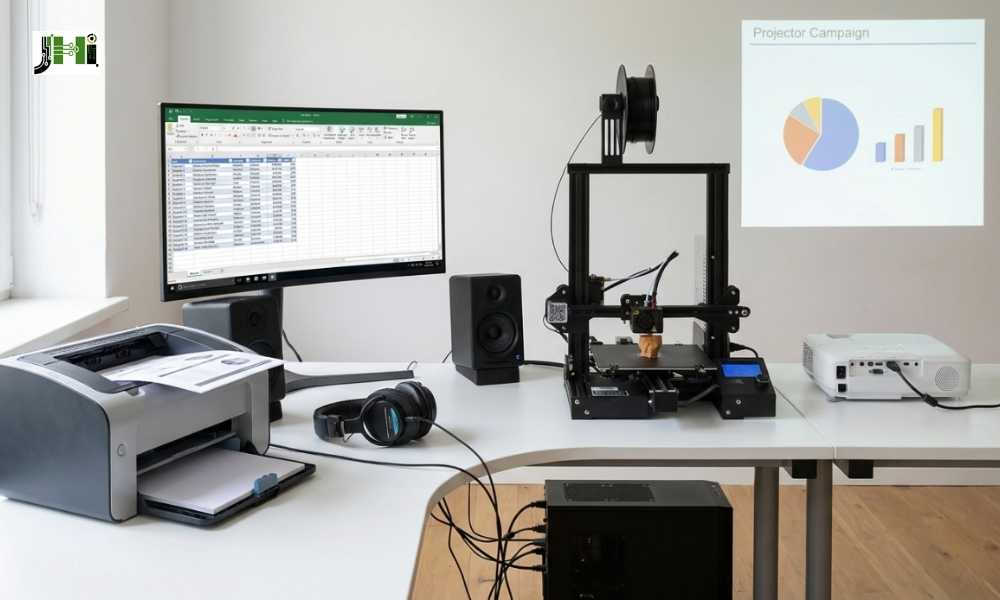
Whether you are a student in Phoenix or a professional upgrading your tech setup, knowing the full list of output devices helps you make smarter decisions. Output devices are not just about screens. They include sound systems, printers, wearable displays, and even devices that let you feel digital feedback through touch. In this guide, we have organized all 30 output devices into clear categories: visual devices like monitors and projectors, audio devices like speakers and headphones, and physical output devices like printers and braille embossers. By the end, you will have a complete picture of the technology that brings computer data to life.
Overview of Output Devices
An output device is any piece of hardware that receives data from a computer and translates it into a form humans can understand. If an input device is how you ask a question, an output device is how the computer gives you the answer. For example, when you type a search query using your keyboard (input), the results appear on your monitor (output). Understanding this simple relationship makes it easy to identify output devices all around you.
Understanding Output Devices in Phoenix, AZ
Output devices are part of your daily routine, whether you realize it or not. From the moment you check the time on your smartwatch to watching the evening news on your TV, you interact with output technology constantly. In homes, offices, classrooms, and even cars across Phoenix, output devices deliver information in visual, audio, and physical formats. Understanding how they work does not require a computer science degree. It simply takes a willingness to look at familiar gadgets from a new perspective.
Definition of Output Devices
An output device is hardware that converts processed computer data into a human-readable or human-perceptible form. In plain terms, it is any device that shows, plays, or prints information for you. A monitor displaying a webpage is one of the most common examples.
Importance of Output Devices in Computing
Without output devices, a computer would process information but have no way to share it with you. Here is why they matter:
- They let you see results on screens and displays, making work and entertainment possible.
- They allow you to hear audio content like music, alerts, and voice calls.
- They produce physical copies of documents, designs, and photos through printing.
- They support accessibility, giving visually impaired users braille output and speech synthesis.
Without output, your computer would be completely silent and invisible.
What Are Output Devices?
In the simplest terms, output devices are the tools a computer uses to communicate its results to you. Have you ever wondered what happens after you click “print”? The printer, an output device, takes digital data and turns it into ink on paper. Every screen you look at, every sound you hear from a device, and every page you print is powered by an output device working behind the scenes.
Explaining Output Devices Simply
Think of output devices as translators. Your computer speaks in code, and these devices translate that code into images, sounds, or printed pages that make sense to you. A speaker translates digital signals into music, and a monitor translates data into visuals.
Purpose of Output Devices
Output devices serve one fundamental purpose: delivering processed data to the user. They show you graphics on a display, print your reports on paper, and play your favorite podcast through speakers. In short, they show, they print, and they speak. Without them, all the computing power in the world would remain locked inside the machine with no way to reach you.
Types of Output Formats (Text, Visuals, Audio, Physical Copies)
Computers deliver output in several different ways, much like different languages a computer can speak:
- Text: Characters and words displayed on a screen or printed on paper, such as documents and emails.
- Visuals: Images, videos, and graphics shown on monitors, TVs, and projectors.
- Audio: Sound output through speakers, headphones, or synthesizers, including music and voice.
- Physical Copies: Tangible output you can hold, such as printed pages, 3D-printed objects, and braille sheets.
Each format serves a different need, ensuring that information reaches you in the most useful way possible.
Now that you understand what output devices are, why they matter, and the different formats they use, you are ready to explore the complete list. In the sections ahead, you will learn about each of the 30 output devices, organized by category. You will see them everywhere once you know what to look for.
Visual Output Devices (Screens and Display) in Phoenix, AZ
Screens and displays are the output devices you interact with most. From the phone in your pocket to the monitor on your desk, visual output devices are the eyes of a computer, showing you everything from text messages to full-length movies. In Phoenix, whether you are setting up a home office or outfitting a classroom, understanding the range of display technologies helps you choose the right screen for personal use or advanced professional applications.
1. Monitor
The monitor is the most common output device connected to a desktop computer. It displays text, images, videos, and everything you do on your PC. Modern monitors come in various sizes and resolutions, from basic HD screens to ultra-high-definition 4K displays that deliver crisp, detailed visuals for work and entertainment.
2. LCD Display
LCD stands for Liquid Crystal Display. This technology replaced the old, bulky CRT monitors with thinner, lighter screens that use less energy. LCD displays are found in laptops, desktop monitors, and many handheld devices, offering clear images at an affordable price point.
3. LED Display
LED displays are an upgrade over standard LCDs. They use light-emitting diodes for backlighting, which produces brighter images and deeper contrast while consuming less power. LED screens are now the standard in most modern televisions and computer monitors because of their energy efficiency and vivid color output.
4. CRT Monitor
The CRT, or Cathode Ray Tube monitor, is the large, boxy screen that dominated desktops for decades. While heavy and bulky compared to modern flat panels, CRT monitors were reliable workhorses. They have largely been replaced by LCD and LED technology, but they hold a nostalgic place in computing history.
5. OLED Display
OLED stands for Organic Light-Emitting Diode. Unlike LCD screens, each pixel in an OLED display produces its own light, which means true blacks and vivid colors. OLED technology is found in premium smartphones, high-end TVs, and professional monitors where color accuracy and contrast are essential.
6. Touchscreen Display
A touchscreen display is unique because it serves as both an input and output device. It shows you visual information and lets you interact directly by tapping, swiping, and pinching. You tap, and it responds. Touchscreens are everywhere, from smartphones and tablets to ATMs and self-checkout kiosks.
7. VR Headset
A Virtual Reality headset lets you step inside the screen. It wraps a display around your field of vision, creating a fully immersive 360-degree experience. VR headsets are used for gaming, virtual tours, employee training simulations, and even therapy. They represent one of the most exciting advances in output technology.
8. Smartwatch
A smartwatch is a compact display you wear on your wrist. It outputs notifications, health data, time, and even navigation directions right to your arm. Despite its small screen, a smartwatch delivers a surprising amount of useful information throughout the day.
9. Smart Glasses
Smart glasses project digital information directly into your line of sight using augmented reality technology. Imagine seeing directions, messages, or real-time data overlaid on the world around you. While still evolving, smart glasses hint at a future where screens are invisible, and output is seamlessly woven into everyday life.
10. TV (Television)
The television is one of the most familiar output devices in any home. Modern smart TVs not only display broadcast content but also stream apps, browse the web, and mirror your phone screen. As a visual output device, the TV remains the centerpiece of home entertainment.
11. Game Console Display
Game consoles like the PlayStation and Xbox output high-quality graphics to your TV or monitor. The console processes game data and sends rich visual output, including detailed environments, characters, and special effects, delivering an immersive and fun gaming experience.
12. Holographic Display
A holographic display creates three-dimensional images that appear to float in space without requiring special glasses. This technology is still emerging, but it holds enormous potential for medical imaging, product design, and entertainment. Imagine viewing a 3D model you can walk around, all projected from a screen.
13. Video Card (GPU)
The GPU, or Graphics Processing Unit, is the hidden engine behind every visual you see on your screen. While you do not look at the GPU directly, it processes and renders all images, videos, and animations before sending them to your monitor. Without a GPU, your display would have nothing to show. It is a behind-the-scenes output device that makes visual computing possible.
14. Head-Up Display (HUD)
A head-up display projects key information, such as speed, navigation, and alerts, onto a transparent surface in front of the driver. HUDs are increasingly common in modern vehicles, allowing drivers to see critical data without taking their eyes off the road, improving both convenience and safety.
Visual Output Devices (Projectors and Specialized) in Phoenix, AZ
Beyond personal screens, a whole category of output devices is designed to project or display information for larger audiences. You have seen them in classrooms, conference rooms, shopping malls, and public events across Phoenix. These projector and specialized display devices turn computers into powerful presentation and communication tools for business, education, and public information.
15. Projector
A projector takes the image from your computer and enlarges it onto a wall or screen, making it visible to a large audience. Projectors are essential in classrooms, boardrooms, and home theaters where a big-screen experience is needed without the cost of an equally large display.
16. LCD/LED Projector
LCD and LED projectors are the most common types available today. LCD projectors pass light through liquid crystal panels to create an image, while LED projectors use light-emitting diodes as the light source, offering longer lamp life and lower energy use. LED models tend to be brighter and more portable.
17. Data Projector
A data projector is specifically designed for presentations. It connects to a computer or laptop and projects slides, spreadsheets, and other business content onto a screen. It is a staple in offices and conference rooms where sharing visual data with a group is a daily requirement.
18. Plotter
A plotter is a specialized output device that produces large-scale drawings and designs. Architects, engineers, and graphic designers use plotters to print blueprints, maps, and detailed technical drawings that would be too large for a standard printer. Plotters use pens or inkjet technology to achieve precise, high-quality output.
19. Digital Signage
Digital signage refers to electronic displays used to show advertisements, menus, schedules, and public information. You see them in malls, airports, restaurants, and along highways. These screens are managed remotely and can update content instantly, making them a flexible and eye-catching output device.
20. Microfilm Reader
A microfilm reader is an older but still useful device found primarily in libraries and archives. It magnifies and displays information stored on tiny rolls of film. While digital storage has reduced its everyday use, microfilm readers remain important for accessing historical records and documents.
21. Interactive Whiteboard
An interactive whiteboard combines a display with touch input, allowing teachers and presenters to write, draw, and interact with digital content in real time. It is widely used in classrooms and training rooms. Touch and learn takes on a literal meaning with this device, making lessons engaging and collaborative.
Audio Output Devices (Sound) in Phoenix, AZ
You hear output devices every day, from the alarm on your phone to music streaming through your car speakers. Sound is the voice of the computer, delivering alerts, music, voice calls, and audio content. Audio output devices range from tiny earbuds to powerful surround-sound systems, and each one converts digital signals into the sounds that keep you connected and entertained.
22. Speakers
Speakers are the most basic and widely used audio output device. They convert electrical signals into sound waves, letting you hear music, videos, system alerts, and voice calls. Desktop speakers, laptop speakers, and standalone units all serve the same fundamental purpose: making the computer audible.
23. Headphones
Headphones deliver audio directly to your ears, providing a private listening experience. They range from simple wired models to advanced noise-canceling wireless sets. Only you can hear the output, making headphones ideal for focused work, commuting, and late-night listening without disturbing others.
24. Headset
A headset combines headphones with a built-in microphone, making it both an output and an input device. Headsets are popular for gaming, video calls, and customer service work. They deliver clear audio output while allowing you to speak at the same time.
25. Sound Card
A sound card is an internal component that processes digital audio data and converts it into analog signals your speakers or headphones can play. While most computers have built-in audio, dedicated sound cards provide higher quality output with richer detail and less distortion, which matters for music production and gaming.
26. Speech Synthesizer
A speech synthesizer converts text into spoken words. It is a vital accessibility tool that allows visually impaired users and people with reading difficulties to interact with computers. Virtual assistants like Siri and Alexa also rely on speech synthesis to respond to your questions out loud.
27. Earbuds
Earbuds are compact, lightweight headphones that fit inside the ear. Their small size makes them highly portable, perfect for workouts, commutes, and everyday use. Wireless earbuds have become especially popular, offering convenient audio output without any cords.
28. Soundbar
A soundbar is a slim, elongated speaker designed to sit below or in front of a TV. It dramatically improves the audio quality of your television compared to built-in TV speakers. Soundbars are a popular choice for home entertainment setups where better sound is wanted without a full surround system.
29. Bluetooth Speakers
Bluetooth speakers connect wirelessly to your phone, tablet, or computer, giving you the freedom to play music or audio content anywhere. They are portable, rechargeable, and come in all sizes. Wireless freedom is the defining benefit, letting you enjoy output audio without being tethered to a cable.
Physical and Hard Copy Output Devices in Phoenix, AZ
Not all output stays on a screen. Some devices give you something you can hold in your hands. Physical output devices like printers and braille embossers take digital data and create tangible results, from printed documents to three-dimensional objects. The key difference is simple: you see it on screen with a display, but you hold it in your hand with a hard copy device. In Phoenix offices, schools, and design studios, hard copy output devices remain essential.
30. Printer
The printer is the most common hard copy output device. It takes digital documents, photos, and designs and produces them on paper. From simple homework assignments to professional reports, printers turn screen content into something physical you can file, share, or mail.
Inkjet Printer
An inkjet printer works by spraying tiny droplets of ink onto paper. It excels at producing color documents and photographs with smooth gradients and rich detail. Inkjet printers are affordable and widely used in homes and small offices for everyday printing needs.
Laser Printer
A laser printer uses a laser beam and toner powder to produce sharp text and graphics at high speed. Laser printers are the preferred choice for busy offices because they print large volumes quickly and the cost per page is lower than inkjet models.
Dot Matrix Printer
A dot matrix printer creates characters by striking an ink ribbon against paper using tiny pins. While largely outdated for general use, dot matrix printers are still used for printing multipart forms and receipts in certain industries because they can print through carbon copy layers.
3D Printer
A 3D printer creates solid, three-dimensional objects from digital designs. Instead of printing ink on paper, it builds objects layer by layer using materials like plastic or resin. It is used for prototyping, manufacturing, education, and even medical applications. With a 3D printer, you print objects, not paper.
Fax Machine
A fax machine scans a printed document and transmits it over a phone line to another fax machine, which prints a copy. While largely replaced by email and digital scanning, fax machines are still used in legal and medical offices where document transmission protocols remain standard.
Braille Reader
A braille reader, also called a refreshable braille display, translates on-screen text into braille characters that a visually impaired user can feel with their fingertips. It updates in real time as the user navigates through content, providing an essential bridge between digital information and tactile reading.
Braille Embosser
A braille embosser is like a printer for braille. It takes digital text and presses raised dot patterns onto paper, producing physical braille documents. Schools and organizations for the visually impaired use braille embossers to create textbooks, labels, and educational materials.
Visual and Multimedia Output Devices in Phoenix, AZ
Some output devices combine visual and multimedia capabilities to deliver richer experiences. You watch, play, and interact with these daily, whether streaming a show, playing a game, or checking a smart display in your kitchen. These devices bring digital content to life, blending screens with interactivity and multimedia features that go beyond simple display.
Television (TV) as Multimedia Device
Modern smart TVs go far beyond traditional broadcast. They stream content from apps, display video calls, mirror your phone, and even run games. As a multimedia output device, the TV in your living room is a versatile hub for entertainment, communication, and information.
VR Headsets in Multimedia
Beyond gaming, VR headsets are used for virtual training, virtual travel experiences, architectural walkthroughs, and therapeutic applications. They output immersive visual and audio content that places you inside a completely digital environment, offering a level of engagement no traditional screen can match.
AR Devices
Augmented reality devices overlay digital content onto the real world. Using your smartphone camera or dedicated AR glasses, you can see information, animations, and interactive elements layered on top of your physical surroundings. AR is used in navigation, retail, education, and gaming applications.
Digital Signage Displays
Large-format digital signage displays are used for advertising, wayfinding, and public information. You see them in malls, airports, stadiums, and along busy streets in Phoenix. They display dynamic, remotely updated content that captures attention far more effectively than static signs.
Smart Displays
Smart displays combine a touchscreen with a voice assistant, giving you hands-free control over your home, calendar, music, and video calls. Devices like the Amazon Echo Show and Google Nest Hub are popular examples, serving as interactive multimedia output devices in kitchens and living rooms.
Specialized Output Devices in Phoenix, AZ
Some output devices are less common but serve critical roles in specific fields. These are the devices you may not notice every day, but they matter significantly in accessibility, navigation, safety, and advertising. Not common in every household, but very powerful in the right context, specialized output devices expand what computers can communicate.
Braille Display
A braille display converts on-screen text into tactile braille characters in real time. It connects to a computer or smartphone and allows visually impaired users to read emails, browse websites, and work with documents through touch. It is an indispensable accessibility output device.
Haptic Feedback Devices
Haptic devices let you feel digital output. When your phone vibrates for a notification or a game controller rumbles during action, that is haptic feedback. These devices add a tactile dimension to computing, letting you literally feel the output and creating a more immersive experience.
GPS Devices
GPS devices receive satellite signals and output your location, route directions, and estimated travel times on a screen. Many also provide voice-guided navigation, combining visual and audio output. GPS is critical for driving, hiking, fleet management, and emergency services.
LED Indicators
LED indicators are the simplest form of output device. A tiny light on your laptop showing it is charging, or a blinking LED on your router, communicates status information at a glance. While basic, they serve as quick, silent signals that keep you informed about device states.
Digital Billboards
Digital billboards are large-scale outdoor displays used for advertising and public announcements. They are especially prominent along highways and in commercial areas across Phoenix. Unlike traditional billboards, digital versions rotate multiple ads and can be updated remotely in real time.
Additional Output Devices in Phoenix, AZ
To complete the full picture of output technology, here are a few more devices that round out the list. Some overlap with earlier categories but serve distinct use cases. Now you can see the full range of ways computers deliver output.
E-Book Reader
An e-book reader like the Amazon Kindle uses a special e-ink display to show digital books and documents. The screen mimics the look of real paper, reducing eye strain during long reading sessions. It is a portable, lightweight output device built for one purpose: comfortable reading.
Smartwatch Display
The smartwatch display delivers a constant stream of notifications, fitness data, weather updates, and quick messages to your wrist. Its small screen packs a lot of output into a compact, wearable form, keeping you informed without pulling out your phone.
Game Console Output
Game consoles output detailed graphics, sound effects, and music through your TV or monitor. Modern consoles can render cinematic visuals in real time, making gaming one of the most demanding and impressive demonstrations of output technology in action.
Car Infotainment Display
The infotainment display in modern vehicles outputs navigation maps, music controls, phone call information, vehicle diagnostics, and even streaming video when parked. It has become the central output hub inside the car, combining multiple functions into a single touchscreen.
Categories of Output Devices in Phoenix, AZ
With all 30 devices covered, it helps to step back and see how they fit into just two main categories. This simple classification makes everything easier to understand and remember. The distinction comes down to whether you see the output or hold it.
Categories of Output Devices
Output devices are generally divided into two main groups based on the type of output they produce. Understanding these two categories gives you a clear framework for classifying any output device you encounter.
Soft Copy Output Devices
Soft copy output devices produce output you can see or hear but cannot physically hold. Monitors, projectors, speakers, and headphones all fall into this category. The output exists as images on a screen or sound from a speaker and disappears when the device is turned off.
Hard Copy Output Devices
Hard copy output devices produce tangible, physical output. Printers, plotters, braille embossers, and 3D printers all create something you can pick up and keep. See it, print it, hold it, that is the essence of hard copy output.
Applications of Output Devices in Phoenix, AZ
Output devices are not just technical components. They are practical tools embedded in every aspect of daily life. You already use them every day at home, at work, and in public spaces. Understanding their applications helps you appreciate their value and choose the right devices for your needs.
Applications of Output Devices
Output devices find applications across nearly every field, from healthcare and education to entertainment and transportation. Wherever data needs to be communicated to a person, an output device is doing the work.
Home and Personal Use
At home, output devices are the backbone of entertainment and communication. Your TV streams movies, your speakers play music, your phone displays messages, and your printer produces school projects. Every screen, speaker, and printer in your home is an output device at work.
Business and Office Use
In the workplace, output devices drive productivity. Monitors display spreadsheets and reports, projectors share presentations with teams, printers produce hard copies for filing, and headsets facilitate conference calls. Businesses in Phoenix rely on a wide mix of output devices to keep operations running smoothly.
Industrial and Commercial Use
On a larger scale, industries use plotters for engineering drawings, digital billboards for advertising, digital signage for public communication, and specialized displays for monitoring manufacturing processes. Commercial output devices operate at a scale and durability level that exceeds typical consumer products.
Advanced Learning Topics for Output Devices in Phoenix, AZ
Now that you know all 30 output devices, you might want to go deeper into how they connect to the broader computing landscape. The following topics build on what you have learned and open doors to a more complete understanding of computer hardware and human-computer interaction.
Input vs Output Devices
Input devices send data into the computer, while output devices deliver data from the computer to you. A keyboard is input; a monitor is output. A microphone is input; a speaker is output. Understanding this pair helps you see how computers form a two-way conversation with users.
Computer Hardware Basics
Output devices are one piece of the larger hardware puzzle. The CPU processes data; input devices collect data; storage devices store data; and output devices present data. Learning how these components work together gives you a solid foundation in computer hardware basics.
Human-Computer Interaction
Human-computer interaction studies how people and computers communicate. Output devices are half of that conversation. Every time a screen displays a result or a speaker plays an alert, the computer is responding to you. Think of it as a continuous conversation between human and machine, with output devices delivering the computer’s side of the dialogue.
Your Complete Guide to the 30 Output Devices
From monitors and speakers to 3D printers and braille displays, you have now explored all 30 output devices that power the way we see, hear, and interact with digital information. These devices are not just technical jargon. They are the screens you watch, the speakers you listen through, the printers you rely on, and the wearable displays that keep you connected every single day.
Understanding output devices gives you the confidence to make better technology decisions, whether you are upgrading your home setup, equipping an office in Phoenix, or simply satisfying your curiosity about how computers communicate. You will see them everywhere now, and you will know exactly what each one does.
Whether you are managing surplus electronics, upgrading old IT equipment, or responsibly recycling outdated output devices, Jay Hoehl Inc. has been helping businesses and individuals in Phoenix since 1980. We specialize in IT asset disposition, excess inventory management, electronics surplus, and e-waste recycling.
Ready to Recycle or Upgrade Your Output Devices?
Jay Hoehl Inc. — Phoenix’s Trusted Electronics Surplus & IT Asset Disposition Experts Since 1980
|
📞 Call Us |
|
|
📍 Visit Us 3334 W McDowell Rd Unit 17, Phoenix, AZ 85009 |
🌐 Website |
🛡️ BBB A+ Rated • Serving Phoenix Since 1980