
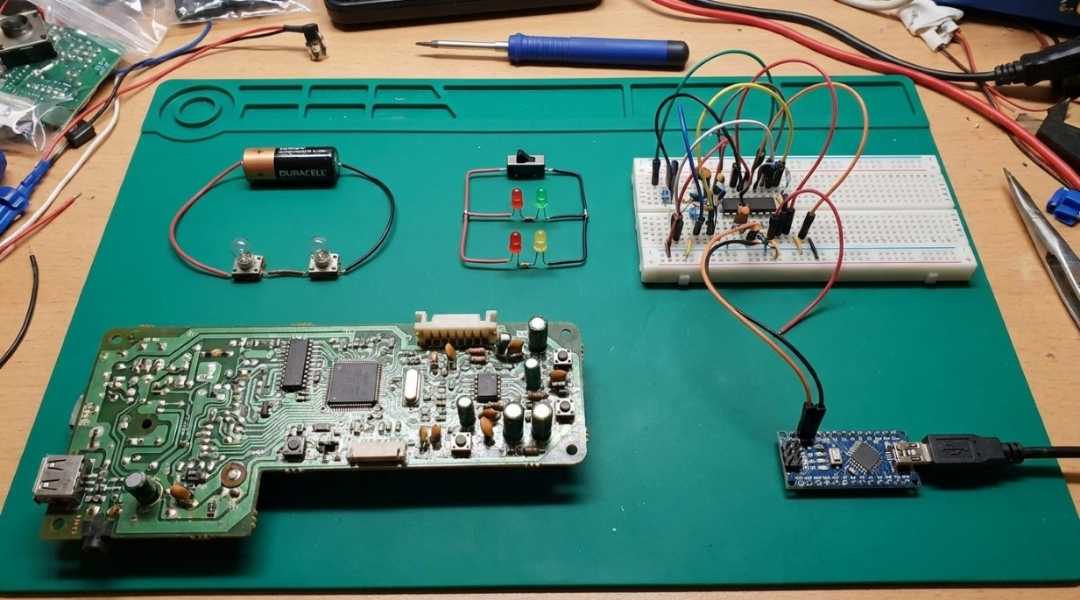
What Are the 5 Types of Circuits? A Clear Guide for Phoenix, AZ Homeowners
What Are the 5 Types of Circuits?
Ever wondered why some lights go off together while others don’t? It all comes down to circuit type. The 5 types of circuits are series, parallel, series-parallel, open, and closed. Each one moves electricity differently. And each one shows up in your home, your phone, and your daily life. Once you understand them, electrical problems start making a lot more sense.
What Are the 5 Types of Circuits in Phoenix, AZ?
Circuits are like roads for electricity. Some roads have one lane. Others have many. In Phoenix, AZ homes and businesses, these circuit types control everything from your lights to your AC unit. Understanding them helps you spot problems faster. It also helps you talk to your electrician with confidence. Whether you’re dealing with a tripped breaker or planning a renovation, knowing your circuit types puts you ahead. This guide breaks each one down in plain English.
Overview of Circuit Types
Here’s a quick look at all 5 before we go deeper:
- Series circuit — one single path for electricity
- Parallel circuit — multiple paths running side by side
- Series-parallel circuit — a mix of both
- Open circuit — the path is broken, no current flows
- Closed circuit — the path is complete, current flows freely
Some circuits share power. Others stop completely. Let’s explore each one.
Understanding Electrical and Electronic Circuits in Phoenix, AZ
What actually makes electricity move? It needs a complete path to travel. That path is called a circuit. Electrical circuits carry power to devices like your lights and fridge. Electronic circuits control how that power behaves inside devices like your phone or TV. Both types are everywhere in Phoenix homes and buildings. The key difference is simple. Electrical circuits deliver energy. Electronic circuits direct and manage it. Knowing this difference helps you understand what’s actually happening inside your walls and devices.
Overview of Electrical and Electronic Circuits
Think of it this way. Electrical circuits carry power. Electronic circuits control it. Your home wiring is an electrical circuit. Your smartphone’s motherboard is an electronic circuit. One powers your appliances. The other tells your apps what to do. Both rely on the same basic rules of electricity. But they serve very different purposes in everyday life.
Definition of a Circuit
A circuit is a complete path for electricity. That’s it. Electricity flows from a power source, travels through wires or components, and returns back. If the path is unbroken, electricity flows. If the path breaks, it stops. Think of it like water in a loop. No gap, no problem. One gap, no flow.
Importance of Circuits in Electronics
You use circuits every day without noticing. Every time you flip a light switch, tap your phone, or turn on the AC, a circuit is doing the work. Without circuits, no device works. They control power, protect your appliances, and keep your home running safely. In Phoenix’s intense summer heat, a faulty circuit isn’t just annoying. It can be a real safety risk.
The 5 Main Types of Circuits Explained in Phoenix, AZ
Each circuit type works differently. And one wrong connection can change everything. Here’s your full breakdown of all 5 main types. We’ll start with the list, then dig into each one clearly.
The 5 Main Types of Circuits
- Series circuit — components connected in one line
- Parallel circuit — components connected across multiple paths
- Series-parallel circuit — a combination of both types
- Open circuit — incomplete path, no current flows
- Closed circuit — complete path, current flows normally
Series Circuit
A series circuit is like a single road with no exits. All components connect in one straight line. Current flows through each component one by one. If one component fails, the whole circuit stops. You’ve seen this in older holiday string lights. One bulb burns out and the entire string goes dark. It’s simple to build. But it has a major weakness: one failure shuts everything down.
Parallel Circuit
A parallel circuit gives electricity multiple paths to travel. Each component connects on its own separate branch. If one branch fails, the others keep working. Your home wiring works this way. When one light blows, your other lights stay on. That’s parallel wiring doing its job. It’s more complex than series. But it’s far more reliable for everyday use.
Series-Parallel (Combination) Circuit
A combination circuit blends both series and parallel connections. Some components share a single path. Others run on separate branches. This gives engineers more control over how power moves. Most modern electronics use this type. Think of your TV, laptop, or car dashboard. They need precise power delivery. A combination circuit makes that possible.
Open Circuit
An open circuit has a broken path. No electricity can flow through it. Think of a light switch in the OFF position. The path is intentionally broken. Current stops. The device turns off. Open circuits aren’t always a problem. Sometimes they’re designed that way for safety. But an unintended open circuit means something has failed or disconnected.
Closed Circuit
A closed circuit has a complete, unbroken path. Electricity flows from start to finish without interruption. Think of a light switch in the ON position. The path is complete. Current moves. The bulb glows. A closed circuit is a working circuit. No gaps, no breaks, just steady power moving through the system.
How Circuit Types Work in Phoenix, AZ Applications
You already use these circuits daily. But do you know how they actually behave? Each circuit type has a unique way of handling current, voltage, and resistance. Tie that to a real device and it starts to click. In Phoenix homes, understanding circuit behavior helps you catch problems early. It also helps you communicate clearly with your electrician when something goes wrong.
How Each Type of Circuit Works
Here’s a quick overview before we go section by section:
Some circuits share power across one path. Others divide it across many. Some stop working the moment one part fails. Others keep running no matter what. The behavior of each circuit depends on how it’s connected. And that connection determines reliability, safety, and performance.
Working of a Series Circuit
In a series circuit, current follows one road, one flow, one failure point. All the current passes through every component in order. Each component gets a share of the total voltage. If one component breaks, the circuit opens. No current flows anywhere. This is why older string lights fail completely when one bulb goes out. It’s a simple design. But it comes with a real reliability trade-off.
Working of a Parallel Circuit
In a parallel circuit, electricity splits across multiple paths. Each branch carries its own current. Each device gets the full voltage. If one branch fails, the others stay active. This is exactly how home wiring works in Phoenix. Your kitchen appliances, bedroom lights, and bathroom fan all run on separate branches. One trips, the others stay on. It’s more wiring, but far more dependable.
Working of a Series-Parallel Circuit
A combination circuit mixes highways and side streets. Some components share a single path. Others run on independent branches. This gives the circuit flexibility. Engineers use this design when devices need both shared and isolated power. Your smartphone, laptop, and smart TV all use combination circuits internally. They need precise control over power flow and this design delivers it.
Working of an Open Circuit
No path, no power. That’s the open circuit in one line. When a break occurs anywhere in the loop, current stops completely. It doesn’t matter how much voltage is available. If the path isn’t complete, nothing moves. A light switch in the off position is a controlled open circuit. A broken wire in your wall is an uncontrolled one. Both stop current flow, but only one is a problem.
Working of a Closed Circuit
Complete path, steady flow, working system. A closed circuit is a circuit doing exactly what it’s supposed to do. The path from source to load and back again is unbroken. Electrons move freely. Devices get power. Everything works. When you flip a switch on, you’re closing the circuit. That simple action completes the path and lets electricity flow.
How the 5 Types of Circuits Work
Quick recap of circuit behavior:
- Series — one path, shared voltage, single failure stops all
- Parallel — multiple paths, full voltage per branch, independent operation
- Combination — mixed behavior, flexible control
- Open — no current, broken path
- Closed — full current, complete path
Complete Path and Current Flow (Closed Circuit)
In a closed circuit, energy moves in a continuous loop. Power flows from the source, through wires, through devices, and back again. Nothing blocks it. Nothing interrupts it. The result is a working, powered system. This is the state every circuit is designed to reach.
Broken Path and No Flow (Open Circuit)
Imagine a bridge with a gap in the middle. Cars can’t cross. Electricity works the same way. In an open circuit, the gap stops all current. No electricity reaches the device. No work gets done. Sometimes this is intentional, like a switch. Sometimes it’s a fault, like a loose wire.
Unintended Path and Excess Current (Short Circuit)
A short circuit is dangerous. It happens when electricity finds an unintended shortcut. Instead of traveling through the full circuit path, it jumps across a gap. This floods the system with excess current. Wires overheat. Breakers trip. In worst cases, fires start. This is why proper insulation and circuit protection matter so much in Phoenix homes.
Single Path Connection (Series Circuit)
A series circuit connects all components along one continuous line. Current enters at one end and travels through every component before exiting. Every device in the line shares the same current. Take one out and the whole line stops. It’s clean, simple, and easy to understand. But it’s not built for reliability.
Multiple Path Connection (Parallel Circuit)
A parallel circuit connects each device on its own separate branch. Current splits at every junction. Each device operates on its own. Remove one device and the rest keep running. This design is built for reliability. It’s the standard for modern residential and commercial wiring.
Key Differences Between Circuit Types in Phoenix, AZ
Knowing circuit types is one thing. Knowing how they compare is what actually helps you make smart decisions. Whether you’re troubleshooting a problem or planning new wiring, the differences matter. Here’s what sets each type apart.
Key Differences Between Circuit Types
The biggest differences come down to three things: how current flows, how voltage is shared, and how the system responds to failure. A series circuit is simple but fragile. A parallel circuit is reliable but more complex. A combination circuit balances both. An open circuit is inactive. A closed circuit is active.
Current Flow Differences
- Series — same current flows through every component
- Parallel — current splits between branches
- Combination — current behaves differently in each section
In a series circuit, every component gets the same current. In a parallel circuit, each branch carries its own current. The total current is the sum of all branches. This directly affects how devices perform and how failures spread.
Voltage Distribution
- Series — voltage divides across components
- Parallel — each component gets the full voltage
- Combination — voltage varies by section
This is a major practical difference. In a parallel circuit, every device gets full power. In a series circuit, devices share the available voltage. As you add more components to a series circuit, each one gets less power.
Reliability and Performance
Better design means fewer problems. Parallel circuits are the gold standard for homes and businesses. They keep devices independent. One failure doesn’t affect the rest. Series circuits are simpler but more fragile. Combination circuits offer the best of both. For critical systems in Phoenix, reliability always wins.
Applications of Circuit Types in Phoenix, AZ
You use these circuits every day. You just never noticed. Every plug socket, light fixture, alarm system, and smart device in your Phoenix home runs on one of these circuit types. Let’s look at where each one actually shows up in real life.
Applications of Different Circuit Types
Each circuit has a purpose. And one wrong choice can cause problems. Here’s where each type naturally fits in the real world.
Household Wiring (Parallel Circuits)
Your home uses parallel circuits throughout. Every outlet, light, and appliance runs on its own branch. One device fails, others still work. This is why your kitchen lights stay on when a bathroom breaker trips. Phoenix electricians wire homes this way by design. It’s safer, more flexible, and far more practical for modern living.
Decorative Lighting (Series Circuits)
Like a chain, one break stops everything. Older decorative string lights use series circuits. All bulbs share one path. If one bulb burns out, the whole string goes dark. Newer LED strings are wired differently to avoid this. But series lighting still shows up in some decorative and low-voltage applications.
Electronic Devices (Combination Circuits)
Devices mix circuits like recipes. Your smartphone, TV, and laptop all use combination circuits internally. Different parts of the device need different power levels. Some sections share current. Others operate independently. Combination circuits make that possible. They’re the reason modern electronics can be powerful and efficient at the same time.
Safety Systems (Open and Closed Circuits)
Alarm systems rely on both open and closed circuits. A door sensor uses a closed circuit when the door is shut. Open the door and the circuit breaks. That triggers the alarm. Smoke detectors, security sensors, and emergency shutoffs all use this principle. These circuits are simple. But they’re incredibly effective for protecting Phoenix homes and businesses.
Advantages and Disadvantages of Circuit Types in Phoenix, AZ
Every circuit type has trade-offs. Knowing the pros and cons helps you make smarter decisions about your home’s electrical system. Here’s a clear breakdown of what each type offers and where it falls short.
Advantages and Disadvantages of Circuit Types
No circuit type is perfect for every situation. The right choice depends on the application, the budget, and the need for reliability. Here’s how each one stacks up in practical use.
Advantages of Series Circuits
- Simple design and easy to build
- Low cost with fewer components
- Easy to understand and troubleshoot
- Useful for low-power applications
- Great for fuses and safety cutoffs
Disadvantages of Series Circuits
- One failure stops the whole circuit
- Voltage drops as more components are added
- Not suitable for most home wiring
- Devices can’t operate independently
- Poor performance with multiple high-draw devices
Advantages of Parallel Circuits
- Devices operate independently
- Each component gets full voltage
- One failure doesn’t affect others
- Ideal for home and commercial wiring
- Easy to add or remove devices
Disadvantages of Parallel Circuits
- More complex wiring required
- Higher installation cost
- Draws more total current from the source
- Requires more wire and connections
- Harder to design in compact spaces
Advantages of Combination Circuits
- Highly flexible design
- Suits complex devices and systems
- Balances simplicity and reliability
- Used in most modern electronics
- Gives engineers precise control over power
Disadvantages of Combination Circuits
- Difficult to troubleshoot
- More complex to design and install
- Requires advanced knowledge to work on
- Faults can be hard to locate quickly
- Higher risk of errors during installation
Other Common Circuit Types in Phoenix, AZ
You learned the basics. But real electrical systems go beyond these 5 types. There are a few more circuit categories worth knowing. They show up in advanced electronics, industrial systems, and the power grid itself.
Other Common Circuit Types
These aren’t your everyday home circuits. But they’re important in broader electrical systems. Here’s a quick look at some common variations you’ll encounter beyond the basic 5.
Series-Parallel (Combination) Circuits
Like mixing two systems for better performance. Combination circuits blend the structure of series and parallel designs. They give engineers flexibility to direct power exactly where it’s needed. Most advanced electronics rely on this design for precision control.
AC (Alternating Current) Circuits
Power that changes direction. AC circuits carry electricity that reverses direction at regular intervals. This is the type of power that comes from your wall outlets in Phoenix. It’s the standard for homes, businesses, and the city’s power grid. AC power travels long distances efficiently, which makes it ideal for utility-scale distribution.
DC (Direct Current) Circuits
DC circuits carry electricity in one steady direction. Batteries produce DC power. So do solar panels and USB chargers. Your phone runs on DC internally, even though it charges from an AC source. An adapter converts the power. DC is essential for portable devices, electronics, and renewable energy systems.
Advanced Learning Topics for Circuits in Phoenix, AZ
Once you understand these, circuits become simple. If you want to go deeper, there are a few foundational concepts that will level up your understanding fast. These topics aren’t just for engineers. They’re useful for any Phoenix homeowner who wants to understand what’s happening in their electrical system.
Additional Learning Topics
You don’t have to master these overnight. But getting familiar with them puts you in a much stronger position. Here’s where to start.
Ohm’s Law
Ohm’s Law is the foundation of circuit math. It says voltage equals current times resistance (V = I x R). If you know two values, you can find the third. For example, a higher resistance means less current at the same voltage. This law explains why devices behave the way they do. And it’s why overloaded circuits are dangerous.
Kirchhoff’s Laws
Kirchhoff’s Laws describe how current and voltage behave in a circuit. The first law says the current flowing into a junction equals the current flowing out. The second law says the voltages around any closed loop add up to zero. You don’t need to run calculations to benefit from these concepts. Just knowing the principle helps you understand circuit balance.
Circuit Analysis Techniques
Circuit analysis is how engineers study and solve circuit behavior. The key is to think step by step. Start at the power source. Follow the current. Identify where voltage drops or splits. Tools like Ohm’s Law and Kirchhoff’s Laws make this process logical. Even homeowners can use basic analysis to identify common issues before calling an electrician.
Basic Electrical Components
Every circuit is built from a handful of core parts:
- Resistors — limit current flow
- Capacitors — store and release electrical energy
- Diodes — allow current in one direction only
- Switches — open or close the circuit path
- Conductors — carry current through the system
Understanding these components helps you read circuit diagrams, follow electrical instructions, and communicate clearly with your Phoenix electrician.
Conclusion
Now You Know Your Circuits. Here’s Your Next Step.
You came here asking a simple question. What are the 5 types of circuits? Now you have the full picture.
Series circuits run on one path. Parallel circuits give electricity room to breathe. Combination circuits handle complex devices. Open circuits cut the flow. Closed circuits complete it. Each type has a job. And each one is working somewhere in your Phoenix home right now.
Understanding circuits doesn’t make you an electrician. But it does make you a smarter homeowner. You can spot problems faster. You can talk to your electrician with confidence. And you won’t get caught off guard when something goes wrong.
Don’t wait for the problem to learn the system.
If your home’s wiring feels outdated, unreliable, or just plain confusing, Jay Hohel Inc is here to help. We serve homeowners and businesses across Phoenix, AZ, with honest, professional electrical service you can trust.
📍 3334 W McDowell Rd Unit 17, Phoenix, AZ 85009 📞 (602) 272-4033 📧 JayHoehlinc@gmail.com