
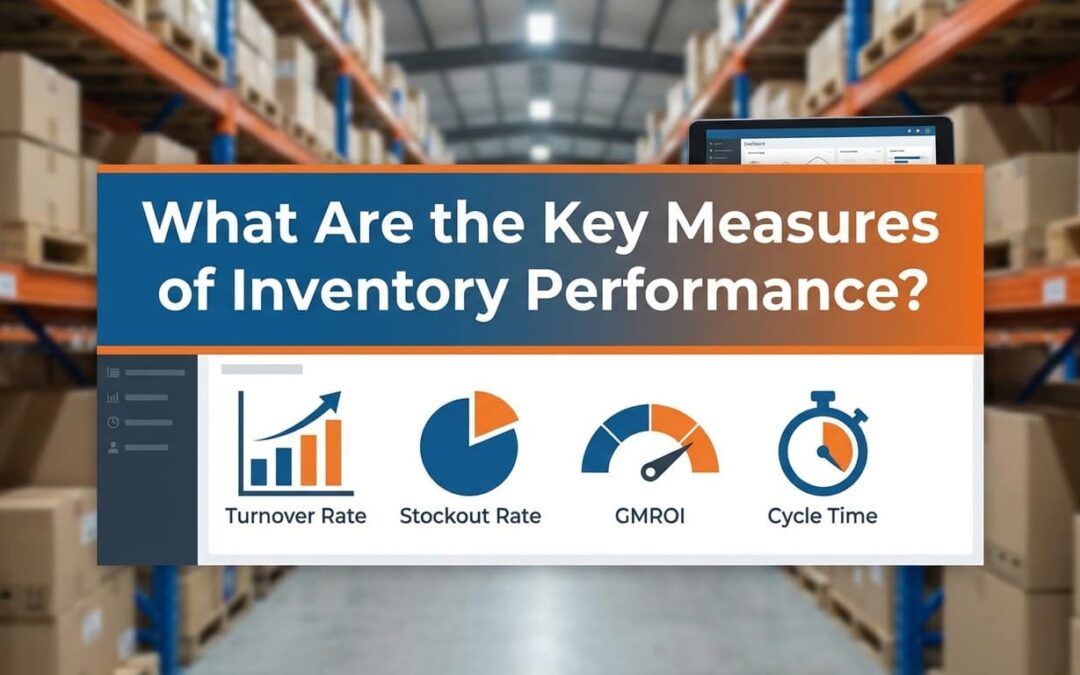
What separates a thriving Phoenix warehouse from one that bleeds margin quietly every month? The answer is almost always the same. One operation measures. The other guesses.
You either track what matters, or you lose money not knowing why.
Key measures of inventory performance are the numbers that tell you how well your stock is moving, how much it costs to hold it, and whether your warehouse is actually making you money. For Phoenix, AZ businesses competing in one of the fastest-growing logistics corridors in the Southwest, these metrics are not optional. They are your compass.
Inventory Performance KPIs for Phoenix, AZ Businesses
Inventory is the heartbeat of your warehouse. In Phoenix, that heartbeat needs to beat fast and stay steady. The city is a regional distribution hub serving markets across Arizona, Nevada, New Mexico, and Southern California. That pressure makes KPI tracking tighter here than in most U.S. metros.
Phoenix warehouse operators face a unique set of challenges that make the right metrics non-negotiable.
- Extreme heat drives up storage costs and accelerates product degradation for temperature-sensitive goods.
- Rapid regional population growth is pushing demand unpredictability higher every quarter.
- Labor costs in the distribution sector are rising faster than national averages.
- E-commerce fulfillment expectations have compressed acceptable order cycle times.
- Phoenix sits at a major cross-dock point for West Coast-to-Midwest freight, which means velocity matters more than almost anywhere else.
Track the right KPIs and you strengthen supply chain control. Ignore them and you hand your competitor the margin you worked hard to build.
What Is a KPI in Inventory Management?
A KPI, or key performance indicator, is a measurable value that shows how well a specific part of your operation is performing against a defined goal. In inventory management, KPIs tell you if your stock levels, costs, and fulfillment speed are hitting the mark or quietly slipping.
Not every metric is a KPI. A vanity metric looks good on a report but drives no decision. An actionable KPI tells you what to fix and by when. For example, tracking total units in stock is a metric. Tracking inventory turnover rate against an industry benchmark is a KPI that actually moves profit.
Ask yourself this: does this number tell me what to do next? If the answer is no, it is a metric. If the answer is yes, it is a KPI.
Why Are KPIs Important in Inventory Management?
Cash tied up in slow-moving stock is cash you cannot deploy elsewhere. Every day a product sits unsold in your warehouse, it costs you money in storage, insurance, and opportunity. That is not theory. That is the quiet killer of warehouse profitability.
KPIs protect against that loss. They connect your day-to-day operations to your bottom line in a language every stakeholder understands.
Without KPIs: You react to stockouts after customers complain. You discover carrying cost overruns at quarter-end.
With KPIs: You spot demand shifts early. You reduce financial waste before it compounds.
Tie your KPIs to EBITDA and working capital, and suddenly your warehouse metrics become a boardroom conversation. That is the level of visibility that protects business growth and secures long-term profitability.
How to Pick the Right KPIs to Track?
Picking the right KPIs starts with one rule: align to the bottleneck, not the department ego. Here is a clean framework to get you there.
- Identify your biggest operational pain point first. Stockouts? Cash flow gaps? Slow fulfillment?
- Match a measurable metric to that pain point directly.
- Set a baseline. You cannot improve what you have not measured before.
- Assign ownership. A KPI without an owner is just a number on a dashboard.
- Review it on a fixed cadence. Weekly for operational metrics, monthly for strategic ones.
Old inventory wisdom still holds: what gets measured gets managed. Pick fewer KPIs and track them obsessively rather than tracking everything loosely.
The SMART Method
The SMART framework gives your KPIs structure so they actually drive action rather than collect dust in a spreadsheet.
- Specific: Define exactly what you are measuring. Not ‘improve inventory’ but ‘reduce days on hand by 10%.’
- Measurable: Attach a number to it. Revenue, days, percentage, or ratio.
- Achievable: Set a target your team can realistically hit with focus.
- Relevant: Connect the KPI to a real business outcome like cash flow or margin.
- Time-bound: Set a deadline. A Phoenix distribution center might target a 15% fill rate improvement within one fiscal quarter.
SMART KPIs are not just smarter. They are significantly more likely to change behavior on the warehouse floor where it actually counts.
Tips on Picking the Right KPIs
- Start with three KPIs max. Add more only when those three are consistently tracked.
- Involve the people doing the work. Floor staff often know the real bottlenecks before management does.
- Never chase a KPI your system cannot actually measure. Bad data is worse than no data.
- Run a quarterly KPI audit. Business conditions change, and your KPIs should change with them.
- If a KPI has not triggered a single decision in 90 days, cut it. It is not working for you.
One last tip: do not let perfect be the enemy of useful. A decent KPI tracked consistently beats a perfect KPI tracked never. (Yes, that means you, the person still waiting to build the perfect dashboard.)
Core Inventory Performance Metrics Used by Phoenix Warehouses
Phoenix warehouses move fast. The city’s position as a gateway distribution hub for Southwest markets means velocity metrics are not a nice-to-have. They are operational survival tools. Think of your core metrics as the vital signs of your warehouse. If one goes flat, the whole operation feels it. What metrics should Phoenix warehouse operators watch most closely? Here is the breakdown that separates efficient operations from expensive ones.
Key Inventory Performance Measures (KPIs) for Phoenix, AZ Operations
Phoenix is a regional logistics hub serving the entire Southwest corridor. High turnover is often tied directly to distribution velocity, and operators who optimize warehouse efficiency Phoenix-wide understand that numbers drive every decision.
Fast-moving inventory builds margin. Slow-moving inventory builds risk.
Want to boost warehouse efficiency and improve operational confidence? These are the KPIs your Phoenix operation needs to track every single month. Each one connects directly to a measurable business outcome.
Inventory Turnover Ratio (Stock Turnover / Turns)
Formula: Cost of Goods Sold divided by Average Inventory Value
Inventory turnover measures how many times your stock is sold and replaced in a given period. Think of it as the speed of your inventory. High turnover means the product is moving efficiently. Low turnover means cash is sitting still on shelves.
A retail business in Phoenix might target 8 to 12 turns per year. A manufacturing operation might run lower. Always benchmark against your specific industry segment rather than global averages, which are almost meaningless without context. Increasing inventory turnover Phoenix-wide is one of the fastest ways to improve profit margins without adding a single new customer. Faster turns mean less capital tied up and more room to reinvest.
Days Sales of Inventory (DSI) / Days on Hand
Formula: (Average Inventory divided by COGS) multiplied by Number of Days DSI tells you how many days your current inventory would last if no new stock arrived. It is a direct window into cash flow health. The longer your days on hand, the more working capital is locked in stock. How does your DSI compare to your supplier lead time? If your lead time is 10 days and your DSI is 45, something is off. You are holding far more inventory than you need to, and that excess is costing you money every single day.
Reducing days inventory outstanding improves cash flow faster than almost any other operational change. It is one of the most underused levers in Phoenix warehouse management.
Stock-to-Sales Ratio
Formula: Inventory Value divided by Net Sales for the same period
The stock-to-sales ratio measures balance. It shows whether your inventory level matches your actual sales pace. A ratio that is too high signals overstock. Too low signals a stockout risk. Picture a Phoenix hardware retailer heading into summer. Demand for cooling products spikes sharply in May. If their ratio is misaligned entering that season, they either run short and lose sales or they overstock and eat the margin loss in carrying costs. Use seasonal comparison in Phoenix retail cycles to keep this ratio calibrated.
Too much stock is a cost problem. Too little stock is a customer problem. Both are margin problems.
Sell-Through Rate
Formula: (Units Sold divided by Units Received) multiplied by 100
Sell-through rate tracks product velocity. It tells you what percentage of stock you received and actually sold in a given timeframe. A high sell-through rate means your buying decisions are sharp. A low one means something got miscalculated.
Fast sell-through builds momentum and frees up warehouse space for higher-margin products. Slow sell-through builds risk and ties up cash. Tie this metric to your promotional timing to improve sales velocity on slower-moving SKUs before they become a markdown problem.
Inventory Carrying Cost
Inventory sitting still is money standing still.
Carrying cost is the total cost of holding inventory over a period. Most operations target 20 to 30 percent of inventory value per year. In Phoenix, that number can creep higher without warning.
The key cost drivers that make up carrying cost include:
- Storage and warehouse rent or lease costs
- Energy and climate control costs (Phoenix heat makes this a major factor)
- Insurance on inventory value
- Shrinkage, damage, and obsolescence
- Opportunity cost of capital tied up in stock
Phoenix warehouse operators know that summer energy bills alone can shift carrying cost calculations significantly. Reduce carrying costs by tightening reorder accuracy and cutting excess safety stock. Every percentage point saved here goes directly to margin.
Gross Margin Return on Investment (GMROI)
Formula: Gross Margin divided by Average Inventory Cost
GMROI connects your inventory investment directly to profitability. It tells you how many dollars of gross margin you earn for every dollar invested in inventory. A GMROI above 1.0 means your inventory is generating more margin than it costs to hold.
Here is the question every executive should ask: which of your product categories is actually pulling its weight? Analyzing GMROI by category rather than overall average reveals the profit winners and the quiet drains hiding inside your portfolio.
Improve GMROI by either increasing the gross margin on a product or reducing the average inventory value needed to support the same sales volume. Both paths lead to stronger returns on your inventory investment.
Order Cycle Time / Fill Rate
Order Cycle Time Formula: Order Delivery Date minus Order Placement Date
Order cycle time measures how long it takes from when a customer places an order to when they receive it. In today’s fulfillment environment, slow cycle times lose customers. Fast cycle times build loyalty.
Do not just track average cycle time. Track variability. An average of three days means very little if some orders take one day and others take seven. Inconsistency is the trust killer in fulfillment operations. Improve order processing time by identifying the exact stage where delays accumulate most.
Customer trust lives or dies on how predictably you deliver. Consistent and fast cycle times are how Phoenix operations stand out in a crowded distribution market.
Supporting Inventory Health Metrics for Phoenix Supply Chains
Reactive warehouses fight fires. Predictive warehouses prevent them.
The core KPIs tell you what is happening right now. Supporting health metrics tell you what is about to happen. Together they give Phoenix supply chain operators the foresight to act before problems compound into real losses.
Here are the supporting metrics that round out a complete inventory health picture.
Days Inventory Outstanding (DIO)
Formula: (Average Inventory divided by COGS) multiplied by 365
DIO measures how many days on average your inventory sits before it is sold. It is one of the core working capital efficiency metrics in the cash conversion cycle. Lower DIO means faster cash recovery from inventory investment.
Are you tracking DIO as a trend over time or just as a single data point? A single reading tells you where you are. A trend tells you where you are headed. Monitor the direction consistently. DIO creeping upward quarter by quarter is an early warning sign worth acting on before it becomes a cash flow problem.
Reorder Point Accuracy
Formula: (Average Daily Sales multiplied by Lead Time) plus Safety Stock
Reorder point accuracy measures how well your restocking triggers match actual demand and lead time reality. An inaccurate reorder point means you either run out of stock too early or build excess inventory you did not need.
The most common mistake is using average lead time without accounting for lead time variability. Combine lead time variability with demand variability when setting your reorder points. That combination gives you a safety stock calculation that actually protects you during disruption, not just during average conditions. Reorder at the right moment every time and stockouts largely disappear.
Backorder Rate
Formula: (Backordered Items divided by Total Orders) multiplied by 100
Backorder rate tracks the percentage of orders you cannot fulfill from current stock. Every backorder is a customer experience failure. High backorder rates cost you not just the sale but the relationship.
A rising backorder rate is almost always a symptom of forecast error. Link this metric directly to your forecast accuracy tracking. If your predictions are off, your reorder points will be off too, and backorders follow. Reduce backorders by tightening the forecast-to-reorder connection, not by simply stocking more of everything.
Forecast Accuracy
Formula: 1 minus (Absolute Forecast Error divided by Actual Demand)
Forecast accuracy measures how close your demand predictions are to actual sales. Think of it as the navigation system for your entire inventory strategy. A bad forecast sends everything else in the wrong direction.
Use a rolling forecast model rather than a static annual projection. Rolling forecasts update every period using fresh data, which makes them dramatically more responsive to real demand shifts in a dynamic Phoenix market. Improving forecast accuracy by even a few percentage points can reduce both stockouts and overstock simultaneously.
Fill Rate
Formula: (Orders Fulfilled Completely divided by Total Orders) multiplied by 100
Fill rate measures service completeness. It answers one question: when a customer orders something, can you deliver it fully and on time?
A 95 percent fill rate sounds strong. But are you measuring order fill rate or line fill rate? They are not the same. An order fill rate measures complete orders delivered. A line fill rate measures individual SKU lines fulfilled within an order. You can have a high order fill rate and still be failing customers on specific products. Track both separately for a complete picture.
How Phoenix, AZ Businesses Use Inventory Performance Measures
Measuring KPIs is only half the job. Using them to make real decisions is what actually drives results. Phoenix operators across retail, manufacturing, and third-party logistics all apply these metrics differently based on their operational model.
A Phoenix-based retail chain uses sell-through rate and stock-to-sales ratio to plan seasonal buys ahead of the brutal summer demand curve. They cut overstock losses by timing markdowns before storage costs accelerate in high-heat months.
A local manufacturing operation tracks GMROI by product category to identify which components are dragging profitability. They redirect purchasing budget toward faster-moving, higher-margin inputs and reduce the capital locked in slow-turning raw materials.
A 3PL operator in the Phoenix distribution corridor monitors order cycle time variability and fill rate daily. Their client contracts include service level agreements, and missing those targets costs real money. KPI dashboards are not optional for them. They are contractual obligations.
The businesses that protect their growth in Phoenix are the ones that measure consistently, act quickly, and adjust before small problems become expensive ones
Industries in Phoenix, AZ That Track Inventory KPIs Closely
Not every industry tracks the same KPIs with the same intensity. But the fastest-growing sectors in Phoenix all share one thing: tight inventory discipline driven by measurable performance data.
- Retail and e-commerce: Sell-through rate and fill rate are tracked weekly to stay competitive in a high-velocity market.
- Manufacturing: Days inventory outstanding and GMROI drive production planning and capital allocation decisions.
- Aerospace and defense: Phoenix hosts major aerospace players who track reorder point accuracy with zero tolerance for stockouts on critical components.
- Electronics and semiconductors: High product value makes carrying cost and turnover ratio critical metrics for protecting margins.
- Third-party logistics (3PL): Order cycle time and backorder rate are contractual KPIs measured against service level agreements every single month.
- Food and beverage distribution: DSI and forecast accuracy protect against spoilage in a market where product shelf life and Phoenix heat both add pressure.
Some industries count on perfect supply. Others manage acceptable risk. All of them count on their numbers.
Synonyms and Related Inventory Performance Terms in Phoenix Inventory Management
Inventory management language is not always consistent across industries. Different teams use different words for the same concepts. Here is a quick reference to clear up the most common terminology overlap.
- Inventory performance measures and inventory KPIs both refer to the quantifiable metrics used to evaluate how well your stock is being managed.
- Stock control metrics is the same concept applied specifically to the monitoring and control of physical stock levels.
- Warehouse efficiency metrics typically refer to the operational subset of KPIs focused on throughput, speed, and cost per unit handled.
- Supply chain performance indicators broaden the lens beyond the warehouse to include supplier lead times, logistics costs, and end-to-end fulfillment.
- Inventory management key performance indicators is simply the formal term most used in consulting, ERP documentation, and executive reporting.
Understanding these terms helps your team communicate clearly across departments. It also helps when evaluating software tools, consulting services, or benchmarking reports that may use slightly different language to describe the same fundamentals.
Measure What Matters. Protect What You Built.
Running a Phoenix warehouse without tracking inventory KPIs is like driving the I-10 corridor at night with no headlights. You might make it. But you are taking on risk you do not have to.
The key measures of inventory performance are not complicated. Turnover ratio. Days on hand. Fill rate. Carrying cost. GMROI. Forecast accuracy. Each one answers a specific question about your operation. Together, they tell you the full story of where your money is moving and where it is quietly leaking.
Smart Phoenix businesses do not wait for a crisis to start measuring. They build the habit before the problem shows up.
The Southwest distribution market is growing fast. Competition for warehouse efficiency, supply chain speed, and customer fulfillment is tighter every year. The operations that win are the ones that make decisions based on real numbers, not gut feel.
You now have the framework. You know the formulas. You know which metrics to track for your industry and why each one connects directly to profit and cash flow.
The next move is yours. Start with three KPIs. Measure them consistently. Then build from there.
If you need a partner who understands Phoenix inventory management from the ground up, Jay Hohel Inc is ready to help. We work with warehouse operators, distributors, and supply chain teams across the Phoenix, AZ metro to turn raw numbers into real operational improvement.
| Get a Free Inventory Performance Consultation
Call (602) 272-4033 | Email JayHoehlinc@gmail.com | Visit: jhiescrap.com |
Ready to take control of your inventory performance?
Contact Jay Hohel Inc today and let’s build a KPI strategy that works for your Phoenix operation.