
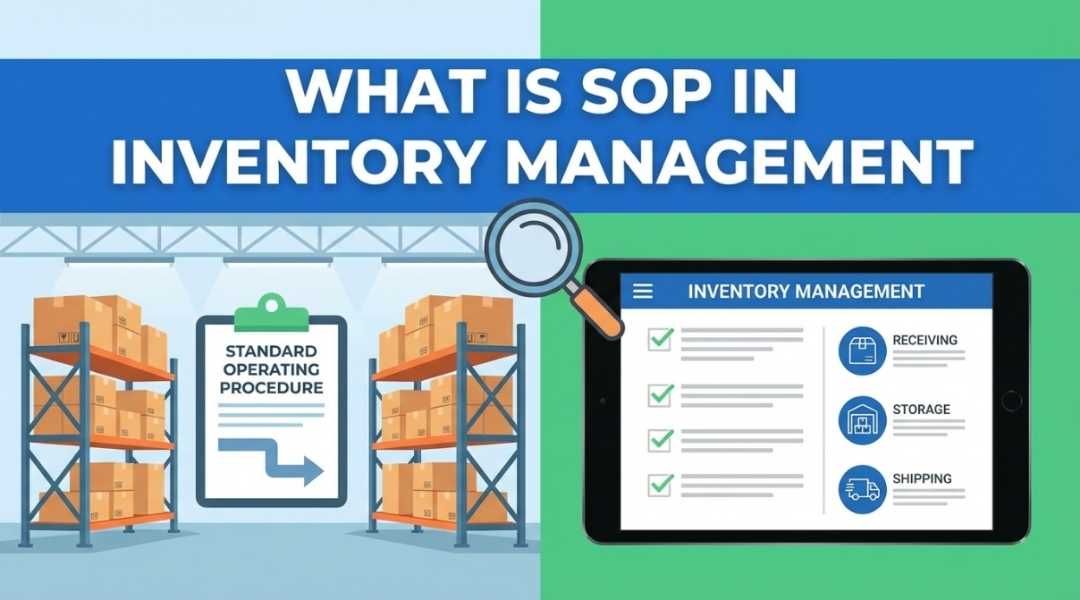
Ever feel like your warehouse runs on luck? One employee counts stock this way. Another does it differently. Orders slip through cracks. Pallets vanish. Sound familiar?
A Standard Operating Procedure (SOP) in inventory management is a documented, step-by-step guide that tells your team exactly how to handle every inventory task. It covers receiving, storing, picking, shipping, and counting. No guessing. No shortcuts.
Without SOP, you react. With SOP, you prevent. Phoenix warehouses face unique pressures. Heat affects product storage. Desert logistics demand precision. An inventory SOP gives your team clear instructions that protect profit margins and eliminate warehouse confusion.
Think of it as your warehouse playbook. Every shift follows the same rules. Every product moves the same way. SOP reduces variation, not flexibility. It builds a foundation so your team can handle exceptions without chaos.
What Is an SOP in Inventory Management for Phoenix, AZ Businesses
For Phoenix businesses, an inventory SOP is your operations blueprint. It defines how products enter your warehouse, where they go, how they move, and how they leave. Local conditions matter here. Phoenix warehouse operations deal with 100+ degree summers that demand strict storage protocols for temperature-sensitive goods.
Your inventory SOP should address these Phoenix-specific challenges:
- Climate-controlled receiving schedules to avoid heat exposure
- Storage rotation rules that account for desert temperature swings
- Loading dock timing that reduces product time in extreme heat
- Verification steps that catch damage before it becomes loss
Business process standardization means every employee follows identical steps. This gives you full inventory visibility across shifts, teams, and locations. The old saying fits: don’t dig a well when you’re already thirsty. Build your SOP before problems multiply.
What is an SOP for inventory?
An inventory SOP is a written document that spells out who does what, when they do it, and how to verify it got done right. It covers specific tasks like receiving shipments, organizing shelves, picking orders, and counting stock.
An SOP is the playbook every shift follows.
Here’s a quick example. Your receiving SOP might say: Dock worker scans incoming pallet barcode. Worker checks quantity against purchase order. Worker inspects for visible damage. Worker moves pallet to staging zone within 15 minutes. Supervisor verifies count before storage assignment. This level of detail simplifies staff training. New hires know exactly what to do. Veterans stay consistent. Your warehouse runs smoother because nobody has to guess.
Who needs an SOP for inventory?
If your best employee quit tomorrow, would operations continue smoothly? If you hesitated, you need an inventory SOP. The truth is, every business handling physical products benefits from documented procedures.
Here’s who needs inventory SOPs most:
- Retail stores managing fast-moving consumer goods and seasonal stock fluctuations
- Manufacturing facilities tracking raw materials, work-in-progress, and finished goods
- Distribution centers coordinating high-volume inbound and outbound shipments
- E-commerce operations handling direct-to-consumer fulfillment with tight delivery windows
Small warehouses actually benefit most. Why? They lack redundancy. One untrained worker can create expensive mistakes. A small business inventory SOP in Phoenix protects you from knowledge walking out the door. It helps you build a scalable warehouse system that grows with your business.
Definition and Purpose of Inventory SOPs in Phoenix Warehouse Operations
An inventory SOP exists for one reason: to create repeatable, measurable results. It’s not about bureaucracy or paperwork compliance. It’s about operational control.
The purpose of an inventory SOP goes deeper than documentation. It aligns daily actions with business goals. Every procedure ties back to performance metrics. Every step drives toward efficiency, accuracy, and profitability.
It reduces mistakes. It increases margins.
Phoenix warehouse operations face distinct pressures. Supply chain optimization demands precision timing. Regional logistics require coordination across vast distances. Your SOP becomes the framework that keeps everything synchronized.
Purpose must always align with KPIs, not paperwork compliance. If your SOP doesn’t connect to measurable outcomes, it’s just busy work. Write procedures that drive real results. Reduce operational waste. Protect your bottom line.
Main Objectives
Every inventory SOP should target specific, measurable objectives. These form the foundation of your warehouse performance metrics.
- Reduce errors by documenting exact steps for each inventory task
- Improve stock accuracy through standardized counting and verification methods
- Standardize workflow so every team member follows identical procedures
- Increase accountability by assigning clear ownership for each process step
Each objective should connect to a measurable KPI. Error rates should drop. Accuracy percentages should climb. Workflow completion times should decrease. When you can measure it, you can improve it.
Key Components of an Inventory SOP for Phoenix Inventory Management
A complete inventory SOP covers every touchpoint in your warehouse. Each component builds on the last. Skip one, and gaps appear. What happens when one step breaks? The whole chain suffers. Your Phoenix inventory management SOP needs structured components. Each one should define the task, assign accountability, list exact steps, and specify verification methods. Let’s break down each component your SOP must include.
Stock Receiving Procedure
Stock receiving is your first line of defense. Control at the entry point prevents problems downstream. Your stock receiving SOP should document every step from truck arrival to staging completion.
Key elements include:
- Scheduled delivery windows and dock assignments
- Goods receipt process with barcode scanning
- Quantity verification against purchase orders
- Digital timestamp on all receipts for tracking
Timestamp all receipts digitally. Paper logs get lost. Digital records create audit trails that protect you during disputes and inventory reconciliation.
Receiving & Inspection
Inspection catches problems before they become losses. Your quality inspection process should happen immediately upon receipt. Small cracks become big losses. A damaged pallet spotted at receiving costs far less than one discovered during customer fulfillment.
Your receiving audit checklist should cover:
- Visual damage assessment on packaging and products
- Temperature verification for sensitive goods
- Documentation of any discrepancies with photos
- Quarantine procedures for suspect items
Risk prevention starts here. Train your team to catch issues early. Document everything. Create clear escalation paths for damaged or incorrect shipments.
Storage & Organization Procedure
Your warehouse storage SOP determines how efficiently products move. A proper inventory organization system reduces pick times and prevents errors. Order and clarity start with logical placement.
Essential storage procedures include:
- Bin location assignment based on velocity and size
- Climate zone designation for temperature-sensitive items
- Aisle organization for efficient picking routes
- Labeling standards for consistent identification
Warehouse Layout Optimization
Warehouse layout optimization directly impacts efficiency. Smart bin location management puts fast-moving items within easy reach. Slow movers go to less accessible spots. This simple principle saves hours of labor weekly.
Your layout SOP should specify:
- ABC zone designations based on pick frequency
- Clear aisle width requirements for equipment access
- Staging area locations for receiving and shipping
- Safety zones and emergency access routes
Stock Issuance Procedure
Stock issuance controls how inventory leaves your storage locations. Your stock issuance SOP ensures accuracy at every release point. This matters for internal transfers, production feeds, and order fulfillment.
Your warehouse stock release procedure should define:
- Authorization requirements for stock releases
- Pick verification steps before items leave storage
- System updates that reflect real-time inventory changes
- Documentation trails for every transaction
Order Fulfillment & Shipping
Order fulfillment is where customer trust gets built or broken. Your order fulfillment SOP covers picking, packing, and shipping workflows. For Phoenix businesses, shipping workflow must account for carrier schedules and regional distribution patterns.
Critical fulfillment procedures include:
- Pick list generation and wave planning
- Pack station setup and verification steps
- Carrier selection based on service level requirements
- Final quality check before dispatch
Stock Counting & Auditing
Inventory audit SOP procedures create accountability. Regular cycle counting process checks catch discrepancies before they compound. You can’t manage what you don’t measure accurately.
Your counting SOP should cover:
- Cycle count schedules based on item velocity
- Blind count procedures that prevent confirmation bias
- Variance thresholds that trigger investigation
- Reconciliation steps for addressing discrepancies
Inventory Tracking & Counting
Your inventory tracking system provides real-time visibility. Barcode inventory management automates data capture and reduces manual entry errors. This visibility matters for decision-making at every level.
Tracking procedures should specify:
- Scanning requirements at each movement point
- Label placement standards for consistent scanning
- System reconciliation frequency and methods
- Exception handling for unreadable barcodes
Inventory Adjustment & Reporting
Inventory variance reporting creates transparency. Your stock adjustment procedure documents why quantities change and who approved the adjustment. This protects against both errors and theft.
Adjustment procedures need:
- Clear reason codes for all adjustments
- Authorization levels based on adjustment value
- Documentation requirements with supporting evidence
- Regular variance analysis and reporting
Reordering & Replenishment
Your inventory replenishment system prevents stockouts and overstocking. Reorder point calculation balances carrying costs against availability requirements. Better to prepare than repair.
Replenishment SOP elements include:
- Reorder point formulas for each product category
- Safety stock calculations based on demand variability
- Purchase order generation triggers and approvals
- Lead time monitoring and vendor performance tracking
Types of Inventory SOPs Used by Phoenix, AZ Businesses
Inventory SOPs are not one-size-fits-all. Different products. Different risks. Different SOPs. A retail store needs different procedures than a manufacturing plant. Understanding these variations helps you build the right system for your operation.
Would you manage a retail store like a factory floor? Of course not. Here are the main SOP types Phoenix businesses use:
- Retail inventory SOP focuses on high turnover, shelf replenishment, and customer-facing stock. Speed matters most.
- Manufacturing inventory SOP emphasizes raw material tracking, production feeds, and quality control. Precision matters most.
- Distribution center SOP coordinates high-volume receiving, cross-docking, and outbound routing. Throughput matters most.
- E-commerce fulfillment SOP handles individual order picking, rapid shipping, and returns processing. Timing matters most.
E-commerce operations need tighter fulfillment timing SOPs than wholesale operations. A wholesale delay of one day rarely matters. An e-commerce delay can mean lost customers and negative reviews. Match your SOP type to your business model.
Inventory Management Methods Included in SOPs for Phoenix Operations
Your SOP documents don’t just describe tasks. They operationalize inventory management methods. Method is the strategy. SOP is the execution engine. Without clear procedures, even the best inventory strategies fall apart.
Here are the primary inventory management methods your Phoenix SOPs should address:
- FIFO (First In, First Out) works best for perishables and dated products. Your SOP defines how workers physically rotate stock.
- LIFO (Last In, First Out) aligns with certain accounting approaches. Your SOP specifies when this method applies.
- JIT (Just In Time) minimizes holding costs through precise timing. Your SOP coordinates receiving with production or sales.
- ABC Analysis prioritizes items by value and velocity. Your SOP assigns different handling rules per category.
Important clarification: SOP defines how FIFO gets executed physically, not just financially. It tells workers which pallets to pull first. It specifies location rotation rules. It creates verification steps to ensure oldest stock moves first. Measure twice, cut once. Plan your methods carefully. Document them precisely. Then let your SOP drive consistent execution across your Phoenix operations.
Benefits of Inventory SOPs for Phoenix Companies
You shouldn’t lose sleep over missing pallets. A solid inventory SOP changes everything. It shifts you from reactive firefighting to proactive management. More control. Less chaos.
Phoenix companies implementing proper inventory SOPs see measurable improvements across multiple performance areas. These benefits compound over time as procedures become second nature to your team. Let’s examine each benefit and tie it to measurable KPIs that matter for your warehouse efficiency improvement.
Reduced Errors
Inventory errors cost real money. Inventory shrinkage in Phoenix warehouses often stems from simple process failures. Small cracks become big losses. SOPs close those gaps systematically.
Common errors SOPs prevent include:
- Receiving count discrepancies from rushed dock workers
- Misplaced stock from inconsistent storage procedures
- Picking mistakes from unclear location systems
Cycle counting tied to SOP reduces annual write-offs significantly. When you document verification steps, errors get caught early. Prevention costs far less than correction.
Increased Efficiency
Efficiency gains show up in time savings and throughput increases. Less confusion. Faster fulfillment. When workers know exactly what to do, they stop wasting time figuring it out.
SOPs improve warehouse productivity by streamlining operations. Phoenix warehouses report faster order processing when procedures eliminate decision points. Workers move on autopilot through routine tasks. Consider adding time-motion study integration with your SOP development. Measure current process times. Document improvements. Track ongoing performance against baseline metrics.
Improved Training
New hires shouldn’t feel lost on day one. A warehouse employee training SOP gives them clear guidance immediately. Standard training procedures mean consistent skill development across your entire workforce.
Use your SOP as an onboarding checklist. New employees can follow documented steps while learning. Supervisors can verify competency against specific procedures. Training time drops. Confidence rises. This consistency matters especially when turnover happens. Knowledge stays in the system. New workers step into established processes. Operations continue without disruption.
Consistency
Consistency builds trust. Standardized warehouse processes create predictable outcomes. You know what to expect from every shift, every worker, every transaction. Operational uniformity also improves audit outcomes. Auditors love documented procedures. They appreciate consistent execution. SOPs make compliance verification straightforward. This predictability extends to customers too. Consistent processes mean consistent service levels. Orders ship on time. Quality stays steady. Your reputation grows stronger.
Sample Basic Inventory SOP Structure for Phoenix Warehouses
If it isn’t written, can it be repeated? A proper SOP structure gives you that repeatability. Here’s a practical framework your Phoenix warehouse can adapt.
Every inventory SOP template should include these elements:
- Purpose: Why this procedure exists and what it accomplishes
- Scope: Which products, locations, and situations the SOP covers
- Roles: Who performs each step and who approves or verifies
- Procedure Steps: Detailed, numbered instructions for each task
- Verification: How to confirm the procedure was completed correctly
- KPI Linkage: Which metrics this procedure impacts
Critical tip: Each SOP must assign accountability to a role, not a person. People leave. Roles stay. Write “Receiving Clerk” instead of “John.” This approach simplifies staff training and ensures continuity.
Tools and Systems Supporting SOP-Based Inventory Management in Phoenix, AZ
Software is the engine. SOP is the roadmap. The right inventory management software in Phoenix makes your SOPs enforceable. Technology turns documented procedures into automated workflows.
Modern warehouse automation tools embed SOP compliance directly into system logic. Workers can’t skip steps. Managers get real-time visibility. Exceptions trigger automatic alerts. Cloud-based inventory systems give you full inventory visibility across locations. They enforce procedures consistently whether workers are in Phoenix or at remote distribution points. Technology enforces SOP discipline automatically.
ERP & Inventory Systems That Use SOP-Based Workflows
SOP-driven ERP systems turn your documented procedures into enforced workflows. ERP workflow automation guides workers through required steps. The system won’t proceed until each step completes. Choose ERP that supports approval routing. This feature ensures supervisors sign off on critical steps. It builds accountability into your daily operations. The following platforms offer strong SOP integration for Phoenix operations.
Oracle NetSuite
Oracle NetSuite inventory module provides comprehensive warehouse management capabilities. NetSuite warehouse management integrates receiving, storage, picking, and shipping workflows into unified processes. The platform supports custom approval workflows that align with your documented SOPs. Real-time inventory tracking ensures system records match physical reality.
SAP
SAP inventory management offers enterprise-grade warehouse process control. The platform handles complex multi-location operations with configurable workflow rules. SAP’s strength lies in enforcing consistent procedures across large organizations. It scales from single warehouses to global distribution networks.
Microsoft Dynamics 365
Dynamics 365 inventory system integrates with familiar Microsoft tools. This compatibility reduces training time and improves user adoption. The platform offers flexible workflow configuration that maps to your specific SOP requirements. Cloud deployment enables access from anywhere.
Odoo
Odoo inventory management provides an open-source option with strong customization capabilities. Small and mid-sized Phoenix businesses often find Odoo’s pricing attractive. The modular design lets you implement inventory features progressively. Start with core functions. Add complexity as your SOPs mature.
Professional Standards and Process Authorities Influencing Inventory SOPs in Phoenix
Local warehouse. Global standards. Your Phoenix SOP gains credibility when it aligns with recognized professional frameworks. If your processes were audited tomorrow, would they hold up? Reference standards strengthen audit readiness even for mid-sized Phoenix warehouses. These authorities provide proven methodologies that increase accountability and help avoid compliance issues.
Operations & Process Standardization Authorities
Standards are the guardrails of process control. Several umbrella organizations influence how businesses develop and document operational procedures. Quality management frameworks from these bodies provide templates for SOP structure. Process standardization authorities offer terminology and methodology guidance. Align your SOP terminology with industry-standard definitions to improve clarity across your team.
International Organization for Standardization
ISO 9001 inventory control requirements shape documentation practices worldwide. ISO warehouse compliance standards establish quality management system expectations. Even non-certified warehouses can adopt ISO documentation discipline. The framework improves consistency and prepares you for future certification if needed.
Project Management Institute
PMI process framework principles apply beyond project management. PMBOK process standards offer workflow documentation methodologies that translate well to warehouse procedures. Plan the process. Then process the plan. Use PMI process mapping tools for SOP drafting. Their structured approach helps identify gaps and dependencies.
Supply Chain & Inventory Management Professional Organizations
Specialized professional bodies set supply chain professional standards. Inventory management associations publish best practices that inform SOP development. Referencing recognized bodies enhances credibility in RFPs and customer audits. Industry legitimacy matters when competing for contracts.
Association for Supply Chain Management
ASCM standards, including the former APICS inventory certification programs, provide industry-recognized frameworks. APICS certification language improves SOP consistency by using standard terminology. Their body of knowledge covers planning, execution, and control processes relevant to inventory management.
Council of Supply Chain Management Professionals
CSCMP best practices draw from ongoing logistics research authority. Their publications address contemporary challenges in warehouse operations. Industry alignment with CSCMP standards signals professional maturity to partners and customers.
Institute for Supply Management
ISM procurement standards influence how inventory management connects with purchasing processes. Supply management governance frameworks address the full procurement-to-payment cycle. Procurement discipline supports inventory control by ensuring proper purchasing procedures feed accurate receiving processes.
Lean Operations and Continuous Improvement Frameworks for Inventory SOPs
SOP is the foundation. Lean is the engine. Continuous improvement frameworks help you refine procedures over time. But here’s the truth: Lean fails without documented SOP foundation. You can’t improve what you haven’t standardized.
Lean inventory management in Phoenix operations focuses on waste reduction. Your SOP documents the current standard. Improvement initiatives measure changes against that baseline. Small steps today prevent big failures tomorrow.
Lean Enterprise Institute
Lean process standards from LEI emphasize waste elimination and flow optimization. Value stream mapping helps visualize your current processes before rewriting SOPs. Use value stream mapping before revising procedures. Understand where waste exists. Then design SOPs that eliminate those inefficiencies systematically.
Kaizen Institute
Kaizen continuous improvement focuses on incremental process improvement. Better every day. This philosophy treats SOP as a living document that evolves with your operation. Build improvement culture into your warehouse team. Encourage workers to identify better methods. Update SOPs regularly based on proven gains.
Academic and Educational References on SOPs and Inventory Control
Theory guides. Practice proves. Academic foundations inform the principles behind effective SOPs. Understanding inventory control theory helps you build procedures grounded in proven concepts. Blend academic models with practical workflow steps. The best SOPs combine theoretical soundness with operational simplicity. Long-term operational stability comes from procedures built on solid foundations.
Operations Management
Operations management inventory principles cover process optimization theory. This academic discipline examines how organizations convert inputs to outputs efficiently. Strategic depth from operations management helps you understand why certain procedures work better than others. Apply these insights when designing your Phoenix warehouse SOPs.
Supply Chain Management
Supply chain management education covers logistics network design and inventory planning models. System-wide clarity comes from understanding how your warehouse fits into broader supply networks. Your SOP should reflect this bigger picture. Procedures that optimize one step shouldn’t create problems elsewhere in the supply chain.
Inventory Control and Management
Classical inventory control covers EOQ model calculations and safety stock formulas. These analytical tools help you set parameters within your SOPs. Analytical control comes from understanding the math behind reorder points and quantities. Your procedures should reflect these calculated values, not arbitrary guesses.
The Toyota Way
Toyota production system principles revolutionized manufacturing. Lean manufacturing principles from Toyota emphasize standardization before optimization. Standardize before you optimize. This core principle means establishing clear SOPs first. Only then can you measure improvements accurately. Cultural excellence grows from disciplined process adherence.
Key Performance Indicators Used to Measure Inventory SOP Success in Phoenix, AZ
If you can’t measure it, you can’t improve it. Inventory KPIs in Phoenix warehouses connect daily activities to business results. These metrics tell you whether your SOPs actually work.
Key warehouse performance metrics include:
- Inventory turnover ratio measures how quickly stock sells and replenishes
- Stock accuracy rate compares system records to physical counts
- Shrinkage rate tracks inventory loss from theft, damage, or administrative errors
- Order fulfillment rate measures successful order completion percentage
Track trends, not just single data points. Full inventory visibility means watching how metrics move over time. Spot patterns. Identify procedure weaknesses. Refine your SOPs based on real performance data.
Common Inventory Problems SOPs Help Solve for Phoenix Businesses
Nothing feels worse than promising stock you don’t have. Inventory problems in Phoenix warehouses create customer disappointment, financial loss, and operational stress. SOPs address these issues systematically.
Common problems your SOP can prevent:
- Stockouts and overstocking from poor demand visibility and reorder discipline
- Warehouse inefficiency from inconsistent procedures and unclear workflows
- Inventory shrinkage from weak controls and documentation gaps
- Poor tracking systems from manual processes and outdated technology
- Delayed order fulfillment from unclear priorities and process bottlenecks
Less chaos. More control. Root cause analysis must precede SOP rewrite. Understand why problems occur before documenting solutions. Then build procedures that eliminate warehouse confusion and prevent stock shortages.
Protect your profit margins. Professional inventory management services in Phoenix can help you develop SOPs that solve these problems permanently. The investment pays for itself through reduced errors and improved efficiency.
Build Your Phoenix Warehouse SOP Today
Inventory chaos costs you money every single day. Missing stock. Shipping errors. Frustrated customers. Stressed employees. It doesn’t have to be this way. A solid inventory SOP transforms your Phoenix warehouse from reactive to proactive. It gives your team clear direction. It protects your margins. It builds customer trust through consistent service.
You now understand what SOP means in inventory management. You know the key components. You see the benefits. The question isn’t whether you need documented procedures. The question is how long you’ll wait before implementing them. Every day without proper SOPs is a day of preventable mistakes. Every shipment without verification is a risk. Every untrained worker is a liability waiting to happen.
Start simple. Pick one problem area. Document that process first. Then expand. Or partner with experts who’ve helped Phoenix businesses build scalable warehouse systems. The right guidance saves months of trial and error.
Ready to Eliminate Warehouse Confusion?
Jay Hohel Inc helps Phoenix businesses build inventory systems that actually work. We understand local logistics challenges. We know what Phoenix warehouses need.
Get your free inventory consultation today.
Call us: (602) 272-4033
Email: JayHoehlinc@gmail.com
Visit: 3334 W McDowell Rd Unit 17, Phoenix, AZ 85009
Stop reacting. Start preventing. Contact Jay Hohel Inc now.