
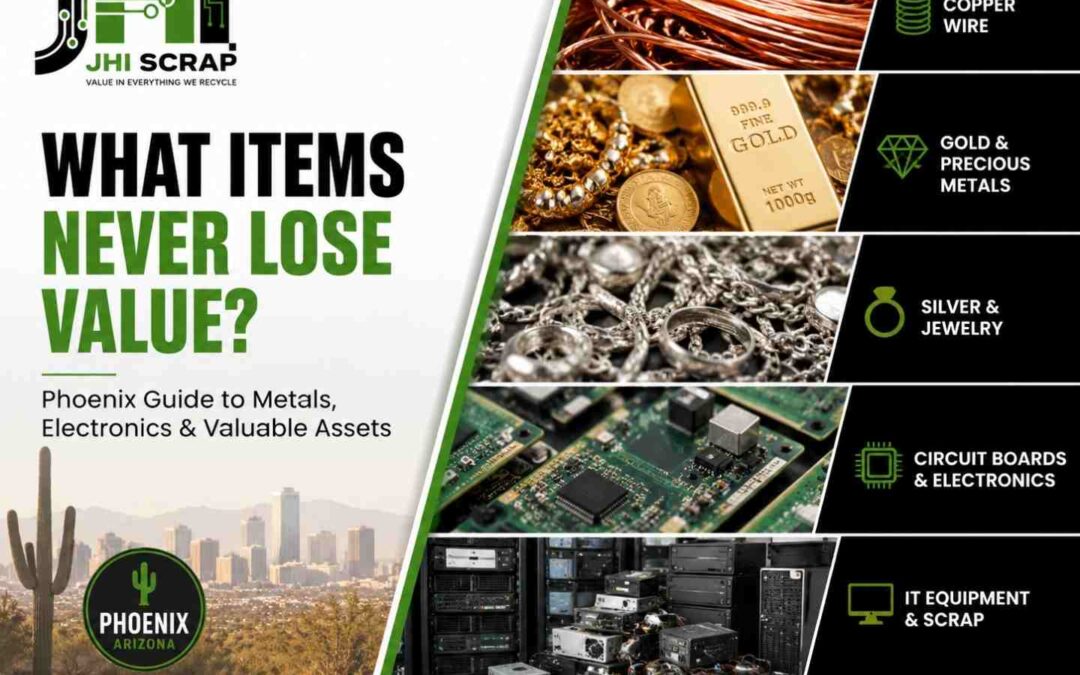
What Items Never Lose Value? A Practical Guide to Items That Hold Value
Some items lose value the moment you buy them. Others keep their worth long after their original purpose is gone.
That gap is where most people leave money on the table.
Here’s the honest answer up front. No single item is guaranteed to never lose value. But a handful of items hold value far better than the rest. Precious metals top that list. Metal-rich electronics sit right behind them. Many of these items hide in plain sight, in drawers, garages, and forgotten IT closets.
Most people only think about resale value. They forget that an item can still hold material value even when nobody wants the product itself. That’s the part we’ll dig into.
So here’s the real question. What if you already own something valuable and don’t realize it? Let’s find out.
Do Any Items Truly Never Lose Value?
The short answer is no. No item is completely safe from market forces. But some items hold value much more reliably than others, and that difference is worth understanding before you sell, donate, or toss anything.
We won’t make hype claims here. Markets change. Demand shifts. Materials hold value in their own way, separate from the product they sit inside. A laptop can lose its resale value while the gold and copper inside it keep their worth.
That’s the trust we want to build with you. This guide trades easy promises for clear thinking.
The Honest Answer: Value Can Change Over Time
Many people assume valuable items always go up in price. The reality is more complicated.
Prices move. A coin worth a lot one year can dip the next. The key is to separate a temporary price drop from a permanent loss of value. A gold ring doesn’t stop being gold when the spot price falls. The material still carries worth.
So when we say an item “holds value,” we mean it tends to keep worth over time. We don’t mean it climbs forever.
Why Some Items Hold Value Better Than Others
Value behaves a bit like gravity. Certain materials keep pulling in buyers decade after decade.
Two forces do most of the heavy lifting. Utility and scarcity. An item that people still need, and that’s hard to find, tends to hold value well.
Here’s the simple version:
- High utility + high scarcity = strong value retention
- Low utility + high supply = fast value loss
- High utility + high supply = steady but lower value
Gold checks both boxes. So does copper, in its own quiet way. A fast fashion shirt checks neither.
Resale Value vs Scrap Value vs Intrinsic Value
People mix these three up all the time. They’re not the same.
| Value Type | What It Means | Best Example |
|---|---|---|
| Resale value | What a buyer pays for the working item | A used laptop that still runs |
| Scrap value | What the raw materials are worth | Copper wire, circuit boards, old motors |
| Intrinsic value | Worth baked into the material itself | Gold, silver, platinum |
Here’s the trap. Many obsolete electronics lose all resale value but keep real scrap value. An old server won’t fetch much as a working machine. The metals inside still matter.
So an item can lose retail value and gain recycling value at the same time. Keep that in mind every time you reach for the trash can.
What Makes an Item Hold Its Value?
Most lasting value comes from a mix of three things. Demand, utility, and scarcity. When all three line up, value tends to stick.
Let’s break down the factors that actually drive long-term worth, one at a time.
Precious or Useful Materials
Raw materials often outlast product trends. A gadget goes out of style. The gold, silver, and copper inside it don’t.
This is why material matters more than looks. A scratched gold bracelet still holds the value of its gold. A shiny plastic toy holds almost nothing.
Useful metals carry their own demand. Copper powers wiring. Gold protects connections. Silver conducts better than almost anything. These materials keep working long after the original product retires.
Scarcity and Limited Supply
What’s scarce today is often sought after tomorrow.
Limited supply pushes value up. Rare materials, small production runs, and discontinued items all benefit from this. When something is hard to find, buyers compete for it.
But scarcity alone isn’t enough. A rare item nobody wants is still worth little. Scarcity only creates value when demand shows up too.
Brand Demand and Buyer Trust
Strong secondary markets protect value. When lots of buyers trust a brand, that brand’s items resell more easily and for more money.
Think about it. A trusted name gives buyers confidence. They know what they’re getting. That confidence holds prices up.
This works for watches, tools, networking gear, and more. A brand with a loyal following almost always holds value better than a no-name version of the same thing.
Condition, Authenticity, and Original Packaging
Condition can make or break value. So can proof that an item is real.
Run through this quick checklist before you judge an item’s worth:
- Does it still work or function?
- Is the original box or packaging included?
- Do you have receipts, manuals, or certificates?
- Are there serial numbers or authenticity marks?
- Is the wear light, or heavy and damaging?
Collectors and buyers pay more for complete, authentic, well-kept items. The closer to “like new,” the better.
Repairability and Parts Value
Here’s a surprise. A broken product can still hold value through its parts.
A dead laptop still has memory, a screen, and a board worth harvesting. A non-working router still has reusable components. Repair shops and refurbishers want these pieces.
So don’t assume “broken” means “worthless.” The repairability and parts value often outlive the working life of the device itself.
Precious Metals: The Classic Store of Value
If one category answers the question best, it’s precious metals. Gold, silver, copper, platinum, and palladium have held value for centuries. They carry both investment demand and industrial demand, and that double pull keeps them strong.
Don’t wait until the well runs dry to appreciate the water. Precious metals reward people who recognize their worth early.
Let’s look at each one.
Gold
Gold holds value because it’s scarce, durable, and trusted across the world. It doesn’t rust or fade. People have used it as money and as a store of wealth for thousands of years.
Gold shows up in three main forms worth noting:
- Gold bullion bars and coins, held for value
- Gold jewelry, which carries both material and resale worth
- Gold in electronics, used to protect connections
Even broken or scrap gold keeps the value of its metal. That’s the core reason gold sits at the top of this list.
Silver
Silver holds value as both an investment metal and an industrial workhorse. It conducts electricity better than any other metal, so industry needs huge amounts of it.
You’ll find silver in bullion, in old flatware, and packed inside electronics. That industrial demand gives silver a floor that pure collector metals don’t always have.
For many people, silver is the easier entry point. It costs less per ounce than gold, and it hides in more everyday items than most folks expect.
Copper
Most people underestimate copper. That’s a mistake.
Copper drives a huge share of real-world recycling value. It powers wiring, motors, cables, and power supplies. The world keeps building things that need it.
Copper rarely makes headlines like gold does. But when you recycle electronics or old electrical gear, copper often does the quiet work of putting money back in your pocket.
Palladium and Platinum
Here’s a discovery for most readers. Platinum and palladium can be more valuable per ounce than you’d guess.
These metals power catalytic converters and high-end electronics. Carmakers and tech makers compete for limited supply, which keeps demand high.
You won’t find them lying around as often as copper. When they do show up, in certain components and converters, they punch well above their size.
Why Precious Metals Appear in Electronics
Electronics contain precious metals because those metals do a job nothing else does as well. Gold resists corrosion and protects tiny connections. Silver conducts current. Copper carries power throughout the device.
Manufacturers use small amounts in each device. Across millions of devices, those small amounts add up to serious recoverable value.
This is exactly why old electronics carry hidden worth. A single phone holds a trace of gold. A pallet of old boards holds a meaningful amount.
If you’re in the Phoenix area and sitting on old equipment, this is where local electronics recycling turns that hidden metal into real value. More on that below.
Electronics That May Still Hold Value
Most people believe all electronics turn worthless with age. That belief costs them money.
Plenty of electronics still hold value through reuse, refurbishment, parts harvesting, and precious metal recovery. The value often comes from those paths long before pure recycling becomes the only option.
That dusty box in storage might hold more value than the device ever delivered while it worked. Let’s open it up.
Servers and Data Center Equipment
Enterprise equipment often depreciates slower than consumer electronics. Servers and data center gear are built tough and built to last.
Businesses upgrade on a cycle. They retire working machines that still have years of use left. That makes used servers and rack hardware a strong category for resale and recovery.
If your company is clearing out a server room, that gear may carry real value. A proper IT asset disposition process helps you recover it the right way.
Network Equipment, Routers, and Switches
Network gear is a quiet value category that many people overlook.
Run through this mini checklist when you find old networking hardware:
- Is it from a trusted business brand like Cisco?
- Does it still power on?
- Are the ports and components intact?
- Is it enterprise grade rather than home grade?
Business routers, network switches, and networking hardware often hold value because companies still need compatible parts. Don’t write them off.
Laptops, Computers, and Workstations
Yes, old computers can be worth money. Even when a machine feels slow by today’s standards, it still holds resale and parts value.
Working laptops sell to buyers who want a budget option. Dead ones give up memory, drives, and screens. Workstations hold even more, since they pack stronger parts.
The takeaway is simple. A used computer rarely has zero value. Check before you bin it.
Cell Phones and Smartphones
Here’s a relief for anyone with a drawer full of old phones. Newer models hold value because parts stay in demand.
Screens, batteries, and chips get reused. Trade-in programs pay for working phones. Even cracked phones have parts worth pulling.
So that smartphone resale value isn’t zero. The fresher the model, the more it holds.
Circuit Boards and Connectors
Circuit boards are the hidden mines inside modern electronics.
They pack small amounts of gold, silver, and copper into a tight space. That concentration is what makes them valuable to recover, even when the device they came from is dead.
Connectors and gold-plated pins add to the haul. If you handle components and boards, you may be holding more value than the size suggests. This is the world of SMD components and capacitors, where tiny parts carry real worth.
Cables, Chargers, and Copper Wiring
Copper often creates value even when the device no longer works. Cables, chargers, and wiring are full of it.
A tangle of old cables looks like junk. To a recycler, it’s copper waiting to be recovered. Power cords, charging cables, and internal wiring all count.
So before you trash a pile of cables, remember what’s inside the plastic.
Items Around the House That Can Still Have Scrap Value
You might already own something valuable and not know it. Have you ever thrown something away, only to learn later it was worth money?
Many valuable household items get ignored because owners only think about retail value. Let’s go room by room and find the worth you’ve been walking past.
Old Jewelry
Old jewelry almost always holds value through its metal. A broken gold chain or a single earring still carries the worth of its gold or silver.
Don’t judge jewelry by whether you’d wear it. Judge it by what it’s made of. Scrap gold jewelry and silver jewelry both hold real value, even when the piece is damaged or out of style.
Silverware and Flatware
Grandma’s silver might be worth more than you think.
The key is to tell sterling silver from plated items. Sterling holds strong value through its metal content. Silver-plated pieces hold far less, since the silver is only a thin coating.
Check for stamps like “sterling” or “925.” That small mark separates a real find from a common set.
Coins and Bullion
Coins made from precious metals hold value through their metal, their rarity, or both. Bullion coins carry the worth of their gold or silver. Some older coins carry collector value on top of that.
Don’t spend or melt old coins without checking first. A coin’s face value and its real value can be worlds apart.
Watches
Quality watches can hold value, and the best ones rise over time. Luxury and collectible watches lead the pack.
Brand, condition, and rarity drive watch resale value. A trusted name with original papers and a box holds value far better than a fashion watch from a big box store.
If you own a quality timepiece, treat it as an asset, not just an accessory.
Dental Scrap and Small Precious Metal Items
Here’s one that surprises almost everyone.
Old dental gold and small precious metal items carry real worth. Dental gold, gold-filled pieces, and other small scraps add up.
To answer a common question, household items that contain precious metals include jewelry, silverware, coins, watches, dental gold, and the insides of electronics. None of these look like treasure. All of them can be.
Collectibles That Sometimes Increase in Value
Some collectibles soar in value. Most don’t. The difference comes down to one rule.
Scarcity alone does not create value. Demand has to exist too. A rare item that nobody wants stays cheap. A rare item that many people chase climbs.
One forgotten collectible sold for thousands decades after it left the store. Why? Let’s look at the categories that sometimes pay off.
Rare Coins
Rare coins gain value from their scarcity, their condition, and collector demand. This is the world of numismatic value, where a coin’s worth goes far beyond its metal.
A low mintage, a minting error, or a key date can turn a small coin into a prized find. Condition matters a lot here. A worn coin and a pristine one can sit at wildly different prices.
Fine Art
With fine art, provenance often matters as much as the artwork itself. Provenance means the proven history of who owned and made the piece.
A documented history builds trust and pushes value up. Art is one of the harder categories to predict. But proven, sought-after work can appreciate strongly over time.
Baseball Cards and Trading Cards
That shoebox in the closet might hold a gem.
Trading card value comes from rarity, condition, and the player or character on the card. Graded cards, sealed in protective cases with a quality score, command the highest prices.
Baseball cards and other trading cards ride waves of nostalgia and demand. The rare ones, in top condition, can be worth a real sum.
Vintage Toys and Memorabilia
That toy you loved as a child may still hold value today.
Vintage toys and memorabilia gain value when they’re rare, original, and tied to strong nostalgia. Original packaging boosts the worth a lot.
Not every old toy is a treasure. But a sealed, sought-after piece from the right era can surprise you.
Limited-Edition Sneakers and Luxury Goods
Limited-edition sneakers and luxury goods hold value through scarcity and brand demand. A small release plus a hyped brand equals a hot resale market.
To answer a top question, the collectibles that increase in value most often are rare coins, graded trading cards, fine art, and limited-edition luxury items. The thread that ties them together is real, lasting demand.
Items That Usually Lose Value Fast
Not every purchase is an asset. Some items lose value fast.
Many products drop in value because newer versions constantly replace them. Oversupply, quick tech changes, and fading demand all speed up the slide.
Some items gain value because they get harder to find. Others lose value because replacements appear every single year. Here are the fast losers to watch.
Most Consumer Electronics
Phones, TVs, and tablets lose value fastest in their first few years. New models launch on a tight cycle, and yesterday’s flagship becomes today’s bargain bin.
The resale value of consumer electronics drops sharply right after release. The good news is that scrap and parts value often outlives the resale value, which is the whole point of recovering it later.
Cars and Luxury Vehicles
Cars lose value because they wear out, pile up miles, and face constant new models. A new car can shed a big chunk of its value the moment it leaves the lot.
Luxury cars often fall hardest in raw dollars. Used car value depends on mileage, condition, and demand for that specific model. Few vehicles beat depreciation.
Fast Fashion and Most Clothing
Most clothing loses value fast, and fast fashion loses it fastest. Cheap production and endless new styles flood the market.
A few designer or vintage pieces buck the trend. The everyday shirt does not. Clothing resale value sits near the bottom of the list for most items.
Timeshares
Many timeshares face weak resale demand and lose value quickly. Buyers are hard to find, and ongoing fees scare people off.
The secondary market for timeshares is thin. That makes them one of the tougher items to sell for anything close to what you paid.
Mass-Produced Furniture and Appliances
That giant entertainment center that cost a fortune in 2005 may now be harder to give away than sell.
Mass-produced furniture and appliances lose value fast because supply is huge and styles change. Used furniture value and appliance resale value stay low for most common pieces. Solid wood antiques are a different story, but the flat-pack stuff rarely holds up.
Why Old Electronics Can Be Worth More Than People Think
Here’s the big shift in thinking. Old electronics often hold value through recoverable metals, reuse, and refurbishment, not just resale.
The most valuable part of an old device may not be what you see on the outside. Let’s reveal where that hidden value lives.
Electronics Contain Recoverable Metals
Many circuit boards hold small but real amounts of gold, silver, and copper. Multiply that across a pile of devices and the recoverable value grows fast.
Gold protects connections. Silver carries current. Copper runs throughout. Recyclers recover these metals from boards, wiring, and components that would otherwise go to waste.
So an old device that looks like junk is really a small store of metal.
Reuse Often Comes Before Recycling
Yes, electronics should be reused before recycling whenever possible. Reuse and refurbishment usually create more value than raw material recovery alone.
A working machine sold or refurbished serves another user. That keeps more value in play and delays the need to break it down. Smart asset recovery always checks for reuse first.
This is the heart of good surplus electronics handling. Get the most life and value out of a device before it becomes scrap.
Bulk Electronics Have More Value Than Single Devices
Large volumes create economies of scale during recovery. One old phone holds a tiny bit of value. A pallet of old phones holds real money.
Bulk electronics recycling makes the math work. The recovery process costs the same per batch whether it’s small or large, so volume drives the payoff.
For businesses, this is where excess inventory management turns piled-up stock into recovered value.
Businesses Often Have Hidden Value in IT Closets
Many companies know they have outdated equipment. Few realize that equipment may still hold measurable value.
IT closets, storage rooms, and surplus shelves often hide valuable hardware. Old servers, switches, drives, and test gear sit there gathering dust.
Phoenix businesses and Arizona tech companies clear out this gear all the time. Done right, that cleanup becomes a source of recovered value rather than a disposal cost. Test gear matters here too, and proper test equipment recovery captures value many firms overlook.
How to Know If Your Item Still Has Value
Before you throw anything away, spend a few minutes checking its true value. It pays off more often than you’d think.
Always check multiple value paths: resale, refurbishment, scrap, and collectible value. An item that fails one test may pass another. Here’s a simple way to evaluate anything in your home or office.
Check the Material
Materials often matter more than appearance. Start by figuring out what the item is made of.
Look for precious metals like gold, silver, copper, or platinum. Check for stamps, weight, and color. A worn item made of valuable metal still holds scrap metal value, no matter how rough it looks.
Check the Brand and Model
Brand and model tell you how much demand exists. Find the model number and search what similar items sell for.
A trusted brand with active buyers holds value. A no-name product with no demand usually doesn’t. This one check often answers the question fast.
Check the Condition
Condition shapes value more than almost anything else.
Use this quick condition checklist:
- Does it work?
- Is the wear light or heavy?
- Are parts missing or broken?
- Would a buyer call it good, fair, or poor?
Honest grading helps you set the right expectations. A working item in clean shape beats a damaged one every time.
Check for Original Packaging or Documentation
Collectors often pay premiums for complete sets. Original packaging, manuals, and certificates of authenticity all add value.
The box you almost recycled could be worth keeping. Receipts and papers prove the item is real and boost collector value. Always check before you toss the extras.
Ask a Professional Recycler or Buyer
When in doubt, ask someone who handles these items every day.
A professional recycler or buyer can tell you an item’s real value quickly. They know current demand, metal content, and fair pricing.
To find out if your item has value, you check the material, brand, condition, and packaging, then confirm with a professional buyer or appraiser. If you’re a Phoenix recycler customer or an Arizona business, a local electronics recycling service can assess your gear and tell you what’s worth recovering.
Best Items to Recycle for Value
Want to know where to start? Focus on concentration of metals, not physical size.
A small circuit board can hold more value than a large plastic device. The most valuable recycling opportunities are often the items people overlook. Here’s how to prioritize.
Computers and Laptops
Old computers are worth money, which makes them one of the strongest recycling categories. They pack boards, drives, memory, and metals into one device.
Working machines resell. Dead ones give up parts and metals. Either way, computer recycling and laptop recycling rank near the top for value recovery.
Servers and IT Equipment
Enterprise equipment frequently holds higher-value components. Servers and IT gear are built with quality parts and more metal than consumer devices.
Server recycling and IT equipment recycling reward volume. Businesses that retire racks of gear sit on real recoverable value. Data center equipment value is a category worth taking seriously.
Cell Phones and Tablets
Phones and tablets hold value through working resale and recoverable metals. They’re small, but they add up fast in volume.
Smartphone recycling and tablet recycling work best in bulk. A drawer of old devices is worth gathering up rather than tossing one by one.
Circuit Boards
Circuit boards work like tiny treasure maps filled with recoverable materials.
They hold the densest mix of gold, silver, and copper in most electronics. That’s why circuit board recycling drives so much of the value in e-waste. Don’t let boards slip into the trash.
Wire, Cable, and Copper-Containing Items
Copper makes wire and cable a reliable value category. Power cords, internal wiring, and bundled cables all count.
Copper wire recycling turns a tangled mess into recovered metal. The copper scrap value adds up across a household or a business.
Power Supplies, Motors, and Electrical Components
Copper and other recoverable metals often drive the value here. Power supplies, electric motors, and electrical components are dense with it.
These parts hide inside appliances, tools, and equipment. Pull them out, and you’ll find more value than the bulky plastic shell ever suggested.
What Should You Do With Items That Still Have Value?
Now you know what holds value. So what’s the right next step?
Evaluate items in this order: reuse, resale, donation, then recycling. That order squeezes the most value and good out of every item. Here’s the simple rule.
If an item still works, sell it. If someone can use it, donate it. If neither fits, recycle it responsibly.
Sell It If It Still Works
Sell working items first to capture the most value. A functioning laptop, phone, or piece of equipment is worth real money to the right buyer.
List it, trade it in, or sell it to used equipment buyers. Resale value is highest while the item still works, so act before it ages out.
Donate It If Someone Can Reuse It
Donate working items that you can’t or won’t sell. Schools, charities, and community groups often need reusable technology.
Donation keeps the item in use and helps someone out. It’s a strong choice when resale isn’t worth the effort but the item still has life left.
Recycle It If It Is Broken or Obsolete
Recycle items that no longer work or sell. Broken and obsolete electronics still hold recoverable metals worth capturing.
Responsible recycling pulls out the value and keeps harmful waste out of the ground. When reuse and resale are off the table, this is the right move.
Avoid Throwing Electronics in the Trash
Never throw electronics in the regular trash. E-waste can leak harmful materials, and you toss recoverable value along with it.
Use proper e-waste recycling instead. Phoenix electronics recycling and Arizona e-waste recycling services handle this the right way, so nothing valuable or harmful ends up in a landfill.
Final Answer: What Items Never Lose Value?
Time to close the loop. Here’s the clear, honest answer.
No item is guaranteed to never lose value. But precious metals and metal-rich electronics hold value the most reliably of anything you’ll own. The best time to recognize that value is before it ends up in the trash.
No Item Is Guaranteed, But Some Hold Value Better
Don’t trust anyone who promises an item will never lose value. Markets shift, and prices move.
Instead, focus on items that retain value well over time. Precious metals lead. Quality and scarcity help. That’s a far smarter frame than chasing guarantees.
Precious Metals and Metal-Rich Electronics Are the Strongest Practical Answer
The items that hold value best are precious metals and the electronics that contain them. Gold, silver, copper, platinum, and palladium carry both investment and industrial demand.
Old electronics fold neatly into this answer. They hold recoverable metals plus reuse and parts value. That combination makes them the most overlooked store of value in most homes and offices.
The Smart Move Is to Recover Value Before Disposal
Recover value before you dispose of anything. Check the material, the brand, the condition, and the demand first.
A few minutes of checking can turn “junk” into recovered value. So before you toss that old gear, find out what it’s really worth. Reach out and get it assessed before it leaves your hands.
FAQs About Items That Never Lose Value
What items never lose value? No item never loses value with full certainty. But precious metals like gold, silver, and copper hold value the most reliably, along with the electronics that contain them. These items keep worth even when their original product use is gone.
Does gold ever lose value?
Gold prices rise and fall with the market, so its price can drop. But gold rarely loses its core value, since it’s scarce, durable, and trusted worldwide. A temporary price dip is not the same as a permanent loss of worth.
What household items hold value best?
Jewelry, sterling silverware, precious metal coins, quality watches, and the metals inside electronics hold value best at home. Most carry worth through their materials, not just resale. People often overlook them because they only think about retail value.
Do electronics hold value?
Many electronics hold value through resale, refurbishment, parts, and recoverable metals. Newer devices keep resale value, while older ones keep scrap and metal value. Even broken electronics often hold worth that’s easy to miss.
What electronics are worth recycling?
Computers, laptops, servers, phones, circuit boards, and copper wiring are the top electronics worth recycling. They pack the most recoverable metals into the least space. Bulk lots and business gear hold the most value of all.
Are old computers worth money?
Yes, old computers are often worth money. Working ones resell, and dead ones give up parts and recoverable metals like gold and copper. A used computer rarely has zero value, so check before you toss it.
Do circuit boards contain gold?
Yes, circuit boards contain small amounts of gold, along with silver and copper. Gold protects key connections from corrosion. Each board holds only a trace, but in volume those traces add up to real recoverable value.
What metals are valuable in e-waste?
Gold, silver, copper, palladium, and platinum are the most valuable metals in e-waste. Gold and silver carry connections and conduct current, while copper runs throughout devices. Palladium and platinum show up in select high-value parts.
Is it better to sell or recycle old electronics?
Sell electronics first if they still work, since resale captures the most value. Recycle them when they’re broken or obsolete to recover the metals inside. The smart order is reuse, resale, donation, then recycling.
Where can I recycle electronics for value?
Use a certified electronics recycler that pays for or recovers value from your gear. In the Phoenix area, local electronics recycling and Arizona e-waste services can assess your items and recover the metals inside. Always confirm value before disposal.
Know What to Look For Before You Let It Go
Some people see old electronics as clutter. Others see recoverable value. The difference usually comes down to knowing what to look for.
Here’s what to carry with you. No item is guaranteed to hold value forever. But precious metals and metal-rich electronics come closest, and most homes and businesses are sitting on more value than they realize. The most overlooked category of all is obsolete electronics.
So before you toss that drawer of cables, that old server, or that box of forgotten gear, stop and check. Look at the material. Check the brand and condition. Then ask a professional what it’s really worth.
You don’t have to be an expert to recover value. You just have to look before you let it go.
Ready to find out what your old electronics are worth? Reach out to our team and turn forgotten gear into recovered value. Want more guides like this one? Visit the JHIE Scrap blog for practical tips on value, recycling, and asset recovery.