
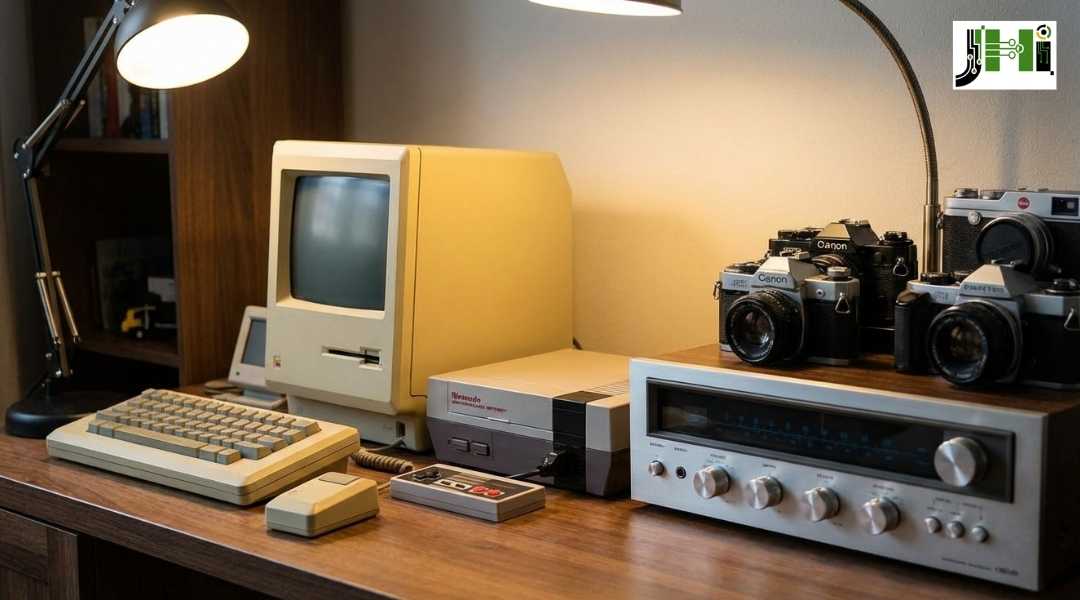
You ever open a drawer and find three old phones just sitting there? Maybe a dusty console. A camera you forgot you owned. Here’s the thing: that “junk” might not be junk at all. Some old electronics are pulling real money right now. And most people don’t even know what they’re sitting on. This guide breaks it all down. What sells, what collectors want, and how to turn old tech into actual cash. No fluff, no guessing.
What Old Electronics Are Worth Money in Phoenix, AZ?
Phoenix is quietly one of the best cities in the country for selling old tech. The market here is active. Collectors, gamers, and audio nerds are all buying. Retro gaming gear moves fast in local Facebook groups. Vintage audio equipment gets snapped up at estate sales before it even hits the internet. And rare Apple products? They find buyers in hours. If you’re in Phoenix and you’ve got old electronics lying around, you’re in a good spot. This city is a gold mine for retro tech. You just need to know what’s worth your time.
Overview of the Secondary Tech Market
Think of the secondary electronics market like a giant swap meet. Sellers have old gear. Buyers want exactly that gear. And prices are driven by nostalgia, scarcity, and demand. Like vintage cars, old tech gains value with time. A Nintendo 64 that cost $200 new can sell for more today. A sealed Game Boy still in its box? Even more. The market runs on two forces: supply shrinks as items age, and demand grows as nostalgia kicks in. That’s the engine behind every resale price you’ll see in this guide.
Understanding the Value of Old Electronics in Phoenix, AZ
Not all old tech is valuable. But some items can genuinely shock you. The difference between a $10 sale and a $500 sale often comes down to a few key factors. Value isn’t random. It follows patterns. Once you understand those patterns, you stop guessing and start making smart decisions about what to keep, what to sell, and what to let go. Here’s what actually drives the price of old electronics.
Factors That Determine Value
Five things control resale value almost every time. Condition. Rarity. Brand. Completeness. And original packaging. Get all five working in your favor and you’ve got something special. Even two or three can push the price well above average.
Condition
A working device is always worth more than a broken one. That part is obvious. But here’s what most people miss: broken items still have value. Parts buyers exist for a reason. A cracked iPhone with a good camera module? Worth something. A dead console with working controllers? Still sellable. Condition matters, but it’s not the whole story.
Rarity
Limited production runs create lasting demand. When a manufacturer only made a small batch, collectors pay a premium to own one. And that premium only grows over time. Think about first-edition anything. First-gen iPhones. Regional console releases. Japan-only game cartridges. Rarity is the multiplier that turns a decent find into a serious payday.
Brand and Model
Brand recognition drives resale. Apple, Sony, and Nintendo dominate the secondhand market. Buyers trust those names and they’re willing to pay for them. But it goes deeper than brand alone. Specific models matter. The original Sony Trinitron CRT. The first PowerBook. The Game Boy Color in rare colors. Model matters as much as the name on the box.
Completeness
A console with the original box, cables, controller, and manual is worth significantly more than the console alone. Missing one cable can cut your price by 20 percent or more. Before you list anything, gather every original piece. Charging cables. Adapters. Warranty cards. Even foam inserts help. Completeness signals care, and buyers pay for that.
What Actually Determines the Value?
Here’s a fast checklist to run through before you price anything:
- Working condition? Yes adds value. No removes it (but doesn’t kill it).
- Original parts included? Every piece adds dollars.
- Rare model or edition? Check production numbers.
- Recognizable brand? Apple, Sony, Nintendo lead.
- Original box? Even empty boxes add value.
Use all five factors together. Don’t judge based on one thing alone.
Original Packaging
Don’t throw away the box. Ever. Original packaging can double or even quintuple the value of an item. A sealed, unopened product in its original box is a collector’s dream. Even an open box in great shape adds real money. Buyers see the box as proof of care. Treat it accordingly.
Condition and Functionality
Working devices sell faster and for more money. But there’s a smarter version of this rule: test before you list. A device that’s tested and confirmed working earns buyer trust. It reduces negotiation. It speeds up the sale. Ten minutes of testing can add $50 to your final price.
Rarity (A Quick Reminder)
Niche demand drives price spikes. You don’t need a mass-market product to make good money. Sometimes the opposite is true. An obscure item with a passionate collector base can outsell a common one by a wide margin.
High-Value Collectible Electronics in Phoenix, AZ
Some electronics aren’t just old. They’re coveted. These are the items that serious collectors hunt for and pay serious money to own. Some of these items sell for more than a new laptop. A few can hit the price of a used car. The key is knowing what you have before you accidentally sell it for nothing. This section covers the high-end tier. The stuff worth researching before you price it.
The High-Value Collectibles: The “Holy Grails”
What makes a device jump from junk to jackpot? Three things: rarity, brand legacy, and cultural timing. These are items tied to moments in tech history. The first of something. The rarest version. The device that changed how people lived. Collectors don’t just want them. They need them.
- First-generation Apple products
- Sealed retro game cartridges
- Early vintage computers with working hardware
- Limited-edition consoles and peripherals
If you own any of these, do your research before selling.
Original Apple Products
Early Apple products hold incredible resale value. The original Macintosh. The Apple I and Apple II. Even early iPods and the first iPhone are collectible now. Condition and originality matter most here. A fully working unit with original peripherals commands a premium. Even non-working machines with original parts attract serious buyers. Apple’s brand legacy is unmatched in tech collecting. If you’ve got early Apple gear, don’t undersell it.
Retro Gaming Consoles and Sealed Games
Remember playing this as a kid? A lot of people do. And that nostalgia translates directly into buyer demand. A used NES or Super Nintendo in good condition can sell for $100 to $300. A sealed copy of a rare game? Thousands. The jump from used to sealed is dramatic and real. Sealed condition is the key word here. Original shrink wrap. Factory seal intact. That’s where the serious money lives.
Vintage Computing
Old computers attract a passionate and specific collector base. Think Apple II. Commodore 64. TRS-80. These machines defined an era of computing history. Like classic cars, old computers gain value with age. Working units are especially valuable. But even non-working systems attract buyers who want to restore them.
Valuable Categories of Old Electronics in Phoenix, AZ
You might already own something valuable and not know it. This section covers the real-world categories that sell consistently in Phoenix. These aren’t just “maybe valuable” items. These are categories with active buyers, real demand, and predictable pricing. Knowing them helps you spot opportunity fast.
Vintage Computers and Laptops
Early computers and vintage laptops are hot right now. Working models from the 1980s and 1990s are especially sought after by collectors and retrocomputing enthusiasts. The sweet spot is a fully functional machine with original accessories. But even parts-only units find buyers. Phoenix has a growing retrocomputing community that snaps these up regularly.
High-Value Examples
- Apple Macintosh 128K (original 1984 model)
- Commodore 64 with original packaging
- IBM ThinkPad 701 (butterfly keyboard model)
- Apple PowerBook G4 Titanium
These aren’t just old laptops. They’re collectibles with active resale markets.
Why They’re Valuable
Nostalgia drives demand. So does scarcity. And so does the growing retrocomputing hobby community. These machines represent early computing in a way that modern hardware simply can’t replicate. Usability matters too. Some buyers want to actually run these machines. That keeps functional units at a consistent premium.
Early Mobile Phones and Handheld Devices
First-generation mobile phones are climbing in collector value fast. The original Motorola DynaTAC. Early Nokia bricks. First-gen BlackBerry devices. These aren’t museum pieces anymore. They’re resale gold. Buyers are motivated by nostalgia and by the cultural weight these devices carry. They represent turning points in how we communicated.
Valuable Devices
- Original Motorola DynaTAC 8000X
- Nokia 3310 (early models, good condition)
- First-generation BlackBerry
- Original Palm Pilot
- Nintendo Game Boy (original grey brick)
Condition and working status matter here. So does original packaging.
What Drives Value
- Rarity of the model
- Working condition
- Cultural or historical significance
- Original accessories included
- Collector community demand
Retro Gaming Consoles and Accessories
Gaming hardware from the 1980s and 1990s is one of the most active resale categories right now. And Phoenix has a strong local gaming community driving demand. NES, Super Nintendo, Sega Genesis, Neo Geo. These all move fast. Especially in good condition with original controllers and cables.
High-Demand Consoles
- NES and Super NES (original and Mini versions)
- Sega Genesis and Game Gear
- Nintendo 64
- Sony PlayStation 1 (original launch model)
- Neo Geo AES (rare and high-value)
The Neo Geo AES in particular can fetch hundreds to thousands depending on condition and game library.
Valuable Extras
Don’t ignore the small stuff. Accessories can outperform the consoles themselves.
- Rare controllers (limited edition, regional)
- Light guns (Zapper, Super Scope)
- Memory cards (original, branded)
- Game cartridges (especially sealed or rare titles)
A sealed copy of a rare game often sells for more than the console it runs on.
Vintage Audio Equipment
The audiophile market is thriving. Buyers are chasing the warm analog sound that modern digital equipment can’t replicate. And vintage gear is how they get it. Turntables, reel-to-reel players, vintage receivers, and tube amplifiers are all in demand. Phoenix has an active audio collector community that pays well for quality gear.
Popular Items
- Technics SL-1200 turntable series
- Marantz receivers (1970s models)
- Pioneer reel-to-reel decks
- Sansui and Kenwood amplifiers
Brands matter here. Stick to the recognizable names and you’ll find buyers quickly.
Value Factors
- Brand reputation in audiophile community
- Working condition (essential for audio gear)
- Original components (not modified)
- Cosmetic condition of faceplate and controls
- Completeness (remote, manual, original cables)
Old TVs and CRT Monitors
CRT monitors are having a serious comeback. Retro gamers want them for their zero-lag display and scanline aesthetic. And the supply is only shrinking. A good CRT monitor can sell for $50 to $300 depending on size, brand, and condition. That’s real money for something most people leave on the curb.
Why They’re Valuable
Modern displays have input lag. CRTs don’t. For retro gaming, that difference is everything. Serious gamers pay for the authentic experience.
The supply side is also collapsing. Most CRTs have already been scrapped or broken. Finding a clean, working unit is increasingly rare.
Vintage Cameras and Photography Gear
The film photography revival is real. A whole generation of photographers is shooting on 35mm, medium format, and even large format film. That’s driving demand for vintage cameras and lenses.
Canon AE-1. Nikon FM2. Leica M-series. These aren’t just collectibles. They’re being actively used. And that demand is sustained and growing.
Valuable Gear
- Canon AE-1 and AE-1 Program
- Nikon FM2 and F3
- Leica M3 and M6
- Polaroid SX-70 (original folding model)
- Hasselblad 500 series (medium format)
Lenses often fetch more than camera bodies. A quality vintage prime lens can sell for hundreds with little effort.
Key Value Drivers
- Brand (Leica, Nikon, Canon lead)
- Lens quality and condition
- Working shutter and meter
- No fungus or haze in glass
- Film door seal condition
Obsolete Storage Devices and Media
This one surprises people. Old floppy disks, ZIP drives, MiniDisc players, and DAT tapes actually sell. And sometimes for more than you’d expect.
Collectors want them. Data recovery specialists need them. Hobbyists use them for niche creative projects. The demand is real even if it’s niche.
Examples
- MiniDisc players and recorders
- ZIP drives (Iomega, 100MB and 250MB)
- DAT tape players
- LaserDisc players
- Original floppy disk drives
Condition matters. Working units command a premium.
Why They Sell
Nostalgia is part of it. But data recovery drives serious demand too. Businesses and individuals still need to access files stored on old formats. That creates a consistent buyer pool beyond pure collectors.
Mid-Tier Nostalgia Electronics Market in Phoenix, AZ
Not every item is a jackpot. But many still bring easy cash. The mid-tier market is where most sellers actually operate. And it’s nothing to dismiss. These are everyday items that people remember using. Walkmans. Boomboxes. Compact cameras. Early digital music players. They’re not rare. But they’re wanted. And they move.
The Mid-Tier Nostalgia Market
Mid-tier items sell because people recognize them. That recognition creates emotional demand. And emotional demand creates buyers. The strategy here isn’t to find one $500 item. It’s to sell 10 items at $50 each. Volume wins in this category. And the items are easy to find.
Sony Walkmans
Remember rewinding your favorite tape? A lot of people do. And they’ll pay to hold that memory again. A working Sony Walkman in good condition sells for $30 to $150 depending on model. The Sport and auto-reverse models sit at the higher end. Working units with original headphones fetch the most.
Classic Audio Equipment
Vintage stereo equipment from the 1970s and 1980s attracts steady buyers. Receivers. Tape decks. Turntables. These items benefit from the analog revival happening in audio culture. Even mid-tier brands like Fisher and Pioneer move consistently. The warm sound versus digital comparison wins new converts every day. That keeps demand strong.
Vintage Cameras
Non-working vintage cameras still sell for parts and display purposes. But working film cameras are the real opportunity here. Point-and-shoot models from the 1990s are trending. The Canon Sure Shot. The Nikon L35AF. The Olympus Stylus. These sell quickly to younger film shooters who want accessible entry-level gear.
Scrap and Parts Value of Electronics in Phoenix, AZ
Even broken electronics still hold value. This is the safety net every seller should know about. When resale isn’t viable, scrap and parts buyers fill the gap. This should be your last option, not your first. But it’s good to know it exists. Nothing in your collection has to be worthless.
Scrap Electronics: Precious Metals
Here’s something most people don’t know. Electronics contain gold, silver, and palladium. In small amounts, yes. But in volume, those amounts add up fast. Circuit boards hold most of the value. Old CPUs and RAM chips are especially dense in precious metals. That’s why scrappers specifically seek them out.
Valuable Materials
- Gold (found in connectors, pins, CPU contacts)
- Silver (solder points, some contacts)
- Palladium (capacitors in older devices)
- Copper (wiring, PCB traces)
- Platinum (rare, found in some components)
Common Sources
- Old desktop computers (yield more than modern devices)
- Server boards
- Vintage CPUs (486, Pentium era)
- Telecommunications equipment
- Old printers and fax machines
Old desktops consistently yield more precious metal per unit than modern slim devices. Older manufacturing used more generous amounts of gold plating.
The Scrap and Parts Market
Parts buyers are specialists. They’re not buying your whole device. They’re buying what’s inside it. And they know exactly what they want. This market runs quietly but efficiently. Repair shops need donor units. Hobbyists need specific chips. Scrappers need circuit boards. Each creates a different buyer for the same item.
Component Harvesting
RAM, CPUs, and graphics chips hold resale value even when the full device is dead. A stripped motherboard with working RAM slots still has a buyer. The key is knowing which parts are worth pulling. Focus on: RAM sticks, CPU chips, GPU cards, and SSDs. These move quickly in the parts market.
Precious Metal Recovery
Gold recovery sounds exciting. But let’s be honest. DIY recovery is rarely profitable for small quantities. The chemicals are hazardous and the yields are tiny. The smarter play is selling boards in bulk to a certified refiner or scrap buyer. Let the professionals handle extraction. You get paid by weight and metal content. No risk, no chemistry.
Where to Sell Old Electronics in Phoenix, AZ
You’ve got items worth selling. Now what? The question is simple: do you want fast cash or the highest price? Both are valid answers. But they lead to different selling paths. Here’s how each one works.
Where to Sell Old Electronics
Two main options exist: online platforms and local buyers. Each has tradeoffs around speed, price, and effort. Knowing which to use for which item saves you time and maximizes your return.
Online Platforms
Online selling takes more effort but typically returns more money. It’s the right path for high-value or rare items where finding the right buyer matters.
- eBay: Best for rare, collectible, and high-value items. Global buyer pool.
- Facebook Marketplace: Strong in Phoenix. Good for quick local sales.
- Swappa: Ideal for phones, tablets, and laptops.
- Mercari: Easy to use. Good for mid-tier items.
Use online platforms when your item is worth researching and packaging properly. The extra work pays off.
Local Options
Local selling is faster. You skip shipping and deal in person. The tradeoff is a lower price. But sometimes speed matters more than maximum profit.
- Pawn shops in Phoenix: Quick cash, lower offers
- Local electronics recyclers: Good for bulk or low-value items
- GameStop or used game shops: Reliable for gaming gear
- Estate sale buyers: Good for collections and lots
- Local collector meetups: Best price for niche items
Go local when you want cash today. Go online when you want the best price.
Monetization Strategies for Old Electronics in Phoenix, AZ
Sell smart or settle fast. Both choices are valid. But the best sellers know when to use each one. This section helps you build a strategy instead of just grabbing the easiest option every time.
Recycling vs. Reselling
Reselling almost always gives you more money. Recycling is the fallback. The choice comes down to item condition and realistic resale value.If an item can sell for $20 or more, resell it. If repair costs more than resale value, recycle it. That’s the line.
When to Sell
- The item works (or mostly works)
- It has collector or nostalgia appeal
- You have original parts or packaging
- Demand is active right now (check eBay sold listings)
- The item is becoming rarer over time
Sell before tech becomes obsolete to new buyers. Demand has a window. Use it.
When to Recycle
- Repair cost exceeds realistic resale value
- Item is too common to attract buyers
- No original parts or accessories remain
- Physical damage is severe
- Hazardous materials require proper disposal
Recycling isn’t failure. It’s the responsible last step when resale isn’t realistic.
Legal and Environmental Considerations for Electronics in Phoenix, AZ
Selling old electronics comes with real responsibilities. Data security. Environmental rules. Safe handling. These aren’t optional extras. They’re part of being a smart seller. Getting this right also builds trust with buyers. That trust translates to faster sales and better prices.
Legal and Environmental Considerations
Electronics contain toxic materials. Lead, mercury, cadmium. These can’t go in regular trash in most cases. And Arizona has specific rules about e-waste disposal. Beyond the environment, you’re also responsible for the data on your devices. Selling a device with personal information still on it is a serious privacy risk.
E-Waste Regulations
Arizona follows federal guidelines on e-waste disposal. Most electronics can’t be legally dumped in landfills. You need to use certified recyclers or manufacturer take-back programs. Phoenix has several certified e-waste recycling centers. Use them. Non-compliance carries fines. And it’s simply the right thing to do.
Data Security
Wipe every device before it leaves your hands. This is non-negotiable.
- Factory reset all phones, tablets, and computers
- Degauss or physically destroy old hard drives if sensitive data was stored
- Remove SIM cards and memory cards before selling
- Log out of all accounts and delink from cloud services
A factory reset takes five minutes. A data breach takes years to recover from.
Sustainable Practices
The best order of operations for old electronics is simple. Reuse it if you can. Resell it if someone wants it. Recycle it properly if neither works. Donate working devices to local schools or nonprofits before you scrap them. Phoenix has several organizations that accept electronics donations. One person’s old laptop is another student’s learning tool.
So, What Old Electronics Are Worth Money? More Than You Think.
You came in wondering if your old tech was worth anything. Now you know it is.
Whether it’s a retro console from childhood, a vintage camera sitting in a closet, or a broken desktop nobody wants to look at — there’s a buyer for almost everything. The key is knowing what you have and where to take it.
Phoenix has an active market. And Jay Hohel Inc is right here in the middle of it.
We buy old electronics. We make it simple. No guessing on price. No wasted trips. Just fast, honest cash for the gear you no longer need.
We’ve been serving Phoenix sellers at 3334 W McDowell Rd Unit 17 for years. We know this market. And we know how to pay you fairly for what your items are actually worth.
Don’t let valuable tech collect dust. Bring it in. Call us. Or shoot us a quick email. We’ll take it from there.
📞 Ready to Turn Old Electronics Into Cash?
Jay Hohel Inc — Phoenix’s Trusted Electronics Buyer
📍 3334 W McDowell Rd Unit 17, Phoenix, AZ 85009 📞 (602) 272-4033 ✉️ JayHoehlinc@gmail.com 🌐 jhiescrap.com