
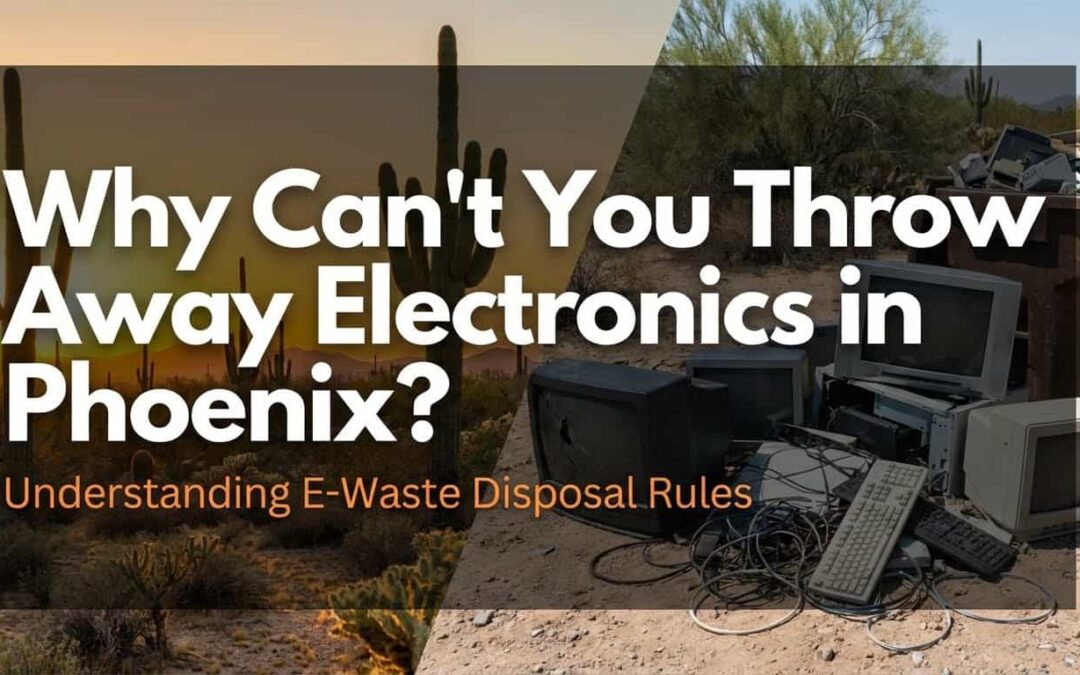
Every year, Phoenix residents toss millions of pounds of old phones, laptops, and printers into the trash. But here’s the problem: those items can’t legally go in your garbage bin. Electronics disposal in Phoenix comes with strict rules designed to protect our desert community from toxic contamination.
Arizona’s e-waste restrictions exist for good reason. Old devices contain heavy metals like lead and mercury. When crushed in landfills, these toxins seep into groundwater. The result? Contaminated soil, polluted air, and health risks for everyone.
Understanding these rules helps you stay compliant and do right by Phoenix.
Why Throwing Away Electronics Is Restricted in Phoenix
Phoenix banned electronics from regular trash to protect public health and the environment. The main reason is simple: electronics contain hazardous materials that don’t belong in landfills.
Here’s why the city takes e-waste seriously:
Environmental protection: Circuit boards leak lead, cadmium, and mercury into desert soil. These toxins travel through groundwater and harm local ecosystems.
Safety concerns: Lithium batteries in phones and laptops can spark fires in garbage trucks. These fires endanger workers and damage equipment.
Resource recovery: Old electronics contain valuable metals like gold, silver, and copper. Throwing them away wastes materials that could be recycled and reused.
Phoenix’s e-waste restrictions mirror statewide efforts to keep Arizona clean. The rules apply to households, businesses, and municipal facilities across the Valley.
Challenges in the Recycling Process
Recycling electronics is harder than tossing out cardboard or plastic bottles. E-waste requires special handling because of its complex composition.
Standard recycling facilities can’t process circuit boards or batteries. These items need specialized equipment to safely extract metals and dispose of hazardous components.
Here are the main challenges:
Mixed materials: A single smartphone contains dozens of materials. Glass, plastic, copper wiring, and rare earth metals all require different processing methods.
Contamination risks: If workers aren’t trained properly, they can be exposed to toxic dust. Lead solder and mercury switches pose real health dangers during disassembly.
Low participation rates: Many Phoenix residents don’t know where to recycle electronics. This leads to illegal dumping or items sitting in garages for years.
Costly infrastructure: Building e-waste processing facilities requires significant investment. Not every recycling center has the equipment needed to handle electronics safely.
A real-world example: In 2023, a Phoenix-area facility temporarily shut down after improper battery sorting caused a small fire. The incident highlighted how critical proper training and equipment are in e-waste recycling.
What Are the Rules and Regulations for Electronics Recycling in Phoenix?
Phoenix enforces clear rules about electronic waste disposal. These regulations align with Arizona state law and local municipal codes designed to protect residents and the environment.
You cannot place electronics in curbside trash bins or residential dumpsters. This includes computers, monitors, TVs, printers, cell phones, tablets, and any device with a circuit board or battery.
Key Phoenix regulations include:
Ban on landfill disposal: Electronics are prohibited from regular trash collection. Violators may face fines or citations from the city.
Mandatory recycling pathways: Residents must use approved drop-off centers, certified recyclers, or special collection events. The city provides multiple options to make compliance easy.
Business requirements: Companies generating e-waste must partner with licensed recyclers. Businesses cannot simply throw old computers in their commercial dumpsters.
Data security standards: Organizations disposing of IT equipment must ensure proper data destruction. This protects customer information and complies with privacy laws.
Phoenix adopted these rules in coordination with the City of Scottsdale and other Valley municipalities. The goal is consistent enforcement across Maricopa County.
The City of Phoenix Environmental Services Department updates these policies regularly. Check their official website or call 602-262-7251 for the most current guidance.
Hazardous Materials in Electronic Waste
Electronics contain dangerous substances that require careful handling. These materials pose risks to human health and the environment if not managed properly.
Common hazardous components include:
- Lead: Found in circuit boards and older CRT monitors
- Mercury: Present in LCD screens and fluorescent backlights
- Cadmium: Used in rechargeable batteries and some chips
- Brominated flame retardants: Applied to plastic casings to prevent fires
Even small amounts of these materials can contaminate soil and water. That’s why specialized recycling is essential for all electronics.
Environmental and Public Health Concerns
Improper e-waste disposal creates serious health risks for Phoenix residents. Toxic materials from electronics can contaminate our air, water, and soil.
When electronics break down in landfills, heavy metals leach into the ground. Arizona’s dry climate doesn’t prevent this contamination—it can actually concentrate toxins in the soil.
Health impacts include:
Respiratory problems: Lead dust from crushed circuit boards can be inhaled by sanitation workers and nearby residents.
Neurological damage: Mercury exposure affects brain development in children. Pregnant women are especially vulnerable to mercury contamination.
Groundwater contamination spreads these risks beyond landfill sites. Phoenix relies on aquifers for drinking water, making protection of these resources critical.
Safety Risks in Landfills and Waste Facilities
Electronics create physical dangers in waste management facilities. These risks affect workers and equipment daily.
Lithium-ion batteries are the biggest fire hazard. When crushed or punctured, they ignite instantly. Garbage truck fires caused by discarded batteries have increased 400% nationally over the past decade.
Sharp components cut workers: Broken glass from screens and jagged metal edges cause injuries during sorting.
Equipment damage: Hard drives and metal casings jam conveyor belts. This stops operations and requires costly repairs.
Phoenix waste facilities now train staff specifically on battery identification. Workers are taught to spot and remove lithium batteries before they reach processing equipment.
One lithium battery fire in a Phoenix-area facility caused $50,000 in damage last year. The incident shut down operations for three days while repairs were completed.
Environmental and Health Risks of Improper E-Waste Disposal
Dumping electronics improperly triggers a chain reaction of environmental damage. The effects spread far beyond the immediate disposal site.
Think of improper e-waste disposal like dumping poison in the soil. Once toxins enter the ground, they’re nearly impossible to remove completely.
Phoenix’s desert environment makes contamination even more dangerous. Our soil doesn’t filter pollutants as effectively as clay-rich earth found in other regions.
Toxic Leaching into Soil and Groundwater
Heavy metals from electronics don’t stay put. They migrate through soil and contaminate underground water sources.
Lead from circuit boards dissolves slowly over time. Rain and irrigation push these toxins deeper into the ground. Eventually, they reach aquifers that supply Phoenix’s drinking water.
Real example: A Phoenix business park discovered lead contamination in 2022. Investigation traced it back to improperly dumped computer monitors from a nearby facility.
Cadmium from batteries moves even faster through soil. This metal accumulates in plant roots, entering the food chain. Vegetables grown in contaminated soil absorb these toxins.
Arizona’s Department of Environmental Quality monitors groundwater testing sites across the Valley. Results show elevated heavy metal levels near areas with historic electronic dumping.
Air Pollution from Incinerated Electronics
Burning electronics releases toxic fumes into the air. Some people try to extract copper wire by burning plastic insulation—this is illegal and extremely dangerous.
When electronics burn, they release dioxins and furans. These chemicals cause cancer and respiratory disease. Brominated flame retardants in plastic casings create especially toxic smoke.
Outdoor burning risks:
- Immediate health effects: Burning e-waste causes headaches, nausea, and breathing difficulty
- Long-term exposure: Repeated inhalation increases cancer risk significantly
- Neighborhood impact: Smoke travels and affects people blocks away
Phoenix fire codes specifically prohibit burning electronics. Violators face fines up to $2,500 and potential criminal charges.
Fire Hazards Caused by Lithium-Ion Batteries
Lithium-ion batteries power everything from phones to electric toothbrushes. When damaged or improperly disposed, they become fire bombs.
Ever wonder how a single tossed battery could torch a truck? Here’s how it happens.
Lithium batteries contain flammable electrolyte liquid. Crushing or puncturing the battery exposes this liquid to air. The reaction is instant—flames shoot out within seconds.
These fires are especially dangerous because:
- They burn extremely hot (over 1,000°F)
- Water doesn’t extinguish them effectively
- They produce toxic smoke
- They can reignite hours after being “put out”
Phoenix Fire Department responded to 47 garbage truck fires in 2024. Investigators confirmed 31 were caused by lithium batteries in the trash.
Battery fires also occur at recycling facilities. That’s why certified e-waste recyclers use special containment systems and trained staff to handle batteries safely.
Resource Loss and Operational Safety Issues
Throwing away electronics wastes valuable materials and creates safety problems. The economic and operational costs affect everyone in Phoenix.
When you toss a computer, you’re discarding gold, silver, copper, and rare earth metals. These materials could be recovered and reused instead of mined from the earth.
Loss of Valuable and Recoverable Materials
Old electronics are essentially urban mines. They contain precious metals worth real money.
Here’s what’s hiding in your old devices:
| Material | Where It’s Found | Estimated Value |
| Gold | Circuit boards, connectors | $1-2 per phone |
| Silver | Circuit boards, switches | $0.50-1 per device |
| Copper | Wiring, heat sinks | $0.25-0.50 per pound |
| Palladium | Capacitors, connectors | $2-3 per computer |
| Rare earth metals | Hard drives, speakers | Varies by element |
One ton of discarded cell phones contains more gold than one ton of gold ore from a mine. Recycling recovers these materials without environmental damage from mining.
Don’t throw gold into the garbage just because it looks like junk.
Phoenix residents discard approximately 12 million pounds of electronics annually. If properly recycled, this represents over $3 million in recoverable materials.
Damage to Recycling Machinery and Worker Safety
Electronics that end up in standard recycling streams cause serious problems. Recycling facilities aren’t designed to handle circuit boards and batteries.
Equipment damage occurs when:
- Hard drives jam sorting machinery
- Glass screens break and contaminate paper recycling
- Batteries explode on conveyor belts
- Metal components damage shredders
Worker injuries happen frequently at facilities that accidentally receive electronics. Sharp metal edges cut hands. Broken screens create glass hazards. Battery fires expose workers to toxic fumes.
Phoenix recycling facilities report approximately 200 equipment shutdowns per year due to electronics contamination. Each incident costs $500-2,000 in repairs and lost productivity.
Why Electronics Are Prohibited in Phoenix Blue Bins
Phoenix’s blue recycling bins accept paper, cardboard, plastic, glass, and metal cans. Electronics don’t belong in this stream.
Do NOT put these items in your blue bin:
- Computers or laptops
- Cell phones or tablets
- TVs or monitors
- Printers or scanners
- Power cords or chargers
- Small appliances with circuit boards
Placing electronics in blue bins contaminates entire truckloads of recyclables. When this happens, the whole load may go to the landfill instead of being recycled.
Phoenix provides clear guidance through their Recycle Right program. Visit phoenix.gov/recycle for details on what belongs in your blue bin.
Data Security Risks When Discarding Electronics
Old devices hold years of personal information. Simply deleting files doesn’t protect you from identity theft.
Every computer, phone, and tablet stores data on internal drives. This includes passwords, bank information, emails, photos, and browsing history. Criminals know how to recover this data from discarded devices.
Exposure of Personal and Business Data
Data theft from discarded electronics affects thousands of people annually. The risk is real and growing.
What remains on old devices:
- Saved passwords and login credentials
- Financial records and tax documents
- Personal photos and videos
- Business emails and contracts
- Customer information and databases
Studies show that 67% of used hard drives sold online still contain recoverable data. Previous owners believed they’d erased everything.
For businesses, the risks multiply. Arizona’s data breach laws require companies to notify customers if their information is compromised. A single unsecured hard drive could expose thousands of customer records.
Phoenix businesses have faced lawsuits after employees threw away old computers without proper data wiping. One law firm paid $200,000 in damages after client information was recovered from a dumpster.
Importance of Secure Data Destruction in E-Waste Recycling
Professional data destruction protects you from identity theft and legal liability. It’s not optional—it’s essential.
Before recycling any electronic device:
✓ Back up files you need to keep
✓ Sign out of all accounts
✓ Perform a factory reset (this is just the start)
✓ Use data-wiping software that overwrites drives multiple times
✓ For business devices, use certified data destruction services
✓ Request a certificate of destruction for compliance records
Certified e-waste recyclers offer professional data destruction. This includes physical hard drive shredding that makes data recovery impossible.
At Jay Hoehl Inc., we provide secure data destruction for all IT assets. Our process meets Department of Defense standards for data sanitization.
You know where to find us if you’re ready to recycle safely.
How to Properly Dispose of Electronics in Phoenix
Phoenix offers multiple convenient options for responsible electronics disposal. You don’t need to keep that old computer in your garage forever.
Step-by-step disposal process:
- Identify what you’re disposing: Check if your item qualifies as e-waste
- Back up important data: Save files you need before wiping devices
- Wipe all personal information: Use data destruction software or professional services
- Choose your disposal method: Select from approved options below
- Transport safely: Protect screens from breaking during transport
- Get documentation: Request receipts or certificates for your records
Most Phoenix residents live within 15 minutes of an approved e-waste drop-off location. The city has made proper disposal accessible for everyone.
Find your nearest drop-off spot now at phoenix.gov/recycle or call the Environmental Services Department at 602-262-7251.
Legal and Municipal Requirements for Electronics Disposal in Phoenix
Phoenix enforces specific legal requirements for electronic waste disposal. Understanding these rules keeps you compliant and protects you from penalties.
Arizona law classifies many electronics as universal waste. This means they must follow special handling and disposal procedures under state environmental regulations.
Phoenix municipal code prohibits:
- Placing electronics in residential trash containers
- Dumping e-waste at illegal sites
- Burning electronic equipment
- Abandoning electronics on public property
Businesses face stricter requirements than residential users. Companies generating e-waste must maintain disposal records and use only licensed recyclers.
Penalties for violations include:
- First offense: Written warning and required compliance
- Repeat violations: Fines from $250-$1,000 per incident
- Business violations: Fines up to $2,500 plus cleanup costs
- Illegal dumping: Criminal charges and jail time possible
Phoenix Environmental Services investigates illegal dumping complaints. They use surveillance cameras and tracking evidence to identify violators.
Arizona State vs. Local E-Waste Regulations
Arizona doesn’t have a statewide electronics recycling mandate like California or Washington. Instead, the state gives municipalities authority to create local rules.
Comparison of regulations:
| Regulation Type | State Level | Phoenix Local |
| Landfill ban | Recommended | Required |
| Producer responsibility | None | None |
| Recycling requirements | Guidelines only | Mandatory compliance |
| Enforcement authority | ADEQ oversight | City code enforcement |
| Penalties | Environmental violations | Municipal fines |
The Arizona Department of Environmental Quality (ADEQ) sets statewide guidelines. Local cities then implement specific rules based on their needs.
Phoenix’s rules are among the strictest in Arizona. This reflects our population density and environmental protection priorities.
City of Phoenix and Scottsdale Disposal Policies
Phoenix and Scottsdale maintain separate but similar e-waste policies. Both cities prohibit electronics in regular trash but offer different collection options.
Phoenix policies:
- Quarterly Household Hazardous Waste events
- Year-round HHW drop-off center
- Curbside pickup not available for electronics
- Businesses must use private recyclers
Scottsdale policies:
- Monthly HHW collection events
- Scottsdale Solid Waste office accepts small electronics
- Special pickup for large quantities (fee required)
- Same business recycling requirements as Phoenix
Both cities accept the same types of electronics. The main difference is collection event frequency and drop-off locations.
Potential Fines for Improper Electronics Disposal
Phoenix takes illegal dumping seriously. Enforcement has increased significantly over the past five years.
Fine structure:
- Residential violations: $250 first offense, $500 second offense, $1,000+ repeat offenders
- Business violations: $1,000-$2,500 per incident
- Large-scale dumping: Criminal prosecution, potential jail time
- Cleanup costs: Violators pay all removal and disposal expenses
Phoenix Neighborhood Services Division handles enforcement. They respond to complaints within 48 hours and investigate illegal dumping sites.
Business owners face additional liability. If your company’s electronics are found dumped illegally, you’re responsible even if an employee or contractor did the dumping.
Approved Electronics Disposal Options for Phoenix Residents
Phoenix provides several legal pathways for electronics recycling. Choose the option that works best for your situation.
Household Hazardous Waste (HHW) Collection Services
Phoenix operates a permanent Household Hazardous Waste Collection Center plus quarterly community events. These services are free for Phoenix residents.
HHW Center details:
- Location: 2507 S. 27th Avenue, Phoenix, AZ 85009
- Hours: Tuesday-Friday 7 AM-12 PM, Saturday 8 AM-12 PM
- Accepts: Computers, monitors, TVs, printers, cell phones, batteries, cables
- Limit: Up to 125 pounds per visit for residents
- Required: Proof of Phoenix residency
Quarterly collection events rotate through different neighborhoods. Check phoenix.gov/hazwaste for upcoming event dates and locations.
These events typically accept the same items as the permanent center but may have longer wait times during peak hours.
Certified E-Waste Recyclers in Phoenix
Several certified recyclers serve the Phoenix area. These facilities handle both residential and commercial e-waste professionally.
Certified options include:
- Jay Hoehl Inc.: Full-service IT asset disposition and e-waste recycling since 1980. BBB A+ rated. Located at 3334 W McDowell Rd, Phoenix. Call 602-272-4033.
- e-Stewards certified facilities: Search e-stewards.org for certified recyclers meeting the highest environmental and data security standards.
- R2 certified recyclers: Facilities meeting Responsible Recycling (R2) certification requirements.
Certified recyclers provide documentation of proper disposal. This protects you legally and ensures materials are handled correctly.
Business clients should verify recycler certifications before contracting services. Ask for copies of licenses and insurance certificates.
Using the Phoenix Recycle Right Wizard
Phoenix offers an online tool to help residents find disposal options for specific items. The Recycle Right Wizard simplifies the process.
How to use it:
- Visit phoenix.gov/recycle
- Click on the Recycle Right Wizard link
- Type in your item (example: “laptop” or “cell phone”)
- View disposal options specific to that item
- Get addresses and contact information for drop-off locations
The wizard updates regularly with current collection events and facility information. It’s the fastest way to get accurate disposal guidance.
Not sure where your old laptop belongs? The Recycle Right Wizard gives you the answer in seconds.
Finding Responsible Recyclers via Earth911 and e-Stewards
Two national databases help you locate certified e-waste recyclers near you. Both maintain high standards for environmental responsibility.
Earth911.com:
- Enter your zip code and item type
- Search shows nearby recycling options
- Includes facility details and accepted materials
- Free to use, no registration required
e-Stewards.org:
- Lists only facilities meeting the highest certification standards
- Includes data security and worker safety requirements
- Search by location and service type
- Guarantees no export to developing countries
Both databases verify recycler credentials regularly. You can trust facilities listed on these sites to handle your electronics responsibly.
What Are the Environmental Impacts of Electronics Recycling in Phoenix?
Proper electronics recycling creates measurable environmental benefits. Every device you recycle makes a real difference.
Recycling keeps toxic materials out of landfills and groundwater. It reduces mining for new materials. It cuts greenhouse gas emissions compared to manufacturing from raw materials.
Positive environmental outcomes:
Pollution prevention: Recycling one million laptops saves energy equivalent to powering 3,600 homes for a year. It also keeps 40,000 pounds of lead out of landfills.
Resource conservation: Recovering materials from old electronics reduces mining needs by millions of tons annually. This preserves natural landscapes and wildlife habitats.
Energy savings: Manufacturing new electronics from recycled materials uses 2-10 times less energy than virgin material production.
It’s like planting trees with every phone you recycle. The cumulative effect adds up quickly across millions of devices.
Phoenix’s recycling efforts prevented approximately 8,000 tons of electronics from entering landfills in 2024. That’s equivalent to removing 1,700 cars from the road in terms of environmental impact.
How to Choose an Electronics Recycling Company in Phoenix
Not all recyclers meet the same standards. Selecting a qualified company protects your data and ensures proper environmental handling.
Key criteria checklist:
✓ Verify certifications: Look for R2 or e-Stewards certification at minimum
✓ Check insurance: Confirm recycler carries proper liability coverage
✓ Ask about data destruction: Get specific details on their data wiping process
✓ Review documentation: Legitimate recyclers provide certificates of destruction
✓ Inspect facility: Visit in person if recycling large quantities
✓ Read reviews: Check BBB ratings and online customer feedback
✓ Understand pricing: Clarify all fees upfront some items cost money to recycle
✓ Confirm downstream vendors: Ask where materials go after initial processing
Jay Hoehl Inc. has served Phoenix businesses and residents since 1980. We’re BBB A+ rated and provide complete documentation for all recycling services.
Our process meets or exceeds all federal and state requirements. We handle everything from single devices to complete data center decommissioning.
What Are the Different Types of Electronics Recycling Services in Phoenix?
Electronics recycling isn’t one-size-fits-all. Different services match different needs and volumes.
Drop-off services: You bring items to a recycling center. This works well for individuals with a few devices. Most drop-off locations are free for Phoenix residents.
Pickup services: The recycler comes to you. This makes sense for businesses or anyone with large quantities. Pickup typically requires minimum volumes and may involve fees.
On-site destruction: For sensitive business data, recyclers bring equipment to your location. Hard drives are shredded on-site so data never leaves your facility.
Corporate IT asset disposition: Comprehensive service for businesses replacing computers, servers, or equipment. Includes asset tracking, data destruction, and value recovery.
Jay Hoehl Inc. offers all these service types. We handle pickups throughout the Phoenix metro area for businesses and large residential cleanouts.
Small quantities? Drop them off at our West McDowell location during business hours. Large quantities? We’ll schedule a pickup at your convenience.
Conclusion
Phoenix’s electronics disposal restrictions protect our community’s health and environment. These rules aren’t just bureaucratic red tape; they prevent real contamination and safety hazards.
You now know why electronics can’t go in regular trash. You understand the environmental and data security risks. Most importantly, you know exactly where to take your old devices for proper recycling.
The process is simpler than most people think. Phoenix offers free drop-off locations, quarterly collection events, and certified recyclers ready to help.
Every computer, phone, and printer you recycle keeps toxins out of our groundwater. It recovers valuable materials. It protects your personal information. It’s the right choice for Phoenix.
Jay Hoehl Inc. has handled Phoenix electronics recycling for over 40 years. We make the process easy, secure, and environmentally responsible.
Call us at 602-272-4033 or visit 3334 W McDowell Rd to recycle your electronics today. We’re here to help Phoenix stay clean and safe.
Don’t be a stranger, your electronics deserve better than the trash bin.