Why Is 74 Used in IC?
Ever picked up a chip and spotted “74” stamped on it? You’ve seen it on 7400, 74LS00, 74HC595, and dozens more. It feels like a code with no key. But here’s the truth. That number isn’t random at all. It carries real meaning from decades of chip history.
So why is 74 used in IC numbers, and what does it actually tell you?
Quick Answer: What Does 74 Mean in an IC?
The number 74 marks a chip as a commercial-grade logic IC from the 7400 family. It’s a global standard, not a brand or model code. Think of “74” as a label. It tells engineers the chip works in normal room conditions. It also confirms the chip follows the 7400 logic family rules. Not random. Just standard. This naming started in the 1960s with Texas Instruments. Today, dozens of companies still use the same code. That’s why you see it everywhere in digital electronics.
74 Means a Commercial-Grade 7400-Series Logic IC
A “74” prefix means the chip runs safely from 0°C to 70°C. That’s the commercial range. It fits homes, offices, and most lab gear. Think of it like a label on a product. “74” tells you the use case at a glance. It became an industry standard for a reason.
74 Is Common in Digital Logic ICs, Not All ICs
Not every IC uses the 74 code. You won’t find it on op-amps, regulators, or microcontrollers. That code lives in the digital logic world. Gates, flip-flops, counters, and shift registers carry it. Analog chips do not. Don’t expect “74” on a 555 timer or an LM358.
Why Was the Number 74 Chosen for Logic ICs?
The number 74 came from Texas Instruments back in 1964. They launched a new chip family called the 7400 series. The “74” became its trademark prefix. It was not random at all. TI used 74 to mark commercial chips. They used 54 for military-grade versions. Same chip inside, different temperature limits. Other makers copied the system fast. Soon, every major logic IC followed it. That’s how “74” became a global rule.
It Comes from the 7400-Series Naming System
The 7400 series was TI’s first big logic IC line. Each chip got a number starting with 74. Then came two or three digits for the function. So 7400 is one chip. 7404 is another. The “74” stays. Only the tail changes. Simple as that.
74 Identified Commercial Versions, 54 Identified Military Versions
Same silicon, different label. The 54 series ran from -55°C to 125°C. That’s military and aerospace grade. The 74 series ran from 0°C to 70°C. That’s enough for everyday gear. Engineers picked the right one for the right job. The number told them which.
What Is the 7400-Series IC Family?
The 7400 series is a huge family of digital logic chips. It started in 1964 and never really stopped. Hundreds of part numbers exist in this family. Think of it as a toolbox of logic. Each chip does one small job. AND gates, OR gates, flip-flops, counters, and more. These chips share pinouts, voltage levels, and basic rules. That makes mixing them easy. You can swap a chip from one maker for another. The standard holds.
A Family of Standard Digital Logic ICs
The 7400 family covers basic logic building blocks. Gates, latches, decoders, multiplexers, and registers. All in one big set. Every chip in the family follows the same naming pattern. That helps engineers learn fast. Once you know one, you understand the rest.
Why the 7400 Series Became Popular
The 7400 series was cheap, reliable, and easy to use. It also had wide availability. Schools loved it. Hobbyists loved it. Industry trusted it. Datasheets were everywhere. Tutorials filled libraries. Once a standard catches on, it stays. The 7400 family did just that.
Examples of Common 74-Series ICs
You’ll spot these chips in countless circuits:
- 7400 — Quad 2-input NAND gate
- 7404 — Hex inverter (NOT gate)
- 7408 — Quad 2-input AND gate
- 7432 — Quad 2-input OR gate
- 7474 — Dual D flip-flop
- 74HC595 — 8-bit shift register
- 74LS138 — 3-to-8 line decoder
Each one solves a specific logic problem. Mix them and you build real circuits.
How to Read a 74-Series IC Number
Reading a 74 number feels tricky at first. But it follows a clean pattern. Once you see it, you can’t unsee it. A full part number has four parts. Prefix, family code, logic type, and suffix. Each part tells you something useful. Let’s break down two real examples. You’ll get the hang of it fast.
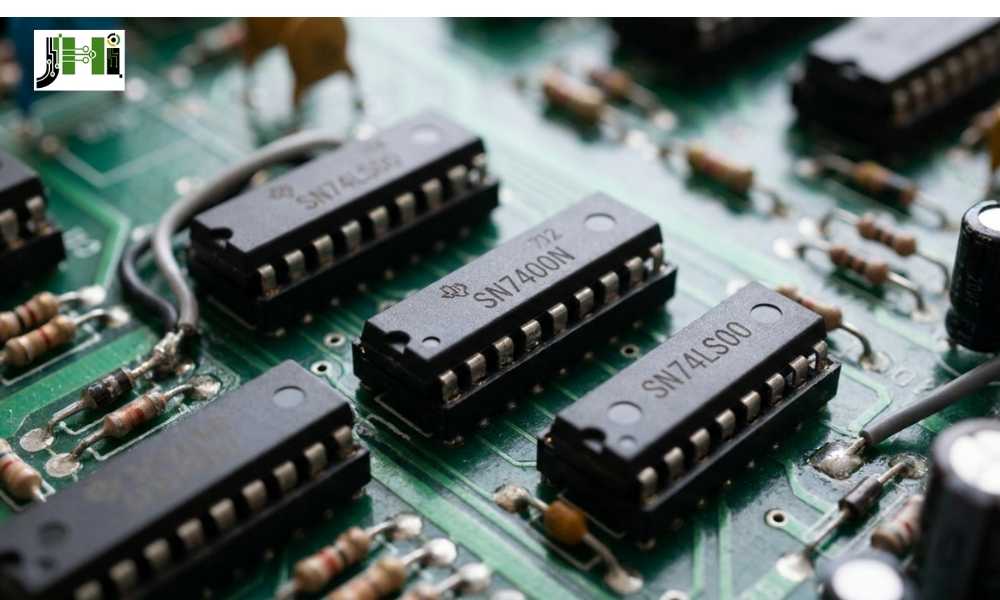
Example 1: SN74LS00
- SN — Texas Instruments prefix
- 74 — Commercial 7400 family
- LS — Low-power Schottky tech
- 00 — NAND gate function
So SN74LS00 is a TI commercial NAND gate using LS tech. Simple breakdown.
Example 2: 74HC595
- 74 — Commercial 7400 family
- HC — High-speed CMOS tech
- 595 — 8-bit shift register
This chip is a CMOS shift register. No maker prefix here, but the rest is clear.
Common Prefixes and What They Mean
Each maker adds their own letters. Here are the big ones:
- SN — Texas Instruments
- MC — Motorola/ON Semi
- DM — National Semiconductor
- HD — Hitachi
- CD — RCA/TI
The prefix doesn’t change the chip. It just tells you who made it.
What Do Letters After 74 Mean?
The letters after “74” tell you the chip’s tech. Speed, power use, and voltage all change with the family. Pick the right one for your project. These letters matter a lot. A 74LS00 and 74HC00 are not the same chip. They share the function but differ in performance. Knowing the codes saves time.
Here’s what the main letter codes mean:
| Code | Family | Speed | Power |
|---|---|---|---|
| (none) | Standard TTL | Medium | High |
| LS | Low-power Schottky | Fast | Low |
| HC | High-speed CMOS | Fast | Very low |
| HCT | HC, TTL-compatible | Fast | Very low |
| AC | Advanced CMOS | Very fast | Low |
74LS — Low-Power Schottky
LS chips use less power than plain TTL. They run faster too. For years, LS was the default choice. Many old circuits still use them.
74HC — High-Speed CMOS
HC chips use CMOS tech. They sip very little power. They also run on a wider voltage range. Great for battery projects.
74HCT — HC With TTL Levels
HCT acts like HC but talks to TTL chips well. It’s the bridge between old and new. Use it when mixing logic families.
Other Variants You Might See
Codes like ALS, F, AS, and AHC also exist. They tweak speed and power further. Most modern designs stick with HC or HCT.
Difference Between 54-Series and 74-Series ICs
Both families share the same logic functions. The big gap is the working temperature range. That’s it.
| Feature | 54-Series | 74-Series |
|---|---|---|
| Temp Range | -55°C to 125°C | 0°C to 70°C |
| Use Case | Military, aerospace | Commercial, hobby |
| Cost | Higher | Lower |
| Availability | Limited | Wide |
| Logic Function | Same | Same |
The 54 chip costs more. It also handles harsh weather. The 74 chip is cheaper and fits daily projects. Pick based on where the chip will live.
Is 74 Always TTL?
Short answer: no. Not anymore.
The first 7400 chips used TTL tech. That’s transistor-transistor logic. Bipolar transistors did the work. Power use was high but speed was decent. Then CMOS came along. Engineers wanted lower power. So makers built CMOS versions and kept the “74” prefix. Same family name, new inside. Today, most 74 chips you buy are CMOS. The “74” tells you the family. The letters tell you the tech. Don’t assume TTL anymore.
Why Are 74-Series ICs Still Used Today?
You’d think modern chips would kill off the 74 family. They didn’t. Old is gold here.
These chips still earn their keep:
- Cheap — A 74HC00 costs cents
- Easy to use — Tons of tutorials online
- Standardized — Same pinouts across makers
- Reliable — Decades of proven use
- Available — Stocked at every parts store
- Educational — Perfect for learning logic
Schools teach them first. Hobbyists love them. Even pros use them for glue logic between bigger chips. They fill gaps no microcontroller wants to fill.
When you need one tiny logic job done fast, a 74 chip wins.
Common Confusions About 74 in ICs
People mix up a few things about 74 chips. Let’s clear them up fast.
Is 74 a brand? No. It’s an industry standard prefix.
Does every IC use 74? No. Only digital logic chips in this family.
Are 7400 and 74HC00 different chips? Same logic, different tech.
Can I swap a 74LS00 with a 74HC00? Mostly yes. Check voltage levels first.
Is 74 outdated? No. It’s still made and sold today.
Does 54 mean older? No. It means military temperature range.
Most confusion comes from the letters and numbers around “74.” Once you decode them, things click.
FAQs About 74 in ICs
Q: What does 74 mean in an IC number?
It marks a commercial-grade logic chip from the 7400 family. The chip works between 0°C and 70°C.
Q: Why is 74 used in IC names?
Texas Instruments started it in 1964. Other makers followed. It became the global standard for commercial logic chips.
Q: Are all 74 ICs TTL?
No. Early ones were TTL. Most modern 74 chips use CMOS tech now.
Q: What’s the difference between 7400 and 74HC00?
Both are NAND gates. The 7400 uses TTL. The 74HC00 uses CMOS and saves power.
Q: Can I still buy 74-series ICs?
Yes. They are made by many companies and stocked worldwide.
Q: What does the prefix SN, MC, or DM mean?
Those tell you the maker. SN is Texas Instruments. MC is Motorola. DM is National Semi.
Q: Is 74 used in microcontrollers?
No. It’s only for basic digital logic chips, not microcontrollers or analog chips.
Conclusion: Why 74 Is Used in IC Numbers
So now you know the full story. The number 74 marks a commercial-grade logic chip from the 7400 family. It started with Texas Instruments in 1964 and became a worldwide standard. The “74” tells you the temperature range. The letters after tell you the tech. The last digits tell you the function. Three small parts, one clear meaning. This naming system saved engineers decades of guesswork. It still does. From schools to factories, the 74 family lives on. Next time you spot “74” on a chip, you’ll smile. You’ll know exactly what it means. Old code. Still gold. Keep learning, keep building.
Final Summary
The 74 in IC numbers means a commercial 7400-series logic chip. It’s an industry standard from the 1960s. Letters and digits after 74 reveal the tech and function. Simple once you know the code.
So now you know the full story. The number 74 marks a commercial-grade logic chip from the 7400 family. It started with Texas Instruments in 1964. It became a worldwide standard fast. The “74” shows the temperature range. The letters after show the tech type. The last digits show the function. Three small parts. One clear meaning. This naming system saved engineers decades of guesswork. It still does today. From classrooms to factories, the 74 family lives on strong.
Next time you spot “74” on a chip, you’ll smile. You’ll know exactly what it means.
Old code. Still gold. Keep learning, keep building.
Final Summary
The 74 in IC numbers means a commercial 7400-series logic chip. It’s an industry standard from the 1960s. Letters and digits after 74 reveal the tech and function. Simple once you know the code.
💡 Got Old ICs, Boards, or Electronic Scrap?
Don’t toss those 74-series chips, circuit boards, or unused electronics in the trash. They hold real value.
At Jay Hoehl Inc, we buy electronic scrap, ICs, circuit boards, and recyclable metals at fair market rates. Trusted by Phoenix businesses and hobbyists for years.
📍 Visit Us: 3334 W McDowell Rd, Unit 17, Phoenix, AZ 85009 📞 Call: (602) 272-4033 📧 Email: JayHoehlinc@gmail.com 🌐 Website: jhiescrap.com