Why do modern devices work faster and smaller today?
The answer lives inside almost every gadget you own. It’s called SMT. And it quietly changed everything about how we build electronics.
What Is SMT (Surface Mount Technology) in Phoenix, AZ
SMT stands for Surface Mount Technology. It’s the method factories use to build modern circuit boards.
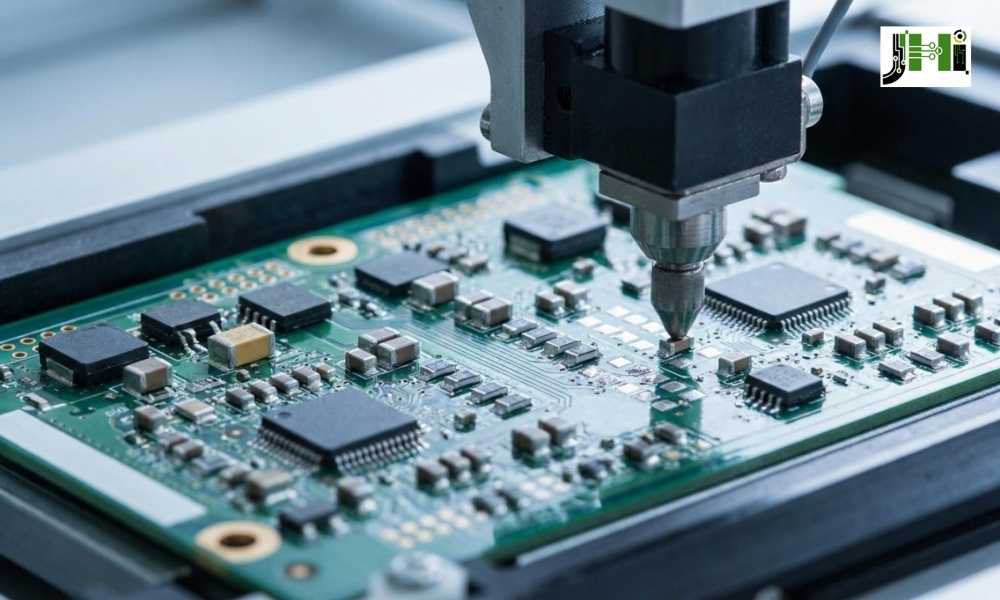
Here’s the simple version. SMT places parts directly on the board surface. No drilling holes. No long metal wires poking through layers. Think of it like placing tiny chips on a flat board. Each piece lands exactly where it belongs.
In Phoenix, AZ, SMT powers nearly every PCB assembly shop in the region. The parts are incredibly small. The machines are precise. The results speak for themselves.
If you’ve ever picked up a smartphone, you’ve held SMT work in your hand. It’s the quiet backbone of compact, smart electronics today. Now you get it.
Introduction to Surface Mount Technology (SMT) in Phoenix, AZ
Electronics manufacturing wasn’t always this sleek. Years ago, builders relied on a method called through-hole assembly. They pushed wire leads through drilled holes in the board. Then they soldered each one by hand. It worked fine. But it was slow, bulky, and hard to scale.
Then SMT arrived. Big things come in small packages. That old saying fits perfectly here.
Surface mount technology flipped the script on PCB evolution. Instead of drilling, parts now sit flat on the board surface. Machines handle placement in seconds. This shift opened the door to smarter technology across Phoenix, AZ, and beyond.
Smaller phones. Thinner laptops. Lighter drones. None of these exist without SMT. The technology overview is simple. The impact is massive.
SMT in Real Manufacturing in Phoenix, AZ
You want fast and reliable production, right? That’s exactly why SMT runs the show on real factory floors.
Across Phoenix, AZ, electronics production teams depend on automated PCB assembly every single day. This isn’t classroom theory. It’s how things actually get built at scale.
Aerospace companies use SMT for flight control systems. Medical device makers trust it for life-saving monitors and implants. Automotive plants rely on it for engine sensors and safety modules. Each industry demands precision. SMT delivers it.
SMT manufacturing in Phoenix, AZ, pushes boards out in massive volumes. The machines work around the clock. Quality holds steady even at top speed. Reliable production isn’t a bonus here. It’s the baseline.
From satellite parts to smartwatch guts, SMT shapes modern electronics production. It stopped being a niche tool long ago. Today it’s the global standard.
Why SMT Is Used (Key Reasons) in Phoenix, AZ
So why do engineers keep picking SMT over older methods? The answer boils down to one idea. Less space, more power.
SMT lets builders pack more components onto smaller boards. It cuts production costs. It ramps up speed. It sharpens electrical performance. That combination is hard to beat.
Most SMT advantages fall into four clear buckets. Size. Cost. Speed. Performance. Once you see how each one plays out, the logic clicks fast. You’ll feel it. This makes sense.
Below are the core reasons why Phoenix, AZ manufacturers choose SMT. Each one tackles a real problem. Each one saves real time, real money, or real space. Together, they paint the full picture of why SMT leads modern electronics.
Miniaturization (Smaller Size)
SMT makes truly tiny devices possible. Components sit flat and tight against the board. Engineers fit more power in less space every time.
Your smartphone is proof. Your wireless earbuds are proof. Without compact circuit design through SMT, wearables would never fit on your wrist. The miniaturization in electronics keeps pushing forward.
High Component Density
More parts. Less space. That’s the core SMT promise for dense PCB design.
Engineers squeeze hundreds of tiny components onto a single board. More parts mean more function packed into the same footprint. Your device does more without growing bigger. High component density turns small boards into powerhouses.
Faster & Automated Production
Why wait longer? Automated SMT production answers that question every day.
Pick-and-place machines lay down parts at incredible speed. Robots handle the precision work in Phoenix, AZ factories around the clock. Fast PCB assembly means your boards ship sooner. You save time on every single batch.
Lower Manufacturing Cost
Time saved is money saved. That old truth hits hard with SMT.
Automation slashes labor costs across the board. Fewer human hands mean fewer mistakes. Machines don’t call in sick. Cost-effective PCB production keeps your project budget on track without cutting corners on quality.
Better Electrical Performance
Shorter path, faster signal. That’s the SMT performance edge in plain terms.
Components sit close together on the board surface. Signals travel shorter distances between parts. Electrical efficiency climbs. Interference drops. Your device runs smoother, faster, and more consistently than through-hole builds allow.
Improved Reliability
You want your device to last, right? SMT builds that confidence into every board.
Reliable solder joints hold firm through heat, vibration, and daily wear. Fewer loose connections mean fewer surprise failures down the road. Durable electronics start with solid, consistent SMT assembly. That’s how you reduce failure rates for good.
Lightweight Design
Lighter device, better use. SMT trims real weight off every circuit board it touches.
Drones fly longer on smaller batteries. Phones slide into pockets without the bulk. Wearable tech sits comfortably on skin all day. Lightweight electronics open fresh doors for product designers who refuse to compromise.
Flexible PCB Design
Design without limits. That’s what SMT hands to creative engineers.
Complex board layouts that once seemed impossible now come together smoothly. Tight corners, curved paths, and unusual shapes all work. Flexible PCB design through SMT means your boldest ideas don’t get blocked by outdated assembly rules.
Key Reasons for Using SMT in Phoenix, AZ
Let’s look at the SMT benefits from a different angle. Less weight, more performance. That sums up why this technology dominates.
Phoenix, AZ production teams choose SMT to improve efficiency across every step. High-speed production lines slash wait times. Smarter component layouts cut material waste. Tighter, cleaner builds boost output quality without extra labor.
The advantages don’t show up one at a time. They stack. Each improvement feeds the next. Cost savings fuel faster turnaround. Faster turnaround supports higher volume. Higher volume drives down per-unit price. It’s a cycle that keeps paying off.
Here’s how those SMT advantages break down in practice. Each point reflects what real builders see on real factory floors. Not theory. Results.
Reduced Size and Weight
Small but powerful. That phrase defines modern SMT builds perfectly.
Portable devices dominate today’s market. Customers want gadgets that feel light and fit anywhere. Pockets, wrists, dashboards. Lightweight electronics built with SMT win because they feel right in your hand. Compact design sells.
Cost-Effectiveness
Every penny counts. Cost-effective SMT production proves it on every build.
Automation handles the heavy lifting. Fewer manual steps mean fewer expensive errors. Rework drops. Throughput climbs. You protect your budget without sacrificing the quality your customers expect. That’s a smart investment.
Improved Electrical Performance
Short path, fast result. Improved signal performance shows up in real device behavior.
Tighter component spacing means electrons travel shorter routes. Signal clarity improves. Noise drops. Your end product responds quicker and performs more reliably than legacy assembly methods allow.
Higher Production Speed
Why slow down production? SMT machines certainly don’t.
Modern pick-and-place systems position thousands of parts per hour. Fast SMT production translates directly to faster delivery for your clients. Bigger batches move through the line without bottlenecks. Speed becomes your competitive edge.
Enhanced Reliability
You want fewer failures, right? That’s the whole point of enhanced SMT reliability.
Automated placement eliminates shaky human hands from the process. Fewer manual errors mean stronger, more consistent joints. Reliable electronics come from controlled, repeatable builds. Your customers notice when things just work.
Improved Design Flexibility
Design without limits. SMT gives engineers the freedom to think bigger and bolder.
Flexible PCB design supports unconventional shapes and dense layouts. Multilayer boards become practical. Prototyping gets faster. Creative product ideas no longer stall at the assembly stage. The process bends to fit the vision.
Advantages of SMT Assembly
Here’s the bottom line on SMT assembly benefits. Faster. Cheaper. Better.
Speed comes from full automation. Savings come from reduced labor and fewer defects. Performance comes from tight, precise layouts with short signal paths. All three advantages arrive in a single production method. That’s why SMT assembly leads PCB manufacturing across Phoenix, AZ and around the world.
SMT vs Through-Hole (Quick Comparison) in Phoenix, AZ
Two assembly methods. One clear winner for most modern jobs. Here’s the honest PCB comparison laid out side by side.
| Feature | SMT | Through-Hole |
|---|---|---|
| Part Size | Very small components | Larger, bulkier parts |
| Assembly Speed | Fast, fully automated | Slower, often manual |
| Production Cost | Lower per unit | Higher labor costs |
| Mechanical Strength | Good for standard use | Best for heavy stress |
| Component Density | High density possible | Limited by drill holes |
| Board Weight | Lighter overall | Heavier builds |
| Repair Ease | Harder to fix by hand | Easier manual repair |
SMT wins on speed, size, cost, and density. That makes it the default for most consumer electronics, medical devices, and communication gear.
Through-hole still earns its place, though. Heavy-duty connectors, high-power components, and parts that face strong mechanical stress perform better with through-hole mounting. Many boards actually use both methods together for the best results.
The smart move? Pick the right method for each part of your design.
Differences Between SMT and SMD in Phoenix, AZ
People mix these two terms up constantly. Let’s clear the confusion right now.
SMT is the process. SMD is the part. That single line solves most of the mystery.
Think of it like cooking. The recipe is SMT. The ingredients are SMDs. One describes how you build. The other describes what you place.
An SMD, or surface-mount device, is the actual tiny component. It’s the chip, the resistor, the capacitor. SMT is the technology used to attach that component to the board surface.
So when someone asks about the “SMT vs SMD difference,” they’re really comparing a method to a component. Both work hand in hand. Neither replaces the other. You need the parts and the process together.
Limitations of SMT in Phoenix, AZ
SMT is powerful. But no technology bats a thousand. Here are the honest SMT challenges every builder should understand.
Repair can be tricky. Those tiny parts are tough to swap without special rework stations. A steady hand and a magnifying glass only get you so far.
Heat sensitivity matters. Some components are at risk of damage during the reflow soldering process. High temperatures can warp delicate parts if profiles aren’t dialed in.
Mechanical stress is a weak spot. Components that face heavy vibration or physical load still perform better with through-hole mounting. SMT joints can crack under extreme force.
Initial setup costs add up. Stencils, pick-and-place machines, and reflow ovens require real upfront investment. Small-batch runs feel that cost more than high-volume jobs.
Tiny parts love to disappear. Seriously. A 0201 resistor is smaller than a grain of sand. Handling them without proper tools is an adventure nobody asked for.
Every method has trade-offs. SMT limitations are minor compared to its wins. But knowing them upfront helps you plan smarter builds.
Learning & Reference Resources for SMT in Phoenix, AZ
Ready to learn SMT technology hands-on? You can start small. Every expert began with curiosity and a willingness to tinker.
Here are solid next steps to build your knowledge:
- Watch SMT tutorials on YouTube from practicing engineers and technicians. Visual learning sticks faster than textbooks.
- Read IPC standards, such as IPC-A-610, for industry-grade quality benchmarks. These documents set the rules professionals follow.
- Visit a local Phoenix, AZ assembly shop and ask for a walkthrough. Seeing a real pick-and-place machine in action teaches more than any article.
- Take an online PCB design course through platforms like Udemy or Coursera. Build a foundation you can grow from.
- Join electronics forums like EEVblog or Reddit’s r/PrintedCircuitBoard. Real conversations with real builders accelerate learning fast.
- Grab a starter SMT practice kit and solder at home. Hands-on learning beats passive reading every single time.
Pick one path. Start today. The best time to learn was yesterday. The next best time is right now.