
Why Business E-Waste Solutions Matter Today
Business e-waste solutions help companies retire old electronics safely, wipe sensitive data, stay compliant, and recover value, all without the legal and security risk of tossing devices in the trash.
Your company upgrades technology every few years. New laptops arrive. New servers go live. But what happens to the gear left behind?
Most of it ends up in a closet, a storage room, or a forgotten corner of the warehouse. Every device sitting there still holds data. Every device still carries risk. And the pile only grows with each refresh cycle.
Electronic waste is the fastest-growing waste stream on the planet, and businesses produce a huge share of it. The good news is simple. A clear plan turns a messy liability into a clean, documented, low-stress process. That is what this guide is about.
The Growing Problem of Corporate Electronic Waste
Corporate electronic waste piles up faster than most teams expect. Technology moves faster. Equipment ages faster. Waste grows faster.
Hardware replacement cycles keep getting shorter. A three-to-five-year refresh is now normal for laptops, phones, and servers. Multiply that across an entire workforce and the math adds up fast. Retired electronics stack up in storage rooms long before anyone decides what to do with them.
Why Businesses Cannot Treat Electronics Like Regular Trash
Businesses cannot throw electronics in the dumpster. Improper e-waste disposal breaks environmental rules and exposes the company to data theft, fines, and lawsuits.
Old devices contain hazardous materials and recoverable data. Drop them in a landfill and you create an environmental problem. Leave the data intact and you create a security problem. Both land on the company, not the hauler.
That is the real issue. A discarded laptop is not just junk. It is a compliance event waiting to happen. Working with a licensed electronics recycling company keeps that liability off your books.
How Responsible E-Waste Recycling Protects Data, Compliance, and the Environment
Responsible e-waste recycling protects three things at once: your data, your compliance record, and the environment. It does this through certified data destruction, full documentation, and proper material processing.
Here is the simple framework:
- Data. Every drive gets wiped or shredded before anything leaves the building.
- Compliance. You receive records that prove each device was handled correctly.
- Sustainability. Materials get recovered and reused instead of buried.
A clear chain of custody ties it all together. You know where every asset went and what happened to it. Don’t wait until the well is dry before looking for water. The time to set this up is before the next refresh.
What Are Business E-Waste Solutions?
Business e-waste solutions are professional services that collect, secure, process, and document a company’s retired electronics. They cover pickup, data destruction, recycling, and compliance reporting in one managed workflow.
Think of e-waste management as asset retirement planning for technology. You plan how to buy equipment. This is how you plan to retire it. The service handles the heavy lifting so your team does not have to.
A complete solution usually includes scheduled collection, secure transport, certified data wiping or drive shredding, sorting and material recovery, and documentation for your records. For higher-value assets, it can also include IT asset disposition, where reusable equipment gets a second life instead of going straight to recycling.
Definition of Business E-Waste Recycling
Business e-waste recycling is the safe collection and processing of a company’s used electronics so that data is destroyed and materials are recovered. It is end-of-life care for your tech, done the right way.
How Commercial E-Waste Differs from Residential Electronics Waste
Commercial e-waste is bigger, riskier, and more regulated than home electronics waste. A household drops off one old TV. A business retires hundreds of devices loaded with company and customer data.
More volume. More data. More rules. That is the core difference. Businesses face audit requirements, data privacy laws, and reputational stakes that home users never deal with. So the disposal process has to be documented, not casual.
Why Companies Need a Structured E-Waste Disposal Plan
A structured e-waste disposal plan gives a company control over cost, security, and compliance instead of leaving it to chance. Without a plan, devices pile up and risk grows quietly in the background.
A plan answers the questions before they become problems. Who collects the devices? How is data destroyed? Where do the records go? Recurring pickup programs make this even easier. You set a schedule, and retired gear never gets the chance to stack up again.
What Types of Business Electronics Can Be Recycled?
Almost every electronic device in your office can be recycled. That includes computers, servers, monitors, phones, networking gear, cables, and circuit boards. Most businesses recycle far more equipment than they realize.
If it plugs in, charges, or stores data, it probably qualifies. Here is a quick breakdown of what a good recycler accepts.
Computers, Laptops, and Workstations
Desktops, laptops, and workstations are the most common business e-waste. Recyclers wipe or shred the drives first, then recover the metals and plastics inside. Bulk laptop refreshes are handled the same way, just at scale.
Servers, Hard Drives, and SSDs
Servers, hard drives, and SSDs hold the most sensitive data, so they get the strictest handling. Drives are wiped to standard or physically destroyed. Lab and test equipment can be processed alongside server hardware during data center cleanouts.
Monitors, Printers, and Copiers
Monitors, printers, and copiers are bulky but fully recyclable. Many copiers and multifunction printers also store data on internal drives. Those drives get wiped too, which is a detail plenty of companies miss.
Phones, Tablets, and Network Hardware
Phones, tablets, routers, and switches all count as recyclable e-waste. Mobile devices need a data wipe before processing. Network equipment can carry stored configurations, so it gets handled with the same care.
Cables, Circuit Boards, and Batteries
Cables, circuit boards, and batteries are recovered for their valuable materials. Boards hold copper, gold, and other metals worth reclaiming. SMD components and IC chips are sorted and recycled rather than scrapped as mixed waste.
Why Businesses Need Professional E-Waste Recycling
Professional e-waste recycling is risk management, not just waste removal. It protects your data, keeps you compliant, frees up space, supports sustainability goals, and recovers value from old gear. A DIY approach handles none of that safely.
Free haulers and informal scrappers skip the parts that matter. They do not wipe drives. They do not give you records. They do not tell you where your devices end up. When something goes wrong, the liability still points back at you. Here is what a professional service actually does for you.
Protecting Sensitive Company and Customer Data
Professional recycling destroys the data on every device before it leaves your control. That is the single biggest reason businesses use a certified recycler.
You replaced the laptop. But did the data really leave with it? Deleting files does not erase them. Real protection comes from certified data wiping and hard drive shredding, with proof that the job was done.
Avoiding Environmental and Compliance Risks
Certified recycling keeps you on the right side of environmental rules. Improper disposal can trigger fines and audits. Proper disposal gives you documentation and an audit trail instead.
When a regulator or auditor asks how you retired your electronics, you want a clear answer with paperwork behind it. That is the difference between confidence and scrambling.
Freeing Up Office, IT, and Warehouse Space
Recycling clears out the dead weight. Storage rooms full of dead monitors become usable space again. The “graveyard closet” turns back into a closet.
Before, retired gear ate into your floor space and your team’s patience. After, it is gone, documented, and off your mind. The excess inventory management side of this matters most for warehouses and facilities holding large quantities.
Supporting ESG, Sustainability, and Landfill Diversion Goals
Responsible recycling feeds directly into your ESG and sustainability reporting. Every diverted device is a number you can point to. Stakeholders, investors, and customers notice that.
Electronics recycling is an easy win for landfill diversion goals. It is measurable, repeatable, and credible. That makes it a natural fit for annual sustainability statements.
Recovering Valuable Materials from Retired Electronics
Old electronics are full of recoverable value. Boards, chips, and connectors hold copper, gold, aluminum, and reusable plastics. Waste is only waste when value goes unnoticed.
A skilled recycler reclaims metals, plastics, and components and sends them back into manufacturing. Your retired gear becomes raw material for the next generation of products.
Key Risks of Improper Business E-Waste Disposal
Improper business e-waste disposal exposes a company to data breaches, environmental fines, lost audit records, reputational damage, and hidden storage costs. The savings from skipping a recycler rarely cover the fallout.
Saving a few dollars today can cost thousands tomorrow. Most leaders weigh disposal against cost. Smart leaders weigh it against exposure. Here are the risks that hide in the “we’ll deal with it later” pile.
Data Breaches from Unwiped Devices
Unwiped devices are the most immediate threat in your storage room. Deleted files often stay recoverable without proper sanitization. A single old drive can leak customer records, financials, or credentials.
You replaced the laptop. But did the data really leave? Certified destruction closes that gap and gives you peace of mind in writing.
Toxic Metals Entering Landfills and Water Systems
Electronics in landfills leak toxic materials into soil and water. Devices contain lead, mercury, cadmium, and flame retardants. One discarded device can become a slow leak into tomorrow’s environment.
Recycling keeps those materials contained and out of the ground. That is responsibility your brand can stand behind.
Loss of Audit Documentation and Chain of Custody
No records means no proof, and no proof means no protection. Without chain of custody, you cannot show what happened to a device after it left your hands.
Audit documentation and asset tracking become critical during legal reviews, audits, and security investigations. Recycling certificates give you that paper trail when you need it most.
Reputational Damage from Irresponsible Recycling
Careless recycling can hurt your brand as much as a bad product. Stakeholders increasingly check sustainability and data practices before they buy or partner.
A story about dumped customer data or e-waste shipped overseas spreads fast. A trusted recycling partner keeps your name out of that story.
Hidden Costs of Storing Old Electronics Too Long
Storing old electronics costs more than it looks. Unused devices take up valuable office and warehouse space while growing your security exposure every month they sit.
If equipment has been untouched for years, is it still an asset or a liability? Holding onto dead gear rarely pays off. Clearing it out almost always does.
Secure Data Handling for Business Electronics
Secure data handling means every device is tracked, wiped or destroyed to standard, and documented before it is recycled. Data security should come before pricing in any recycling decision.
Your data does not stop being sensitive just because the device is old. A strong recycler treats every drive as if it still holds your crown jewels. Here is how that process works, step by step.
Why Data Security Is Critical Before Recycling
Data security comes first because recycling moves your devices out of your control. The moment a laptop leaves the building, you need to know its data is already gone.
That is why certified destruction happens before transport or processing. The data is handled first. Everything else comes after.
Data Wiping, Hard Drive Shredding, and Physical Destruction
There are two main ways to destroy data: software wiping and physical destruction. Some devices need wiping. Some need shredding. All need protection.
- Data wiping overwrites a drive to a recognized standard so files cannot be recovered. It works well for devices headed for reuse.
- Hard drive shredding physically destroys the drive. It is the strongest option for highly sensitive data.
A good recycler helps you pick the right method for each asset.
Chain of Custody for Corporate IT Assets
Chain of custody tracks every asset from pickup through final destruction. Each device is logged, tagged, and accounted for at every step.
That tracking gives you confidence and proof. You always know where your assets went and what happened to them. Nothing disappears into a gray area.
Certificates of Destruction and Recycling Documentation
A certificate of destruction is your proof that data was destroyed and devices were recycled correctly. It is the document auditors and regulators want to see.
Keep these records on file. They protect you during audits, reporting, and any future questions. Good documentation answers tomorrow’s questions today.
Best Practices for Preparing Devices Before Pickup
A little prep makes pickup smooth and secure. Here is a simple checklist before your devices leave the building:
- Inventory your assets. List what is leaving so you can match it against the final report.
- Back up anything you still need. Destruction is permanent.
- Group devices by type. It speeds up tagging and collection.
- Flag data-sensitive gear. Mark drives that need shredding versus wiping.
How Business E-Waste Pickup Works
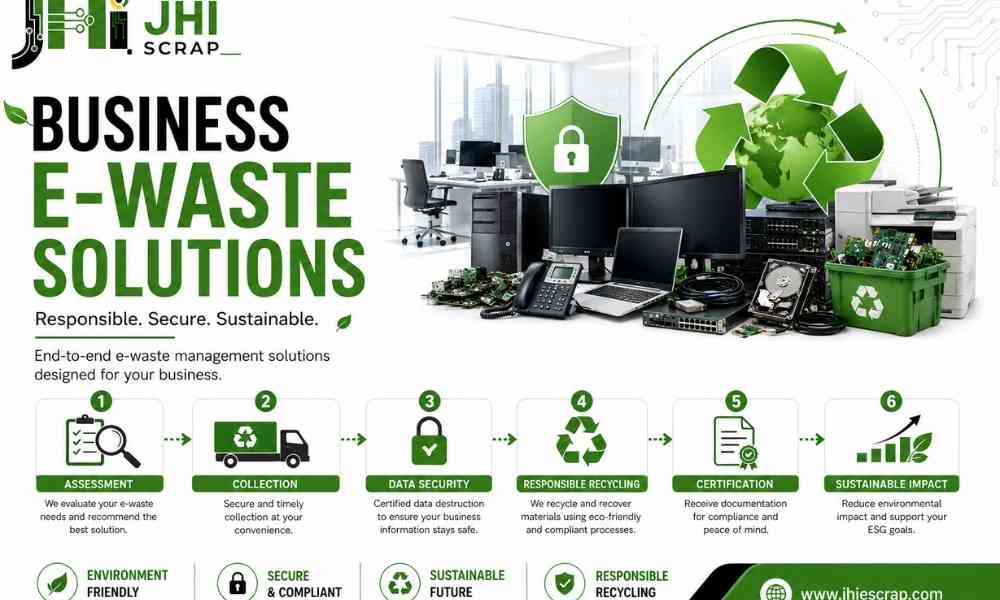
Business e-waste pickup follows five clear steps: identify devices, schedule a pickup, tag and collect securely, sort and recover materials, then receive your recycling documentation. The full workflow is built to be hassle-free.
Knowing the process upfront removes the guesswork. You do not need to figure out logistics. The recycler handles it. Here is what each step looks like.
Step 1: Identify and Separate Retired Electronics
Start by rounding up everything you want gone. Walk the offices, closets, and storage rooms. Pull out the dead laptops, old monitors, and retired servers, and put them in one staging area.
Step 2: Request a Business E-Waste Pickup
Next, schedule the pickup. Reach out with a rough count of devices and a location, and pick a time that works for your team. Need a hand? You can request a business e-waste pickup in a couple of minutes.
Step 3: Inventory, Tagging, and Secure Collection
At pickup, every device gets logged, tagged, and collected under a secure chain of custody. Serialized asset reporting means each item is tracked by ID, not just counted in a box. You get accountability from the first minute.
Step 4: Sorting, Dismantling, and Material Recovery
Back at the facility, devices are sorted, dismantled, and processed for material recovery. Every retired device becomes a source of recoverable value. Metals, plastics, and components are separated and sent back into the supply chain.
Step 5: Recycling Documentation for Business Records
Finally, you receive documentation, including certificates of destruction and recycling records. When questions arise later, documentation provides the answers. File it with your compliance records and you are audit-ready.
Business E-Waste Solutions by Organization Type
Business e-waste solutions are not one-size-fits-all. A small office, a data center, and a hospital all have different volumes, risks, and rules. A small office has different needs than a data center. Different equipment. Different risks. Different disposal requirements.
The right approach depends on who you are and what you handle. Find your organization below.
Small Business Electronics Recycling
Small businesses can recycle electronics just as easily as large ones. How many unused laptops are sitting in a closet right now? Many small teams wait too long because they assume recycling is only for big corporations. It is not. A single scheduled pickup clears the clutter.
Corporate Office E-Waste Pickup
Corporate offices generate steady e-waste from device upgrades and relocations. Whole floors of laptops, monitors, and phones turn over during a refresh or a move. A scheduled office pickup makes that turnover hassle-free and keeps your space clear.
IT Department and Data Center Cleanouts
Data centers carry the highest data risk, so they need the tightest process. More devices. More data. More responsibility. Server racks, drive arrays, and networking gear all require documented chain of custody. A managed cleanout secures every asset from rack to recycling. This often pairs with IT asset disposition for equipment that still has resale value.
Schools, Universities, and Public Institutions
Schools and public institutions recycle electronics on a budget and on the record. Computer labs, admin equipment, and lab gear age out in waves. Documented recycling supports sustainability reporting and keeps public-sector accountability intact.
Healthcare, Financial, and Data-Sensitive Organizations
Healthcare and financial organizations need the strictest data handling there is. What happens if confidential data survives disposal? For patient records and financial data, that is not a risk worth taking. These industries get certified destruction and full documentation on every device, every time.
Warehouses, Retailers, and Multi-Location Businesses
Multi-location businesses need coordinated collection across sites. Managing e-waste across locations is like coordinating inventory across multiple warehouses. Centralized pickup programs pull it all together so you get one process, one standard, and one set of records.
Bulk E-Waste Recycling for Businesses
Bulk e-waste recycling handles large volumes of electronics from cleanouts, refreshes, mergers, and facility closures in one secure, documented project. The challenge is not collecting a few devices. The challenge begins when hundreds need secure handling at once.
Big projects need a partner who can scale up without dropping the ball on security. Here is when bulk service makes sense and how it works.
When Your Company Needs Bulk Electronics Pickup
You need bulk pickup when device counts jump from a handful to hundreds. What happens when dozens of outdated devices become hundreds? Common triggers include office closures, technology refreshes, mergers, and facility moves. If you are staring at a mountain of gear, this is the service for you.
Office Cleanouts and Technology Refresh Projects
Cleanouts and refresh projects create e-waste in big waves. New technology arrives. Old technology accumulates. Scheduled refresh cycles mean predictable volumes of retired gear. Bulk recycling clears it all out as the new equipment rolls in.
Recurring E-Waste Collection Programs
Recurring collection keeps e-waste from ever piling up again. Don’t wait until the warehouse is full before planning the next pickup. A set schedule reduces storage costs and compliance risk at the same time. It turns disposal into a routine instead of an emergency.
Handling Large Volumes of Mixed Electronics
Mixed electronics need careful sorting, tracking, and transport. Large-scale recycling works best when every asset follows a clear path from pickup to processing. A capable recycler manages inventory, sorts by material, and moves everything under secure transport. No item gets lost in the shuffle.
Benefits of Scheduling Bulk Pickup with JHI E-Scrap
Scheduling bulk pickup with JHI E-Scrap turns a disposal headache into a documented, low-stress process. Secure handling. Clear documentation. Responsible recycling. That is how businesses turn a disposal challenge into a compliance advantage.
You get one point of contact, full asset tracking, certified data destruction, and records you can file away. For Phoenix and Scottsdale companies, that means local pickup with national-grade standards. Ready to move a large batch? Bulk and excess inventory recycling is built for exactly this.
How Business E-Waste Recycling Supports Sustainability
Business e-waste recycling supports sustainability by diverting waste from landfills, recovering reusable materials, cutting raw material demand, and strengthening ESG performance. The best time to recover resources is before they become waste.
Recycling is not just damage control. It creates real, measurable environmental value. Here is how your retired gear gives back.
Reducing Landfill Waste and Toxic Pollution
Recycling keeps hazardous materials out of landfills and water systems. Electronics contain lead, mercury, cadmium, and flame retardants. Every recycled device is one less item sitting in a landfill for decades.
Diverting that waste protects soil, water, and communities. It is responsibility you can measure.
Recovering Metals, Plastics, and Reusable Materials
Recycling recovers valuable metals and plastics from old devices. Not buried. Not wasted. Recovered. Copper, aluminum, gold, steel, and plastics get reclaimed and sent back into manufacturing.
That recovery turns end-of-life gear into useful raw material. Nothing valuable goes to the landfill.
Lowering the Demand for Raw Material Extraction
Recovered materials reduce the need to mine new ones. Recovered materials give existing resources a second life. Every reclaimed gram of copper or gold is a gram that does not have to be dug out of the earth.
That eases pressure on mining and manufacturing. It is a quiet but real environmental win.
Supporting Circular Economy Goals
E-waste recycling powers the circular economy by keeping materials in use. Waste is only waste when value is left behind. Retired electronics become the raw materials for tomorrow’s products.
Instead of a straight line from purchase to landfill, you create a loop. Buy, use, recover, reuse. That loop is what sustainable operations look like.
Strengthening Corporate ESG Performance
Recycling strengthens your ESG story with hard numbers. Responsible recycling supports both environmental goals and business credibility. Investors, customers, and procurement teams now expect it.
Documented recycling gives you data for sustainability reporting and stakeholder communications. It is good for the planet and good for the brand.
How to Choose the Right Business E-Waste Recycling Partner
Choose a recycling partner based on security, documentation, responsible downstream practices, and industry fit, not just price. Cheap upfront often means expensive later.
The right partner protects you long after pickup. Use this checklist when you compare providers.
Look for Secure Handling and Documentation
Pick a recycler that tracks every asset and documents every step. Ask how devices are tracked after pickup. A serious provider offers chain of custody and recycling documentation as standard, not as an upsell. If they cannot explain their tracking, keep looking.
Ask About Accepted Electronics and Pickup Options
Make sure the recycler handles your full range of devices and your volume. Can the provider support your needs today and six months from now? A capable partner takes both small pickups and large bulk projects without missing a beat.
Confirm Responsible Downstream Recycling Practices
Ask where materials actually go after collection. Responsible recyclers process and recover materials properly instead of dumping or exporting them. Downstream transparency is a sign of real environmental stewardship. If the answer is vague, that is a red flag.
Review Data Destruction and Device Tracking Processes
Verify how data gets destroyed and how assets get tracked. Track every asset. Verify every step. Document every outcome. Ask for sample documentation, like a certificate of destruction, before you sign anything. Strong providers share it gladly.
Choose a Partner That Understands Business Needs
Pick a partner who knows your industry and your scale. Your business challenges are unique. Your recycling strategy should be too. A provider with relevant experience anticipates your needs instead of reacting to them. That is what a long-term partnership looks like. Learn more about JHI E-Scrap and how it works with businesses.
Common Business E-Waste Mistakes to Avoid
The most common e-waste mistakes are trashing devices, storing them without a plan, forgetting about stored data, using unverified scrappers, and skipping documentation. Each one carries real risk.
Most of these mistakes come from treating e-waste as an afterthought. Spot them early and you avoid the fallout.
Throwing Electronics in Regular Trash
Tossing electronics in the trash is the most common and most costly mistake. Would you throw confidential business files into a public dumpster? That is essentially what an unwiped device in the trash is. It is also illegal in many places.
Storing Old Devices Without a Disposal Plan
Storing devices with no plan just delays the risk. Unused devices quietly become forgotten security liabilities. They take up space, hold live data, and pile up with every refresh. A plan stops the pile before it starts.
Forgetting About Data on Hard Drives and Devices
Old devices still hold live data long after they stop being useful. The device may be old, but the data may still be valuable. Hard drives, copiers, and phones all store information that needs proper destruction. Forgetting that is how breaches happen.
Using Unverified Scrap Buyers or Informal Recyclers
Unverified scrappers are a gamble you do not want to take. Cheap upfront. Expensive later. Without verified handling and documentation, you have no proof your data was destroyed or your devices were recycled properly. Always check procedures first.
Failing to Keep Recycling Documentation
Skipping documentation leaves you exposed during audits. Good records solve tomorrow’s questions before they arise. Keep certificates of destruction and recycling records on file for audits, reporting, and legal protection. They cost nothing to store and save you plenty later.
How JHI E-Scrap Helps Businesses Manage E-Waste Responsibly
JHI E-Scrap gives Phoenix-area businesses a complete e-waste solution: secure pickup, certified data destruction, responsible recycling, and full documentation. Not just collection. Not just recycling. A complete business e-waste solution.
Every service connects to a real outcome, whether that is compliance, security, space, or sustainability. Here is what working with JHI E-Scrap looks like.
Business Electronics Collection and Pickup
JHI E-Scrap collects your retired electronics on a schedule that fits your team. Why let retired electronics occupy valuable workspace? Secure pickup procedures and flexible scheduling make the whole thing hassle-free. You set the time. JHI handles the rest.
Bulk E-Waste Recycling for Offices and Facilities
JHI E-Scrap scales from a single office to entire facilities. One office. Multiple offices. Entire facilities. Whether it is a move, an upgrade, or a full cleanout, the process stays secure and documented. Big volume, same standards.
Responsible Material Recovery and Recycling
JHI E-Scrap recovers materials and returns them to the manufacturing stream. Every retired device holds resources waiting for a second life. Metals, plastics, and components get reclaimed instead of buried. That is recycling done the responsible way.
Data-Sensitive Device Handling
JHI E-Scrap treats every drive as if it still holds your most sensitive data. What happens if confidential data survives disposal? It does not, because every device runs through certified data destruction under a clear chain of custody. You choose wiping or shredding, and you get the proof either way.
Support for Cleaner, Safer, and More Sustainable Operations
JHI E-Scrap helps you run cleaner and more sustainable operations. Documented recycling ties straight into your ESG and landfill diversion goals. You clear out clutter, cut risk, and strengthen your sustainability record all at once.
Book Secure Business E-Waste Pickup with jhiescrap.com
Ready to clear space, protect data, and simplify compliance? Booking a pickup with JHI E-Scrap takes just a few minutes. You get secure handling, certified destruction, and the documentation to back it up. Schedule your business e-waste pickup and put the pile behind you for good.
Frequently Asked Questions About Business E-Waste Solutions
What are business e-waste solutions?
Business e-waste solutions are professional services that collect, secure, recycle, and document a company’s retired electronics. They combine pickup, data destruction, material recovery, and compliance reporting into one managed process so companies retire technology safely.
What electronics can a business recycle?
A business can recycle nearly all of its electronics. That includes computers, laptops, servers, hard drives, monitors, printers, phones, tablets, networking gear, cables, circuit boards, and batteries. If a device plugs in, charges, or stores data, it can usually be recycled.
How does business e-waste pickup work?
Business e-waste pickup follows five steps. You identify and separate retired devices, schedule a pickup, hand off devices for secure tagging and collection, let the recycler sort and recover materials, then receive recycling documentation for your records.
Is business e-waste recycling safe for data-containing devices?
Yes. Certified recyclers destroy data on every device before recycling. They use data wiping or physical hard drive shredding, track each asset through a chain of custody, and issue a certificate of destruction as proof the data is gone.
Can businesses recycle computers, servers, and hard drives?
Yes. Computers, servers, and hard drives are among the most common business e-waste. Drives are wiped to standard or physically shredded first, then the hardware is dismantled so metals, plastics, and components can be recovered.
Why should companies avoid throwing electronics in the trash?
Throwing electronics in the trash creates legal, environmental, and security risk. Devices contain hazardous materials and recoverable data. Improper disposal can break regulations, trigger fines, and expose sensitive company and customer information.
Do businesses need documentation for e-waste recycling?
Yes. Documentation proves devices were handled correctly. Certificates of destruction and recycling records support audits, regulatory reporting, and legal protection. Keeping these records on file is a core part of compliant electronics recycling.
How often should a business schedule e-waste pickup?
It depends on volume. Many businesses set up recurring pickups that match their technology refresh cycle, often quarterly or twice a year. Recurring collection keeps devices from piling up and reduces both storage and compliance risk.
What is the difference between ITAD and e-waste recycling?
IT asset disposition focuses on retiring assets securely and often reusing or reselling working equipment. E-waste recycling focuses on processing end-of-life devices to recover materials. Many businesses use both, with reusable gear going through ITAD and dead gear going to recycling.
How can JHI E-Scrap help with bulk business e-waste?
JHI E-Scrap manages large-volume projects from start to finish. It handles secure pickup, certified data destruction, sorting, material recovery, and documentation for office cleanouts, technology refreshes, and facility closures across the Phoenix and Scottsdale area.
Conclusion: Build a Safer and More Sustainable Business E-Waste Plan
The best time to build a responsible e-waste strategy is before old electronics become tomorrow’s problem. A clear plan protects your data, keeps you compliant, clears your space, and supports your sustainability goals all at once.
Key Takeaways for Businesses
- Protect data first. Wipe or shred every drive before it leaves.
- Keep the paperwork. Documentation is your audit protection.
- Recycle responsibly. Recover value and divert waste from landfills.
- Plan ahead. Recurring pickups beat last-minute scrambles.
Why Secure Electronics Recycling Should Start Now
Why wait for a compliance issue before taking action? Every month old devices sit in storage, the data risk grows and the clutter spreads. Starting now turns a future problem into a solved one.
Turn Retired Electronics into Responsible Resource Recovery
Yesterday’s devices can become tomorrow’s resources. With the right recycler, your retired gear stops being a liability and starts giving back. Metals, plastics, and components return to the supply chain instead of the landfill.
Schedule Secure, Compliant Bulk E-Waste Pickup with jhiescrap.com
Take the next step toward secure, compliant, and responsible electronics recycling. Schedule a business e-waste pickup with JHI E-Scrap and clear space, protect data, and simplify compliance in one move. Want to see the full range first? Explore our recycling services.