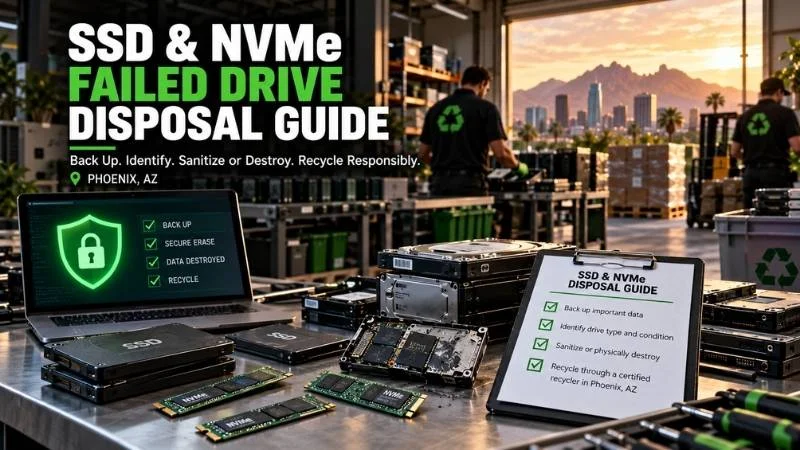
SSD, NVMe, and Failed Drive Disposal Guide
SSD, NVMe, and Failed Drive Disposal Guide Quick answer: Back up anything you need, identify every data-bearing drive, and choose a verified sanitization or destruction method before recycling. An SSD or NVMe drive may hold data even when a computer will not start. If...
Certificate of Data Sanitization and Destruction Checklist
Certificate of Data Sanitization and Destruction Checklist An old laptop can leave your office in five minutes. Its data can follow you for years. That is why a certificate of data sanitization or destruction matters when Phoenix businesses retire computers, drives,...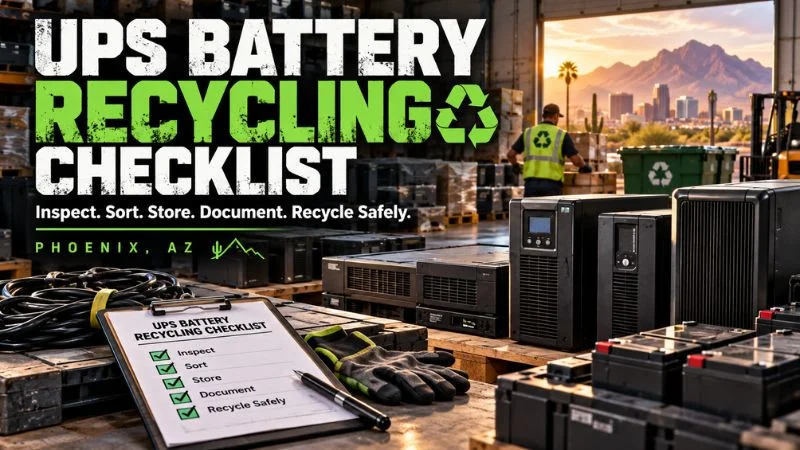
UPS and Battery-Backed Equipment Recycling Checklist
UPS and Battery-Backed Equipment Recycling Checklist Retired UPS units and battery-backed equipment need more care than ordinary office electronics. The batteries may still hold energy, while attached devices may contain sensitive business data. This checklist helps...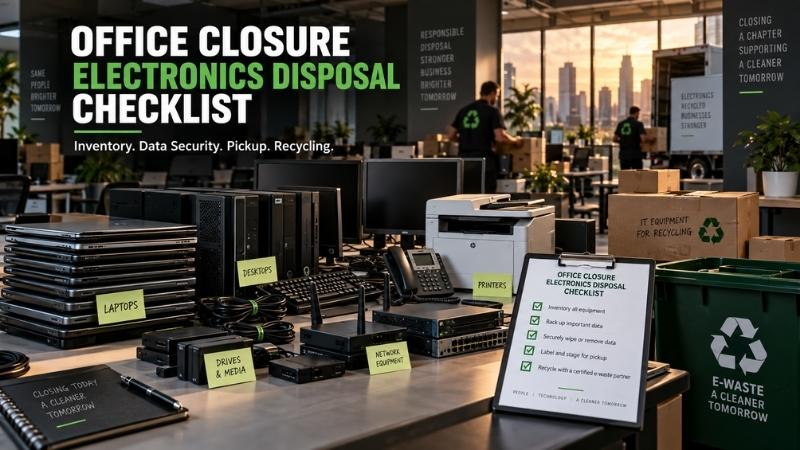
Office Closure Electronics Disposal Checklist
Office Closure Electronics Disposal Checklist Closing an office creates a lot of moving parts at once. Electronics can become the riskiest part. You may have laptops in desk drawers, servers in a closet, and phones in storage. There may also be printers, monitors,...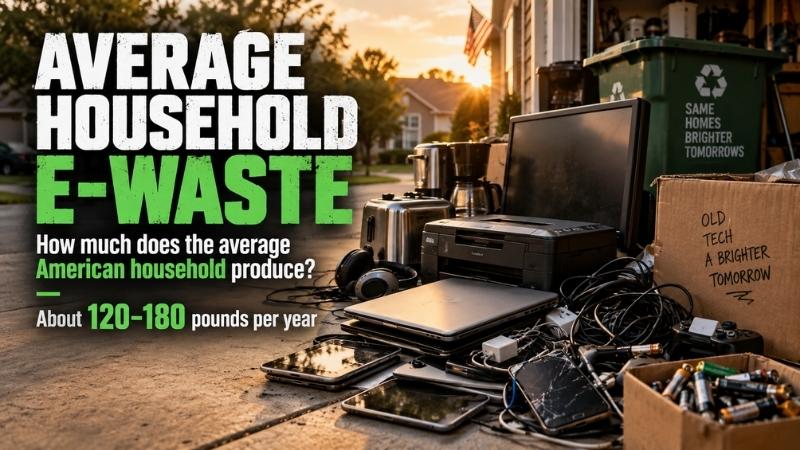
How Much E-Waste Does the Average American Household Produce?
How Much E-Waste Does the Average American Household Produce? The average American household throws out roughly 120 to 180 pounds of electronics every year. A family of four sits near the top of that range. That is about the weight of a full-grown person, made of...