Electronic waste is piling up faster than ever. Your old phones, computers, and gadgets contain valuable materials—but they also pose serious environmental risks. This guide will show you how to handle e-waste responsibly and why it matters for our planet.
What Is E-Waste and Why Should You Care?
Understanding E-Waste
E-waste includes any electronic device you no longer use. Think smartphones, laptops, tablets, printers, and TVs. Even kitchen appliances with circuit boards count as e-waste.
Here’s what falls into this category:
Consumer electronics: Your phones, gaming consoles, and cameras all qualify as e-waste once they stop working.
IT equipment: Computers, servers, routers, and keyboards belong in this group.
Household devices: Microwaves, refrigerators, and washing machines with electronic components fit here too.
Can You Actually Recycle E-Waste?
Yes—most electronic waste is recyclable. Your discarded devices contain precious materials worth recovering.
Gold, copper, silver, and platinum hide inside circuit boards. Lithium batteries power your phones and laptops. Rare earth elements make screens and speakers work.
However, some components resist recycling. Certain plastics mixed with metals create challenges. Contaminated batteries require special handling. But certified recyclers know how to process these materials safely.
Why Improper Disposal Hurts Everyone
Throwing electronics in regular trash causes real damage. Lead from screens seeps into groundwater. Mercury from batteries contaminates soil. Cadmium from chips pollutes the air when burned.
These toxins don’t just harm the environment. They affect human health directly. Communities near informal recycling sites face increased cancer risks. Children exposed to e-waste chemicals develop learning disabilities.
At Jay Hoehl Inc, we’ve seen firsthand what happens when businesses ignore proper disposal. One Phoenix manufacturer we worked with had stored old equipment for years. The deteriorating batteries were leaching chemicals into their warehouse floor.
The Benefits of Doing It Right
Proper e-waste recycling delivers multiple wins:
You conserve natural resources when materials get reused. Mining for new metals damages ecosystems. Recycling reduces this environmental toll significantly.
Pollution drops when certified facilities handle toxic components. Professional recyclers use specialized equipment to prevent contamination.
The circular economy grows stronger through recycling. Recovered materials become new products. This cycle reduces waste and saves energy.
Plus, you meet legal requirements. Arizona law requires businesses to dispose of electronics responsibly. Compliance protects you from hefty fines.
How E-Waste Management Has Evolved
The Journey from 2011 to Today
E-waste management has transformed dramatically over the past decade. Back in 2011, few regulations existed. Awareness was minimal. Most electronics ended up in landfills.
By 2016, Extended Producer Responsibility (EPR) programs expanded globally. Manufacturers became accountable for product lifecycles. Government reports documented the growing crisis.
The 2022 landscape shifted toward digital waste management. Stricter compliance rules emerged. Companies faced pressure to track their electronics disposal.
In 2023, ESG reporting made e-waste transparency mandatory for many corporations. Sustainability metrics included electronics recycling rates. Global monitoring systems improved significantly.
Now in 2024, AI powers sorting systems. Tracking technologies automate compliance documentation. Recycling becomes more efficient and accurate.
What’s Coming in 2025
The future points toward circular electronics design. Manufacturers will create products easier to disassemble and recycle.
Smart recycling systems will use sensors and robotics. These innovations speed up processing while improving material recovery.
Global policy alignment is accelerating. Countries are harmonizing their e-waste regulations. This coordination makes international compliance simpler.
E-Waste Challenges in Developing Nations
Developing countries face unique obstacles. Infrastructure gaps prevent proper collection and processing. Many rely on informal recycling operations.
In Zambia, collection networks remain sparse. Rural areas lack access to certified recyclers. Policy frameworks exist but enforcement struggles.
Zimbabwe runs awareness programs to educate citizens. However, recycling barriers persist. Limited funding constrains facility development.
These nations often become dumping grounds for wealthy countries’ e-waste. This practice creates severe health and environmental consequences for vulnerable populations.
The E-Waste Recycling Process Explained
Step-by-Step Breakdown
Wondering how your old laptop gets recycled? Here’s the journey it takes:
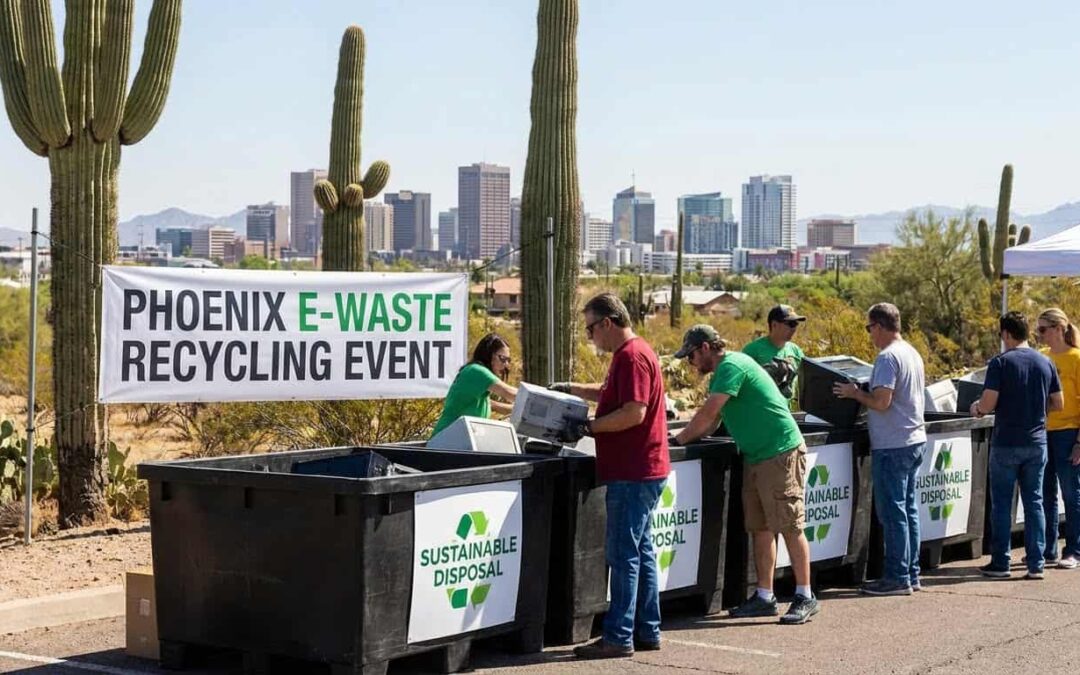
Collection and transportation: You drop off devices at certified facilities like ours at 3334 W McDowell Rd Unit 17, Phoenix, AZ 85009-2414. We safely transport them to processing centers.
Sorting and dismantling: Technicians separate devices by type. They carefully remove batteries, screens, and other components.
Mechanical separation: Shredders break down materials into smaller pieces. Magnets pull out ferrous metals. Other equipment sorts plastics from metals.
Material recovery: Advanced processes extract valuable materials. Copper wiring gets melted down. Circuit boards yield precious metals. Plastics become raw material for new products.
Hazardous waste disposal: Toxic components receive special treatment. Licensed facilities handle lead, mercury, and other dangerous substances safely.
Cutting-Edge Technologies
Modern recycling facilities use impressive innovations:
AI-based sorting identifies materials faster than human workers. Computer vision recognizes different plastic types instantly.
Automated shredding systems adjust settings based on device type. This optimization improves material recovery rates.
Hydrometallurgy uses chemical solutions to extract metals. Bio-leaching employs bacteria to process materials. These methods are cleaner than traditional smelting.
3D models help visualize entire recycling systems. Engineers optimize facility layouts. Educational programs use these models to explain processes clearly.
Finding E-Waste Recycling Services in Phoenix
Your Local Options
Need to dispose of electronics in Phoenix? You have several paths:
Government portals: Arizona Department of Environmental Quality maintains a directory of certified recyclers. Their website lists approved facilities statewide.
Certified recyclers: Look for R2 or e-Stewards certification. These standards ensure responsible processing. Jay Hoehl Inc holds both certifications, guaranteeing your electronics get handled properly.
Manufacturer take-back programs: Apple, Dell, and HP offer free recycling. Check their websites for details. Some provide shipping labels for mail-in returns.
Why Choose Jay Hoehl Inc
We specialize in comprehensive electronics management. Our services go beyond basic recycling:
IT Asset Disposition: We securely wipe data before recycling. Your sensitive information stays protected.
Excess Inventory Management: Got surplus electronics? We handle bulk quantities efficiently.
SMD Components: We recover valuable surface-mount device components for reuse.
Test Equipment: Lab equipment requires specialized handling. We know how to process it safely.
Call us at (602) 272-4033 or email JayHoehlinc@gmail.com. We’ll answer your questions and schedule pickup if needed.
Understanding Disposal Forms and Compliance
Required Documentation
Proper e-waste disposal involves paperwork. These forms create accountability and ensure regulatory compliance:
E-Waste Disposal Forms: Basic disposal forms document what you’re recycling. They include device types, quantities, and condition details.
Form 3: Educational institutions and certain organizations use this. It tracks electronics from schools and research facilities.
Form 6: Commercial and industrial disposals require Form 6. Businesses processing large quantities fill out this detailed documentation.
These forms might seem tedious. But they protect you legally and help authorities monitor e-waste streams.
Teaching E-Waste Awareness in Schools
Environmental education shapes future behavior. Arizona schools increasingly incorporate e-waste topics into curricula:
Class 10 students learn basic definitions. They understand what qualifies as e-waste and why recycling matters.
Class 11 environmental science explores ecological impacts. Students study contamination pathways and health effects.
Class 11 computer science examines hardware lifecycles. They learn how devices get manufactured, used, and disposed of.
Class 12 sustainability courses cover policy frameworks. Students analyze regulations and corporate responsibility.
Class 12 information practices focus on IT systems disposal. They understand data security alongside environmental concerns.
This education creates environmentally conscious citizens. Tomorrow’s business leaders will prioritize responsible electronics management.
The Human Cost of E-Waste
Social and Ethical Issues
E-waste recycling has a dark side. Informal operations in developing nations exploit vulnerable workers.
Children sort through toxic waste barefoot. They burn cables to extract copper. These practices cause permanent health damage.
Global waste dumping perpetuates inequality. Wealthy nations ship their e-waste overseas. Poor communities bear the health consequences.
The 60 Minutes Investigation
In 2009, 60 Minutes exposed illegal e-waste exports. Their investigation followed GPS-tracked devices. Electronics supposedly recycled in the US ended up in Chinese and African villages.
Workers there dismantled devices without protection. Toxic fumes filled the air. Rivers ran black with contamination.
This exposé revealed uncomfortable truths. It sparked regulatory reforms. But illegal exports continue today.
Choosing certified recyclers prevents your electronics from joining this destructive cycle. At Jay Hoehl Inc, we guarantee domestic processing. Your devices stay in the United States throughout recycling.
Writing About E-Waste Management
Essay Structures for Students
500-word essays work well for basic assignments. Start with definitions and examples. Explain one major impact. Conclude with solutions.
1000-word essays allow deeper analysis. Compare different management approaches. Examine case studies. Discuss policy effectiveness.
75-word paragraphs suit quick summaries. Focus on a single point. State the problem and one solution.
150-word paragraphs provide more detail. Introduce context, explain impacts, and suggest responses.
Clear writing about e-waste matters. It spreads awareness and motivates action. Your words can inspire responsible behavior.
The Future of E-Waste Recycling
What’s Next for Sustainable Electronics
The electronics industry is transforming. Several trends will reshape e-waste management:
Smart recycling systems: Facilities will integrate IoT sensors. Real-time monitoring optimizes operations. Efficiency improves while costs drop.
Circular economy adoption: Manufacturers will design for recyclability. Standardized components simplify disassembly. Products will contain recycled materials by default.
Corporate accountability: ESG reporting requirements tighten. Companies face pressure from investors and consumers. Transparency becomes non-negotiable.
Consumer responsibility: You have power through purchasing decisions. Support brands with take-back programs. Buy repairable devices. Extend product lifespans through maintenance.
Phoenix businesses are already embracing these changes. We’ve helped dozens of companies transition to responsible electronics management. The results benefit their bottom line and our environment.
Take Action Today
E-waste poses serious challenges. But solutions exist. Your choices matter.
Start by auditing your electronics. What devices no longer serve you? Don’t let them gather dust in closets or garages.
Choose certified recyclers for disposal. Avoid informal collectors who lack proper credentials. Verify certifications before handing over devices.
Support policies promoting responsible management. Contact legislators about e-waste regulations. Advocate for manufacturer accountability.
At Jay Hoehl Inc, we’re committed to sustainable electronics management. We’ve recycled millions of pounds of equipment across Phoenix. Our processes protect the environment while recovering valuable materials.
Ready to recycle responsibly? Contact us at (602) 272-4033 or email JayHoehlinc@gmail.com. Visit our facility at 3334 W McDowell Rd Unit 17, Phoenix, AZ 85009-2414.
Together, we can turn the tide on electronic waste. Your old devices contain tomorrow’s resources. Let’s make sure they get there safely.
Learn more about our services at https://jhiescrap.com/. We’re here to make e-waste recycling simple, secure, and sustainable.
The planet doesn’t need more landfills filled with toxic electronics. It needs responsible citizens and businesses taking action. You can be part of the solution starting today.