
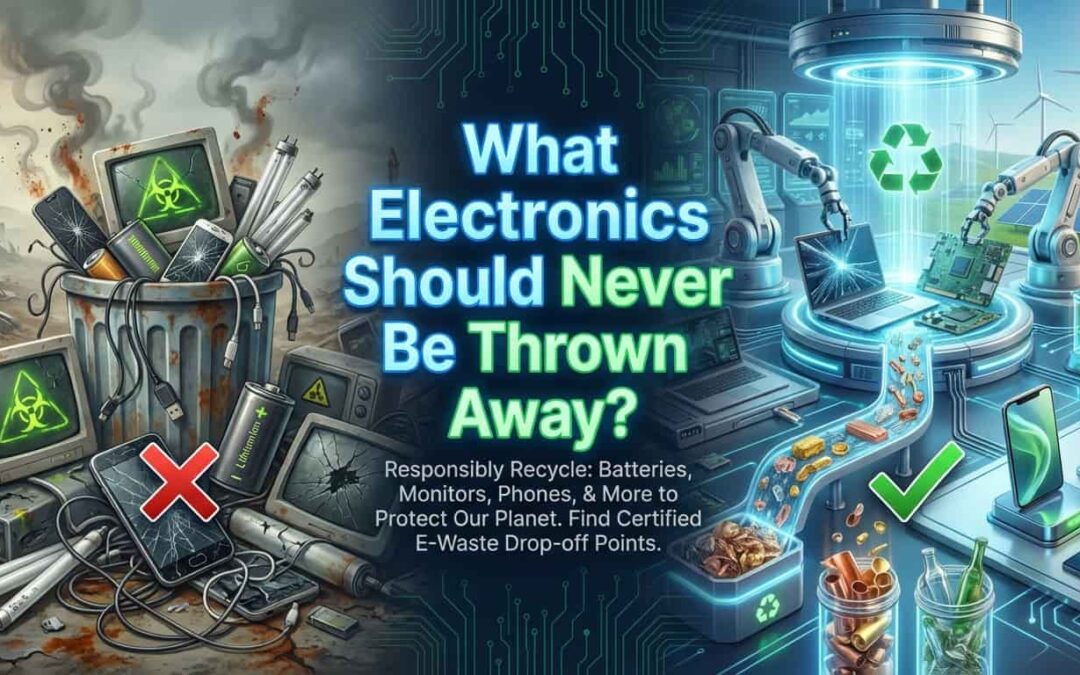
Ever tossed an old phone without thinking twice? You’re not alone. Most of us have chucked a dead remote, cracked tablet, or tangled charger into the trash without a second thought. But here’s the thing: those “harmless” gadgets can leak toxins into Phoenix’s groundwater, spark fires in garbage trucks, and land you on the wrong side of local waste laws.
This isn’t just about being eco-friendly. It’s about protecting your family, your community, and yourself from real consequences. In this guide, you’ll learn exactly which electronics should never be thrown away, why Phoenix treats them differently, and where to take them so you’re doing it right—not just doing it fast.
Why Electronics Should Never Go in the Trash
Tossing electronics might feel harmless, but it’s anything but. Every year, Phoenix generates thousands of tons of e-waste. When old gadgets hit the landfill, they don’t just sit there quietly. They break down, leak heavy metals like lead and mercury, and contaminate soil and drinking water. Worse, lithium-ion batteries can ignite inside trash compactors, causing fires that cost taxpayers millions. The EPA classifies many electronics as hazardous electronic waste for good reasons: they contain toxic chemicals, flammable materials, and data that shouldn’t end up in the wrong hands. Phoenix has strict rules about what goes in your blue bin and your black trash can. Electronics that should not be thrown away are banned from both. Ignoring this doesn’t just hurt the environment—it can result in fines and put waste workers in danger. You’ve probably thrown away a gadget or two without a second thought. We all have. But here’s the thing: knowing what’s inside your old devices changes everything. Don’t dig a well when you’re already thirsty. Plan ahead, and you’ll save yourself—and Phoenix—a lot of trouble.
Environmental Contamination Risks
Your cracked tablet screen could leak toxins into Phoenix’s water table for decades. When hazardous electronic waste breaks down in landfills, it releases lead, mercury, and cadmium into the soil. These chemicals don’t just disappear. They seep into groundwater, poison crops, and harm wildlife. In Phoenix’s desert environment, this is especially dangerous. Our aquifers are already under pressure. Adding electronics to the mix makes it worse. Studies show that e-waste can take 500+ years to decompose. During that time, every rainstorm pushes more toxins deeper into the ground. Would you pour mercury into your garden? That’s basically what happens when you toss a phone or laptop in the trash.
Human Health and Public Safety Concerns
You toss a phone. A worker inhales dust. Your kid plays near a dump site. Exposure to chemicals in hazardous electronic waste harms human health in real, measurable ways. Short-term effects include headaches, breathing issues, and skin irritation. Long-term exposure can lead to neurological damage, reproductive risks, and even cancer.Waste workers are at the highest risk. They handle tons of trash daily, and when lithium-ion batteries or screens break open, they’re the ones breathing in toxic particles.
Kids and vulnerable groups face dangers too. Phoenix’s high population density means landfills and transfer stations are often close to neighborhoods and schools. You know it’s bad to breathe near bleach. Why risk your family’s air with something worse? When you throw electronics you should not throw in the trash into your bin, you may be putting someone else at risk.
Fire Hazards and Waste Facility Risks
Could tossing an old laptop burn down a truck? Yes. Lithium-ion batteries are everywhere—phones, laptops, power tools, e-bikes. When they get crushed or punctured in garbage trucks or compactors, they can spark, smolder, or flat-out explode. One Phoenix facility reported multiple fire incidents in the past year alone, many traced back to discarded electronics. These fires cost taxpayers millions in equipment damage, cleanup, and worker injuries. The risk grows incredibly fast once a battery is damaged. Thermal runaway—a chain reaction inside the battery—can ignite surrounding trash in seconds. Electronics you should not throw in the trash include anything with a rechargeable battery. That’s not a suggestion. It’s a safety rule.
Legal and Regulatory Compliance in Phoenix
Phoenix doesn’t mess around when it comes to e-waste. The City of Phoenix and the Arizona Department of Environmental Quality (ADEQ) regulate how electronics that must be recycled are handled. Local ordinances ban certain items from blue recycling bins and black trash cans. Violating these rules can result in fines, especially for businesses and repeat offenders. Here’s what you need to know:
- Blue bin ban: No electronics allowed, period.
- HHW events: Free disposal for Phoenix residents at scheduled drop-offs.
- ADEQ e-waste rules: State-level oversight for hazardous items.
- Fines: Illegal dumping of electronics can cost you hundreds of dollars.
You can follow the law—or risk fines, fires, and long-term damage. Responsible electronics disposal isn’t just good practice. In Phoenix, it’s required. When in doubt, check Phoenix’s HHW list before tossing any device.
Electronics That Should Never Be Thrown Away
Now that you know the risks, let’s get specific. These items are dangerous, valuable, or illegal to discard in regular trash. They contain toxic chemicals, flammable batteries, or recoverable metals that shouldn’t end up buried in a landfill. Don’t guess. These are the no-go items. An ounce of prevention is worth a pound of toxic cleanup. Let’s break it down so you know exactly what to look for.
Batteries (Lithium-Ion, Lead-Acid, Rechargeable)
Still tossing batteries in the trash? Batteries are one of the most dangerous items you can throw away. Lithium-ion batteries—found in laptops, smartphones, RC cars, even electric toothbrushes—are highly flammable. When crushed or damaged, they can ignite and cause serious fires. Lead-acid batteries (like car batteries) contain sulfuric acid and lead. If these leak, they contaminate soil and water.
Rechargeable batteries from power tools, cameras, and toys also fall into this category. All of which electronics are hazardous waste and must be handled with care. Phoenix saw multiple battery-related fires at waste facilities last year. These aren’t freak accidents. They’re preventable. They power your life—or set your garage on fire. The choice is yours.
Devices With Screens (TVs, Monitors, Smartphones, Tablets)
Your old Kindle’s a hazard. Whoa, right? Devices with screens—TVs, monitors, smartphones, tablets—often contain lead, mercury, and embedded batteries. Even when the screen looks harmless, it’s packed with toxic materials.Flat-screen TVs and monitors are especially tricky. They’re heavy, fragile, and banned from Phoenix trash because they’re hard to dismantle safely.
Don’t forget about smaller screens either: e-readers, smartwatches, baby monitors, GPS units, and dashboard cams all count as electronics that should never be thrown away. Look for the Crossed-Out Wheeled Garbage Can Symbol on most screens. That’s your legal warning. Still thinking of tossing that cracked tablet? Maybe not anymore.
Computers, Laptops, and Peripherals
That old laptop still holds your login info, emails… and your tax returns. Computers, laptops, and peripherals like keyboards, mice, hard drives, and USB drives are loaded with toxic components, personal data, and valuable metals like gold and copper. Tossing these items isn’t just wasteful. It’s risky. Hard drives store sensitive information that can be recovered even after deletion. Identity theft is real, and data destruction electronics services exist for a reason.
Before tossing that desktop tower, ask yourself what’s still inside. Items that should not be thrown away electronics include all of this gear. Recycling them safely protects your privacy and recovers valuable materials that can be reused. It’s like throwing away a piggy bank—full of passwords.
Printers and Office Electronics
They print your kid’s homework—or pollute your local landfill. Printers, copiers, and scanners aren’t just plastic boxes. They contain small motherboards, circuit boards, and toner dust that qualifies them as hazardous electronic waste. Toner cartridges are especially problematic. When crushed, they release fine particles that contaminate air and soil.
Electronics that must be recycled include inkjet printers, wireless scanners, fax combos, and all-in-one office machines. Fun fact: You can recycle cartridges separately at many retailers. Some even offer trade-in credits. When your printer dies, don’t let it become toxic clutter.
Appliances Containing Refrigerants
Still storing that broken mini-fridge in the garage? Small appliances like mini-fridges, air conditioners, dehumidifiers, and water coolers contain coolants like Freon. These chemicals are harmful to the ozone layer and are legally regulated under EPA rules. Even unplugged units can leak gas over time. They’re not just “metal trash.” They’re part of hazardous electronic waste and require certified removal or recycling. Window ACs, portable dehumidifiers, and beverage coolers all fall under this category.
Electronics waste disposal for these items must go through EPA-approved facilities. Don’t risk it. Shockingly overlooked, quietly dangerous.
Fluorescent and Mercury-Containing Lighting
Tossed a lightbulb lately? Might be time to check the label. CFLs, fluorescent tubes, and some LED bulbs contain mercury vapor or hazardous coatings. When these bulbs break, they release mercury into the air—air you and your family breathe.
Waste handlers are at risk too. A shattered bulb in a trash compactor can expose workers to toxic dust. Electronics that should never be thrown away include CFLs, long tubes, and compact spirals. Most hardware stores offer free bulb recycling. It’s easy, safe, and keeps mercury out of your home. If that bulb cracks in your home, you breathe it. So do your kids. Ever felt unsure tossing a bulb? You’re not alone.
Audio, Video, and Entertainment Equipment
You loved it in 2008. Don’t let it pollute Phoenix in 2026. Old iPods, stereo systems, VR headsets, DVD players, speakers, soundbars, and gaming consoles all count as electronics you should not throw in the trash.
These devices contain circuit boards, capacitors, lithium batteries, and data storage. Even unplugged, they may store residual power or personal login info. Game consoles are especially tricky. They store account data, credit card info, and saved games. Wipe them before disposal. Still holding onto that DVD player… just in case? Time to let it go the right way. Electronics recycling and electronics that must be recycled both apply here. Surprisingly complex, secretly valuable.
Cables, Chargers, and Electronic Accessories
How many old phone chargers do you really need? Everyone has that drawer—full of tangled USB cords, phone chargers, HDMI cables, and Bluetooth adapters. These aren’t just clutter. They contain copper and rare metals that shouldn’t go in the trash. Items that should not be thrown away electronics include phone bricks, ethernet cords, old Bluetooth adapters, and even power strips. Retailers often accept cords in bulk for free. Some cords even have gold-plated connectors—don’t trash them. That drawer of tangled junk? It’s a treasure chest in disguise. They look worthless but they aren’t.
Electronics That Require Special Disposal in Phoenix, AZ
Ever felt unsure about where to take that broken gadget in Phoenix? Some electronics need extra steps or specific locations for legal, safe disposal. Local rules matter even when federal law seems unclear. You’re not alone in this. Phoenix offers clear options for residents and businesses. The right place makes all the difference.
Household Electronics
You’ve probably tossed one of these without thinking. Common home-use electronics like toasters with circuit boards, smart thermostats, digital doorbells, baby monitors, and old routers all require special disposal in Phoenix. Even though they’re small or part of everyday life, they still qualify as hazardous electronic waste. Circuit boards, sensors, and Wi-Fi chips contain toxic materials. City of Phoenix HHW options and drop-off events are your best bet for responsible electronics disposal. Ever upgraded your WiFi router and trashed the old one? We’ve all done it—now here’s how to do it better.
Commercial and Business Electronics
It’s not just junk—it’s data, liability, and responsibility. Commercial e-waste includes office PCs, servers, point-of-sale systems, networking gear, and digital signage. Businesses face higher stakes: data risk, legal compliance, and volume challenges. Phoenix-based IT asset disposal (ITAD) programs help businesses meet HIPAA, GDPR, and other data protection standards. Electronics waste disposal for businesses must go through certified recyclers with R2 or e-Stewards certification. These programs offer data destruction electronics services, secure transport, and certificates of destruction. Protect your clients, your team, and your rep. Legally required, publicly visible.
Hazardous Components Found in E-Waste
Would you bury lead in your backyard? Electronics contain dangerous elements: lead, mercury, cadmium, beryllium, and flame retardants. These chemicals harm soil, water, and human health. Lead and mercury in electronics are especially toxic. They leach into groundwater, poison wildlife, and persist in the environment for decades. Electronics that should never be thrown away are regulated because of what’s inside. EPA and Phoenix environmental standards exist to protect you. Ever wonder what’s really inside your old TV? If it sounds dangerous, it probably is.
Phoenix, AZ E-Waste Laws and Disposal Rules
Some items belong in the bin. These don’t. Phoenix has specific regulations on how electronics that should never be thrown away must be handled. Local vs. state requirements, city services, and bans all play a role. You’re part of the solution—here’s how to stay on the right side of the rules. Let’s break it down by authority.
City of Phoenix Solid Waste Guidelines
Think electronics go in the blue bin? Think again. The City of Phoenix bans electronics from blue recycling bins and black trash cans. They cause contamination, damage sorting machines, and put workers at risk.
Don’t: Toss phones, laptops, batteries, or cables in the blue bin.
Do: Use Household Hazardous Waste (HHW) events or approved drop-offs.
According to the City of Phoenix, residents can access free HHW drop-off events throughout the year. You’ll need proof of Phoenix residency.Electronics you should not throw in the trash include anything with a cord, chip, or battery. Strictly enforced, locally banned.
Arizona Department of Environmental Quality (ADEQ)
Wonder who’s behind Arizona’s e-waste laws? It’s ADEQ. ADEQ oversees hazardous electronic waste across Arizona. They regulate permits for recyclers, coordinate statewide programs, and enforce compliance. Businesses should know: ADEQ audits e-waste generators to ensure electronics that must be recycled are handled correctly. ADEQ keeps our air, water, and land cleaner—one circuit board at a time.EPA electronics recycling standards align with ADEQ’s guidelines, giving you state and federal backing.
Why Electronics Are Prohibited in Blue Recycling Bins
It feels right—but it’s totally wrong. Blue bins are for paper, cardboard, and certain plastics. Electronics cause contamination by leaking chemicals, jamming machines, and mixing hazardous materials with clean recyclables. When smartphones, cables, or game controllers end up in blue bins, they can contaminate an entire truckload. That means good recyclables go to the landfill anyway. City of Phoenix waste enforcement takes this seriously. Violations can result in fines or pickup refusal. Think tossing it in the blue bin is recycling? Not with electronics. Do the right thing, the right way.
How to Properly Dispose of Electronics in Phoenix, AZ
You’ve come this far—here’s how to finish strong. Phoenix offers various services: HHW programs, certified recyclers, and donation options. Safe disposal isn’t hard. It’s just a choice.You want to do the right thing. Here’s exactly how.
City of Phoenix Household Hazardous Waste (HHW) Programs
You’ve got e-waste. Phoenix has a plan. Phoenix offers free HHW drop-offs for residents, often held monthly. You can bring old laptops, printers, batteries, phones, and TVs at no cost.
Accepted: Batteries ✅ TVs ✅ Phones ✅
Not accepted: Large appliances, commercial loads
You must show proof of Phoenix residency to access HHW events. Drop off your e-waste—no stress, no mess. Why store junk when the city will take it for free? Bookmark the HHW page or check the city’s calendar for how to dispose of electronics safely.
Certified Electronics Recycling Facilities (R2 / e-Stewards)
When it comes to data and danger—go certified or don’t go at all. Certified recyclers with R2 or e-Stewards certifications offer data wiping, secure transport, hazardous handling, and certificates of destruction. They’re best for businesses, IT equipment, and bulk disposal. They ensure compliance with ADEQ and EPA electronics recycling standards. Would you trust your tax records to a landfill?
Features:
✔️ Data wiping
✔️ Certificate of Destruction
✔️ Pickup or secure drop-off
Check recycler status through SERI.org or the e-Stewards directory. It’s not just recycling—it’s responsible destruction.
Manufacturer and Retail Take-Back Programs
Already going to the store why not drop off your e-junk too?Many brands and stores offer free or low-cost recycling: Best Buy, Staples, Apple, and Dell all accept old electronics. They take phones, printers, laptops, and batteries. Some even offer mail-in options. Your next phone upgrade might come with free recycling. Electronics that should never be thrown away can often be returned to the manufacturer. Check brand websites for product-specific programs. You want it gone. They want it back. Easy win.
Donation Options for Working Electronics
Why toss something that could change a life? Donating still-working electronics is a great option if they aren’t outdated. Local nonprofits, schools, shelters, and e-waste collection drives accept gently used devices. Factory reset devices before donating. Call ahead to check if the nonprofit accepts electronics. Your old tablet could be someone’s only way to learn. Responsible electronics disposal includes giving. Where to recycle old electronics sometimes means finding a new home for it first. You’re done with it—but someone else might just be getting started.
How to Identify Electronics That Need Special Disposal
A tiny icon could save your whole bin from contamination. Many items are marked with symbols, contain embedded batteries, or have visible circuit parts. Knowing what to look for helps you sort e-waste correctly before you toss it. They look normal—but hide dangerous guts.
Crossed-Out Wheeled Garbage Can Symbol
Seen that little trash can with an ‘X’ on your phone charger? This universal symbol—a trash can with an “X” through it—appears on batteries, phones, laptops, and chargers. It means the item is part of electronics that must be recycled. It’s not just a symbol—it’s a legal warning. In Phoenix, it’s illegal to toss these in regular trash or blue bins. Look for it etched near battery packs or on the back label. Many people miss this symbol because it’s small or printed in light ink.
Battery, Plug, or Circuit Board Indicators
Ever cracked open a gadget and saw something green and shiny? That’s your clue. Visible lithium-ion batteries, plug heads, green circuit boards, and power bricks signal electronics that should never be thrown away. Many old toys, speakers, and smart devices contain sealed lithium cells. They’re hidden risks. Does it have a cord, chip, or battery? Then it needs special care. Flip the device, look for exposed wiring, or check for power sources.
Screens, Hazard Labels, or Embedded Power Sources
Is it cracked, blinking, or sealed shut? Then it doesn’t go in the trash. Screens (LCD, OLED), hazard warning labels, or sealed-in batteries mean the device is part of electronics that must be recycled. Even non-working screens contain mercury or heavy metals. Cracked screens or bulging batteries require proper handling. What you can’t see can still be toxic. Handle cracked or leaking items with gloves or drop-off bags.
Step-by-Step: How to Recycle Electronics Safely
A few minutes now saves a landfill later.
Here’s how to dispose of electronics safely with exact steps:
Step 1: Back up your data (photos, contacts, files).
Step 2: Factory reset or wipe the device.
Step 3: Remove batteries if possible (store separately).
Step 4: Wrap screens and pack cords separately to avoid damage.
Step 5: Drop off at an HHW event, certified recycler, or retail take-back location.
You want it gone. Here’s how to do it right. Use tools like DBAN for hard drive wiping or factory reset options in device settings.
Summary Table – Electronics You Should Never Throw Away
Keep this list handy next time you clean out your closet.
| Item | Why It’s Hazardous | Proper Disposal | Phoenix Disposal Option |
| 💻 Laptops, Computers | Lead, data risk, lithium batteries | Certified recycler, HHW | Phoenix HHW events, R2 facilities |
| 📱 Smartphones, Tablets | Mercury, lithium batteries | Retail take-back, HHW | Best Buy, Apple, HHW events |
| 🔋 Batteries (all types) | Fire risk, toxic chemicals | Battery recycling bins, HHW | Phoenix HHW, retail drop-offs |
| 📺 TVs, Monitors | Lead, mercury, embedded batteries | HHW, certified recycler | Phoenix HHW events |
| 🖨️ Printers | Circuit boards, toner dust | HHW, retail programs | Staples, Phoenix HHW |
| 🧊 Mini-fridges, ACs | Freon, ozone-harming coolants | EPA-approved disposal | Certified recyclers |
| 💡 CFLs, Fluorescent Bulbs | Mercury vapor | Hardware store recycling, HHW | Home Depot, Phoenix HHW |
| 🎧 Speakers, Game Consoles | Circuit boards, lithium batteries | Retail take-back, HHW | Best Buy, Phoenix HHW |
| 🔌 Cables, Chargers | Copper, rare metals | Bulk recycling, retail | Best Buy, certified recyclers |
It looks safe—but it’s not. Use this table instead.
Key Takeaways for Phoenix Residents and Businesses
It’s your city, your business, your impact. You know better now and you’ve got better options.
Responsibilities for Phoenix Households
One family’s effort adds up to a cleaner city.
Phoenix residents must:
- Use HHW programs for all electronics
- Never place electronics in trash or blue bins
- Check for symbols, batteries, and hazardous parts
Electronics you should not throw in the trash harm your community. Place a label bin at home for electronics-to-recycle pile. Why toss it when Phoenix gives you a better way?
Compliance Requirements for Businesses and Commercial Projects
Protect your business, your clients, and your reputation.
Businesses must:
- Partner with certified recyclers (R2 / e-Stewards)
- Protect customer data via data destruction electronics services
- Follow ADEQ and EPA rules to avoid liability
Large e-waste generators may need waste tracking records or manifests.
Electronics that must be recycled include all commercial IT gear.
It’s not just junk—it’s risk.
Conclusion
Your old tech doesn’t belong in the trash—it deserves a smarter goodbye. You care about safety, your city, and doing what’s right. That’s why you’re here. From lithium-ion batteries to cracked screens, cables to refrigerants—electronics that should never be thrown away are everywhere. But now you know what they are, why they matter, and where to take them. Phoenix offers free HHW events, certified recyclers, and retail take-back programs. You don’t have to guess. You don’t have to stress. Electronics recycling isn’t complicated. It’s just a choice—one that protects your family, your community, and the planet. Make your next disposal the right one. Phoenix is counting on you.
Need Professional E-Waste Disposal in Phoenix? We’ve Got You Covered.
At JHI E-Scrap, we make responsible electronics disposal simple for Phoenix businesses and residents.
We’re a locally trusted electronics recycling and IT asset disposition company serving the Phoenix area. Whether you’re clearing out a closet full of old gadgets or managing commercial e-waste from your business, we handle it all—safely, legally, and efficiently.
What We Accept:
- Surplus electronics and test equipment
- IT assets (computers, servers, networking gear)
- E-waste pickup for homes and businesses
- Excess inventory management
- SMD components and electronic parts
Why Choose JHI E-Scrap?
✅ Local Phoenix service – We know Arizona’s e-waste laws inside and out
✅ Certified disposal – Compliant with ADEQ and EPA standards
✅ Free pickup available – We come to you
✅ Data security – Safe handling of sensitive business equipment
✅ Fast turnaround – Schedule your pickup today
Don’t let old electronics become a liability. Let us handle the hard part while you focus on what matters.
📍 Location: 3334 W McDowell Rd Unit 17, Phoenix, AZ 85009
📧 Email: JayHoehlinc@gmail.com
📞 Phone: (602) 272-4033
👉 Schedule Your Free E-Waste Pickup Today or call us at (602) 272-4033 to get started.