
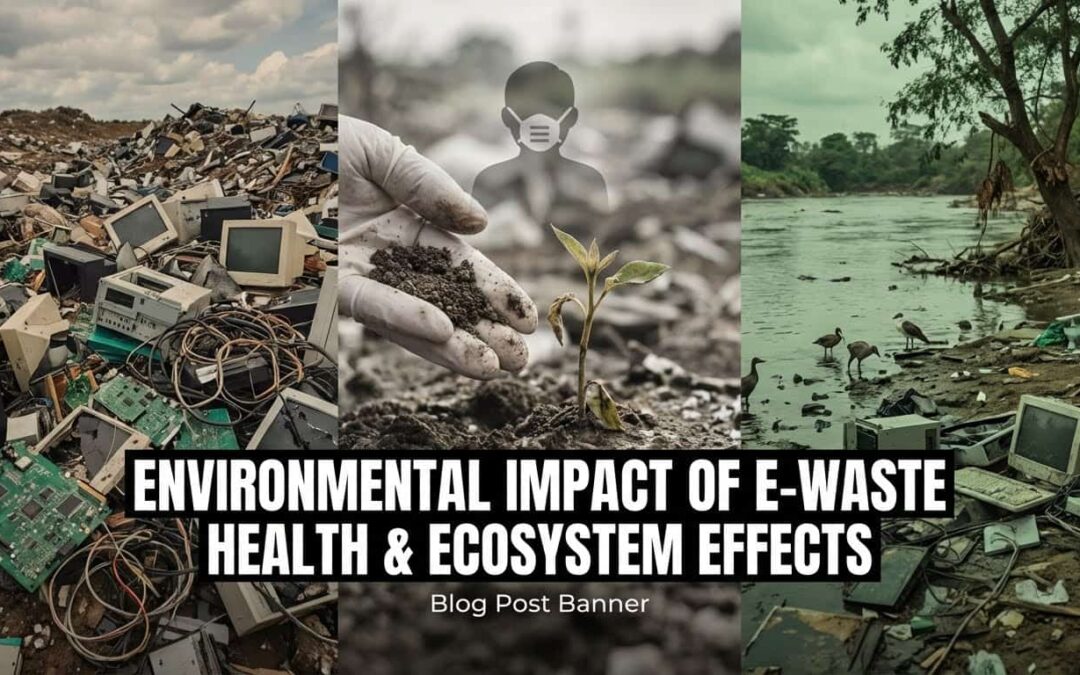
Your old phone isn’t just trash. It’s a ticking pollution bomb.
Every year, we generate over 62 million tons of electronic waste. That’s heavier than the Great Wall of China. Most of it never sees a proper recycling center.
Instead, it piles up in landfills. It gets burned in open pits. It leaches toxins into soil and water.
E-waste is one of the fastest-growing waste streams on the planet. The e-waste environmental impact touches everything from drinking water to wildlife populations. The effects of electronic waste ripple through ecosystems for decades. And e-waste pollution doesn’t stay local—it spreads across borders and through food chains.
You’re not alone if this feels overwhelming. Most people have no idea their discarded gadgets carry lead, mercury, and flame retardants that poison communities.
But here’s the thing: this problem is solvable. Once you understand the pollution pathways, you can make choices that actually matter.
We pulled data from UN and WHO sources to map exactly how e-waste harms the environment.
Here’s what we’ll cover:
- How toxins move through soil, water, and air
- Which materials cause the most damage
- Real health risks for humans and wildlife
- What proper recycling actually looks like
- Actions you can take today
Let’s start with scale.
The Scale of the E-Waste Problem
We throw away 7 kilograms of electronics per person every year. Globally.
That’s 62 million metric tons in 2024 alone. By 2030, experts predict we’ll hit 82 million tons. That growth comes from short product lifecycles, cheap upgrades, and planned obsolescence.
Only 22% of global e-waste gets properly collected and recycled. The rest? It ends up in three places:
Landfills. Mixed with regular trash, leaking toxins into the ground.
Informal dumpsites. Abandoned electronics pile up in vacant lots and fields.
Informal recycling hubs. Workers burn cables and crush circuit boards with no safety gear.
This isn’t a niche problem. It’s a logistics crisis. The effects of electronic waste scale with consumption. More devices mean more disposal pressure.
Key numbers:
- 62 million tons generated in 2024
- Only 22% formally recycled
- Growth rate: 3–5% per year
- Top contributors: Asia, Americas, Europe
The gap between what we generate and what we recycle keeps widening. Collection systems can’t keep up. Consumers don’t know where to take old devices. And the informal sector fills the gap with dangerous shortcuts.
This creates a cycle. More waste. Less oversight. Bigger environmental harm.
About E-Waste
E-waste means any discarded product with a plug, battery, or circuit board.
It includes phones, laptops, TVs, refrigerators, microwaves, and power tools. Even LED bulbs and electric toothbrushes count.
The term covers everything in the WEEE categories Waste Electrical and Electronic Equipment. If it runs on electricity, it’s e-waste when you throw it away.
What counts as e-waste:
- Screens and monitors
- Small appliances (toasters, fans, clocks)
- Large appliances (washers, fridges, AC units)
- IT equipment (laptops, servers, cables)
- Batteries and chargers
- Toys and sports gear with electronic parts
E-waste is different from normal trash. It contains hazardous materials like lead and mercury. But it also holds valuable metals like gold and copper.
That combination makes it risky and profitable. The e-waste environmental impact comes from how we handle that mix.
When devices get dumped or burned, toxins escape. When they’re properly recycled, materials get recovered safely.
The problem isn’t electronics themselves. It’s what happens after we stop using them.
Environmental Risks
E-waste harms the environment through four main pathways.
Leaching. Heavy metals dissolve out of broken devices and soak into soil and groundwater.
Burning. Open fires release toxic fumes and ash. Workers burn cables to extract copper. Plastics melt and create dangerous smoke.
Shredding. Crushing devices creates contaminated dust. It spreads through air and settles on surfaces.
Acid baths. Informal recyclers use acids to dissolve metals. Leftover sludge gets dumped into rivers or soil.
Each pathway exposes people and ecosystems to harm. The risk depends on how much waste, what materials it contains, and how it’s processed.
E-waste pollution doesn’t happen by accident. It’s a predictable outcome of unsafe disposal and weak recycling systems.
The good news? We know exactly how harm occurs. That means we can design systems to prevent it.
Climate Change
E-waste drives emissions in ways most people miss.
Every device has a carbon footprint from manufacturing. Mining metals, assembling parts, and shipping products all require energy. When you throw away a working phone, that embedded carbon is wasted.
Recycling recovers materials with far less energy than mining new ones. But when e-waste goes to landfills or informal dumps, we lose that efficiency. We mine more. We emit more.
The cycle looks like this: short device life → more manufacturing → higher emissions → more waste.
Where emissions hide:
- Mining and refining raw materials (highest impact)
- Manufacturing and assembly
- Transportation and distribution
- Disposal and missed recycling opportunities
“Urban mining” is the alternative. It means recovering metals from old electronics instead of digging new ore.
Recycling one million phones recovers 24 kilograms of gold, 16,000 kilograms of copper, and 350 kilograms of silver. That’s material we don’t have to extract from the earth.
Your choices matter here. Keeping devices longer cuts manufacturing demand. Recycling properly feeds urban mining. Both reduce the e-waste environmental impact on climate.
Lack of Recycling
Only one in five electronics gets recycled properly. Here’s why the gap is so big.
Collection systems are weak. Many cities don’t offer e-waste pickup. Drop-off centers are hard to find. People default to regular trash because it’s easier.
Consumers don’t know where to go. Even motivated people struggle to locate certified recyclers. Some retailers offer take-back, but awareness is low.
Recycling costs money. Proper processing requires specialized facilities. In many regions, there’s no funding model to cover it.
Exports dump the problem elsewhere. Wealthy countries ship e-waste to lower-income nations. It’s cheaper than processing it domestically. The waste ends up in informal recycling sectors with no protections.
What this causes:
Toxins leak into local environments. Workers face dangerous exposure. Valuable materials get lost. And the effects of electronic waste multiply in communities least equipped to handle them.
Good recycling isn’t complicated. But it requires infrastructure, funding, and accountability.
What good recycling includes:
- Safe dismantling with proper tools and PPE
- Pollution controls for smelting and chemical processes
- Downstream tracking to prevent illegal dumping
When those pieces are missing, recycling becomes another source of harm.
Circular Approach for Electronics
Circular design keeps materials in use as long as possible.
It’s a simple idea. Make products that last. Repair them when they break. Refurbish and resell when someone’s done. Recycle only as a final step.
The traditional model is linear: make, use, throw away. Circular flips that. It treats waste as a design failure, not an outcome.
Here’s how it works:
- Design for longevity. Build devices that are easy to repair and upgrade.
- Extend use. Fix broken parts. Replace batteries. Update software.
- Refurbish and resell. Give working devices a second life with new owners.
- Recycle responsibly. Recover materials when repair isn’t possible.
Policies are starting to support this. Right-to-repair laws give people access to parts and manuals. Extended Producer Responsibility (EPR) makes manufacturers fund recycling.
Take-back programs let you return old devices to the brand that made them.
This movement is growing. It’s built on fairness: companies that profit from selling devices should help manage end-of-life impacts.
You’re part of it when you repair instead of replace. When you buy refurbished. When you choose brands that design for circularity.
E-waste pollution shrinks when we stop treating electronics as disposable.
Toxic Materials in Electronics
Electronics work because of chemistry. But that chemistry comes with risks.
Devices need materials that conduct electricity, resist heat, and prevent fires. Many of those materials are toxic.
Lead makes solder flow smoothly. Mercury switches on and off with precision. Cadmium stores energy in batteries. Brominated flame retardants stop plastics from catching fire.
These substances do their jobs well. But when devices get crushed, burned, or dumped, they become pollutants.
Exposure happens three ways:
Ingestion. Contaminated dust settles on food and hands. Kids playing near dumpsites ingest it.
Inhalation. Burning releases fumes and fine particles. Workers and nearby residents breathe them in.
Dermal contact. Touching broken screens or circuit boards transfers chemicals to skin.
The effects of electronic waste depend on dose, duration, and which toxins are present. A single exposure might not cause harm. But repeated contact builds up over time.
Key toxic materials in electronics:
| Material | Where it’s found | Why it matters |
|---|---|---|
| Lead | Solder, CRT screens, circuit boards | Damages brain development, especially in children |
| Mercury | Switches, fluorescent lamps, sensors | Bioaccumulates in fish and wildlife |
| Cadmium | Batteries, chip components, pigments | Harms kidneys and bones with chronic exposure |
| Brominated flame retardants (BFRs) | Plastic casings, circuit boards | Persistent pollutants; toxic when burned |
| Beryllium | Connectors, thermal management parts | Lung disease risk from dust inhalation |
| Arsenic | LEDs, semiconductors | Carcinogen; contaminates water |
These materials don’t disappear when devices break. They move into the environment and stay there.
Understanding what’s inside your electronics is the first step to handling them safely.
Environmental Impacts of E-Waste Pollution
E-waste pollution follows three main pathways: soil, water, and air.
Each pathway spreads toxins differently. But they’re all connected. What leaches into soil washes into water. What burns in air settles back onto soil.
The system looks like this:
Dumped devices → toxins leach → soil contamination → crops absorb metals → humans and animals ingest them.
Burned devices → smoke and ash → air pollution → particles settle → contaminate water and soil.
Crushed devices → runoff → rivers and groundwater → drinking water contamination → aquatic life harmed.
These aren’t isolated problems. They compound. A single dumpsite can contaminate soil, poison wells, and create toxic air all at once.
And the impacts don’t stop at pollution. E-waste also drives biodiversity loss and resource depletion.
Here’s the good news: this is predictable. We know how harm happens. That means we can design interventions that work.
Let’s break down each pathway.
Soil & Water Contamination
When electronics sit in landfills or open dumps, rain does the damage.
Water seeps through broken devices. It picks up heavy metals, flame retardants, and other toxins. This contaminated liquid is called leachate.
Leachate soaks into the ground. It moves downward through soil layers. Eventually, it reaches groundwater—the source of wells and springs.
Once groundwater is contaminated, it’s hard to clean. Toxins spread slowly through underground aquifers. They can travel kilometers from the original dump.
How it happens:
- Rain or irrigation water contacts discarded electronics
- Toxins dissolve and form leachate
- Leachate percolates through soil
- Contamination reaches groundwater and nearby surface water
Soil itself becomes toxic near dumpsites. Lead, cadmium, and other metals bind to soil particles. They stay there for years, even decades.
Plants growing in contaminated soil absorb metals through their roots. Crops near e-waste sites have been found with elevated lead and cadmium levels.
The e-waste environmental impact on soil and water creates a direct path to human exposure. People drink from contaminated wells. They eat crops grown in polluted soil.
This pathway is slow but persistent. Harm accumulates over time.
Air Pollution
Burning e-waste creates immediate air pollution.
Informal recyclers burn cables to melt off plastic insulation and recover copper wire. It’s fast and cheap. But the smoke contains a toxic mix.
What gets released:
- Particulate matter (PM2.5 and PM10)
- Heavy metal fumes (lead, cadmium, mercury vapor)
- Dioxins and furans from burning plastics
- Polycyclic aromatic hydrocarbons (PAHs)
These pollutants don’t stay local. Wind carries fine particles for miles. People living downwind breathe contaminated air.
Indoor exposure is even worse. Workers who dismantle electronics inside homes or workshops inhale concentrated fumes and dust. Ventilation is poor or nonexistent.
Children are especially vulnerable. They breathe faster than adults. They spend more time close to the ground, where heavier particles settle.
The effects of electronic waste on air quality show up fast. Respiratory symptoms appear within weeks of exposure. Long-term exposure increases cancer risk and lung disease.
Communities near burning sites report persistent coughs, asthma, and eye irritation. Schools and markets located near dumpsites become exposure zones.
This pathway is the most immediate. You can see the smoke. You can smell it. But the harm extends far beyond what’s visible.
Biodiversity Loss
E-waste doesn’t just harm humans. It disrupts entire ecosystems.
Toxins from dumpsites move through food chains in a process called bioaccumulation. Small organisms absorb low levels of mercury or lead. Predators eat many contaminated prey. Toxin levels multiply at each step.
This is biomagnification. It hits top predators hardest.
Birds that eat fish from contaminated rivers show reproductive problems. Eggs have thinner shells. Chicks hatch with developmental defects.
Insects living in polluted soil suffer too. Beneficial species like earthworms and beetles decline. Soil microbes that break down organic matter lose function.
Aquatic ecosystems face similar stress. Heavy metals kill sensitive fish species first. Algae blooms increase when ecosystem balance breaks.
Pollinator populations drop near dumpsites. Bees and butterflies avoid areas with high chemical loads.
Examples of affected species:
- Fish in rivers downstream of recycling sites
- Birds nesting near informal dumps
- Soil invertebrates essential for nutrient cycling
- Amphibians in contaminated wetlands
The result is reduced biodiversity. Fewer species. Weaker ecosystems. Less resilience to other stresses like climate change.
E-waste pollution doesn’t stay in one place. It ripples outward through ecological relationships.
We can prevent this. Proper containment and recycling keep toxins out of ecosystems entirely.
Resource Depletion
Every trashed device wastes the materials inside it.
Electronics contain gold, copper, silver, palladium, and rare earth elements. These materials took energy to mine and process.
When e-waste goes to landfills, those materials are lost. We have to mine more to make new devices.
Mining destroys habitats. It pollutes rivers. It displaces communities. And it requires massive energy inputs.
The irony is sharp: we mine new materials while burying recovered ones in the ground.
What we lose when we don’t recycle:
| Material | Uses | Why it matters |
|---|---|---|
| Gold | Circuit boards, connectors | Rare and energy-intensive to mine |
| Copper | Wiring, circuit boards | High demand; mining causes habitat loss |
| Rare earths | Magnets, screens, batteries | Limited sources; extraction is highly polluting |
One ton of circuit boards contains more gold than one ton of gold ore. Recycling is literally more efficient than mining.
Yet we recover only a fraction of what’s available. The rest sits in landfills or gets processed unsafely.
This is what waste looks like from a systems view: valuable materials treated as garbage.
The e-waste environmental impact of resource depletion is indirect but huge. Every device we repair or recycle reduces pressure on ecosystems where mining happens.
Quick win: Repair beats replacement for environmental impact. Keeping a device one extra year saves the energy and materials needed to manufacture a new one.
Soil Contamination from E-Waste
Soil contamination happens in three ways.
Heavy metal leaching. Lead, cadmium, and mercury dissolve out of devices and bind to soil particles. They stay there for decades.
Microplastic fragments. Plastic casings break down into tiny pieces. They mix with soil and don’t biodegrade.
Contaminated dust deposition. Burning and crushing create toxic dust. Wind spreads it over wide areas. It settles on topsoil.
The worst contamination appears near informal recycling clusters and dumpsites. Soil tests from Agbogbloshie in Ghana and Guiyu in China show lead levels 50 to 100 times higher than safe limits.
Plants take up metals through their roots. Leafy vegetables grown in contaminated soil can accumulate cadmium and lead. People eating those crops ingest the toxins.
This creates a soil-to-food pathway. It’s an invisible route of exposure.
Where it shows up:
- Dumpsites and informal processing areas
- Agricultural fields adjacent to e-waste zones
- Residential yards near recycling facilities
- Playgrounds and schools in affected neighborhoods
Soil remediation is slow and expensive. In many cases, contaminated land stays polluted for generations.
The effects of electronic waste on soil are long-lasting. Prevention is far easier than cleanup.
Water Pollution Effects
E-waste toxins move into water systems through runoff and leachate.
Rain washes contaminated dust and particles into streams. Leachate from dumps seeps into aquifers. Both pathways lead to the same outcome: poisoned water.
Rivers near informal recycling hubs show elevated levels of lead, chromium, and cadmium. Wells in affected areas become unsafe to drink.
Aquatic ecosystems suffer first. Fish absorb heavy metals through gills and skin. Toxic levels build up in their tissues. Predators that eat contaminated fish get even higher doses.
In some regions, fish kills have been directly linked to e-waste dumping. Entire populations collapse.
Drinking water contamination is harder to spot. Unlike sewage or oil spills, heavy metals don’t smell or change water color. Communities may drink polluted water for years before health impacts appear.
Water systems at risk:
- Shallow wells near dumpsites
- Rivers and lagoons receiving runoff
- Irrigation channels in agricultural areas
- Urban water supplies downstream of processing zones
The e-waste environmental impact on water is both local and regional. Contamination spreads through watersheds. A problem in one area becomes a problem downstream.
Testing and monitoring help. But prevention is better. Proper recycling keeps toxins out of water entirely.
Air Quality Impact
Burning e-waste creates a toxic cloud.
Informal recyclers burn cables and circuit boards to recover metals. The smoke contains fine particles, heavy metal vapors, and organic pollutants.
What gets released:
- PM2.5 and PM10 (fine particulate matter that penetrates deep into lungs)
- Lead and cadmium vapors
- Dioxins and furans (byproducts of burning plastics)
- Polybrominated compounds from flame retardants
Outdoor exposure affects entire communities. Smoke drifts over schools, markets, and homes. People breathe it in without realizing the danger.
Indoor exposure is worse. Workers who burn materials inside sheds or workshops face concentrated fumes. Without ventilation or masks, they inhale toxic doses daily.
Fine particles are the biggest threat. They bypass the body’s defenses and lodge in lung tissue. They trigger inflammation, reduce lung function, and increase cancer risk.
Children face higher exposure relative to body weight. Their developing lungs are more vulnerable to permanent damage.
What it means:
Short-term exposure causes coughing, eye irritation, and headaches. Long-term exposure leads to chronic respiratory disease, heart problems, and cancer.
E-waste pollution from burning is preventable. Proper recycling eliminates the need to burn anything.
Wildlife and Ecosystem Effects
Dumpsites become death traps for wildlife.
Animals scavenge for food near e-waste piles. They ingest plastic fragments, metal shards, and toxic dust.
Birds use discarded wires and plastic strips for nesting. Chicks hatch in contaminated nests. They absorb toxins through their skin and food.
Fish downstream of recycling sites accumulate mercury and cadmium. Reproductive rates drop. Deformities increase.
Amphibians are especially sensitive. Frogs and salamanders near polluted water show skeletal abnormalities and immune system failure.
The food chain magnifies the problem. Predators at the top—eagles, otters, large fish—carry the highest toxin loads. They suffer the most severe health impacts.
Habitat damage compounds the harm. Soil contamination kills off vegetation. Water pollution destroys breeding grounds. Air pollution stresses entire populations.
Examples:
- Fish kills in rivers near e-waste hubs
- Bird populations declining near dumpsites
- Soil invertebrates disappearing from contaminated areas
Ecosystems lose resilience. Fewer species mean less stability. One bad year or additional stressor can trigger collapse.
The effects of electronic waste on wildlife are measurable and tragic. But they’re also preventable.
Keeping e-waste out of the environment protects biodiversity. Proper recycling preserves the ecosystems we all depend on.
Health Impacts of E-Waste (Humans & Wildlife)
E-waste exposure harms health through multiple pathways.
Workers in informal recycling face the highest risks. They handle toxic materials daily without protection. Nearby residents also face exposure through air, water, and soil.
Children are especially vulnerable. They absorb toxins more easily than adults. Their developing brains and bodies suffer lasting damage from even low-level exposure.
Wildlife health follows similar patterns. Contaminated food and water lead to reproductive failure, organ damage, and population decline.
Key health impacts:
- Neurological damage from lead and mercury
- Respiratory disease from smoke and dust
- Reproductive harm from endocrine disruptors
- Organ damage and cancer from chronic exposure
Health outcomes depend on dose, duration, and which toxins are present. A single exposure might cause acute symptoms. Repeated exposure over years leads to chronic disease.
Prevention is the best strategy. Eliminating unsafe recycling protects workers. Proper disposal prevents community exposure.
The e-waste environmental impact on health is serious but solvable. We know what causes harm. That means we can design systems that prevent it.
Neurological Damage
Lead and mercury target the nervous system.
Lead interferes with brain development in children. Even low levels reduce IQ, impair learning, and increase behavioral problems.
Mercury damages the brain and nervous system at any age. But fetuses and young children are most vulnerable. Exposure during pregnancy can cause developmental delays and motor impairment.
E-waste workers show measurable neurological effects. Studies document memory problems, reduced coordination, and mood changes in people with chronic exposure.
Children living near informal recycling sites have higher blood lead levels than children in unaffected areas. The damage is often permanent.
Who is most at risk:
- Children under 6 years old (developing brains)
- Pregnant women (fetal exposure)
- E-waste workers with daily handling
Neurological harm from the effects of electronic waste is well-documented. Dozens of studies link e-waste exposure to cognitive and developmental impacts.
Protection requires keeping lead and mercury out of the environment. That means banning open burning, using proper recycling, and keeping children away from contaminated areas.
Respiratory Problems
Smoke from burning e-waste destroys lung health.
Inhaling toxic fumes causes immediate irritation. Coughing, wheezing, and chest pain appear within hours.
Long-term exposure leads to chronic obstructive pulmonary disease (COPD), asthma, and lung cancer.
Workers who burn cables without masks face the worst outcomes. Their lungs show scarring and reduced function.
Dust from crushing devices also harms lungs. Fine particles bypass the body’s filters and lodge deep in lung tissue.
Children and elderly people are most vulnerable. Their lung defenses are weaker.
Risk snapshot:
- Acute exposure: coughing, throat irritation, shortness of breath
- Chronic exposure: COPD, asthma, reduced lung capacity
- Severe exposure: lung cancer, pulmonary fibrosis
Communities near burning sites report higher rates of respiratory illness. Schools close to dumpsites see increased asthma among students.
E-waste pollution from burning is entirely preventable. Proper recycling eliminates smoke and dust exposure.
Reproductive Issues
Some e-waste chemicals disrupt hormones.
Brominated flame retardants and other compounds interfere with the endocrine system. This can affect fertility, pregnancy, and child development.
Studies of e-waste workers show higher rates of miscarriage and premature birth. Animal studies confirm reproductive harm from these chemicals.
Exposure during pregnancy is especially concerning. Developing fetuses are vulnerable to even small hormonal disruptions.
Early-life exposure may affect puberty timing and reproductive health later in life.
What to avoid:
- Direct handling of e-waste without protection
- Living near uncontrolled burning or dumpsites during pregnancy
The science here is still developing. But the precautionary principle applies: minimize exposure, especially for pregnant women and young children.
The e-waste environmental impact on reproduction reminds us that chemical exposure affects future generations.
Organ Damage & Cancer
Cadmium targets the kidneys.
Long-term exposure causes kidney disease. The damage is often irreversible. Workers in informal recycling show elevated kidney markers.
Mixed chemical exposure from e-waste is also linked to cancer. No single chemical may be enough to trigger disease. But combinations of toxins over time increase risk.
Dose and duration matter. A one-time exposure is less dangerous than daily handling over years.
What increases risk:
- Prolonged contact without protective equipment
- Burning or acid processing that releases concentrated toxins
- Living in contaminated areas with multiple exposure pathways
The effects of electronic waste on organs and cancer risk are dose-dependent. Eliminating unsafe practices dramatically reduces harm.
Proper recycling protects workers and communities from these long-term health threats.
Impact on Developing Countries
E-waste harm is not evenly distributed.
Lower-income countries receive the bulk of global e-waste exports. Wealthy nations ship their discarded electronics abroad for “recycling.”
Much of it ends up in informal processing sectors. Workers dismantle devices by hand with no safety protections. Communities nearby breathe the smoke and drink contaminated water.
This is environmental injustice. The countries that consume the most electronics export the environmental and health costs.
Labor is cheaper in these regions. Environmental regulations are weaker or poorly enforced. E-waste becomes a profitable—but deadly—industry.
Why it happens:
- Export is cheaper than domestic processing
- Importing countries have weak enforcement of waste treaties
- Informal recycling provides income in areas with few alternatives
- Global trade rules allow loopholes
Workers and families in places like Agbogbloshie (Ghana), Guiyu (China), and parts of India and Southeast Asia bear the burden.
Children work at dumpsites. Families live meters from burning zones. Schools operate near contaminated soil.
The e-waste pollution problem is global. But the harm concentrates in specific communities.
Solutions must address both supply (reducing waste generation) and demand (creating safe, local recycling infrastructure).
Fairness means taking responsibility for the full lifecycle of products, not exporting the harmful parts.
Causes and Risks of Informal E-Waste Recycling
Informal recycling exists because formal systems are too weak or too expensive.
In many regions, there’s no official e-waste collection. No certified recyclers operate nearby. So informal workers fill the gap.
They recover valuable metals—copper, gold, aluminum—and sell them to scrap dealers. It’s a livelihood for millions of people worldwide.
But the methods are dangerous. No protective equipment. No pollution controls. No worker safety standards.
How the informal chain works:
- E-waste arrives via exports or local collection
- Informal workers buy or collect devices
- They dismantle by hand, burn cables, use acid baths
- Recovered metals are sold to middlemen
- Waste residue is dumped into soil or water
This system is efficient at extracting value. But it’s catastrophic for health and the environment.
Workers face daily exposure to toxins. Communities near processing sites suffer contamination. And the environmental damage persists for decades.
The e-waste environmental impact of informal recycling is massive. But banning it without alternatives just pushes people into poverty.
Real solutions require creating formal recycling jobs with safety protections. Funding infrastructure. And ensuring workers can earn a living without poisoning themselves.
Unsafe Recycling Practices
Informal recycling uses methods that maximize profit and minimize cost.
Burning wires. Cables are thrown into open fires. Plastic insulation melts away. Copper wire is recovered from the ash. Toxic smoke spreads for miles.
Acid baths. Circuit boards are soaked in acid to dissolve metals. Gold and other precious materials are extracted. Leftover acid is dumped untreated.
Manual breaking. Devices are smashed with hammers or rocks. Glass, plastic, and metal are separated by hand. Toxic dust fills the air.
No PPE. Workers have no gloves, masks, or protective clothing. They touch contaminated materials with bare hands. They breathe toxic fumes all day.
No controls. There are no ventilation systems. No wastewater treatment. No emission filters.
The result is maximum exposure for workers and maximum environmental contamination.
E-waste pollution from informal recycling is severe and preventable.
Red flags when choosing a recycler:
- They ask for payment to take your e-waste (legitimate recyclers often don’t charge)
- No certifications displayed (look for e-Stewards or R2)
- Facilities are not open for inspection
Avoid recyclers who can’t prove they process waste safely.
Global Spread of Toxic Pollutants
E-waste toxins don’t stay where they’re released.
Air carries smoke and fine particles across borders. Rivers move contaminated water downstream. Ocean currents distribute pollutants globally.
Trade also spreads the problem. E-waste shipped from Europe shows up in African dumpsites. Electronics discarded in the U.S. end up in Southeast Asian recycling hubs.
Once toxins enter the environment, they persist. Mercury bioaccumulates in fish that migrate across oceans. Dioxins settle into sediments far from their source.
How pollutants spread:
- Wind-borne particles from burning sites
- River systems carrying contaminated runoff
- International waste shipments
Local contamination becomes a global chronic exposure issue.
The effects of electronic waste cross borders and timescales. A device burned in one country can contribute to mercury in fish eaten thousands of miles away.
Solving this requires international cooperation. Waste trade agreements. Shared infrastructure. And accountability across the entire supply chain.
Informal Recycling Dangers
Meet Kofi. He’s 14 years old. He works at Agbogbloshie in Ghana.
Every day, he burns cables to extract copper. The smoke makes his eyes water. His lungs hurt. But the work pays better than anything else available.
Kofi is one of thousands. Workers and families live directly on or near dumpsites. Children play in contaminated soil. Mothers cook food meters from burning piles.
Exposure is constant. Workers touch toxic materials all day. Families breathe contaminated air. Everyone drinks water from wells near the dump.
The health impacts show up fast. Respiratory problems. Skin rashes. Headaches. Over time, neurological damage and organ disease.
Main exposure routes:
- Inhalation of smoke and dust
- Dermal contact with contaminated materials
- Ingestion of dust on hands and food
- Drinking contaminated water
Kofi’s story is not unique. It’s the reality for millions of people in informal recycling sectors worldwide.
This is the human face of e-waste pollution.
The tragedy is that it’s preventable. Proper recycling systems would eliminate these exposures. Workers could recover materials safely. Communities could live without contamination.
But that requires investment, infrastructure, and political will.
Case Studies: E-Waste Disasters
Some places show us exactly how bad it can get.
Agbogbloshie, Ghana
Location: Accra, Ghana
What happened: One of the world’s largest informal e-waste processing sites. Thousands of workers burn cables and dismantle devices daily. No safety protections. No pollution controls.
What pollution pathway: Primarily air pollution from open burning. Soil and water contamination from dumping residues.
Lesson: A 2024 study found blood lead levels in workers and nearby residents significantly elevated. Children showed the highest levels. The site demonstrates how informal recycling concentrates harm in vulnerable communities.
Guiyu, China
Location: Guangdong Province, China
What happened: Historic e-waste processing hub operating since the 1990s. Acid baths, burning, and manual dismantling contaminated the entire region.
What pollution pathway: All three—soil, water, and air. Groundwater became undrinkable. Soil showed extreme heavy metal contamination. Air quality was among the worst in China.
Lesson: Guiyu became a case study in long-term environmental damage. Cleanup efforts continue decades