
Are Old Electronics Worth Money in Phoenix, AZ? What “Worth” Really Means
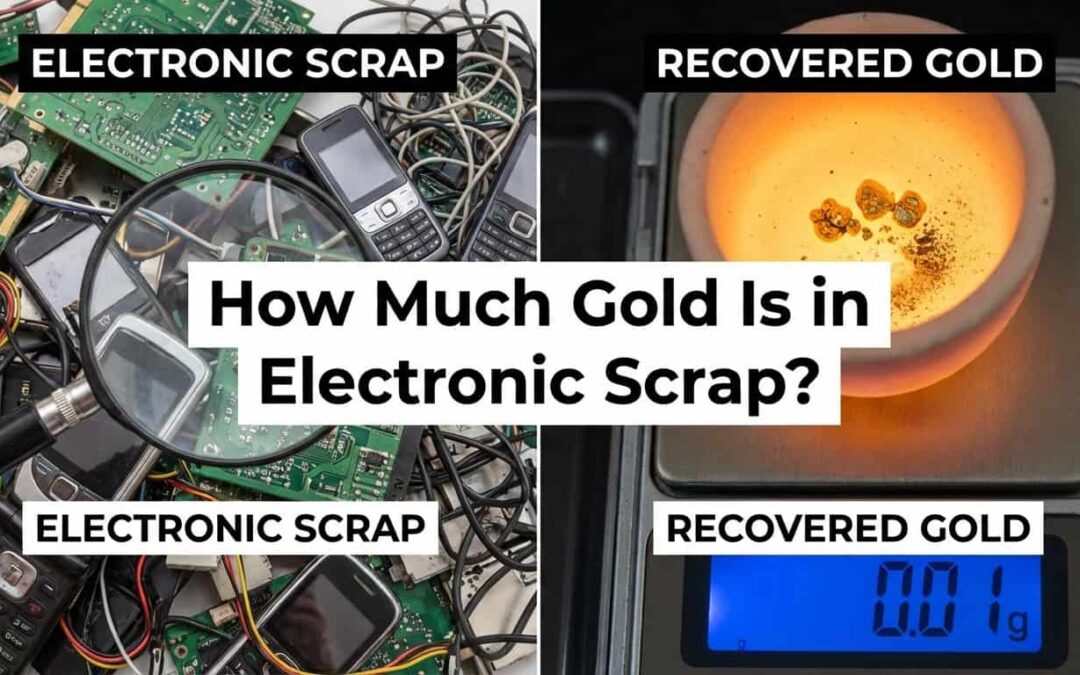
Ever stare at a dead laptop wondering if it’s just… junk? Here’s the twist. That drawer full of old phones and cables? It might fund your next coffee run. Or your weekend getaway. In Phoenix, old electronics hold two kinds of value: resale and scrap. Resale means selling a working device on Facebook Marketplace or eBay. Scrap means selling the raw materials inside—especially precious metals like gold.
Local recyclers in Phoenix often pay more for bulk trade-ins. Bring in 10 old phones instead of one, and you’ll see better rates. The heavier the haul, the sweeter the deal. The takeaway? Don’t assume broken means worthless. Gold doesn’t care if your device boots up.
Resale Value vs Scrap Value (Gold/Metals)
Resale Value:
- Device must power on and function
- Higher payout for popular brands (Apple, Samsung)
- Condition matters: screens, batteries, cosmetics
- Best for newish tech (2-5 years old)
Scrap Value:
- Device can be completely broken
- Focuses on internal metals (gold, copper, palladium)
- Condition doesn’t matter much
- Best for vintage or dead devices
Broken doesn’t mean worthless. Many components are still gold-bearing.
Your smashed phone? Still has gold in the circuit board. Your ancient tower PC? Loaded with gold pins and connectors.
Don’t trash it. Mine it.
Why Electronics Contain Gold and Why It Matters for Phoenix Scrap Value
Gold isn’t in electronics for show. It’s there because it works. Manufacturers use gold for three main reasons. It conducts electricity better than most metals. It resists corrosion even in humid or dusty conditions. And it’s malleable, so it’s easy to work with during production. Copper conducts electricity well, but it oxidizes. Silver conducts even better, but it tarnishes. Gold sits in the sweet spot: excellent conductivity with near-perfect durability. For Phoenix scrap sellers, this matters. Gold retains value even decades after a device dies. That 1990s desktop collecting dust? The gold inside is still pure, still valuable.
Conductivity Comparison:
| Material | Conductivity | Corrosion Resistance |
|---|---|---|
| Gold | Excellent | Best |
| Silver | Superior | Moderate |
| Copper | Very Good | Poor |
The proverb fits: Don’t dig a well when you’re already thirsty. The gold is already in your closet.
Corrosion Resistance of Gold
Gold survives where other metals fail. Circuit boards experience heat, humidity, and dust. Over years, copper corrodes. Silver tarnishes. Gold? It stays pure. Think of gold as the Teflon of metals. Nothing sticks. Nothing degrades. This durability is why manufacturers coat connectors and pins with gold plating. Even a thin layer protects the connection for decades. That’s why vintage electronics still have recoverable gold.
Where Gold Is Found Inside Old Electronics and Scrap Devices
Gold hides in plain sight. You just need to know where to look. Like hidden treasure in plain sight, gold lives in the small connectors and coatings most people overlook.
Key gold-bearing components:
- Circuit boards (PCBs): Gold traces on the surface, especially in older boards
- CPU pins and sockets: Gold-plated connection points
- RAM fingers: The gold contacts along the edge of memory sticks
- Connectors and ports: USB, HDMI, and audio jacks use gold plating
- SIM cards: Thin gold contact pads
- Hard drive platters: Some older models used gold coatings
- Capacitors and transistors: Tiny but numerous gold components
Ceramic CPUs from the 90s are often overlooked. But they’re gold-dense gems. A single Pentium Pro can contain up to 0.5 grams of gold.
RAM fingers are another sleeper hit. Each stick has dozens of gold contacts. Collect enough, and you’ve got serious value.
Gold Content in Common Household Electronics in Phoenix (Approximate)
Think your Xbox is worthless? Think again.
The gold content in household electronics varies wildly. Older devices often contain more gold than their sleek modern replacements.
Here’s what you might find lurking in your garage:
| Device | Approx. Gold Content |
|---|---|
| Smartphone | 0.034g per phone |
| Desktop Computer | 0.2-0.5g per unit |
| Laptop | 0.2-0.3g per unit |
| Old Gaming Console | 0.1-0.3g per unit |
| CRT Monitor | 0.1-0.2g per unit |
| Tablet | 0.02-0.05g per unit |
| Circuit Board | 0.1-0.5g per pound |
Desktop towers often hold more gold than new devices. Why? They have more connection points. More expansion slots. More RAM slots. More pins.
A single desktop from the early 2000s can contain 10 times the gold of a modern smartphone.
And that old Xbox 360 gathering dust? It’s got gold-plated connectors in the motherboard. Not a fortune, but not nothing either.
📊 Gold Content in Electronic Scrap (E-Waste)
Here’s where things get shocking.
One ton of smartphones yields 300-400 grams of gold. That’s 100 times more gold than one ton of gold ore from a mine.
Less rock, more reward. Less digging, more gold.
E-waste vs Gold Ore Comparison:
| Material | Gold Yield per Ton |
|---|---|
| Smartphones | 300-400g |
| Computer Circuit Boards | 200-300g |
| Gold Ore (average mine) | 3-5g |
Urban mining recycling gold from electronics—makes economic sense. The concentration is higher. The extraction is easier. And you’re not destroying wilderness to get it.
For Phoenix residents, this means your pile of old tech is a mini gold mine. Literally.
Profitability of Recycling Gold From E-Waste in Phoenix, AZ
Can you actually make money recycling gold from electronics in Phoenix?
Short answer: Yes, but with caveats.
The Opportunity:
Phoenix scrap yards prefer sorted over mixed scrap. If you separate high-gold components (RAM, CPUs, connectors), you’ll get better rates. Bulk matters. One phone won’t make you rich. But 50 phones? That’s a different story.
The Reality:
Professional refiners have industrial equipment. They can extract 95% of available gold. At home, you’ll struggle to hit 50% without dangerous chemicals. Most Phoenix residents are better off selling to e-waste recyclers. Let them handle the extraction. You get cash upfront without the hazmat suit.
The Bottom Line:
Yes, your junk drawer might fund your next weekend getaway. Just don’t expect to retire off it. Local Phoenix recyclers typically pay $1-5 per pound for mixed e-waste. High-grade scrap (CPUs, gold-plated pins) fetches more—sometimes $20-50 per pound.
High-Grade Components With Concentrated Gold Yields
Want the best bang for your scrapping buck? Target these components.
These parts are the gold veins in the e-waste mountain.
- RAM fingers: Each memory stick has 50+ gold contacts. Older DDR1 and DDR2 use thicker gold plating.
- Gold-plated pins: Found in CPUs, expansion cards, and connectors. Easy to spot, easy to remove.
- SIM cards: Tiny but concentrated. Each card has a small gold contact pad.
- Ceramic CPUs: Vintage Pentium Pro, 486, and 386 chips. These can contain 0.3-0.5g gold each.
- Telecom equipment: Old routers and switches use heavy gold plating for reliability.
Ceramic CPUs from the 90s are especially valuable. They use thick gold plating on dozens of pins. A single CPU can be worth $10-30 at a scrap yard.
Modern CPUs? Less gold, more plastic. The old stuff wins here.
Bulk Scrap Categories and Average Gold Yields
Not all scrap is created equal. Phoenix e-waste centers sort by category for a reason.
Some boards whisper gold… others scream it.
| Scrap Category | Gold Content per Pound |
|---|---|
| High-Grade Boards | 1-3g |
| Low-Grade Boards | 0.1-0.5g |
| CPUs (vintage ceramic) | 5-10g |
| RAM Sticks | 0.5-2g |
| Connectors/Pins | 2-5g |
| Whole Computers (mixed) | 0.2-1g |
High-grade boards come from servers, telecom equipment, and industrial devices. They’re packed with gold traces and plated components.
Low-grade boards are from consumer electronics. Phones, tablets, cheap laptops. Less gold, more plastic.
Phoenix recyclers pay more for sorted scrap. Bring in a bag of mixed junk, and you’ll get low-grade pricing. Bring in separated CPUs or RAM, and you’ll triple your payout.
CPU Gold Content Breakdown (Per Unit Estimates)
Vintage CPUs are where nostalgia meets profit.
These chips carry gold like treasure maps on silicon.
| CPU Type | Era | Approx. Gold Content |
|---|---|---|
| Pentium Pro (ceramic) | Mid-90s | 0.3-0.5g |
| Pentium II (SECC) | Late 90s | 0.15-0.3g |
| Pentium III | Late 90s-2000s | 0.1-0.2g |
| Pentium 4 | 2000s | 0.05-0.15g |
| Modern CPUs | 2010+ | 0.02-0.05g |
The older, the better. Ceramic CPUs from the 386, 486, and Pentium Pro era use thick gold plating. You can see it with the naked eye.
Modern CPUs use micro-thin gold coatings. They’re more efficient but less valuable for scrappers.
Key insight: One Pentium Pro can be worth as much as 10 modern Intel chips for scrap purposes.
If you’ve got old tower PCs from the 90s, don’t trash them. Pull the CPUs. They’re worth more than the rest of the computer combined.
Recovery and Refining Reality Check for Phoenix E-Waste Sellers
Let’s talk real numbers versus pipe dreams.
Theoretical gold content sounds amazing. But recovery rates tell the real story.
What You’ll Actually Get:
- Theoretical gold in a device: 0.2g
- Recoverable gold (professional refiner): 0.18-0.19g (90-95% recovery)
- Recoverable gold (DIY methods): 0.08-0.12g (40-60% recovery)
Refining losses come from incomplete chemical reactions, gold trapped in slag, and handling losses.
Alloy variance matters too. Some pins are 10-karat gold (41% pure). Others are 24-karat (99%+ pure). You won’t know until you refine.
For Phoenix sellers:
Sell to professional recyclers instead of DIY refining. They handle the chemistry. You get cash upfront. No fumes, no hazards, no losses.
It’s not all glitter. But it’s still gold.
Comparison of Electronic Scrap to Gold Ore
Here’s the stat that makes miners jealous.
Electronic waste yields 40-100 times more gold per ton than traditional gold ore.
| Source | Gold per Ton |
|---|---|
| Smartphone E-Waste | 300-400g |
| Computer Boards | 200-300g |
| Mixed E-Waste | 150-250g |
| High-Grade Gold Ore | 10-15g |
| Average Gold Ore | 3-5g |
Why dig a mountain when your attic holds more gold?
Urban mining makes environmental sense too. No open-pit mines. No cyanide leaching. No habitat destruction.
Phoenix generates thousands of tons of e-waste annually. If recovered properly, that’s millions of dollars in precious metals staying local instead of ending up in landfills.
Where to Sell Old Electronics in Phoenix, AZ (Best Options by Device Type)
Ready to cash in? Here’s your Phoenix playbook.
For Working Devices:
- Facebook Marketplace / OfferUp: Best for phones, tablets, laptops. Meet local. Get cash instantly.
- ecoATM kiosks: Located in malls. Instant quotes for phones. Lower payout but zero hassle.
- Best Buy Trade-In: Store credit only. Good if you’re buying something there anyway.
For Broken or Old Devices:
- Phoenix e-waste recyclers: Companies like Arizona Mobile Electronics Recycling and ERI pay cash for bulk scrap.
- Local scrap yards: Industrial Metal Supply and others buy by weight. Sorted scrap pays better.
- Mail-in refiners: Companies like Cash4Scrap accept shipments. Good for high-grade scrap only.
Pro tip: Phoenix recyclers typically pay cash for bulk loads. Show up with 50 pounds of old computers, and you’ll get paid on the spot.
Don’t just recycle. Get paid to declutter.
How to Maximize Payout for Old Electronics in Phoenix
Want to squeeze every dollar from your e-waste? Follow this checklist.
An ounce of prep is worth a gram of gold.
Before Selling:
- Clean devices: Wipe off dust. Remove batteries. Looks matter, even for scrap.
- Test what works: A device that powers on is worth 20-50% more than a dead one.
- Sort by type: Separate phones, computers, cables. Sorted scrap pays better.
- Remove non-metal parts: Plastic cases add weight but no value. Strip them if you can.
When Selling:
- Get multiple quotes: Call 3-5 Phoenix recyclers. Rates vary wildly.
- Negotiate on bulk: The more you bring, the better your per-pound rate.
- Ask about pickup: Some Phoenix buyers will collect for free if you have enough volume.
- Document gold-rich parts: Point out ceramic CPUs, RAM, and gold pins. Some buyers miss them.
Cleaning and testing devices increases offers by up to 20%. It’s worth the hour of prep.
📌 Environmental and Resource Perspective on E-Waste Gold
Ever wonder where your old phone ended up? Globally, less than 20% of e-waste gets recycled. The rest sits in landfills or gets incinerated. That’s not just an environmental problem. It’s a resource problem. The EPA estimates Americans throw away $60 million in gold and silver annually through e-waste. In Phoenix alone, thousands of pounds of precious metals end up buried instead of recovered.
Quick facts:
- 50 million tons of e-waste generated globally each year
- Only 9.3 million tons properly recycled
- $57 billion in raw materials lost annually
- Phoenix generates ~15,000 tons of e-waste per year
Recycling keeps metals in circulation. It reduces mining. And it keeps toxic components out of landfills.
Your old laptop might not change the world. But multiply that by every Phoenix household, and the impact is real.
📈 Key Takeaways on Gold in E-Waste
Let’s wrap up the essentials:
- E-waste contains 40-100x more gold per ton than gold ore
- Smartphones hold ~0.034g gold each. Desktops hold 0.2-0.5g
- Vintage ceramic CPUs are the most gold-dense consumer parts
- Professional refiners recover 90-95% of gold. DIY methods struggle past 60%
- Phoenix recyclers pay more for sorted, bulk scrap
- Working devices sell for more than broken ones, but broken still has scrap value
- Environmental benefit: keeping metals in circulation reduces mining impact
Bottom line? Your junk drawer has hidden value. Don’t trash it. Extract it.
Conclusion on Gold Value in Electronic Scrap
Your old electronics aren’t just trash. They’re dormant assets. Phoenix offers multiple paths to cash in. Resell working devices. Scrap broken ones. Or bulk-sell to recyclers who handle the heavy lifting. The gold is real. The opportunity is real. And the environmental benefit is a bonus. Don’t be a stranger your old tech has stories (and gold) left to tell. Start with one junk drawer. Sort what works from what’s broken. Get a quote from a local Phoenix recycler. You might be surprised how much value is hiding in your garage.
Call Jay Hoehl Inc at (602) 272-4033 or visit jhiescrap.com. We’re located at 3334 W McDowell Rd Ste 17, Phoenix, AZ 85009. We’ll walk you through every step and answer all your questions.