
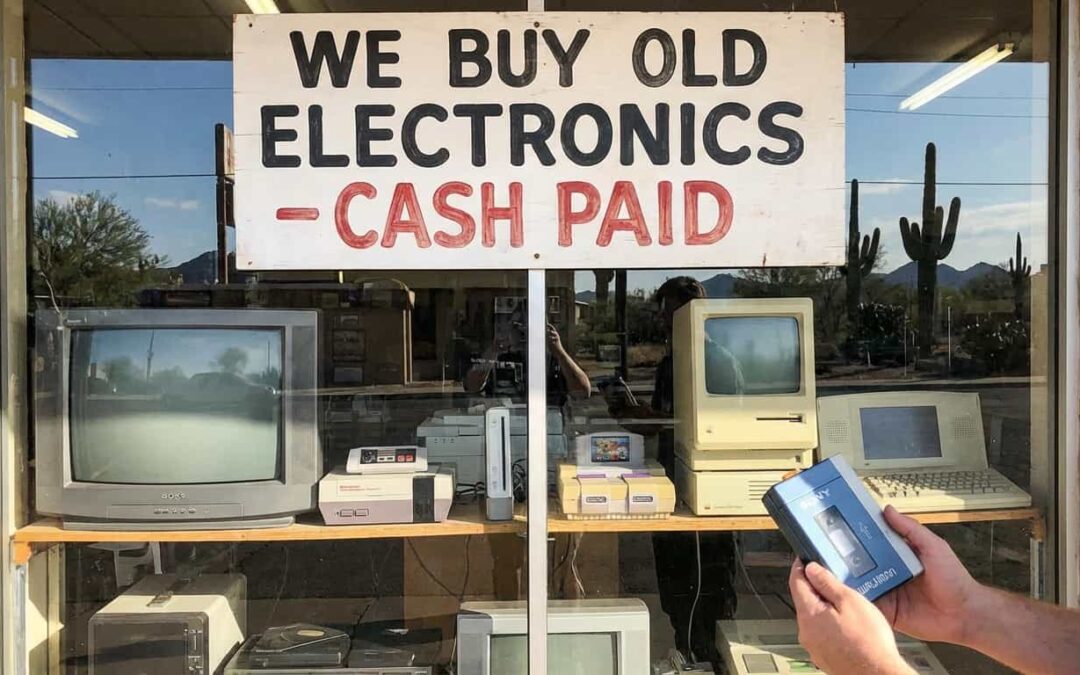
Are Old Electronics Worth Any Money in Phoenix, AZ? Why is Gold in Electronics?
Would you believe your old flip phone could be worth more than you think?
Most people in Phoenix toss out their broken laptops and ancient cell phones without a second thought. But here’s the thing—those devices contain real gold. Not a metaphor. Actual, recoverable gold hiding in circuit boards and connectors.
You’ve probably thrown away gold without knowing it. That dusty desktop in your garage? It might hold $10 to $25 in precious metals. Old phones, tablets, and gaming consoles all carry gold components that tech recyclers pay good money for.
Don’t dig a well when you’re already thirsty. Check your junk drawer today. What feels like trash could turn into cash with the right buyer in Phoenix.
Why is Gold in Electronics?
Gold isn’t in your gadgets by accident. It’s there because it works better than anything else.
Copper is cheaper. Silver conducts faster. But only gold lasts forever in electronics without corroding or losing performance. That’s why manufacturers plate it onto the parts that matter most.
Here’s what makes gold the VIP metal in tech:
- Superior conductivity – Signals flow smoothly with zero resistance
- Corrosion resistance – Gold never rusts, even after decades
- Reliability – Connectors stay stable through heat and humidity
- Durability – Plated contacts last through thousands of connections
Most of the gold lives in connectors, sockets, and circuit paths. Those tiny golden strips on your RAM? Real gold. The pins on your old CPU? Coated in gold. Tech companies use it because gadgets made better last longer—and gold delivers both.
How Much Gold Can Be Extracted From the Electronics You Got in Years Past?
You probably trashed $50+ in gold last year without knowing it.
That’s not an exaggeration. A single older desktop PC can contain $10 to $25 worth of recoverable gold if you dismantle it properly. Multiply that across every device you’ve donated, dumped, or left in storage—and the numbers add up fast.
Here in Phoenix, most people don’t realize their electronic trash contains real value. Old laptops, gaming consoles, and even VCRs carry gold-plated components. The older the device, the more gold it likely contains.
Pre-2000 electronics used heavier gold plating standards. Manufacturers didn’t skimp back then. So that vintage desktop or ancient camcorder? It’s richer in gold than today’s sleek smartphones.
You ever wonder if that VCR you tossed had something valuable inside? You weren’t wrong. The gold was there. You just didn’t know where to look—or who to sell it to.
Phoenix, AZ E-Waste Value: A Ton of Trash, A Handful of Gold
One ton of garbage or half a kilo of gold—which one’s in your garage right now?
It sounds wild, but it’s true. A single ton of discarded electronics can yield anywhere from 300 to 800+ grams of gold. That’s not dust. That’s real, recoverable treasure sitting in landfills across Maricopa County.
Compare that to traditional gold mining. Natural ore yields around 5 grams per ton if you’re lucky. E-waste? It’s 10 to 160 times richer. High-yield batches from telecom gear or industrial electronics can recover over 800 grams per ton—more gold than you’d find in a commercial mine.
The contrast is shocking. What looks like junk to you is liquid gold to urban miners. And yet, most Phoenix residents throw it all away without a second thought.
Phoenix, AZ E-Waste Value Insights: A Ton of Trash, A Handful of Gold
Don’t let your landfill become your loss. Gold waits for no one.
Here’s a stat that’ll surprise you: 70% of electronics thrown away in Phoenix contain recoverable precious metals. Yet most of them end up unrecycled, buried in Maricopa landfills or shipped overseas.
That means Phoenix residents are literally throwing away gold every single day. Old routers, broken tablets, outdated laptops—all of them carry value. You just need to know where to take them.
Key insights for Phoenix sellers:
- Mixed e-waste averages 300g of gold per ton
- Circuit boards from high-end equipment push 350–550g per ton
- Industrial and telecom scrap can hit 800g+ per ton
You’re sitting on hidden value. The question is: will you act on it, or let someone else cash in?
Gold Content per Ton of Electronic Waste (E-Waste) in Phoenix, AZ
A ton of e-waste might look like junk—until you realize it’s richer than a gold mine.
Here’s the breakdown. Typical mixed e-waste yields around 300 grams of gold per ton. That’s already 60 times richer than natural ore. But if you sort your scrap? The numbers skyrocket.
Sorted printed circuit boards (PCBs) can deliver 800 to 1,500 grams per ton. That’s more gold than most commercial mining operations pull from the ground. And you don’t need explosives or heavy machinery—just the right recycling partner.
Benchmark data for Phoenix sellers:
- Mixed e-waste: ~300g/ton
- Sorted PCBs: 800–1,500g/ton
- High-end telecom boards: 1,000g+/ton
The numbers don’t lie. E-waste isn’t trash. It’s urban ore. And Phoenix has plenty of it waiting to be mined.
Typical Gold Range in 1 Ton of E-Waste
From barely a glimmer to a goldmine—e-waste yields can vary more than you think.
Not all electronics are created equal. Consumer gadgets like old DVD players or basic printers? They’ll give you 250–350 grams per ton at best. Business-grade equipment like servers or network switches? You’re looking at 400–600 grams per ton.
High-yield circuit boards from telecom or aerospace gear often exceed 1,000 grams per ton. That’s where the real money hides. But even mixed batches of everyday electronics deliver solid value if you know what you’re doing.
Quick yield guide:
- Low-grade scrap: 100–250g/ton
- Mixed consumer e-waste: 250–350g/ton
- Business equipment: 400–600g/ton
- Industrial/telecom boards: 800–1,500g/ton
High-Grade E-Waste Can Yield 300g+ of Gold per Ton
Would you throw away $18,000 worth of metal?
That’s what you’re doing when you toss high-grade e-waste in the trash. A single ton of premium circuit boards can yield over 300 grams of gold—and that’s the low end.
Telecom boards and medical equipment often exceed 400 grams per ton. Some aerospace-grade components push past 1,000 grams. At current gold prices, that’s serious money for anyone willing to sort and recycle properly.
The opportunity is real. You just need to recognize what you’re sitting on.
Circuit Boards and Motherboards as Top Gold Sources
Think of circuit boards as the golden bones inside your tech.
Not all e-waste is worth the same. If you’re looking for gold, you want circuit boards—especially motherboards, RAM modules, and CPUs. These components pack the highest density of gold plating.
Top gold sources in old electronics:
- Motherboards – Edge connectors and socket pins
- RAM modules – Gold-plated contact fingers (older models contain 2–3× more gold than new ones)
- CPUs – Pin arrays coated in gold
- PCI cards – Graphics, sound, and network cards with gold connectors
Older components beat newer models every time. Pre-2005 RAM and CPUs used heavier plating standards. Manufacturers didn’t cut corners back then. So that clunky old desktop? It’s golden—literally.
E-Waste vs. Mined Gold Ore (Gold per Ton Comparison)
One ton of rock gives you dust. One ton of junk gives you dollars.
Here’s the math. Natural gold ore yields around 5 grams per ton in a good mine. E-waste? It delivers 300 to 800+ grams per ton, depending on the source.
That’s a 60× to 160× difference. In some cases, top-tier circuit boards exceed 1,000× the gold concentration of mined ore. No drilling. No blasting. Just smart recycling.
This is why urban mining is booming. It’s cheaper, faster, and more profitable than digging holes in the ground. And Phoenix has warehouses full of it.
Key Facts About Gold Recovery From E-Waste in Phoenix, AZ
You recycle your bottles. But what about the gold in your junk drawer?
Most Phoenix residents don’t think twice about tossing old electronics. But here’s the reality: those devices contain recoverable gold, silver, and copper. And only 12–15% of it ever gets recycled.
Key facts every Phoenix seller should know:
- E-waste is 60× richer in gold than natural ore
- A single PC motherboard can yield more gold than 30 mixed devices
- Older electronics (pre-2000) contain 2–3× more gold than modern gadgets
- 70% of Phoenix e-waste ends up in landfills—unrecycled and unclaimed
- High-grade telecom boards can hit 1,000g+ of gold per ton
The gold is there. The question is whether you’ll claim it or let it go to waste.
Gold Concentration Varies by Scrap Mix
It’s like panning for gold—not every stream is equal.
Not all e-waste delivers the same yield. A box of old phones won’t pay out like a crate of server motherboards. A pile of random cables and plastic casings? Barely worth the trip.
Gold concentration depends on what you’re recycling. Devices with similar external appearances can differ wildly in gold yield. That’s why sorting matters. Pre-sorted circuit boards always beat mixed scrap in value.
If you want top dollar, know what you’re selling. And if you’re not sure, ask your Phoenix recycler to help you grade your haul.
Yields Depend on Source Type (Motherboards vs. Mixed Scrap)
Like comparing artisan chocolate to Halloween candy bags.
One full PC motherboard can yield more gold than 30 mixed devices. That’s the difference between targeted recycling and throwing everything into one bin.
Mixed scrap is convenient, but it’s not profitable. You’re diluting high-value components with low-yield junk. Sort your motherboards, RAM, and CPUs separately—and you’ll see better payouts across the board.
Phoenix recyclers pay premium rates for sorted, high-grade scrap. Don’t leave money on the table by mixing it all together.
E-Waste Can Be 10–800× Richer Than Natural Ore
Ore gives grams. E-waste gives gold bars.
The numbers don’t lie. Natural gold ore yields 5 grams per ton. Mixed e-waste? 300 grams per ton. Sorted circuit boards? 800 to 1,500 grams per ton.
That’s a 60× to 300× difference on average. Some telecom boards exceed 1,000× the gold concentration of mined ore. It’s not even close.
This is why major recycling operations are booming. They’re not digging in the desert. They’re mining Phoenix garages, storage units, and office buildings. And the gold keeps flowing.
Recovery Efficiency Example (41 Phones ≈ 1 Gram of Gold)
Got 41 phones? You’re holding a gram of gold.
That’s the reality of phone recycling. It takes about 41 smartphones to recover a single gram of gold. Sounds like a lot—until you realize how many old phones are sitting in drawers across Phoenix.
Older phones yield more gold than modern models. Flip phones and early business smartphones used heavier plating. So if you’ve got a stash of pre-2010 devices, you’re sitting on better returns than you think.
Potential Annual Gold Yield From Processing 1 Ton/Day
Recycle like clockwork, and you could mint your own fortune.
Let’s do the math. If you process 1 ton of mixed e-waste per day at 300 grams of gold per ton, that’s 300 grams daily. Over a year? That’s 109.5 kilograms of gold.
At current prices, that’s over $7 million in annual gold recovery—from a single-ton-per-day operation. Scale that up, and the numbers get wild.
Small-scale recyclers with consistent volume can potentially recover over 100kg of gold per year. That’s real money. And Phoenix has the supply to make it happen.
Gold Yields by E-Waste Category for Phoenix, AZ Sellers
You always thought that old PC was worthless. Not anymore.
Every type of e-waste carries a different gold value. Knowing what you’ve got helps you price it right and get paid fairly. Here’s the breakdown by category.
Gold yield by e-waste type:
- Mixed e-waste – 300g per ton (general electronics)
- Mobile phones – 140g per ton (specialized batches)
- High-end PCBs – 350–550g per ton (servers, routers)
- Top-tier circuit boards – 800–1,500g per ton (telecom, aerospace)
- Older RAM/CPUs – 2–3× more gold than modern equivalents
RAM modules and older CPUs still command top payouts in gold recovery. If you’ve got vintage computer parts, don’t sell them short. They’re worth more than you think.
Mixed E-Waste (Approx. 300g per Ton)
300 grams from trash? Believe it.
Mixed e-waste is the baseline. It’s a catch-all category for random devices—old monitors, keyboards, printers, and cables. On average, you’re looking at 300 grams of gold per ton.
That’s still 60× richer than mined ore. But yields increase significantly when you pre-sort by circuit content. Separate your motherboards and high-grade components, and you’ll see better returns.
Mobile Phones (Approx. 140g per Ton in Specialized Batches)
Think your old phone is worthless? Think again.
A ton of mobile phones yields around 140 grams of gold when processed in specialized batches. That’s less than mixed e-waste but phones are easier to collect in bulk.
Business phone models and flip phones tend to yield more. Early smartphones used heavier gold plating on SIM slots and connectors. So if you’ve got a box of old Nokias or Blackberries, you’re sitting on decent value.
Printed Circuit Boards (PCBs) From High-End Equipment (350–550g per Ton)
These boards are the VIPs of gold recovery.
High-end PCBs from servers, routers, and industrial equipment deliver 350 to 550 grams of gold per ton. That’s nearly double the yield of mixed e-waste.
Industrial and server-grade PCBs typically outperform consumer models. They’re built for reliability, which means heavier plating and better components. Phoenix tech recyclers pay premium rates for this grade of scrap.
Circuit Boards With Very High Reported Ranges (800–1,500g per Ton)
Worth its weight in gold. Literally.
This is the top tier. Telecom boards, aerospace components, and medical equipment can yield 800 to 1,500 grams of gold per ton. Some exceed even that.
These boards are rare in consumer electronics, but they’re out there. If you’re scrapping business or industrial equipment, check the components carefully. You might be sitting on a goldmine.
Older Computer Components (RAM/CPUs) vs. Newer Models (Plating Differences)
That clunky old PC? It’s golden.
Pre-2005 RAM often contains 2 to 3 times more gold than current memory strips. Same goes for older CPUs. Manufacturers used heavier plating back then, and it shows in the recovery yields.
Newer models are sleeker, faster, and more efficient. But they’re also cheaper to produce—which means less gold. If you’ve got vintage computer parts, don’t assume they’re worthless. They’re often worth more than modern equivalents.
Key takeaway: Older tech = more gold. Don’t toss it without checking its value first.
Stop Treating Gold Like Garbage
The truth is simple. Your old electronics aren’t junk. They’re gold mines sitting in storage.
Every broken laptop you’ve tossed. Every ancient phone gathering dust. Every vintage desktop collecting cobwebs in the garage. They all contained real, recoverable gold—and you let it slip away.
But that stops today.
Now you know what Phoenix recyclers have known for years. E-waste is urban ore. It’s 60 to 800 times richer than anything pulled from the ground. And it’s everywhere—in your closets, basements, and junk drawers.
You’ve learned:
- Old electronics contain $10 to $25+ in gold per device
- Pre-2000 tech has 2–3× more gold than modern gadgets
- Circuit boards yield up to 1,500g of gold per ton
- Phoenix has certified recyclers ready to pay fair prices
- Sorting your scrap increases payouts significantly
The question isn’t whether your e-waste has value. It does. The question is what you’ll do about it.
You can keep ignoring it. Let it pile up while gold prices climb and Phoenix landfills overflow. Watch other people profit from the same opportunity you’re sleeping on.
Or you can act.
Start small. Check one drawer. Sort one box. Take one trip to a local Phoenix recycler. See what happens when you stop treating gold like garbage.
The metal’s been there all along. Waiting. Patient. Valuable.
Call Jay Hoehl Inc at (602) 272-4033 or visit jhiescrap.com. We’re located at 3334 W McDowell Rd Ste 17, Phoenix, AZ 85009. We’ll walk you through every step and answer all your questions.