
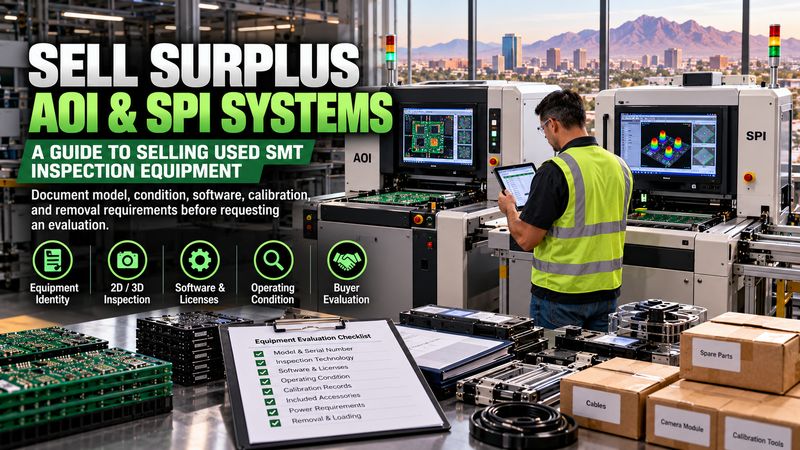
Where to Sell Surplus AOI and SPI Systems A Guide to Selling Used SMT Inspection Equipment
You can sell surplus AOI and SPI systems through specialist buyers, machinery marketplaces, or electronics manufacturers. The best route depends on your machine, deadline, and willingness to manage the sale. Start with the equipment’s identity and condition, then compare written offers on equal terms.
AOI means automated optical inspection. SPI means solder paste inspection. Both support quality checks in surface mount technology, usually called SMT. Their inspection tasks differ, so buyers need more than a photo and the word “working.”
For a plant manager, an idle inspection system creates a practical problem. You need floor space back, but you don’t want to leave money on the table. The controller may also hold customer programs, board images, and production records.
This guide covers selling routes, buyer requirements, equipment value, and preparation. It also explains software questions and removal responsibilities. You’ll learn how to compare a direct buyout with a listing that needs more attention.
Phoenix businesses can also discuss local surplus evaluation with Jay Hoehl Inc.. JHI handles industrial electronics surplus and related disposition services. Ask about your specific AOI or SPI model before assuming it qualifies for purchase.
Request a purchase offer for your equipment.
Advertise your machine and manage buyer inquiries.
Negotiate with a business that will use the system.
Best Places to Sell Surplus AOI and SPI Systems
The best places are specialist equipment buyers, relevant machinery marketplaces, and manufacturers needing your exact configuration. Start with your priorities, then shop around. A firm collection deadline calls for a different approach than an open-ended search for buyers.
Compare each route’s responsibilities before comparing prices. Someone must answer technical questions, arrange demonstrations, and coordinate removal. Decide how much of that work your team can handle without disrupting production.
Specialized SMT Equipment Buyers and Liquidators
Specialized SMT equipment buyers evaluate machines for resale, refurbishment, parts recovery, or a known customer’s needs. A direct buyer offers to purchase your equipment. A liquidator may instead manage its sale, so establish the arrangement before discussing an expected payout.
Get straight to the point with a concise equipment summary. Include the manufacturer, model, year, location, and operating status. Add photos of the machine, identification plate, controller screen, and included accessories. Explain whether it remains connected for a demonstration.
This route can suit equipment upgrades, factory moves, or production line closures. Ask whether one agreement can cover several assets. Confirm which machines receive individual values and which enter a combined lot price.
For local context, review industrial surplus buyers near Phoenix. Then check inspection equipment experience directly. General surplus handling and technical AOI evaluation require different information, even when one company coordinates both.
Global Industrial Machinery Marketplaces
Global machinery marketplaces let sellers reach buyers beyond their existing contacts. They can help you cast a wider net for an uncommon inspection configuration. However, advertising creates an opportunity for inquiries, not a guaranteed sale.
Prepare to explain technical details across different production environments. A buyer may need a certain board width, inspection option, or conveyor direction. Another may already own the same platform and want a compatible backup machine.
Choose a service based on its actual seller agreement. Check subscription charges, sales commissions, listing assistance, and cancellation rules. Ask who responds to inquiries and who verifies a buyer’s interest before arranging a visit.
International interest also adds practical questions about payment, packing, freight, and arrival support. Request those details early. A distant buyer’s higher offer may leave less money after seller-paid costs.
Direct Sales to Electronics Manufacturers
Direct sales let you negotiate with the electronics manufacturer that will use the machine. Potential buyers include contract assemblers, original equipment manufacturers, and businesses adding production capacity. The strongest prospect needs your actual configuration within a workable schedule.
Start with existing industry relationships where appropriate. Describe the process problem your system can address, using verified specifications. A manufacturer running similar equipment may find familiar software or matching spare parts useful.
Timing matters, but don’t count your chickens before they hatch. Initial interest can still require engineering review, purchasing approval, and a demonstration. Keep the machine available until you understand those steps and agree on a schedule.
Set boundaries around support after collection. State whether training, installation, or troubleshooting is included. A direct equipment sale should clearly identify the machine, accessories, condition, and agreed acceptance process.
Selling Through SMT Equipment Buyers and Liquidators
Selling through a specialist starts with confirming whether the company buys assets or arranges their sale. Get everyone on the same page before sharing a target price. An outright purchase, consignment, and brokered sale create different payment expectations.
Ask who becomes responsible for the equipment and when payment occurs. Also ask what happens if an expected end buyer withdraws. Those answers make an offer easier to compare with other selling methods.
SMT Sales Group
SMT Sales Group buys and sells pre-owned SMT and PCB assembly equipment. Its published scope includes individual machines and complete production lines. AOI and SPI systems appear among its inspection equipment categories.
Send a model-specific request with photographs and a clear condition statement. Identify available software options, calibration records, and the date of the last successful inspection run. Include the machine’s location and the latest acceptable collection date.
Put your expectations on the table early. Say whether you need a single-machine purchase or a package offer. Ask which inspection checks could change the proposed price and when that price becomes firm.
Request written details for payment, deinstallation, packing, and freight. The company’s published shipping assistance does not define every seller’s collection arrangement. Confirm the actual scope for your equipment before scheduling removal.
ASC International
ASC International supplies new inspection equipment and pre-owned SPI and AOI systems. Its published pre-owned range includes CyberOptics inspection platforms and other manufacturers. That makes it a relevant specialist to approach about particular equipment.
Its public pre-owned page does not establish an unrestricted surplus-buying program. Ask whether ASC currently offers purchase, trade-in, referral, or another resale option. Treat each possibility as unconfirmed until the company responds about your model.
Read the fine print on any proposed arrangement. A supplier selling refurbished equipment is not automatically offering to buy every older unit. Your configuration, condition, support needs, and location could affect its interest.
Provide the controller details and missing-item list at the start. Ask which accessories or records would help evaluation. A focused inquiry gives the company a clearer basis for suggesting the next step.
What to Ask Before Accepting a Buyout Offer
Before accepting a buyout, confirm the final price, payment conditions, included assets, and collection responsibilities. Look before you leap when an attractive number arrives without supporting terms. The written offer should resolve the following points:
- Who is purchasing the machine, and who signs the agreement?
- Is the price firm or subject to inspection and testing?
- Which accessories, controllers, and software rights are included?
- When must cleared payment arrive?
- Who pays for deinstallation, rigging, packing, loading, and freight?
- Who handles damage during removal or transport?
- What happens if collection misses the agreed deadline?
Ask for separate amounts when a package combines working machines and scrap material. Keep reusable inspection equipment identifiable throughout the evaluation. A single unexplained lot value can make competing offers difficult to compare.
Listing AOI and SPI Systems on Equipment Marketplaces
Listing AOI and SPI systems requires an accurate description and a clear response process. Put your best foot forward with useful evidence. Separate verified capabilities from optional features shown in a manufacturer’s brochure.
The businesses below offer different selling arrangements. Compare the service behind the website before assuming each works the same way. Your responsibility for inquiries, fees, and removal should be clear before an advertisement goes live.
Machinio
Machinio provides machinery advertising and buyer inquiries for equipment sellers. Its seller page describes account registration, review, listing creation, and incoming leads. Its terms also describe subscription services for machinery suppliers.
Ask which plan fits a single inspection machine or a larger equipment inventory. Confirm the current charge, commitment period, renewal rules, and cancellation process. A general marketplace presence does not tell you your total selling cost.
Time is money when inquiries need technical answers. Name one person who can respond with specifications, photos, and demonstration availability. Keep the listing current if the machine moves, becomes disconnected, or sells elsewhere.
Build the description around the exact model and installed configuration. Include the inspection type, board limits, controller details, and known faults. Confirm payment and collection with the actual buyer. A platform inquiry does not assure payment.
Tekmart International
Tekmart International directly purchases surplus equipment for stock and maintains an AOI/SPI equipment catalog. Its seller page describes purchasing machines from plant floors and handling logistics. Its appraisal service also describes consignment and other resale arrangements.
That purchasing role matters when comparing options under this marketplace heading. Ask whether your proposal concerns an outright purchase or a sale arranged for you. The payment trigger and ownership arrangements should match that specific proposal.
Compare apples to apples when requesting an offer. Use the same equipment list, condition description, and collection deadline supplied to other buyers. Make clear whether accessories, spare parts, and disconnected workstations belong to the sale.
Confirm the logistics scope in writing. Identify responsibility for electrical disconnection, machine preparation, crating, loading, and transport insurance. General logistics support should become a specific collection plan for your facility.
Exapro
Exapro connects industrial machinery sellers with buyers through its marketplace and related services. Its published terms distinguish brokerage from subscription listings. Those arrangements have different fee structures and levels of sales involvement.
Do your homework on the service offered to you. Ask whether your agreement involves commission, recurring charges, or both services separately. Confirm minimum charges, renewal dates, and what happens when a previously introduced buyer purchases later.
Its seller service describes agent assistance with listings, inquiries, and buyer introductions. That can be useful when you need help managing the sales process. Confirm the assistance included in your chosen agreement before relying on it.
Ask for your expected net proceeds alongside the advertised asking price. Make sure currencies and included costs are clear. Keep technical descriptions consistent across every listing so buyers receive the same facts wherever they inquire.
Information Buyers Need to Evaluate Your AOI or SPI System
Buyers need enough information to identify the machine, verify its capabilities, and estimate deployment costs. Get your ducks in a row before requesting offers. An organized equipment file can prevent the same questions from returning through several contacts.
Keep public marketing information separate from confidential production records. Share technical proof without exposing customer designs or credentials. The goal is to show what transfers with the machine and what still needs confirmation.
Manufacturer, Model, Serial Number, and Year
Provide the manufacturer’s name, complete model designation, serial number, and documented build year. Photograph the identification plate so the details can be checked. Use purchase records or manufacturer confirmation when the plate lacks a clear date.
“Close enough” isn’t good enough for model identification. A suffix or option code may distinguish configurations within one product family. Keep the build year separate from installation dates, controller replacements, and later upgrades.
Record your internal asset number as a separate field. This helps your team match the machine with accounting records and service files. Share the full serial number through an appropriate channel when a qualified buyer needs verification.
If a detail remains unknown, label it unknown. Don’t estimate a year from appearance or another listing. Accurate gaps are easier to resolve than conflicting claims discovered during an inspection visit.
Inspection Technology: 2D or 3D AOI and SPI
Identify the inspection function first, then state whether the installed system uses 2D or 3D measurement. Automated optical inspection checks visible assembly features. SPI evaluates solder paste deposits, typically after printing and before component placement.
For 2D AOI, describe the installed cameras, lighting, and inspection options. For 3D AOI, document the actual height-measurement capability and enabled features. A product family’s newest brochure may describe capabilities absent from your older machine.
Three-dimensional SPI can measure deposit height, area, and volume. Specify which measurements your system provides and how they are demonstrated. Include supported board dimensions and the documented measurement configuration.
The devil is in the details when comparing technical specifications. Distinguish camera resolution from measurement accuracy and repeatability. Describe applicable board clearance, component height limits, and conveyor direction using the correct model documentation.
Software Versions, Operating System, and License Transferability
List the inspection software version, operating system, installed options, and known licensing requirements. Screenshots can help verify version details. Remove product keys, credentials, customer names, and other sensitive information from shared images.
Get it in writing before promising software transfer. Ask the manufacturer or authorized software provider whether the buyer can use each license. Confirm any ownership registration, activation, transfer fee, or support approval that applies.
Identify dongles, license servers, separate review stations, and offline programming tools. State which physical items accompany the machine. A controller that starts successfully does not by itself prove every software entitlement transfers.
Also ask about replacement-computer support and recovery media. Buyers should understand what happens if the existing controller fails. Keep production programs and transferable machine software separate in your documentation and handover plan.
Operating Condition, Calibration Records, and Maintenance History
Describe the machine’s condition using specific test results and dated records. Distinguish a system demonstrated inspecting boards from one that only powers on. Also separate untested equipment from equipment with a confirmed fault.
Honesty is the best policy when preparing the condition statement. List errors, intermittent behavior, missing components, and past repairs. Explain the last successful production use without implying that an old result proves present performance.
Include calibration reports, maintenance entries, and service invoices where available. Match each document to the machine’s serial number. Redact unrelated commercial details while retaining dates, work performed, and the service provider’s identity.
Agree on a demonstration that reflects the advertised inspection task. Record the sample board, program, setup, and observed results. Ask the manufacturer whether transport will require further checks or calibration before the buyer resumes production.
Machine Dimensions, Weight, and Power Requirements
Provide the machine’s dimensions, weight, electrical requirements, and any required utilities. Use the installed configuration’s documentation and verify site details. Include separate cabinets, review stations, and other items that change the shipment.
Measure twice, move once. Check doorways, aisles, loading access, and any route restrictions before agreeing to collection. Record whether the facility has a loading dock and who can approve access for movers.
List voltage, phase, frequency, and other power details shown on the equipment. Note compressed-air requirements if the specific model uses air. Include conveyor height, board-flow direction, and known interface requirements when relevant to integration.
Keep operating dimensions separate from packed dimensions. A crate and protective packing can change the required truck space. Have the qualified mover confirm weights, lifting points, and handling methods before preparing a transport quote.
Factors That Affect Used AOI and SPI Equipment Value
Used AOI and SPI value depends on technical fit, condition, support, and actual buyer demand. Keep your feet on the ground when setting expectations. The original purchase price cannot establish what another business will pay today.
Assess the complete usable package instead of the cabinet alone. Then compare offers after fees and seller-paid costs. This approach helps you judge whether a higher headline price produces a better result.
Brand, Model, Age, and Technical Capabilities
Brand, model, age, and installed capabilities affect which buyers can use your machine. Consider the buyer’s board sizes, inspection tasks, and production requirements. A familiar brand still needs the correct configuration for a particular application.
Age is only part of the picture. An older system may fit a buyer’s existing platform. A newer machine may still miss a required option or board-size capability. Explain the actual fit instead of relying on model year alone.
Document meaningful upgrades with dates and supporting records. Identify replaced controllers, added measurement options, or changed conveyor configurations. Keep those details separate from standard equipment so buyers understand what has changed.
Avoid applying a fixed depreciation percentage without model-specific evidence. Compare machines with similar capabilities and support conditions. If the available examples differ substantially, describe them as rough context rather than direct price comparisons.
Machine Condition and Demonstrated Inspection Performance
Demonstrated inspection performance gives buyers stronger evidence than a general claim that a machine works. Show the system completing the task you describe. A startup screen alone cannot demonstrate measurement quality or reliable board handling.
The proof is in the testing. Use a permitted sample board and record the relevant operating sequence. Identify the software setup and any inspection limits. Include known faults even when the demonstration avoids triggering them.
A single good run is useful evidence, but it has limits. It does not establish long-term reliability across every product. Let buyers request an agreed acceptance test suited to their intended use.
Make condition categories clear in every quote request. For example, distinguish demonstrated operation, power-on only, untested storage, and known repair needs. Consistent descriptions reduce the chance of price changes caused by misunderstood condition.
Software Support, Spare Parts, and Included Accessories
Software support, spare parts, and accessories affect how complete the buyer’s purchase will be. Make an itemized list before advertising. Include the controller, monitor, dongles, manuals, calibration artifacts, and separate workstations where applicable.
Small things add up when a buyer must replace missing items. Identify which accessories are essential and which are optional extras. Don’t assume a general-purpose replacement will work with a model-specific component.
Ask the manufacturer about support for the exact machine and proposed ownership change. Confirm software compatibility, available service, and relevant replacement parts. Treat unverified availability as an open question rather than a selling promise.
Check boxes, storage rooms, and maintenance cabinets before finalizing the inventory. A missing cable or calibration reference may simply be stored elsewhere. Photograph included items together, then label them so collection staff can match the agreed list.
Buyer Demand and Comparable Equipment Listings
Buyer demand and comparable listings provide context, but asking prices do not prove completed sale values. Compare the same model, inspection configuration, condition, and region where possible. Note whether a dealer’s listing includes testing, warranty, or installation assistance.
Take unusually high listings with a grain of salt. An advertisement may remain visible long after a realistic buyer has moved on. Repeated listings can also represent the same machine through several sales channels.
Keep a comparison sheet with dates and verified differences. Record asking prices separately from firm purchase offers. If someone provides a completed-sale example, ask what equipment and services that amount included.
For mixed factory surplus, surplus electronics services can help start the wider disposition discussion. Still request a model-specific evaluation for reusable inspection equipment. Its resale prospects need separate consideration from unrelated components or scrap.
How to Prepare Your AOI or SPI System for Sale
Prepare your AOI or SPI system by documenting it, demonstrating it, and planning a controlled handover. A little preparation goes a long way. Complete the useful checks while the machine remains accessible and connected, where safe.
Assign one owner to the equipment file and another contact for collection planning if needed. Keep revisions dated. Buyers, technicians, and movers should work from the same current asset list and condition statement.
Take Clear Photos and Record an Operating Video
Take clear photographs and a video that demonstrate the exact machine being offered. Show its overall condition before focusing on details. Include the identification plate, conveyor area, controller, accessories, and visible damage.
Let the evidence speak for itself. Photograph the machine in good light without hiding wear behind selective angles. Capture readable screen images after removing sensitive information. Avoid editing a video in ways that conceal faults or interruptions.
Record the date, startup, board movement, inspection sequence, and displayed result where practical. Use a board you are authorized to share. Explain which parts of the machine were tested and which remain unverified.
Follow the manufacturer’s safe operating procedures throughout filming. Keep guards and interlocks in place. A sales video should help buyers understand condition without creating a new handling or operating problem.
Prepare Specifications and Service Documentation
Prepare one organized equipment package containing specifications, condition evidence, service records, and the included-item list. Keep it simple enough for a buyer to review quickly. Use clear filenames and include the machine’s model in each record.
Start with a short summary sheet. Add the location, build year, serial number, inspection type, controller details, and removal deadline. Attach supporting documents behind it so buyers can check the most important claims.
Mark any brochure specifications that describe optional equipment. Confirm which options are actually installed and enabled. Explain missing records directly instead of presenting an incomplete file as a full service history.
The guide on how to sell surplus items provides broader planning context for multiple assets. Give each inspection machine its own record. That makes individual offers and package offers easier to reconcile.
Confirm Software Transfer Terms and Remove Sensitive Production Data
Confirm software transfer terms and remove sensitive production data before releasing the machine. Coordinate the work with IT and the equipment specialist. You need a documented handover that protects information and preserves the agreed machine functionality.
Don’t cut corners by deleting a few desktop folders. Review customer programs, board images, network settings, saved credentials, and connected review stations. Identify any separate storage devices or removable media included with the equipment.
Plan how to protect sensitive business data before changing the controller. Preserve authorized recovery resources, machine settings, and calibration information under an approved process. If storage must be removed or sanitized, confirm the recovery plan first.
Retest the agreed functions after authorized changes. Record what was removed, retained, or reinstalled. Have the responsible staff approve the final state. Give the buyer only the information and access rights included in the sale.
Plan Deinstallation, Packing, and Shipping
Plan deinstallation, packing, and shipping before finalizing a collection date. Name the responsible technician, mover, and shipping contact. Identify the last demonstration date and when the equipment becomes available for disconnection.
An ounce of prevention is worth a pound of cure during equipment moves. Follow model-specific transport instructions and use qualified handlers. Confirm travel locks, protected optics, secured assemblies, and appropriate packing with the manufacturer or experienced mover.
For Phoenix facilities, plan around site access, outdoor staging, and the equipment’s documented storage limits. Keep sensitive machinery protected while awaiting pickup. Avoid leaving packing decisions until a truck has already arrived.
Photograph the machine before packing and after loading where permitted. Check the packing list against the sale agreement. Record who accepts custody and which carrier collects it. Identify who handles damage claims under the agreed terms.
How to Choose the Right Selling Method
Choose the method that best matches your deadline, expected net proceeds, and available staff time. There’s no one-size-fits-all answer. Compare the entire transaction, including preparation work and collection responsibilities, before selecting the largest offer.
What is a higher price worth if added costs consume the difference? A practical comparison makes those costs visible. Use the same condition evidence and asset list for every prospective buyer.
Compare Direct Purchase Offers With Marketplace Listings
Compare a direct purchase offer with a realistic marketplace outcome after seller-paid costs. A direct offer gives you a proposed transaction now. A listing gives you a route to seek offers, with an uncertain final outcome.
Don’t put the cart before the horse by treating your asking price as money received. First estimate the costs attached to each route. Then consider the work and uncertainty involved in reaching a completed sale.
Consider this hypothetical example, which is not a market valuation. A direct buyer offers $12,000 with buyer-paid removal. A separate marketplace sale reaches $15,000. Assume $1,500 in fees and $2,000 in seller-paid preparation costs.
The marketplace sale would leave $11,500 before other costs. The direct offer would leave $12,000 under those assumptions. Replace every example amount with your actual written terms before making a decision.
Evaluate Payment Terms, Fees, and Collection Arrangements
Evaluate payment terms, fees, and collection arrangements as part of one written agreement. Spell out the details before anyone books a truck. Identify when payment is due and what must happen before the equipment leaves.
Confirm subscription charges, commissions, inspection costs, storage charges, and any agreed transfer costs. Define who pays each amount. Ask how cancellations, rejected inspections, and missed collection dates affect the transaction.
Verify the buyer’s business identity and payment through your own finance process. Don’t release equipment based only on a payment screenshot. Arrange a clear release approval between accounting staff and the person supervising loading.
Set collection hours, site access rules, required insurance, and the final removal date. Attach the asset list to the agreement. Keep the signed terms, payment confirmation, and collection record together for the final handover.
Balance Sale Speed With Your Target Selling Price
Balance sale speed against the cost of waiting and your minimum acceptable net proceeds. Set a target price and a review date. Decide in advance what evidence would make you adjust the approach.
A bird in the hand can matter when a facility deadline is fixed. Still, compare credible offers before committing where time allows. A rushed decision without condition evidence may leave useful questions unanswered.
Would you hold the machine longer if the extra return remained uncertain? Consider storage, staff effort, access restrictions, and the need to keep it demonstrable. These are business-specific costs, so use your own figures.
You can seek several nonbinding evaluations before choosing a sales channel. Check exclusivity and introduced-buyer obligations before combining brokers or listings. Update everyone promptly when the machine sells or its availability changes.
Frequently Asked Questions About Selling Surplus AOI and SPI Systems
These answers address common obstacles when selling used SMT inspection equipment. When in doubt, ask for a model-specific answer and record it. The machine’s condition, software status, and removal requirements should guide each decision.
Use these questions during buyer discussions as well as internal planning. They can reveal missing information before it delays an offer. Keep the answers with the equipment file so colleagues can follow the same plan.
Can You Sell an AOI or SPI System That Is Not Working?
Yes, a nonworking system may attract a buyer for repair, refurbishment, or usable parts. Acceptance and value depend on the exact machine and fault. Describe it as nonworking or for parts when that matches the evidence.
Call a spade a spade in the listing. Include error messages, diagnosis notes, missing parts, and known repair attempts. Distinguish a confirmed failure from equipment that simply has not been tested recently.
Get repair estimates before assuming a small fix will restore full function. Compare repair spending with credible offers in its present condition. Avoid advertising an easy repair unless a qualified assessment supports that description.
If resale interest is limited, ask about responsible disposition options. Keep data-bearing components within your approved data-handling process. Confirm whether the equipment will be reused, dismantled, or recycled under the proposed arrangement.
Can You Sell Inspection Equipment With Older Software?
Yes, older software does not automatically rule out a sale. A buyer may need an existing platform or a particular supported configuration. The key questions concern lawful use, reliable operation, support availability, and transfer requirements.
Better safe than sorry when a license or controller is unclear. Confirm the version, operating system, enabled options, and required hardware. Ask the authorized provider what the buyer must do to continue using the software.
Disclose unsupported components and any known recovery limitations. Don’t promise compatibility with a newer computer or operating system without confirmation. Explain whether installation media, dongles, and authorized recovery resources accompany the machine.
An older system can still deserve evaluation, but assumptions create avoidable disputes. Present confirmed facts and unresolved questions separately. Let the buyer assess whether those limits fit the intended production environment.
Should You Sell Machines Individually or as Part of an SMT Line?
Sell individually when separate buyers offer a better practical outcome for the included machines. Consider a line sale when coordinated removal and a matched buyer make the package attractive. Request both options if your timetable permits.
The whole may be worth more than its parts to one buyer. Another may need only the inspection system. Compare actual offers instead of assuming either approach always produces more money.
List every asset, controller, conveyor, accessory, and spare part in the proposed package. Make shared items clear so nothing is promised twice. Explain whether demonstrations can occur before the line is disconnected.
A package offer also needs clear treatment of unwanted assets. Ask whether the buyer takes everything or leaves selected machines behind. Include the cost of handling those remaining items when comparing the final result.
Who Handles Equipment Removal and Shipping?
The party named in the agreement handles each removal and shipping task. Buyers, sellers, or specialist contractors can take different parts of the process. There is no universal arrangement that applies to every equipment sale.
Many hands make light work only when responsibilities are clear. Assign disconnection, transport preparation, rigging, packing, loading, freight, and insurance individually. Specify who approves the contractor and who supervises work inside your facility.
Ask how custody and damage responsibilities change during the move. Confirm whether the buyer expects a demonstration before collection or after delivery. Record the agreed process in language both sides understand.
Local collection still needs careful planning. A short trip does not remove the need for correct handling and secure packing. Keep the equipment record available until the machine reaches the agreed handover point.
How Long Does It Take to Sell Used AOI and SPI Equipment?
The time required depends on finding a suitable buyer and completing evaluation, payment, and removal. A ready buyer may move quickly. A specialized configuration may need more time, particularly when support or condition remains unclear.
The sooner you prepare, the better your control over the process. Separate the offer date, payment date, and collection date in your plan. A prompt inquiry does not mean the machine will leave promptly.
Use a review deadline, such as 30 days, to reassess your asking price and sales route. That is a management choice, not an industry sales-time estimate. Check whether inquiries reveal missing specifications, pricing concerns, or transport obstacles.
Start with complete information and a realistic removal plan. Then compare the offers you can actually accept. Your team can then recover space and complete a documented sale with fewer unresolved questions.