
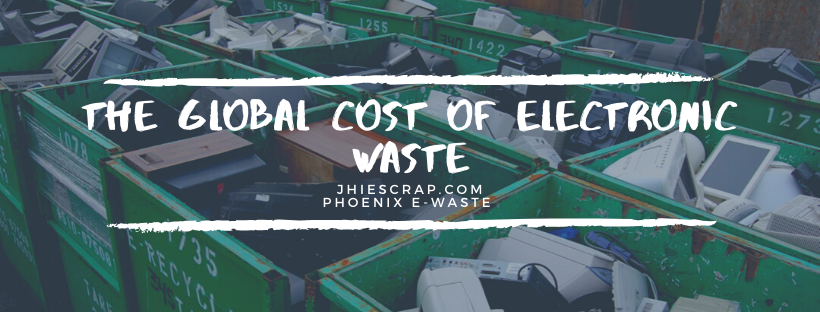
 Electronic waste is a serious problem, and every year more of it ends up in landfills. In 2012, only 29 percent of this e-waste was recycled. The rest, including the reclaimable finite resources, is still sitting in a landfill. The global cost of electronic waste is rising, and society needs to change how we treat this waste as soon as possible.
What is Electronic Waste?
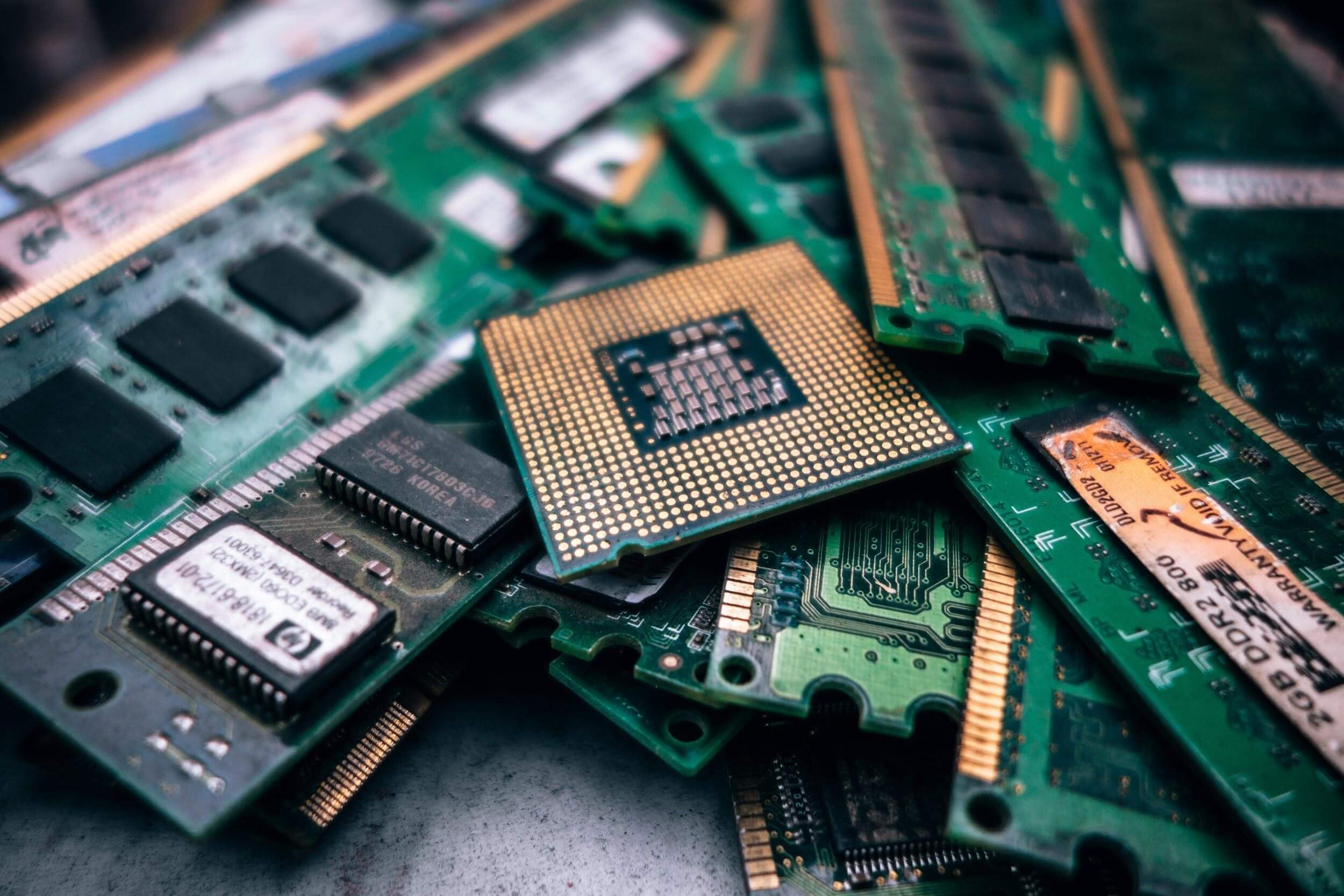
Electronic waste (e-waste) is anything that electricity once ran through. We use items that will one day become e-waste every day at home, work, and even to travel. Examples include phones, computers, TVs, tablets, and appliances.
The Electronics Problem
Electronics do not break down in landfills within a reasonable period. As an example, glass can take 1 to 2 million years to break down. We don’t have that kind of time. On top of that, many of the substances inside our electronics are toxic. Once the case breaks, chemicals like mercury leech out into the surrounding soil.
Right now, e-waste that is not correctly recycled goes one of two places. It may go to a local landfill, where it sits and creates pollution. The other place it may go to is overseas. If it goes abroad, the locals may disassemble it for the valuable metals and materials inside. This practice, in turn, harms their health and pollutes their environment since proper safety gear is rare.
The Business End
 Businesses create electronics for consumers. Over time, these businesses have become focused on making more money. In this pursuit, many chose to use planned obsolescence. This method involves tailoring how long a device will remain in good working order, which forces consumers to buy a new one on a regular schedule. Companies then bank on this regular schedule to forecast their profits and production.
The other factor in company profit is software. Software updates, such as operating system changes, can also force obsolescence. An example of this is pushing performance throttling on older devices, which companies have said extends the life of the devices. However, the throttling frustrates consumers, and many upgrade their devices to avoid it.
The Consumer End
Consumers are the ones buying the devices and supporting businesses that create electronics. At the slightest inconvenience, we can replace devices with newer, faster models of phones, computers, TVs, and more. The economics mean it makes sense to do so. Additionally, consumers often cannot repair the devices they use effectively. This lack of repair availability also makes upgrading more appealing.
The Better Solution
Electronics recycling is different from the standard recycling of soda cans and bottles. E-waste handlers in the U.S.A. like Jay Hoehl Inc require specific certifications and facilities to operate. Jay Hoehl Inc is Arizona’s premier electronics handling center. We can help any company recover the valuable parts of electronics, dispose of electronics in an environmentally friendly manner, and manage asset disposition. We aim to bring the global cost of electronic waste down through our responsible practices.