
Why Some E-Waste Costs Money to Recycle
You carried an old television into a recycling center. Then someone mentioned a fee. That can feel backward. The recycler receives metal, plastic, glass, and electronics. Why would you pay for giving those materials away?
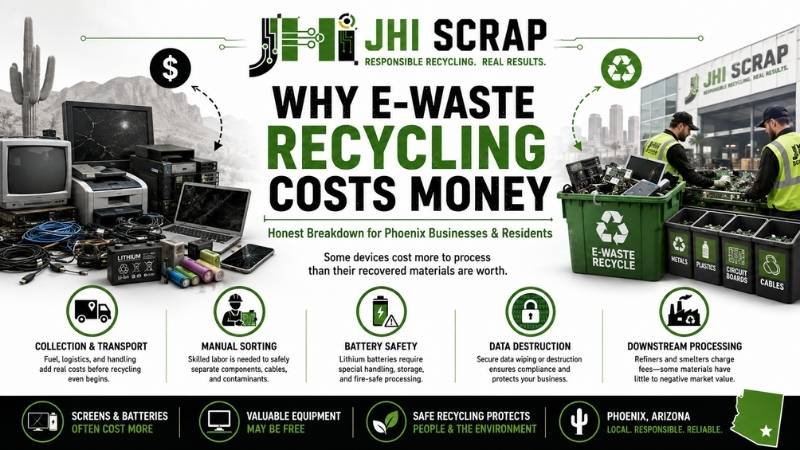
Here is the honest answer. Some devices cost more to process than their recovered materials are worth. The fee covers that gap. It may pay for labor, transport, safe storage, or specialist processing. It can also cover data destruction and detailed reporting. Those services protect people, businesses, and the environment.
The charge should still make sense. A trustworthy recycler should explain it before accepting your equipment. This guide explains common e-waste recycling costs in Phoenix. It also shows how to compare quotes fairly. You will learn which items often carry charges. You will also learn why valuable equipment may be free. Most importantly, you will know what questions to ask. That helps prevent surprises on pickup day.
The Short Answer: Why E-Waste Recycling Is Not Always Free
E-waste recycling is not always free because every device creates different processing costs. Some equipment contains valuable copper, aluminum, gold, or reusable parts. Those materials may cover the recycler’s work. Other products contain mostly low-value glass, plastic, or mixed materials. They may also require careful manual handling.
Think of each device as a tiny mixed-material building. Someone must take it apart safely. Workers sort every recovered stream. Batteries, circuit boards, metals, wires, plastics, and glass follow different routes. That work requires time, tools, floor space, protective equipment, and trained staff. Freight adds another expense. Downstream processors may also charge the first recycler. This often happens with screens, damaged batteries, and hazardous components.
The result is a simple equation. Material value must offset collection, labor, transport, and final processing. When recovered value falls short, a recycling fee covers the difference. It keeps responsible processing financially possible.
Fees can use several formats:
- A fixed charge for each item
- A rate based on total weight
- A pickup or transportation charge
- A labor charge for sorting or dismantling
- A data destruction charge
- A minimum service charge for small loads
- A custom project price for business cleanouts
Rates change with equipment type, condition, volume, and commodity markets. That is why a current quote matters.
What Counts as E-Waste?
E-waste includes discarded devices with electronic parts, plugs, batteries, or circuit boards. The broader electronic waste category includes household, office, industrial, and communications equipment. Common examples include computers, servers, televisions, printers, routers, phones, and testing equipment. Cables and circuit boards also qualify.
Some items are easy to identify. A broken laptop or outdated server clearly belongs in an electronics stream. Others are less obvious. Smart thermostats, security cameras, battery tools, and laboratory controls also contain electronic components. Condition matters as much as category. A working laptop may have resale value.
The same laptop may become scrap after water damage. Missing drives, batteries, or parts can also change its value. Age matters too. An older device may contain valuable metals. However, it may require more labor and have fewer reuse options. That balance shapes the final price. Readers who need a broader item list can review how to recycle electronics in Phoenix.
Recycling Value Is Not the Same as Purchase Price
An expensive device can have very little recycling value. Its original price does not control its end-of-life value.
Customers paid for design, software, branding, engineering, and retail support. Recyclers usually recover physical materials and reusable parts.
A ten-year-old television may have cost thousands of dollars. Today, it may contain heavy glass and few marketable parts.
A modest server can tell a different story. It may contain reusable memory, processors, drives, and metal chassis.
Recycling value depends on several practical questions:
- Can the complete device be tested and reused?
- Do working parts have a reliable resale market?
- How much recoverable metal does the unit contain?
- Are valuable components easy to remove?
- Does the unit contain hazardous or fragile material?
- Will a downstream processor charge for the remaining fraction?
- How far must the material travel?
The answers can change quickly. Metal prices, freight rates, and buyer demand move throughout the year.
A quote is therefore a current estimate, not a permanent price list. Clear photographs and item counts improve accuracy.
What an E-Waste Recycling Fee Actually Pays For
A legitimate recycling fee should cover real work within the material’s handling chain.
It should not appear as a vague surprise. The recycler should identify the service or difficult material involved.
Collection and Transportation
Trucks, fuel, drivers, insurance, and loading equipment cost money. Route distance affects every pickup.
A single television across town has poor transportation efficiency. A pallet of sorted computers uses the same trip better.
Stairs, narrow hallways, loading restrictions, and dock schedules can add labor. Business sites may require scheduled access.
Phoenix heat also changes loading plans. Electronics and batteries should not sit in an uncovered truck for hours.
Intake, Weighing, and Inventory
Incoming equipment must be counted, weighed, and categorized. Business projects may also need serialized asset records.
That first review decides whether each item can be reused. It also separates data-bearing devices from ordinary scrap.
Detailed inventory takes longer than bulk weighing. The extra record can still provide valuable proof and control.
Manual Sorting and Dismantling
Electronics are mixtures, not single materials. Workers may remove batteries, boards, drives, lamps, screens, and wires.
Manual separation improves recovery quality. It also prevents dangerous components from entering shredders or mixed containers.
Small items can demand surprising labor. Twenty printers may require more handling than one dense server rack.
Safe Storage and Fire Prevention
Damaged lithium batteries can ignite. Swollen devices require isolation, careful packaging, and quick routing.
Safe facilities need suitable containers, clear labels, trained employees, and protected storage areas. Those controls carry costs.
This work is not decorative paperwork. It protects workers, buildings, vehicles, and nearby businesses.
Downstream Processing
Most local recyclers do not refine every material themselves. They send separated streams to specialized processors.
Those partners may accept copper-bearing boards for payment. They may charge for leaded glass or mixed plastics.
Transportation between facilities also matters. Heavy, low-value material can create a large freight bill.
Environmental Controls and Documentation
Responsible operations track where materials go. They may also document weights, destruction, recycling, or downstream transfers.
Business clients often need records for internal policies. Healthcare, finance, education, and government teams may need more detail.
The required proof affects labor. A basic receipt costs less than serialized reporting and destruction records.
Data Security Services
Storage devices can hold personal, financial, medical, or business information. Deleting files does not always remove recoverable data.
Secure wiping, drive shredding, witnessed destruction, and certificates are separate services. Each method uses equipment and staff.
Data destruction is the lock on the back door. Skipping it can expose far more value than recycling saves.
Which Electronics Most Often Carry Recycling Fees?
Screens, batteries, bulky equipment, and low-value mixed products often create negative recycling value.
That does not mean every Phoenix recycler charges for them. It means these categories commonly need a closer quote.
CRT Televisions and CRT Monitors
CRT units are among the hardest electronics to recycle. They are heavy, fragile, and difficult to move.
Their glass can contain lead. The EPA’s CRT recycling guidance explains federal handling concerns.
Demand for recycled CRT glass has also fallen. Modern screens replaced most new CRT manufacturing years ago.
That leaves fewer end markets. Specialized processors must safely dismantle or manage the remaining glass.
Fees may use a per-item rate or a weight-based rate. Large console televisions can therefore cost more.
Never break a CRT before transport. Broken glass increases exposure risk and makes safe handling harder.
Flat-Screen Televisions
Flat-screen televisions look lighter and cleaner than CRT models. Their recycling economics can still be difficult.
Large plastic housings have limited commodity value. Screens may require careful removal and separate downstream processing.
Older backlights can also need special handling. Cracked panels create added labor and packaging problems.
Computer monitors may follow different pricing than televisions. Size, panel type, age, and condition can all matter.
Ask whether the quote covers stands, remotes, and attached cables. Those details prevent confusion at drop-off.
Printers, Copiers, and Multifunction Machines
Printers combine plastic, steel, boards, motors, ink, and toner. Their material mix lowers processing efficiency.
Copiers are also bulky. They may require dollies, lift gates, or several workers.
Toner spills create cleanup work. Full cartridges may need separate removal and routing.
Before requesting a quote, identify the exact model. Note any attached finishers, paper trays, or stands.
Also report whether toner remains inside. Honest details help the recycler plan safely.
Devices With Lithium-Ion Batteries
Lithium-ion batteries require careful handling because damaged cells can catch fire. Heat can increase that concern.
Phoenix garages and storage rooms become very hot. Swelling, punctures, or unusual odors deserve immediate attention.
Do not mail, crush, or casually transport a damaged battery. Ask the recycler for specific instructions first.
Some devices have removable batteries. Others use glued or sealed battery packs.
Sealed designs require extra labor. Safe removal may cost more than recovered materials provide.
Loose Batteries and Battery-Damaged Equipment
Loose batteries may follow different recycling programs. Chemistry, condition, and quantity affect acceptance.
Tape exposed terminals when instructed. Keep batteries separated to reduce short-circuit risk.
Never place swollen batteries inside a mixed electronics box. Tell the recycler before arrival.
Water-damaged or burned equipment also needs disclosure. Hidden damage can endanger workers during sorting.
Lamps, Bulbs, and Mercury-Containing Components
Some screens, switches, lamps, and older devices may contain mercury. These items require controlled processing.
They may not belong in a standard electronics load. A specialist or household hazardous waste program may be required.
Do not remove fragile lamps without guidance. A broken lamp can turn a simple job into cleanup work.
Refrigerators, Air Conditioners, and Cooling Equipment
Cooling equipment may contain refrigerants, oils, compressors, and electronic controls. Refrigerant recovery requires qualified handling.
These products are not ordinary scrap. Acceptance rules may differ between appliance recyclers and electronics processors.
Provide the model, size, condition, and refrigerant status. Ask whether professional recovery must happen first.
Solar Equipment, UPS Units, and Power Systems
Power equipment can contain large batteries, capacitors, or heavy transformers. Weight and stored energy affect handling.
Uninterruptible power supplies may be valuable when complete. Missing batteries or damaged cases can change that result.
Industrial power systems need a project review. Photographs, nameplates, and quantities make estimates more reliable.
Mixed Small Appliances and Low-Grade Electronics
Small appliances often contain little recoverable metal. Plastic housings and mixed assemblies dominate their weight.
Examples include coffee makers, vacuums, speakers, toys, and low-cost accessories. Each unit still requires sorting.
One item may feel trivial. Hundreds of mixed items create meaningful labor and freight.
Damaged, Contaminated, or Incomplete Equipment
Damage can reduce reuse and parts value. Missing boards, processors, drives, or cables can also reduce returns.
Contamination creates more serious problems. Oil, chemicals, biological material, pests, or standing water require disclosure.
Some recyclers cannot accept contaminated equipment. Others may need a specialized partner and added handling charge.
Never hide condition problems to secure a lower estimate. Accurate information protects everyone and improves pricing.
Why Some Electronics Are Free or Even Valuable
Some electronics generate enough recovery value to offset handling costs. Reusable equipment can create even more value.
Servers, network equipment, laptops, processors, circuit boards, and test equipment may qualify. Condition and market demand remain important.
A recycler may use three possible routes:
- Reuse the complete device after testing.
- Recover working parts for resale or repair.
- Separate valuable metals and components for commodity recovery.
Reuse usually preserves the most value. Parts recovery often comes next.
Material recycling becomes the final route when reuse is unsafe or impractical. That hierarchy explains many price differences.
Clean, sorted loads also cost less to process. Labeled pallets beat mixed boxes filled with trash.
Complete equipment may hold more value than stripped shells. Removing high-value parts before delivery can change a free load.
JHI evaluates electronics for reuse before recycling. You can learn what happens to recycled electronics within that broader process.
The Main Factors That Change Your Recycling Quote
Two similar-looking loads can receive different prices. The details below explain most differences.
Equipment Type
Dense business electronics often contain more recoverable value. Large consumer displays usually create higher processing costs.
The model number helps identify construction, battery type, and potential reuse. Include it whenever possible.
Condition and Completeness
Working equipment may qualify for remarketing. Broken, wet, burned, or stripped equipment usually loses that option.
Original power supplies, trays, racks, cables, and accessories may support reuse. Missing parts may reduce value.
Quantity and Load Density
Volume can improve route efficiency. However, volume alone does not guarantee free service.
A truck of servers differs from a truck of plastic printers. Weight, value, and processing time all matter.
Sorting Quality
Sorted material lowers intake labor. It also reduces contamination and incorrect downstream shipping.
Separate computers, displays, batteries, cables, and trash. Label every pallet or container clearly.
Pickup Distance and Site Access
Distance affects fuel and driver time. Access limits affect loading time.
Mention stairs, elevators, gates, dock hours, and security requirements. Also mention any required insurance documents.
Data Destruction Requirements
A basic material load may only need recycling. A business retirement project may need serialized data controls.
Identify every storage device. State whether wiping, destruction, witnessing, or certification is required.
Commodity Markets
Copper, aluminum, precious metals, plastics, and resale markets change. Their movement affects recovery credits.
Published rates can become outdated quickly. Ask how long the quote remains valid.
Downstream Availability
Some materials have few qualified processors. Capacity shortages can raise prices or extend turnaround times.
CRTs provide a clear example. Fewer glass markets create higher handling and transportation pressure.
Documentation and Compliance Needs
Simple receipts require little work. Asset reports, weight summaries, and certificates require more.
Define the required deliverables before pricing. Adding them after processing may be difficult or impossible.
How Residential and Business Recycling Costs Differ
Residential drop-off pricing usually focuses on item type. Business pricing includes project scope and risk.
A homeowner might bring one television, two laptops, and several cables. The recycler can quote each difficult item.
A business may retire hundreds of assets. Those assets can span several offices, storage rooms, or campuses.
Business projects may need:
- Scheduled pickup windows
- Pallets, bins, or packing support
- Secure chain-of-custody controls
- Serialized asset inventory
- Data wiping or physical destruction
- Certificates or weight reports
- Loading crews and lift-gate service
- Revenue sharing for reusable assets
- Coordination with property managers
Those services change the quote. However, valuable equipment may offset many costs.
This is where IT asset disposition becomes useful. ITAD treats equipment as managed assets, not random scrap.
A good ITAD plan separates reuse, resale, parts recovery, recycling, and data security. That can improve both control and returns.
Phoenix Conditions That Can Affect E-Waste Handling
Phoenix adds practical concerns that deserve attention. Heat, travel distance, and rapid growth shape local recycling projects.
Extreme Heat
High temperatures speed battery damage. They can also weaken plastics, adhesives, and screen components.
Do not leave devices inside parked vehicles. Avoid storing batteries in outdoor sheds or direct sun.
Schedule summer loading during cooler hours when possible. Tell the recycler about swelling or heat damage.
Long Storage Periods
Many local offices store retired equipment for years. Dust, pests, moisture, and heat can reduce reuse value.
Old equipment also occupies expensive space. That hidden cost grows while resale value falls.
Create a regular retirement schedule. Quarterly or annual reviews can keep storage from becoming a graveyard.
Metro-Wide Transportation
Phoenix and Maricopa County cover a wide area. A pickup from an outer suburb takes more route time.
Combine small loads when practical. Accurate counts help the recycler select the right vehicle.
Apartment and Office Access
Elevators, loading zones, gate codes, and parking limits can slow a pickup. These details matter before dispatch.
Reserve access early. Stage equipment near the loading point when safe and permitted.
How to Reduce E-Waste Recycling Costs
You cannot remove every fee. You can still improve the quote through better preparation.
Make a Clear Inventory
List equipment by category, brand, model, quantity, and condition. Include approximate weights for large items.
Photograph mixed pallets from several angles. Capture labels and model numbers for unusual equipment.
Separate Valuable and Difficult Items
Keep servers, laptops, boards, displays, batteries, printers, and trash separate. Do not mix them in one bulk box.
Separation helps the recycler calculate value. It also prevents difficult items from lowering the entire load.
Preserve Complete Systems
Keep reusable parts with their devices. Include chargers, trays, rails, and power supplies when available.
Do not strip equipment without a plan. The removed part may carry most of the recovery value.
Disclose Damage Early
Mention cracked screens, swollen batteries, water exposure, smoke, or chemical contamination. Send clear photographs.
Early disclosure allows safe planning. It also reduces surprise labor after arrival.
Consolidate Pickups
One planned pickup may cost less than several small trips. Consolidation improves truck use and staff time.
Do not wait until unsafe materials accumulate. Separate damaged batteries and request guidance immediately.
Decide Your Data Requirements
Choose the right security level before requesting quotes. Not every drive needs the same method.
However, sensitive data deserves documented handling. A cheaper recycling quote may exclude data protection.
Ask About Reuse and Value Recovery
Working business equipment may generate resale proceeds or recycling credits. Ask how the recycler evaluates it.
Request a clear settlement method. Understand testing costs, sales fees, timing, and unsold equipment handling.
Compare the Same Scope
One quote may include pickup and reporting. Another may only include basic material processing.
Place each service beside its price. Apples-to-apples comparison prevents a cheap quote from becoming expensive later.
What a Fair E-Waste Quote Should Explain
A fair quote should explain the items, services, charges, credits, and important assumptions.
So, what should a fair quote explain? It should answer the questions below without smoke and mirrors.
- Which items are accepted?
- Which items carry fees?
- Are charges per item, pound, pallet, or project?
- Is pickup included?
- Are loading labor and equipment included?
- Does the price include data destruction?
- Will the recycler provide certificates or reports?
- Can reusable equipment create a credit?
- What conditions could change the price?
- How long does the quote remain valid?
- What items require special preparation?
- Is an appointment required?
Watch for vague phrases like “fees may apply” without examples. Ask for written clarification.
Also question guaranteed free pickup without an inventory. Difficult items can change the economics dramatically.
The best provider may not have the lowest headline price. Transparent scope often saves more than a vague discount.
Use this checklist when you choose an e-waste company in Phoenix.
Common Red Flags in “Free” E-Waste Offers
Free service can be legitimate. Valuable equipment often supports it.
However, an unexplained promise deserves questions. A low quote should never require weak environmental or data controls.
No Questions About the Equipment
A responsible recycler needs basic details. Type, quantity, condition, location, and data needs affect every project.
Immediate promises may ignore difficult materials. They can also hide later surcharges.
No Clear Data Process
“We delete everything” is not a complete plan. Ask about the method, verification, and records.
Business clients should define responsibility before equipment leaves the site. Get the process in writing.
Cash Claims Without Inspection
Some electronics have value. That value still depends on models, parts, condition, and markets.
Guaranteed high payouts can disappear after pickup. Request written grading and settlement terms.
Vague Downstream Handling
Ask where non-reusable materials go. A trustworthy provider should explain its processing path clearly.
You do not need every trade secret. You do need confidence that materials receive responsible handling.
Surprise Charges at Arrival
Unreported damaged batteries or extra televisions can change a quote. Hidden standard fees are a different problem.
Confirm possible adjustments beforehand. Call before you haul, especially with screens or unusual equipment.
How JHI Scrap Approaches Electronics and Industrial Surplus
JHI Scrap has managed electronic surplus and e-scrap since 1980.
The Phoenix team evaluates equipment for reuse first. Material moves into responsible recycling when reuse is not practical.
JHI also handles business IT assets, electronic components, test equipment, servers, and industrial electronics. Available services depend on the load.
Some high-value equipment may support free handling or value recovery. Difficult material may require a processing charge.
The only honest way to know is through an evaluation. Provide a clear inventory before scheduling service.
For an accurate review, share:
- Equipment categories and quantities
- Brand and model information
- Working, untested, or damaged condition
- Photographs of equipment and pallets
- Pickup address and loading details
- Desired pickup timing
- Data destruction requirements
- Reporting or certificate needs
- Any batteries, screens, lamps, or contamination
JHI can then identify likely reuse, recovery, and recycling routes. That review also reveals possible charges early.
The goal is simple. Match each item with the most responsible practical path.
Phoenix businesses can request a free evaluation of surplus industrial electronic material. Call (602) 272-4033 to discuss the load.
JHI is located at 3334 W McDowell Road, Unit 17, Phoenix, Arizona 85009-2414.
Business hours are Monday through Friday, 8:00 a.m. to 4:30 p.m. Public visits are by appointment only.
Call before visiting. That confirms current hours, acceptance, preparation, and any possible fees.
Frequently Asked Questions About E-Waste Recycling Costs
Is e-waste recycling free in Phoenix?
Some e-waste recycling is free in Phoenix. Other items or services may carry charges.
Computers, servers, circuit boards, and reusable business equipment may contain enough value. Screens and damaged batteries often create higher costs.
Pickup, data destruction, inventory, and certificates can also affect price. Request a current quote for your exact load.
Why do recyclers charge for televisions?
Televisions can contain large screens, mixed plastics, glass, boards, and fragile parts. Their recovered value may be limited.
CRT televisions add heavy leaded glass and fewer downstream markets. Flat screens also require careful panel handling.
The fee helps cover labor, storage, freight, and specialist processing. Pricing may use size, weight, or item count.
Why does CRT recycling cost more?
CRT units are heavy and fragile. Their glass can contain lead and requires controlled handling.
Demand for recycled CRT glass has fallen sharply. Fewer outlets increase transportation and processing pressure.
Do not break the unit. Keep it dry and call ahead for instructions.
Can I recycle a computer for free?
Many computers contain recoverable metals and reusable parts. Complete units may qualify for no-cost recycling.
Condition, age, missing parts, and quantity can change that result. A recycler may charge for pickup or data services.
Always ask whether hard-drive handling is included. Free material recycling does not always include secure destruction.
Do recyclers pay for old electronics?
Some recyclers pay for equipment with reuse, parts, or commodity value. Servers, test equipment, boards, and components may qualify.
Payment depends on condition, completeness, quantity, and current demand. Testing and remarketing costs may reduce proceeds.
Ask how value is calculated. Also ask when and how settlement occurs.
Does data destruction cost extra?
Data destruction often costs extra because it requires a controlled process. Wiping and physical destruction use different tools.
Inventory, witnessing, and certificates can add labor. The exact scope should appear in the quote.
Businesses should not assume recycling alone removes data. Define the required method before pickup.
Is a factory reset enough before recycling?
A factory reset may help with many consumer devices. It may not satisfy every security requirement.
Remove accounts, SIM cards, memory cards, and activation locks. Back up needed files before resetting.
Organizations with sensitive data should use a defined sanitization or destruction process. Ask for suitable documentation.
Why do damaged batteries cost more?
Damaged batteries create fire and transport risks. They need careful isolation, packaging, storage, and processing.
Swelling, punctures, heat, or water exposure increases concern. Never hide a damaged battery inside another device.
Contact the recycler before moving it. Follow the exact safety instructions provided.
Are pickup fees the same as recycling fees?
No. Pickup fees cover transportation and loading.
Recycling fees cover processing the material itself. A quote may combine both charges.
Ask for separate line items when comparison matters. Also confirm any route minimum or lift-gate charge.
Can a large volume remove the fee?
Large volume can improve transportation efficiency. It cannot make every material valuable.
A large load of servers may support free service. A large load of CRTs may increase total processing costs.
Provide a category breakdown, not only total weight. Mixed descriptions can produce inaccurate estimates.
Should I remove hard drives before recycling computers?
You may remove drives when your policy requires internal control. Keep asset records accurate during removal.
Complete systems can hold more reuse value. Removed parts may change the recycler’s evaluation.
Discuss the plan before dismantling equipment. The recycler may offer secure drive handling within the project.
Can I put electronics in curbside recycling?
Do not place electronics in curbside bins unless the local program allows them. Batteries create serious collection risks.
Use an approved electronics recycler, retailer program, or municipal event. Confirm accepted items before traveling.
Phoenix-area rules and programs can change. Check current local guidance for your address.
How can I get the most accurate quote?
Provide categories, counts, models, condition, photographs, and location details. Include every difficult item.
Explain data, reporting, and timing requirements. Mention stairs, docks, gates, and loading limits.
Clear information reduces guesswork. It also lowers the chance of a price change later.
What should I do before bringing electronics to JHI?
Call (602) 272-4033 before visiting. Confirm acceptance, appointment timing, preparation, and possible charges.
Create a simple inventory and photograph unusual items. Keep damaged batteries separate and disclose their condition.
Bring identification or project records when requested. Do not leave equipment outside the facility.
Final Takeaway: A Recycling Fee Should Never Be a Mystery
Some e-waste costs money because responsible processing costs more than recovered materials return.
Screens, damaged batteries, printers, and bulky mixed products often create that gap. Pickup and data services may add costs.
Valuable computers, servers, boards, and industrial equipment can produce a different result. Reuse or recovery may offset processing.
The key is transparency. A fair quote should explain charges, credits, services, and possible adjustments.
Prepare an inventory. Share photographs and report damage honestly.
Then compare identical service scopes. That protects your budget and your data.
Need help with electronics or industrial surplus in Phoenix? Request a free evaluation from JHI.
Call (602) 272-4033 before visiting or scheduling pickup. The team can review your exact equipment and needs.