
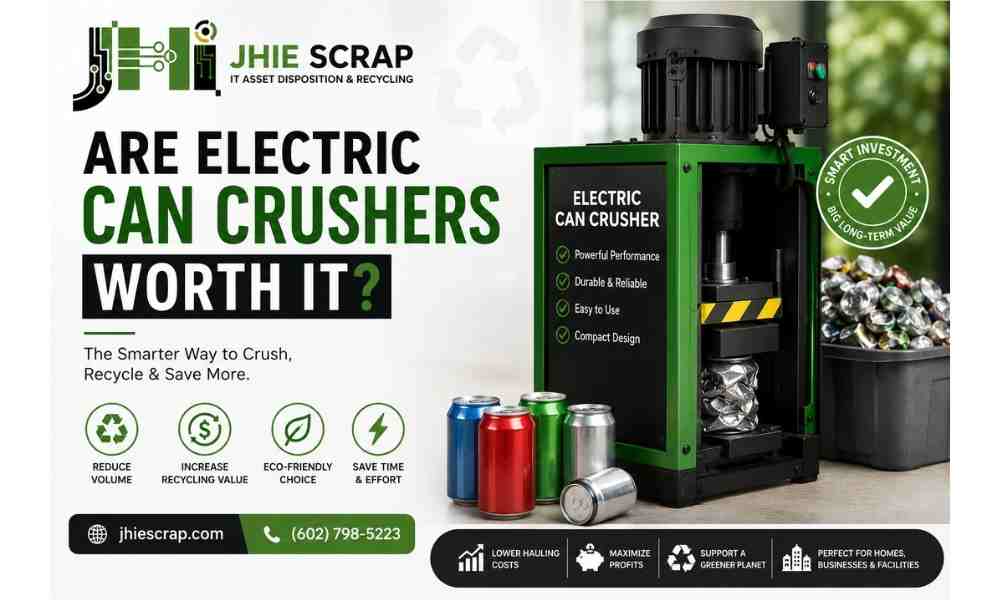
Are Electric Can Crushers Worth It? Cost, Convenience, Recycling Value, and When to Use One
Have you ever looked at piles of aluminum cans and wondered if there’s an easier way to deal with them? You’re not alone. An electric can crusher is a convenience tool first and a profit tool second. It saves space, cuts effort, and keeps your recycling tidy. Whether it’s worth your money comes down to one thing: how many cans you actually crush.
Quick Answer Before You Read On
An electric can crusher is worth it if you crush cans in volume and want to save space and effort. It’s probably not worth it if you only toss a few cans a week. The machine makes recycling easier and faster. It does not raise the scrap value of your cans.
Most buyers underestimate one thing. The real win isn’t money. It’s the storage space you get back. Let’s break down the full picture so you can decide with confidence.
Here’s what we’ll cover. We’ll explain what these machines do. We’ll weigh the pros and the honest drawbacks. We’ll compare electric models against manual and pneumatic ones. Then we’ll help you figure out if you’re the right kind of buyer. By the end, you’ll know exactly where you stand.
What Is an Electric Can Crusher?
An electric can crusher is a small machine that flattens aluminum cans using a motor instead of your hands. You feed in a can, the motor does the work, and out comes a compact disc of aluminum. Think of it as a tiny compactor built just for beverage cans.
Here’s the key thing to understand. Crushing and compacting aren’t the same as melting or recycling. The crusher only changes the shape of the can. The aluminum stays exactly the same. That matters later when we talk about scrap value.
These machines fit on a countertop, a workbench, or a garage shelf. Some mount to a wall. They’re part of a wider family of recycling equipment that helps people handle materials faster and cleaner.
Simple Definition of an Electric Can Crusher
An electric can crusher is a powered device that flattens empty aluminum cans automatically. You drop a can in, press a button or trigger a sensor, and the motor crushes it in seconds. It’s a simple recycling tool that turns bulky cans into flat, stackable pieces with almost no effort from you.
How an Electric Can Crusher Works
Most electric crushers follow the same simple steps:
- You place an empty can into the loading slot.
- The motor drives a press toward the can.
- Motor-driven pressure flattens the can in one smooth motion.
- The crushed can drops into a bin or chute below.
The difference from a manual crusher is the muscle. A manual crusher needs your arm. An electric crusher uses motor power instead. Think of it like a small compactor designed for beverage cans. You supply the cans, and the machine supplies the force.
Common Can Sizes Electric Can Crushers Handle
Most electric can crushers handle standard beverage cans with ease. Always check the specs before you buy, though, since not every model fits every can.
Typical sizes supported:
- 12 oz cans (soda, beer, sparkling water)
- 16 oz cans (energy drinks, tall boys)
- Slim cans on select models
Oversized or specialty cans can be hit or miss. If you drink unusual sizes, confirm compatibility first. A quick spec check now saves a frustrating return later.
Are Electric Can Crushers Worth It?
For most high-volume users, yes. For occasional recyclers, often no. An electric can crusher earns its price through convenience, speed, and saved space, not through scrap profit. The honest answer depends on your habits.
Here’s the simple way to think about it. The value lives in time and effort. If you crush cans daily or weekly, the machine pays you back in saved hassle and recovered storage. If you crush a handful now and then, a cheap manual tool does the same job for less.
We’ll be straight with you. The scrap value of your aluminum doesn’t change because you crushed it. So the question isn’t “will this make me money?” The real question is “will this make my life easier?” For a lot of people, the answer is a clear yes.
Want the best of both worlds? Pick the tool that matches your volume. That’s the whole game.
Yes, If You Crush a Lot of Cans
If cans pile up fast in your home or business, an electric crusher is a no-brainer. High volume is where these machines shine. They turn a slow, repetitive chore into a few quick seconds of work.
Picture a busy household, a packed office break room, or a bar that empties dozens of cans a night. Crushing those by hand gets old fast. An electric model keeps up without wearing you out. The more cans you handle, the more the machine earns its keep.
Maybe Not, If You Only Crush a Few Cans
We’ll be honest here. If you only crush a few cans a week, an electric crusher is overkill. The cost won’t match the benefit.
A simple manual can crusher does the job for a fraction of the price. Light, occasional recyclers rarely need motor power. Set realistic expectations. A machine that sits unused most of the week isn’t a smart buy. Spend less, and you’ll feel better about the choice.
The Real Value Is Convenience, Not Huge Scrap Profit
Let’s clear up the biggest myth. An electric can crusher won’t boost your scrap earnings. Here’s why.
Myth: “Crushing cans makes them worth more.” Reality: Scrap value comes from weight, not shape.
A crushed can weighs the same as an uncrushed can. The recycler pays for the aluminum, not the form. What the crusher actually gives you is space and ease. Flat cans stack tighter. Your bin fills slower. Storage gets simpler. That’s the genuine payoff, and for many people it’s reason enough.
Electric Can Crusher vs Manual Can Crusher
Choosing between electric and manual comes down to volume, effort, and budget. Both flatten cans. They just suit different people. Here’s a quick side-by-side.
| Feature | Electric Can Crusher | Manual Can Crusher |
|---|---|---|
| Effort | Hands-free, motor-powered | Needs arm strength |
| Speed | Fast, great for volume | Slower, one at a time |
| Cost | Higher upfront | Budget-friendly |
| Best for | High-volume users | Occasional recyclers |
| Maintenance | More moving parts | Almost none |
Electric Can Crushers Are Easier to Use
Electric crushers win big on ease. You don’t push, pull, or strain. The motor does all the work while you simply feed in cans.
This matters most for some users. Seniors and people with arthritis often struggle with manual crushers. The repeated pressing can hurt. An electric model removes that strain completely. Press a button, and you’re done. For anyone who wants recycling to feel effortless, electric is the clear pick.
Manual Can Crushers Are Cheaper
Manual can crushers win on price, plain and simple. They cost a fraction of electric models and need almost no upkeep.
For low-volume users, that’s a strong case. If you crush a few cans a week, a manual crusher mounted on a wall does the trick. No motor, no power, no maintenance worries. Sometimes the simplest tool is the smartest buy.
Which One Is Better for Most Households?
Use one simple rule to decide:
- High volume = electric
- Low volume = manual
If your family drinks canned drinks daily and your bin fills fast, an electric crusher saves real time and space. If cans trickle in slowly, a manual crusher covers you for less. Match the tool to your habits, and you’ll never regret the spend. There’s no single “best” crusher. There’s only the best one for your home.
Electric Can Crusher vs Pneumatic Can Crusher
Electric and pneumatic crushers serve very different buyers. Electric models suit homes and small businesses. Pneumatic models suit heavy industrial use. Here’s how they stack up.
| Feature | Electric Can Crusher | Pneumatic Can Crusher |
|---|---|---|
| Power source | Standard outlet | Compressed air |
| Setup | Plug and go | Needs an air compressor |
| Best for | Homes, offices, small shops | High-volume industrial sites |
| Cost | Lower overall | Higher, plus compressor costs |
| Maintenance | Moderate | More, due to air system |
Most homeowners do not need pneumatic systems. Pneumatic equipment usually makes sense only when a site already has compressed air infrastructure.
Electric Models Use a Power Outlet
Electric crushers keep things simple. You plug them into a standard outlet, and they’re ready to work. No special setup. No extra gear.
Like plugging in a kitchen appliance, most electric crushers are ready to work in minutes. That accessibility is why they’re the go-to choice for homes and small businesses. If you want hassle-free crushing without a learning curve, electric is the easy answer.
Pneumatic Models Use Compressed Air
Pneumatic crushers run on compressed air instead of a motor. They connect to an air compressor and deliver strong, steady crushing force. That makes them a fit for industrial recycling operations.
But there’s a catch. The air compressor adds cost and maintenance. You’re not just buying a crusher. You’re buying and maintaining an air system too. For most everyday users, that’s more machine than they’ll ever need.
Which One Is Better for Businesses?
Match the machine to your volume:
- Small businesses (offices, cafes, small shops) do best with electric models. They’re affordable, simple, and plenty fast.
- High-volume industrial operations with existing air systems may benefit from pneumatic crushers built for nonstop work.
If you run a moderate-volume business, an electric commercial crusher almost always makes more sense. Save the pneumatic systems for true industrial demand. The right fit keeps your recycling workflow smooth and your costs in check.
Main Benefits of Electric Can Crushers
Electric can crushers deliver real, everyday wins. They save space, cut effort, speed up the job, and keep your recycling organized. Let’s look at each benefit in plain terms.
They Save Space in Recycling Bins
Ever open a recycling bin and find it overflowing with bulky cans? Whole, round cans waste a ton of space. They trap air and fill bins fast.
A crushed can takes up far less room. Flatten your cans, and you can fit several times more in the same bin. That means fewer trips to the curb and a cleaner, tidier space. For anyone short on storage, this benefit alone often seals the deal.
They Make Recycling Easier
Easy recycling is recycling that actually happens. When the process feels simple, you stick with it.
An electric crusher removes friction. You don’t dread a pile of cans. You just crush them in seconds and move on. That convenience builds a habit. And habits are what keep recycling consistent over months and years. The easier you make it, the more you’ll do it.
They Reduce Physical Effort
Crushing cans by hand wears on your body. The pressing, the squeezing, the repetition. It adds up, especially over a big batch.
An electric crusher takes that load off you. The motor does the hard part, hands-free. This is a real relief for seniors and anyone with arthritis or limited hand strength. Recycling shouldn’t hurt. With an electric model, it doesn’t. You get the same result with none of the strain.
They Can Speed Up High-Volume Can Crushing
When cans pile up fast, speed matters. An electric crusher flattens cans in seconds, one after another, without slowing down.
That’s a game-changer for busy settings. Offices, bars, and restaurants burn through cans daily. Crushing them by hand eats up time staff don’t have. An electric model keeps the line moving and frees people up for real work. More speed means less buildup and a smoother day.
They Help Keep Aluminum Cans Organized for Recycling
A place for everything and everything in its place. That’s the vibe a crusher brings to your recycling.
Flat, uniform cans stack neatly. They don’t roll around or spill out. Your collection stays clean and contained, whether it’s a garage bin or a back-of-house setup. Organized recycling streams are also easier to handle at collection time. Less mess now means smoother recycling later, and a little more peace of mind for you.
Drawbacks of Electric Can Crushers
We believe in honest advice. Electric can crushers have real downsides, and you deserve the full picture before you spend. Balanced facts help you make a smart, confident choice.
Higher Upfront Cost
The biggest barrier is price. Electric crushers cost more than manual ones, often by a wide margin. That upfront cost stops a lot of casual buyers.
Here’s a fair way to weigh it. A manual crusher costs less upfront, but an electric crusher can save more time over the long run. Compare the price against your expected volume. High volume justifies the spend. Low volume usually doesn’t. Run the math on your own habits before you buy.
More Parts Can Mean More Maintenance
Electric crushers have motors and moving parts. More parts can mean more upkeep over time. That’s just how powered equipment works.
Like most powered equipment, more moving parts usually mean more maintenance. The good news is that higher-quality units often need less attention. A well-built crusher can run for years with simple care. Budget models may need more. Buy quality, and you’ll usually spend less time on repairs down the road.
They Need Power
Electric crushers need an outlet to run. That’s obvious, but it’s worth a thought. No power means no crushing.
Indoors, this is rarely an issue. Most garages, kitchens, and break rooms have outlets close by. It only becomes a concern for mobile or off-grid recycling setups. If you plan to crush cans far from a power source, factor that in before you commit.
Some Models Are Noisy
Nobody wants recycling equipment that sounds like a construction site in the garage. Some electric crushers run loud, and the noise can surprise you.
Noise levels vary a lot by model and build quality. Cheaper units tend to be louder. If you’ll use the crusher in a home, office, or shared space, this matters. Check the manufacturer’s noise rating when it’s listed. A quieter model keeps the peace while it works.
Not Every Model Handles Every Can Size
Not all crushers fit all cans. Some models only handle standard 12 oz cans. Feed them an oversized or specialty can, and you’ll hit a wall.
The fix is simple. Check the supported can sizes before you buy. If you drink energy drinks, tall boys, or unusual containers, confirm compatibility first. A two-minute spec check prevents a costly mismatch. Always verify before you order.
Do Crushed Aluminum Cans Still Have Scrap Value?
Yes. Crushed aluminum cans are still fully recyclable and still hold scrap value. Crushing changes the shape of the can, not the metal inside it. Let’s bust a few myths so you know exactly what your cans are worth.
Yes, Aluminum Cans Are Still Recyclable When Crushed
Crushed aluminum cans are 100% recyclable. Flattening a can does nothing to harm the aluminum. Recyclers accept crushed cans the same way they accept whole ones.
One small note. A few local facilities have their own rules about how they want cans prepared. It’s smart to check your local guidelines. But as a rule, crushed cans recycle just fine. You’re not losing anything by flattening them.
Scrap Value Is Based on Weight, Not Shape
Here’s the core fact. Scrap value comes from weight, not shape. Crushing changes the shape, not the weight.
Recyclers pay by the pound. A crushed can and a whole can of the same type weigh exactly the same. So crushing has zero effect on what you earn per pound. What it does affect is storage. Crushed cans pack tighter, so you can stockpile more before a recycling run. The crusher saves space. It doesn’t change the price. To learn more about which materials hold their worth, see our guide on what items never lose value.
Clean, Sorted Cans May Be Easier to Recycle
An ounce of prevention is worth a pound of cure. Clean, sorted cans make the recycling process smoother for everyone.
Rinse out residue and keep aluminum separate from other materials. This cuts contamination and helps facilities process your load faster. Some recyclers even prefer clean, sorted streams. A little prep on your end goes a long way. It’s a small habit with a real payoff.
Scrap Prices Change Often
Aluminum scrap prices move with the market. They rise and fall based on demand, supply, and local conditions. So don’t lock in any single number in your head.
Before you estimate your earnings, check current local rates. A price from last year may be way off today. Staying current keeps your expectations realistic. When in doubt, call a local recycler for the day’s rate.
How Much Money Can You Make Recycling Aluminum Cans?
Most people earn modest money recycling aluminum cans. The exact amount depends on weight and your local scrap price. Let’s set realistic expectations with a simple breakdown.
It Depends on Weight and Local Scrap Prices
Your earnings come down to two numbers: how much your cans weigh, and the going rate per pound in your area.
Here’s a rough example. It takes roughly 30 to 35 empty cans to make one pound of aluminum. If your local rate is a certain price per pound, you multiply that by your total weight. Collect more weight, earn more. It’s straightforward math, but the totals stay modest for most households. If you’re curious about turning recyclables into cash, our post on how to earn money from recycling in Phoenix digs deeper.
Electric Crushers Help With Storage, Not Price Per Pound
Let’s be crystal clear, because this is one of the most important points in this guide. The crusher saves space, not scrap value.
An electric crusher does not raise your price per pound. It can’t. Recyclers pay by weight, and crushing doesn’t change weight. What the crusher does is let you store more cans in less space before a recycling trip. That’s a convenience benefit, not a profit boost. Anyone who tells you otherwise is selling, not advising.
Businesses May Benefit More Than Households
Volume changes the math. A household crushing a few cans a day earns little. A business crushing hundreds of cans a week is a different story.
Bars, cafes, offices, and restaurants generate aluminum at scale. For them, organized, high-volume recycling can add up. An electric crusher helps keep that workflow tight and efficient. The cans still sell by weight. But the sheer volume makes the convenience and the modest returns far more meaningful for a business than for a single home.
Who Should Buy an Electric Can Crusher?
Not sure if you’re the right buyer? Find yourself in the list below. These are the people and places that get the most value from an electric can crusher.
Large Households
Does your recycling bin seem full long before collection day arrives? If so, you’re a prime candidate.
Big families drink a lot of canned beverages. Soda, sparkling water, beer, energy drinks. The cans add up fast. An electric crusher keeps that flood under control. It flattens cans in seconds, slashes bin clutter, and keeps your aluminum storage neat. Less mess, fewer curb trips, and a tidier home. For busy households, that’s a daily win.
Seniors or People With Limited Hand Strength
Manual crushers ask a lot of your hands. The pressing and squeezing can be tough or even painful. That’s where an electric crusher truly helps.
For seniors and anyone with arthritis or limited grip strength, the motor does all the work. No straining. No repetitive motion. Just press and go. It keeps recycling independent and comfortable. The focus here isn’t age. It’s effort. Anyone who wants to skip the physical strain will feel the difference right away.
Offices and Break Rooms
Office break rooms collect cans fast. Coffee runs, lunch breaks, late afternoon sodas. By week’s end, the recycling bin is overflowing.
An electric crusher keeps the break room clean and the workflow smooth. Staff crush cans in seconds and get back to work. No overflowing bins, no mess on the counter. A tidy break room is a small thing that makes the whole office feel better. For workplaces that go through cans daily, it’s an easy upgrade.
Bars, Cafes, and Restaurants
Less space for cans means more space for operations. In food and drink businesses, that trade matters.
Bars, cafes, and restaurants empty cans by the dozen every shift. Storing whole cans eats up valuable back-of-house room. A commercial electric crusher flattens that volume fast and keeps your aluminum organized for collection. The result is a cleaner workspace and a smoother recycling routine. For high-traffic venues, the efficiency pays off shift after shift.
Schools and Community Centers
Many hands make light work. Schools and community centers often run recycling programs with lots of participants and lots of cans.
An electric crusher supports those programs in two ways. It handles high volume with ease, and it doubles as a hands-on lesson in sustainability. Kids and community members see recycling in action. That builds environmental responsibility and community pride. It’s a practical tool that also teaches a lasting habit.
Scrap Collectors and Recycling Enthusiasts
For scrap collectors and recycling enthusiasts, efficiency is everything. You handle serious volume, and you want it organized.
An electric crusher flattens cans fast and packs them tight. That means easier storage and simpler transport to the recycler. More cans per load. Fewer trips. A cleaner staging area. If recycling is your hobby or your hustle, the right crusher turns a big job into a streamlined routine. You can also sell other recyclable materials in Phoenix to round out your collection runs.
Who Does Not Need an Electric Can Crusher?
We’d rather save you money than sell you something you don’t need. Here’s who can skip the electric crusher and feel good about it.
Occasional Can Users
If you only crush a handful of cans a week, an electric crusher is more than you need. The cost won’t match the benefit.
A simple manual crusher handles light use for a fraction of the price. Low volume just doesn’t justify motor power. Save your cash. A budget manual model keeps your few cans flat without the bigger spend. There’s no shame in matching the tool to the task.
People With Limited Storage Space for Equipment
If every square foot matters, adding another machine may not be the best move. Electric crushers take up counter, garage, or utility-room space.
For small homes, apartments, or tight workspaces, that footprint can be a dealbreaker. A wall-mounted manual crusher uses far less room. Think about where the machine will live before you buy. Sometimes the smartest recycling tool is the smallest one.
Users Who Want the Cheapest Option
If price is your only concern, a manual crusher wins every time. The cheapest option upfront is not always the most convenient option later, but for tight budgets, it gets the job done.
Manual crushers cost little and last long. There’s no motor to maintain and no power bill to worry about. Just weigh total ownership cost against purchase price. For pure value seekers, manual is the practical choice.
Anyone Expecting Big Profit From Small Can Volumes
Let’s set the record straight one more time. More convenience does not automatically mean more profit.
An electric crusher improves storage and convenience. It does not raise scrap prices. If you’re buying one hoping to cash in on a small pile of cans, the numbers won’t work. Aluminum sells by weight, and small volumes earn small returns no matter how you crush them. Buy a crusher for ease, not for income.
What Features Should You Look for in an Electric Can Crusher?
Before you buy, know what matters. Prioritize compatibility and durability first, then weigh the convenience features. Here’s your feature checklist.
Can Size Compatibility
Start with fit. Make sure the crusher handles the cans you actually drink. Most models cover standard 12 oz cans, but coverage varies from there.
Check the supported sizes against your habits. If you drink specialty energy drinks or oversized cans, confirm those fit before you order. The wrong size match leads to a return. A quick spec check up front saves the hassle.
Crushing Speed
Speed matters most for big users. If you crush cans in volume, look for a model that flattens them fast and keeps up.
For a small household, speed is less critical. For a busy office or a high-traffic bar, it’s a top priority. Faster crushing means less buildup and a smoother routine. Match the speed to your daily volume, and you’ll never feel held back.
Automatic Discharge
Automatic discharge ejects the crushed can on its own, so you can keep feeding cans without stopping. It’s a simple feature with a big payoff at volume.
The more cans you handle, the more valuable this becomes. Continuous operation keeps your rhythm going. For high-volume users, automatic discharge turns a stop-start chore into a smooth, hands-off flow. It’s worth looking for if you crush a lot.
Safety Features
Safety comes first with any powered machine. Look for models with guarded moving parts and an automatic shutoff.
These features protect your hands and give you peace of mind, especially in homes with kids or busy workplaces. A safety lock or sensor adds another layer of protection. Don’t skip this. A crusher should make life easier without adding risk. Prioritize safe design every time.
Durability and Build Material
Buy nice or buy twice. Build quality decides how long your crusher lasts.
Steel-frame crushers generally outlast lightweight plastic ones. Heavy-duty construction stands up to repeated use, especially in commercial settings. A sturdy machine is an investment in years of reliable service. Spend a little more on solid materials, and you’ll likely save on replacements down the line.
Ease of Cleaning
A crusher should be easy to keep clean. Look for removable collection trays and simple, wipe-down surfaces.
Residue and sticky drink leftovers build up over time. Easy-clean designs make upkeep quick and painless. A removable tray lets you empty and rinse in seconds. Small detail, big convenience. It keeps your crusher fresh and your recycling area tidy.
Noise Level
Nobody wants a machine that turns a quick recycling task into a noisy interruption. Noise matters more in homes, offices, and shared spaces.
Quieter models cost a bit more but spare your ears and your neighbors. If your crusher will run in a living area or a workplace, check the noise rating before you buy. A low-noise model keeps recycling calm and unobtrusive. Comfort counts.
Electric Can Crushers and Aluminum Recycling
A can crusher is one small piece of a bigger picture. Recycling aluminum protects resources, cuts waste, and builds better habits. Here’s why your cans are worth the effort.
Why Aluminum Cans Are Worth Recycling
Aluminum is one of the most valuable materials you can recycle. The reason is simple. Aluminum can be recycled over and over with no loss in quality.
That means a can you recycle today can become a new can again and again. Recycling aluminum also uses far less energy than making it from raw materials. Every can you recycle conserves resources and keeps a useful material in circulation. That’s a real, lasting impact from a simple habit.
Why More Aluminum Cans Should Stay Out of Landfills
Waste not, want not. Every can in a landfill is a wasted resource and a missed chance to do better.
Aluminum doesn’t break down quickly in landfills. It just sits there. Recycling diverts those cans into something useful and keeps your local landfill from filling up faster than it should. Smart recycling habits add up across a community. To see the bigger environmental picture, read about the environmental impact of waste and the benefits of recycling.
How Crushing Cans Supports Better Recycling Habits
Here’s a quiet truth. Convenience drives consistency. When recycling is easy, you do it more.
A crusher removes the friction that makes people skip recycling. No overflowing bins. No messy piles. Just quick, satisfying crushing that keeps you motivated. Over time, that ease turns into a steady habit. And steady habits are what make recycling actually work. The easier the task, the longer you’ll stick with it.
Are Electric Can Crushers Worth It for Phoenix Homes and Businesses?
Phoenix homes and businesses can get real value from an electric can crusher, especially if they store cans before recycling. Let’s bring this home with local context.
Phoenix Households May Benefit If They Store Cans Before Recycling
Many Phoenix households don’t recycle every day. They collect cans and make occasional trips to a recycler. If that’s you, a crusher helps a lot.
Crushed cans take up far less space. So you can store weeks of cans in a fraction of the room. That means fewer trips in the heat and a tidier garage or patio. For households that stockpile before recycling, the space savings alone make a strong case.
Phoenix Businesses May Benefit From Cleaner Recycling Workflows
For Phoenix businesses, the win is workflow. Less space for cans means more space for operations and a cleaner back-of-house.
Restaurants, bars, offices, and shops generate aluminum daily. An electric crusher keeps that volume organized and contained. Staff spend less time wrangling cans and more time on the work that matters. A tight recycling routine also looks more professional. For local businesses, that efficiency adds up fast. Learn more about recycling in Phoenix.
Check Local Scrap Prices Before Estimating Value
Before you guess your earnings, check current Phoenix scrap rates. Aluminum prices shift with the market, and Arizona rates can differ from national averages.
An old estimate can lead you astray. A quick call or search for today’s local rate keeps your expectations grounded. Realistic numbers help you make a smart decision. Don’t plan around a price that may be months out of date.
JHI Scrap Can Help With Scrap and Recycling Questions
If you have questions about aluminum recycling, help is always available. At JHI Scrap, we work with metals, electronics, and scrap every day, and we’re happy to point you in the right direction.
Not sure where to take your cans or what they’re worth? We can help you sort it out. Think of us as a local resource first. Reach out through our contact page anytime, and explore our services to see how we support Phoenix recycling.
Final Verdict: Are Electric Can Crushers Worth It?
So, are electric can crushers worth it? Yes for high-volume users who value convenience. Not always for small households or occasional recyclers. Here’s the simple wrap-up.
Worth It for Convenience and High Volume
If you crush cans often, an electric crusher is absolutely worth it. The payoff is convenience, speed, and saved space.
High-volume homes and businesses feel the benefit every day. Less effort, less clutter, less time spent on a tedious chore. The machine earns its price through ease, not through scrap profit. For the right user, that convenience is a genuine return on investment.
Not Always Worth It for Small Households
We’ll keep it real. For small households and occasional recyclers, an electric crusher often isn’t worth the cost.
More equipment is not always a better solution. If you crush only a few cans a week, a budget manual crusher does the job for less. There’s no need to overspend on motor power you’ll rarely use. Match the tool to your volume, and you’ll always come out ahead.
Best Decision Rule
Keep it simple. Use this one rule to decide:
- Low volume = manual crusher
- Medium to high volume = electric crusher
Count roughly how many cans you handle in a week. If it’s a steady stream, go electric. If it’s a trickle, go manual. That single question answers most buying decisions. No overthinking required.
Recycle Aluminum Cans the Smart Way
The best time to start a good habit was yesterday. The second-best time is today.
Whatever crusher you choose, the real goal is consistent recycling. Crushing cans makes the habit easier to keep, and an easy habit is one that lasts. Pick the tool that fits your life, keep your aluminum out of the landfill, and feel good knowing your cans get a second life. That’s recycling done the smart way. For more tips, browse our blog.
FAQs About Electric Can Crushers
Are electric can crushers worth it?
Yes for volume and convenience, no for occasional users. An electric can crusher saves space, time, and effort if you crush a lot of cans. If you only handle a few cans a week, a cheaper manual crusher does the same job. The machine adds convenience, not scrap value.
Do electric can crushers save money?
Not directly. An electric can crusher won’t raise the scrap value of your cans, since aluminum sells by weight, not shape. The real savings are in time, effort, and storage space. For most buyers, the value is convenience rather than profit.
Do crushed cans get recycled?
Yes. Crushed aluminum cans are fully recyclable. Flattening a can changes its shape, not the metal, so recyclers accept crushed cans just like whole ones. Local facility rules may vary, so it’s smart to check your area’s guidelines.
Are crushed cans worth less than uncrushed cans?
No. Crushed cans are worth the same as uncrushed cans of the same weight. Recyclers pay by the pound, and crushing doesn’t change weight. Shape has no effect on scrap value. It only affects how much storage space the cans take up.
How many aluminum cans make a pound?
Roughly 30 to 35 empty aluminum cans make one pound. The exact count varies by can size and brand. Use this as a rough estimate when you calculate weight and potential scrap earnings, not as an exact figure.
Is an electric can crusher better than a manual one?
It depends on your volume and effort level. Electric crushers are easier and faster, which suits high-volume users and anyone with limited hand strength. Manual crushers cost far less and suit occasional recyclers. Match the tool to how many cans you crush.
Are electric can crushers safe?
Yes, when used as directed. Look for models with guarded moving parts and an automatic shutoff. These features protect your hands and make the machine safe for homes and workplaces. Always follow the manufacturer’s safety instructions.
Can electric can crushers crush steel cans?
Usually no. Most electric can crushers are built for aluminum beverage cans, not steel. Steel is much harder and can damage the machine. Always check the manufacturer’s specifications before crushing anything other than aluminum.
What size cans can an electric can crusher crush?
Most handle standard 12 oz and 16 oz beverage cans. Some models also fit slim cans or larger sizes. Coverage varies by model, so check the supported can sizes before you buy if you drink specialty or oversized cans.
Are electric can crushers good for seniors?
Yes. Electric crushers are a great fit for seniors and anyone with limited hand strength. The motor does all the work, so there’s no pressing or straining. They reduce effort and repetitive motion, making recycling easy and comfortable.
Should businesses use electric or industrial can crushers?
Match the equipment to your volume. Most small businesses do well with an electric commercial crusher, which is affordable and fast. High-volume industrial operations with existing compressed air systems may benefit from pneumatic or industrial crushers built for nonstop use.
Where can I recycle aluminum cans in Phoenix?
You can recycle aluminum cans at local scrap yards and recycling facilities across Phoenix. Check current scrap acceptance requirements and rates before you go, since these change often. If you’re unsure where to take your aluminum cans, a local recycling expert can point you in the right direction.