
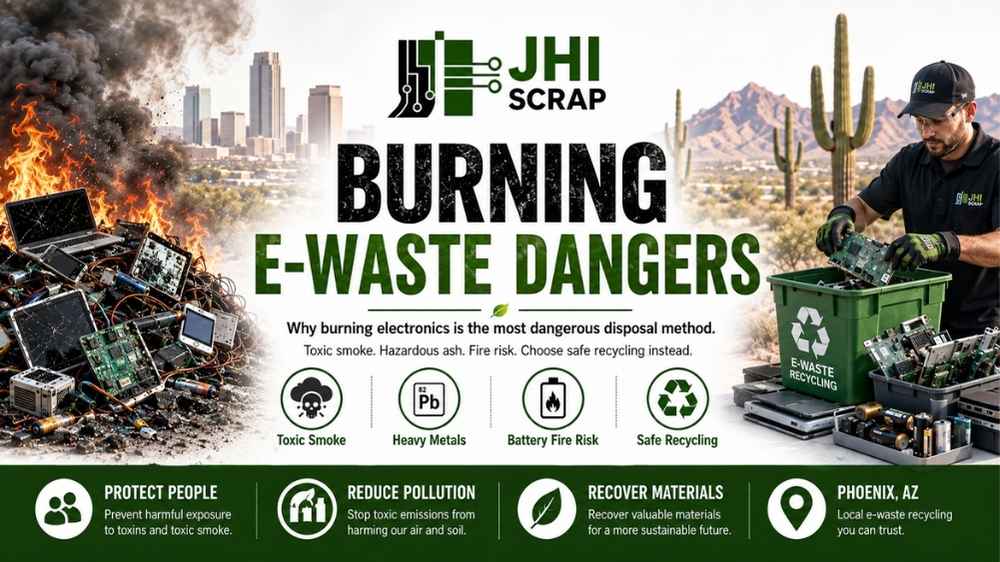
Burning E-Waste: Why It’s the Most Dangerous Disposal Method
Burning old electronics may look like a quick disposal method. It’s anything but safe.
Phones, computers, cables, batteries, and circuit boards contain mixed materials. Fire turns that mix into toxic smoke, ash, and contaminated dust.
The danger doesn’t end when the flames go out. Pollution may settle on soil, buildings, vehicles, clothes, and nearby play areas.
That risk matters across Phoenix and Maricopa County. Homes, schools, warehouses, and offices all store aging electronics.
Some devices sit in hot garages for years. Others pile up during office upgrades or property cleanouts.
Either way, a match isn’t an answer. Responsible reuse and recycling protect people, data, and valuable materials.
What Is Burning E-Waste?
Burning e-waste means setting discarded electronics or their parts on fire.
People sometimes burn wires to expose copper. Others burn circuit boards, devices, or mixed scrap to reduce volume.
Let’s call a spade a spade. This isn’t recycling, even when someone recovers metal afterward.
E-waste includes discarded products with plugs, cords, circuit boards, or batteries. Examples include laptops, routers, phones, printers, servers, and televisions.
It also includes smaller items. Chargers, keyboards, cables, hard drives, and power tools all count.
Many products look harmless while intact. Heat changes the equation by breaking materials apart.
Why Is Burning E-Waste So Dangerous?
Burning e-waste is dangerous because heat releases pollutants from many materials at once. A laptop isn’t a simple object. It contains plastics, metals, coatings, batteries, glass, and electronic components. Fire mixes these materials into a chemical cocktail. Bad news travels fast, especially when smoke carries it. The World Health Organization calls open burning among the most hazardous e-waste activities. Toxic fumes can affect nearby workers, families, and communities.
Pollutants can enter air, soil, dust, and water. Some may travel far beyond the fire. What does one burned laptop really release? The answer depends on its parts and temperature. That uncertainty makes open burning more dangerous. Nobody controls the heat, airflow, or resulting emissions.
What Chemicals Can Burning Electronics Release?
Burning electronics can release heavy metals, toxic gases, and harmful combustion byproducts.
The devil is in the details. Different devices contain different metals, plastics, flame retardants, and coatings.
Common concerns include:
- Lead from solder, circuit boards, and older display glass
- Mercury from switches, lamps, screens, and older equipment
- Cadmium from batteries, contacts, chips, and some components
- Chromium from metal finishes and corrosion protection
- Dioxins and furans from poorly controlled combustion
- Carbon monoxide from incomplete burning
- Fine particles carrying metals and chemical residue
- Acidic gases from certain plastics and cable coatings
Arizona environmental guidance warns that burning synthetic waste creates toxic pollution. That pollution may include dioxins, furans, carbon monoxide, and heavy metals.
Smoke becomes a delivery truck for those pollutants. It moves them beyond the original burn pile.
The ash also remains hazardous. Wind, shoes, tires, tools, and rain can spread it elsewhere.
How Does E-Waste Smoke Harm People?
E-waste smoke harms people through breathing, swallowing dust, and skin contact.
What goes around comes around. Pollution released outside can return indoors on clothes, shoes, or air.
Short-term exposure may irritate the eyes, throat, and lungs. It may also trigger coughing, headaches, nausea, or breathing trouble.
People with asthma or heart conditions may face greater risks. Children and pregnant women need added protection.
WHO reports links between unsafe e-waste exposure and serious health concerns. These include lung problems, developmental harm, and lead-related learning issues.
A child also breathes more air relative to body size. Their developing nervous system remains more sensitive to certain pollutants.
Workers face another risk during repeated exposure. Smoke, dirty dust, and contaminated surfaces can create an ongoing pattern.
One exposure doesn’t predict a specific illness. Still, avoiding the exposure is the smart move.
Why Is Burning E-Waste Especially Risky in Phoenix?
Burning e-waste is especially risky in Phoenix because heat, dryness, and stored batteries raise fire concerns.
Phoenix summers can turn garages, storage rooms, and trailers into ovens. Devices may already have swollen or damaged batteries.
The desert gets dry as a bone. A small electronics fire can spread into nearby cardboard, weeds, pallets, or trash.
Smoke also adds pollution to local air. Children, older adults, and people with asthma may feel the effects first.
Dust creates another local concern. Contaminated ash can move across yards, alleys, parking lots, and work sites.
Never burn devices during a cleanout. That applies in Phoenix, Mesa, Tempe, Glendale, Scottsdale, Chandler, and nearby communities.
Apartment managers should also watch shared trash areas. A damaged battery may ignite after entering a dumpster or collection truck.
Is Burning Electronics Legal in Arizona?
Burning electronics generally conflicts with Arizona’s open-burning restrictions and safe waste rules.
Better safe than sorry. Don’t assume a backyard fire, barrel, or vacant lot makes burning acceptable.
The Arizona Department of Environmental Quality regulates outdoor burning. Its guidance says burn barrels aren’t allowed.
ADEQ also warns against burning plastics, electrical wire, and hazardous materials. Most open burning requires a permit unless an exemption applies.
Electronics contain plastics, wires, batteries, and metal-bearing components. Those materials don’t belong in an ordinary burn pile.
Business waste can create added duties. Requirements may depend on materials, quantities, storage, and disposal methods.
A business should document its process. Records can support safety reviews, audits, and environmental reporting.
What Should You Do if Electronics Are Burning?
Move away from the smoke and contact emergency services when electronics are actively burning.
Where there’s smoke, there’s fire. Don’t breathe fumes while trying to save a device or recover metal.
Take these steps:
- Move people and pets upwind from the smoke.
- Call 911 when fire, heavy smoke, or immediate danger exists.
- Avoid touching batteries, ash, melted plastic, or damaged components.
- Close nearby windows and doors when you can safely do so.
- Keep children and unprotected workers away from the area.
- Follow firefighter instructions before cleaning or moving debris.
- Ask local authorities how contaminated ash should be handled.
Don’t sweep ash into the street. Dry sweeping can send fine particles back into the air.
Never use a household vacuum on suspicious debris. It may spread contaminated dust indoors.
Medical help may be needed after breathing smoke. Seek urgent care for breathing trouble, confusion, chest pain, or severe symptoms.
What Is the Safe Alternative to Burning E-Waste?
The safe alternative is reuse, secure data handling, and responsible electronics recycling.
Waste not, want not. Working equipment may hold more value through reuse, resale, donation, or refurbishment.
Broken equipment can still contain useful materials. Copper, aluminum, steel, circuit boards, and components may enter recovery streams.
Start by sorting items into clear groups:
- Working equipment for testing, reuse, or resale
- Data-bearing devices requiring secure handling
- Broken electronics for material recovery
- Batteries needing separate storage
- Specialized equipment requiring evaluation
- Items the recycler cannot accept
Businesses should consider IT asset disposition during upgrades. ITAD can combine inventory tracking, data protection, logistics, reuse, and recycling.
Households should protect personal information before releasing devices. Businesses need a stronger process with clear custody and final records.
Review the importance of data destruction before handing over computers, servers, phones, or storage media. Deleting files alone may not remove recoverable data.
Need to clear electronics without the smoke, stress, or guesswork?
Call JHI at (602) 272-4033 for a free evaluation. Ask about accepted items, pickup options, data handling, and possible costs.
How Does Responsible E-Waste Recycling Work?
Responsible recycling starts with collection, sorting, inspection, and secure material handling.
The proof is in the pudding. A trustworthy provider should explain what happens after collection.
A typical process may include:
- Recording the incoming equipment
- Separating batteries and higher-risk materials
- Identifying reusable or resalable devices
- Wiping or destroying data-bearing media
- Dismantling equipment into material groups
- Sending materials through suitable recovery channels
- Providing records when the service includes documentation
The EPA’s electronics guidance favors reuse and recycling over disposal. Recycling can return copper, aluminum, glass, gold, and other materials to supply chains.
This approach protects more than the environment. It can lower storage risks and simplify office cleanouts.
Some equipment may also hold resale or scrap value. Testing and evaluation should happen before destruction.
The broader environmental impact of e-waste goes beyond smoke. Poor handling can waste resources and contaminate land, water, and communities.
Why Should Lithium Batteries Be Separated?
Lithium batteries should be separated because damage can create heat, sparks, and fires.
Don’t play with fire. A battery may still store energy after its device stops working.
The EPA says lithium-ion batteries shouldn’t enter household trash or curbside recycling bins. Crushing during collection or sorting may start a fire.
For small, undamaged batteries, follow the recycler’s instructions. EPA advises covering terminals with nonconductive tape and separating batteries in bags.
Don’t puncture, crush, bend, or burn batteries. Contact the manufacturer or a qualified handler about damaged batteries.
Signs of damage include swelling, leaking, unusual heat, odor, or discoloration. Keep people away when a battery is smoking or hissing.
How Do You Choose an E-Waste Recycler in Phoenix?
Choose a Phoenix recycler by checking its process, pricing, data controls, and accepted materials.
Don’t buy a pig in a poke. A vague promise of green recycling isn’t enough.
Ask these questions before scheduling:
- Which electronics do you accept?
- Which items carry fees?
- Is pickup available for my location and volume?
- How do you protect data-bearing devices?
- Do you reuse or remarket working equipment?
- How are batteries, displays, and circuit boards handled?
- What records will I receive?
- Where do materials go after processing?
- Can you explain your downstream partners?
- Do I need an appointment?
The EPA recommends checking qualified electronics recyclers. R2 and e-Stewards are recognized independent certification standards.
Certification can support vendor screening. However, it shouldn’t replace questions about your exact equipment and service.
A good quote should explain scope, labor, transportation, special items, and data services. Hidden costs shouldn’t appear after the truck arrives.
Use this complete Phoenix electronics disposal guide when planning a larger cleanout. It covers practical disposal choices across the local area.
What Does Safe Electronics Disposal Cost?
Safe disposal costs depend on the equipment, volume, condition, location, and requested services.
Penny-wise and pound-foolish fits here. A cheap handoff can become costly when data or hazardous materials get mishandled.
Some valuable equipment may qualify for free handling or value recovery. Other items need paid labor or specialized processing.
Common cost factors include:
- Pickup distance and loading conditions
- Total volume or pallet count
- Equipment type and condition
- Battery or display handling
- Data wiping or physical destruction
- Inventory reporting and serial tracking
- Stairs, elevators, docks, or limited access
- Urgent scheduling or after-hours work
Ask for written pricing before booking. Describe equipment honestly and send photographs when requested.
A fair quote should feel clear, not mysterious. The provider should also explain possible changes before work begins.
Which Electronics Should Never Be Burned?
No electronic device, cable, component, or battery should be burned for disposal.
One person’s trash is another person’s treasure. Even broken electronics may contain reusable parts or recoverable materials.
Never burn these common items:
- Computers, laptops, servers, and tablets
- Phones, smartwatches, and wireless devices
- Hard drives, solid-state drives, and backup media
- Lithium-ion, nickel-cadmium, or lead-acid batteries
- Circuit boards, processors, and memory
- Power supplies, chargers, cables, and electrical wire
- Routers, switches, modems, and telecom equipment
- Printers, scanners, monitors, and televisions
- Test equipment, controls, sensors, and laboratory electronics
- Power tools, toys, and appliances containing batteries
CRT screens need special care because their glass may contain lead. Batteries also require separation and suitable packaging.
Don’t dismantle unfamiliar equipment with hammers, grinders, or fire. Ask a recycler how to prepare it.
How Big Is the Global E-Waste Problem?
The global e-waste problem is growing much faster than documented recycling.
A rising tide lifts all boats, but this tide carries discarded devices. Better local handling helps slow that flow.
The Global E-waste Monitor 2024 reported 62 billion kilograms generated during 2022. Only 22.3% received documented formal collection and recycling.
The report projects 82 billion kilograms by 2030. It also says e-waste growth outpaces formal recycling by nearly five times.
Those numbers matter locally. Every Phoenix computer, battery, and circuit board becomes part of that larger system.
Burning destroys recoverable value. Responsible reuse and recycling keep more materials working.
Frequently Asked Questions About Burning E-Waste
These answers cover the questions Phoenix residents and businesses ask most often.
There’s no such thing as a silly question. E-waste rules and handling steps can feel confusing.
Can I burn electrical wire to remove the copper?
No. Burning wire can release toxic pollution from plastic insulation and coatings. Use proper mechanical processing through a qualified recycler.
Can I burn an old computer in a fire pit?
No. A computer contains mixed plastics, metals, boards, and possibly batteries. Fire pits don’t control toxic emissions.
Is e-waste ash safe after it cools?
Don’t assume cooled ash is safe. It may contain metal-bearing dust and combustion residue.
Can electronics go into my household recycling bin?
Usually, no. Curbside programs often reject electronics and batteries. Check local program rules before placing anything inside.
Should I remove the hard drive before recycling?
That depends on your recycler and security needs. Confirm whether secure wiping or physical destruction is available.
Can I leave old electronics in a Phoenix garage?
Short-term storage may be possible when devices remain stable. Avoid extreme heat, moisture, crushing, and damaged batteries.
Does JHI accept every electronic item?
Acceptance can vary by material and condition. Call first and describe the equipment before visiting or scheduling pickup.
Choose Safe E-Waste Disposal in Phoenix
Safe e-waste disposal protects your health, neighborhood, data, and recoverable materials.
An ounce of prevention is worth a pound of cure. That’s especially true around batteries and toxic smoke.
JHI Scrap has managed electronic scrap and industrial surplus since 1980. The Phoenix team evaluates equipment for reuse or responsible recycling.
JHI also provides data handling, logistics, and IT asset services. The facility serves Phoenix and the broader Maricopa County market.
Public visits are available by appointment only. Hours are Monday through Friday, from 8:00 a.m. until 4:30 p.m.
Ready to clear old electronics safely?
Call (602) 272-4033 for a free evaluation. JHI is located at 3334 W McDowell Road, Unit 17, Phoenix, AZ 85009-2414.