
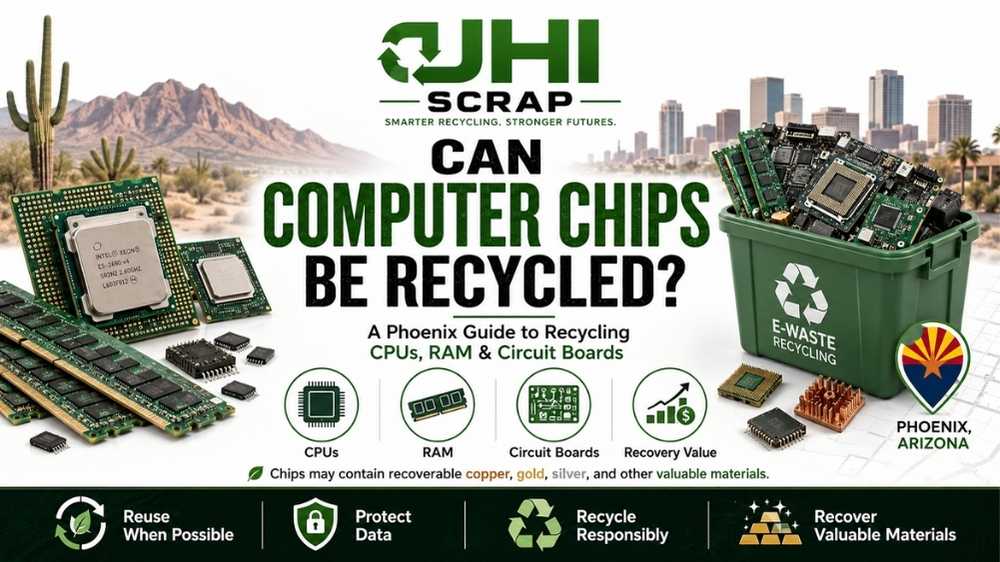
Can Computer Chips Be Recycled?
Yes, computer chips can be recycled. The useful answer is not simply yes, though. Chips need trained handling, careful sorting, and proper downstream processing. Tossing them into a curbside bin will not do the job.
Most chips hold tiny amounts of copper, gold, silver, palladium, and other materials. Those amounts look small in one device. They become meaningful across trays, boards, servers, and production leftovers. Small hinges can swing big doors.
Phoenix homes and businesses often store retired electronics for years. Closets fill, warehouse shelves sag, and nobody wants the data risk. The right recycler turns that pile into a clear plan. You get more space, fewer worries, and useful materials back in circulation.
This guide explains what recyclers can recover from chips. It also covers safety, value, data, pickup, and Phoenix options. You will know what to ask before choosing a recycler. You will also know how to prepare a load without making a mess.
The short answer: computer chips are recyclable
Computer chips are recyclable through specialized electronics recovery systems. A recycler first identifies the chip type and its current condition. Reusable parts may return to the market. Damaged or obsolete parts move toward material recovery.
Think of a chip as a tiny layered sandwich. It may include silicon, copper, resins, ceramics, and metal contacts. Each layer needs a different recovery path. A kitchen recycling bin cannot separate those materials safely.
The word “recyclable” also needs context. A chip may be technically recyclable but costly to process alone. Larger, sorted quantities usually improve the economics. As folks say, many hands make light work.
The best first step is a professional evaluation. JHI offers recycling IC chips for qualifying surplus material. The team can review form, volume, condition, and likely recovery options. That avoids guesswork before anything moves.
What counts as a computer chip?
A computer chip is a packaged electronic circuit used inside larger equipment. People often mean processors, memory chips, or controller chips. Recyclers may use broader terms like integrated circuits or semiconductor components. The label matters because values and handling needs differ.
Common examples include CPUs, RAM chips, BGA packages, microcontrollers, and flash memory. Other loads include SMD components, telecom boards, server boards, and industrial controls. A tray of unused parts differs from a broken household laptop. Apples and oranges need separate baskets.
Some chips remain attached to printed circuit boards. Others arrive loose, boxed, tubed, taped, or stored on reels. Manufacturers may also hold canceled stock with traceable part numbers. That clean surplus can have reuse value before material recovery begins.
Avoid calling every electronic part a chip. Capacitors, batteries, heat sinks, and connectors need different handling. Clear photos and part labels help a recycler sort the load. Better descriptions also produce better quotes.
What materials are inside computer chips?
Computer chips contain several materials that recyclers may recover. The main body often includes silicon and protective resin. Internal connections can include copper, gold, silver, or aluminum. Packages may also include ceramics, solder, and metal lead frames.
The amounts depend on chip age, package style, and manufacturing method. Older ceramic processors can differ greatly from modern plastic packages. High-performance server parts differ from low-cost consumer controls. The devil is in the details.
The surrounding circuit board may hold more recoverable metal than one chip. Boards include copper pathways, connectors, solder, and plated contacts. That is why recyclers often evaluate whole assemblies. Removing parts without a plan can reduce value and create hazards.
The U.S. EPA notes that electronics contain metals, plastics, and glass. Its electronics donation and recycling guidance explains why proper recovery saves resources. That broader view matters. Recycling is not only about finding a speck of gold.
Why chip recycling is harder than can recycling
Chip recycling is harder because each part combines many materials. Aluminum cans hold one main metal stream. Chips pack metals, polymers, silicon, and coatings into millimeters. Separating them takes equipment, controls, and downstream partners.
The materials also appear in very small concentrations. A home chemical trick may look easy online. In practice, acids, fumes, heat, and contaminated residue create real danger. You should never burn, crush, or chemically strip chips at home.
Professional processors use controlled systems. Methods may include dismantling, size reduction, screening, magnetic separation, and density separation. Qualified partners may use refining or controlled chemical recovery. There is more than one road to Rome.
Economics also matter. A clean tray of identified chips may justify detailed evaluation. Mixed household scraps may move through a broader e-waste stream. A trusted recycler should explain that difference without smoke and mirrors.
How the computer-chip recycling process works
The process starts with identification, sorting, and a clear chain of custody. Recyclers do not simply throw every device into one grinder. They look for reuse, data risk, hazardous parts, and material categories. The order protects value and reduces mistakes.
Next comes controlled dismantling or separation. Workers may remove batteries, drives, heat sinks, and other components. Boards and loose chips then move into matched processing streams. Measure twice, cut once works well here.
Mechanical systems can reduce and separate material by size, weight, magnetism, or conductivity. Other processors use smelting or hydrometallurgical methods under controlled conditions. The exact route depends on material, volume, and downstream capability.
Finally, recovered materials return to manufacturing supply chains. Reusable components may find a second market first. Metals can become feedstock for new products. Residual materials need documented, responsible handling.
Step 1: inventory and initial evaluation
Inventory answers what you have, how much exists, and what condition it is in. A simple count can separate trays, loose chips, boards, and complete devices. Part numbers help identify possible reuse. Photos help the recycler prepare before pickup.
Businesses should note ownership and project source. A server refresh differs from canceled manufacturing stock. A school cleanout differs from a semiconductor lab shutdown. Knowing the source supports records and compliance.
Do not spend days counting every tiny part without guidance. Start with rough quantities, box counts, and representative photos. The recycler can request more detail if needed. Do not make a mountain out of a molehill.
Step 2: separate reusable parts from scrap
Reuse can preserve more value than immediate material recovery. Unused parts may retain labels, packaging, and traceability. Working systems may also support resale, redeployment, or parts harvesting. Recycling should not destroy value too early.
Age alone does not decide reuse. Demand, condition, storage, and authenticity all matter. Moisture exposure can affect components. Bent leads or missing labels can reduce options.
Obsolete parts can still serve legacy equipment. However, some parts have no practical secondary market. A qualified evaluator should compare both paths. Do not count your chickens before they hatch.
Step 3: protect data-bearing parts
Some chips can store data even after power disappears. Flash memory, EEPROM, embedded storage, and security modules need attention. A CPU usually is not the main storage risk. Drives and memory devices deserve a separate review.
Businesses should define required sanitization or destruction before pickup. Records may need asset identifiers, methods, dates, and responsible parties. The importance of data destruction grows with customer, employee, medical, or financial records.
Never assume deleting files clears every device. Data can remain on drives and storage chips. When in doubt, disclose the equipment type to the recycler. Better safe than sorry fits perfectly here.
Step 4: dismantle and sort safely
Safe dismantling removes parts that need separate treatment. Batteries are a common example. Screens, lamps, and certain power supplies also require care. Loose sharp metal can injure workers during sorting.
Sorting improves recovery quality. Recyclers may separate high-grade boards, low-grade boards, ceramic parts, and plastic packages. Clean streams reduce contamination. They can also improve pricing confidence.
Do not break chips from boards with hammers or torches. That can scatter fragments and expose workers. Let trained teams choose the right method. Haste makes waste.
Step 5: recover metals and other materials
Material recovery separates valuable fractions from the remaining package. Mechanical steps often come first. These steps can screen particles, remove ferrous material, and divide conductive fractions. Specialized refiners handle later recovery.
Gold receives attention because it resists corrosion. Copper often represents more total mass. Silver and palladium may also appear in some components. The best recovery target depends on the whole load.
No honest recycler should promise identical yields from every chip. Designs change across years, makers, and device classes. Recovery is closer to mining a mixed ore. Every batch tells a different story.
Step 6: document the outcome
Good documentation shows what entered the process and what happened next. Businesses may need weights, asset lists, pickup records, and destruction records. Sustainability teams may also need diversion or recovery information.
Ask which documents are standard and which cost extra. A homeowner may only need a receipt. A healthcare office may need stronger records. One size does not fit all.
Keep final records with the project file. That helps with audits, asset controls, and future cleanouts. It also makes the next project faster.
Can old CPUs, RAM, and circuit boards be recycled?
Old CPUs, RAM, and circuit boards can usually enter electronics recycling streams. Their exact value varies widely. Clean, sorted parts often receive better evaluation than mixed boxes. Complete devices may still be accepted too.
CPUs can use plastic, ceramic, pin-grid, land-grid, or ball-grid packages. RAM sticks combine memory chips with a printed circuit board. Motherboards contain processors, sockets, connectors, and many supporting components. Each category has a different material profile.
Industrial boards may carry uncommon parts or valuable connectors. Telecom and server boards can differ from basic consumer boards. Scrap value depends on grade, condition, quantity, and current downstream markets. You cannot judge a book by its cover.
Send photos before removing parts. A recycler may prefer complete boards for safe processing. Unnecessary dismantling can consume time and lower resale options. It can also scatter small pieces around a shop.
Which chip-containing items can a recycler accept?
Acceptance depends on the recycler, the item, and the project size. Common categories include computers, servers, networking gear, industrial controls, and circuit boards. Manufacturing surplus may include reels, tubes, trays, and boxed components.
Other examples include test equipment, telecom devices, printers, and embedded systems. Schools may have carts, lab equipment, and old classroom computers. Offices may have desktop fleets, switches, and backup systems. Every load has its own mix.
Ask about monitors, televisions, batteries, lamps, and damaged devices separately. Those items can carry special fees or handling rules. Do not assume a computer quote covers every nearby item. Read the fine print.
JHI works with electronic scrap, industrial surplus, and IT assets. Call before bringing material to the Phoenix location. Public visits are by appointment. That small step prevents a wasted drive.
Are computer chips worth money when recycled?
Some computer chips have resale or recovery value, but not every load earns payment. Value depends on part identity, condition, quantity, cleanliness, and market demand. Processing and logistics costs also affect the result.
Unused, traceable surplus can be more valuable than scrap. Organized trays may support testing or resale. Mixed broken components usually depend on commodity recovery. The early bird catches the worm when inventory is still clean.
Do not trust a quote based only on one photo of a gold-colored contact. Ask whether pricing depends on final weight, grade, testing, or settlement. Also ask about deductions, freight, containers, and special items.
A clear evaluation should explain the likely route. It should separate reuse value from recycling value. It should also identify any fees before pickup day. That clarity matters more than a flashy headline price.
What affects the price of computer-chip recycling?
Price follows material value minus the work needed to recover it. Clean, labeled, separated loads are easier to evaluate. Mixed equipment needs more labor. Hazardous parts or remote logistics can add cost.
Key factors include chip package, board grade, total weight, contamination, and reuse demand. Freight, pallets, labor, and documentation also matter. Current metal markets can shift settlement values. A rising tide lifts some boats, not every box.
Ask for a written explanation of the quote basis. Fixed quotes can help small projects. Weight-based settlements may suit large commodity loads. Reuse projects may require testing before final value is known.
Avoid offers that hide conditions until collection. Surprise charges damage trust. A good recycler explains likely fees, exclusions, and timing early. That is how no-surprises service should work.
Can you recycle chips at home?
You should not process computer chips at home. Home recovery methods can involve toxic fumes, corrosive chemicals, fire, and contaminated waste. The small metal return rarely justifies the danger.
Do not burn boards, melt solder, crush packages, or use acid baths. Videos can hide ventilation, permits, waste treatment, and professional controls. What looks simple on camera can become dangerous fast. If it sounds too good, it probably is.
Homeowners can still prepare responsibly. Keep devices dry, separate loose batteries, and avoid broken glass. Place small chips in sealed containers. Label boxes by item type when possible.
Then contact a legitimate electronics recycler. Describe the volume and any damaged batteries. Ask about appointment rules and fees. Safe handoff is the smart do-it-yourself step.
Does recycling computer chips protect your data?
Recycling can protect data only when the process includes proper sanitization or destruction. Material recovery alone is not a data policy. You must identify every data-bearing device before the load leaves your control.
Hard drives, solid-state drives, flash cards, and some embedded modules can retain data. Network devices may store configurations or credentials. Printers and copiers can hold job history. Out of sight should never mean out of mind.
Ask whether the recycler wipes, shreds, or physically destroys media. Then ask what record you receive. Business projects may need serial-level tracking and a certificate. Requirements should match your policies and legal duties.
JHI can help route retired equipment through IT asset disposition planning. That connects recycling with inventory and security decisions. It also reduces the chance that a drive slips through unnoticed.
What are the environmental benefits?
Chip recycling keeps useful materials in circulation and reduces unmanaged disposal. Electronics require mining, refining, manufacturing, and transport. Recovering materials can reduce pressure on new resource extraction.
Responsible handling also keeps problem materials away from ordinary trash. Batteries can create fires. Other components may contain substances needing controlled treatment. Waste does not vanish when a truck leaves.
The wider topic is called electronic waste recycling. It includes collection, reuse, dismantling, separation, and material recovery. Chips are one small but important part. Every little bit helps.
For a practical overview, review the benefits of computer recycling. The strongest choice supports both recovery and reuse. It should also provide a clear downstream path.
Why Phoenix heat changes storage decisions
Phoenix heat makes long-term electronics storage a poor default. Garages, sheds, trailers, and outdoor cages can become extremely hot. Heat can damage batteries, plastics, labels, and packaging. Dust adds another layer of trouble.
Swollen or damaged batteries deserve special care. Do not pile them with loose metal or chips. Isolate the device and ask the recycler for instructions. Where there is smoke, there may be fire.
Businesses should stage equipment in a dry, secure indoor area. Use sturdy boxes, pallets, or labeled carts. Keep data-bearing assets behind controlled access. Avoid leaving the load on a sunny dock for days.
Schedule pickup soon after the inventory is ready. That reduces clutter and handling. It also protects reuse value for working equipment. In the desert, time and shade both matter.
How Phoenix homes should prepare old electronics
Phoenix residents should start by separating devices, cords, batteries, and loose parts. Do not place electronics in curbside recycling. Contact the recycler before driving over. Accepted items and fees can change by type.
Back up needed files before releasing computers. Sign out of accounts and remove activation locks. Then follow the recycler’s data instructions. Do not rely only on dragging files into the trash.
Pack loose chips in a small sealed container. Keep sharp boards inside a sturdy box. Tape exposed battery terminals when the recycler advises it. An ounce of prevention is worth a pound of cure.
JHI’s Phoenix site is at 3334 W McDowell Road, Unit 17. Visits are by appointment. Call (602) 272-4033 before arriving. Weekday hours are listed as 8:00 a.m. to 4:30 p.m.
How Phoenix businesses should prepare a larger load
Phoenix businesses should build a simple inventory before requesting pickup. Count major asset types and estimate boxes or pallets. Note data-bearing equipment, damaged batteries, and heavy items. Photos help the recycler plan labor and transport.
Separate reusable surplus from broken scrap when practical. Keep labeled parts in original packaging. Do not mix chemicals, lamps, or unknown liquids with electronics. Clean streams support safer work and better valuation.
Name one project owner for questions and access. Confirm dock rules, building hours, insurance needs, and loading equipment. Too many cooks can spoil the broth.
Request the quote, scope, and records in writing. Ask about pickup timing and final reporting. Keep the handoff record with asset retirement documents. That makes future audits much easier.
How to choose a trustworthy chip recycler
A trustworthy recycler explains the full path before taking your material. The company should describe accepted items, data handling, fees, pickup, and downstream processing. Vague promises are not enough.
Ask how the team decides between reuse and recycling. Ask who handles final recovery. Request relevant records for your project. Proof beats puffery every time.
Look for a real address, working phone, clear hours, and appointment guidance. Review the written quote for exclusions. Check whether the company understands industrial parts and IT assets. The proof is in the pudding.
JHI has served the electronics and industrial-surplus market since 1980. The business works from central Phoenix. Its focus includes e-scrap, IT assets, and surplus electronics. That local history can make project discussions more grounded.
Questions to ask before booking
The best questions expose cost, security, and processing details early. Ask them before pickup or drop-off. A confident provider should answer plainly. No answer is also an answer.
- Do you accept loose chips, circuit boards, and complete computers?
- Do you evaluate parts for reuse before material recovery?
- Which items carry fees, and when will I know the total?
- How do you handle hard drives and flash storage?
- What pickup minimums, access needs, or packing rules apply?
- Which receipt, weight ticket, or destruction record will I receive?
- Where does the material go after initial sorting?
- Can you handle industrial, school, office, or lab equipment?
Write down the answers and compare them across quotes. Do not compare only the pickup fee. A cheap load can become expensive after hidden labor or data risk. Penny wise and pound foolish is still a bad plan.
Red flags that deserve a pause
Red flags include cash-only pressure, vague downstream answers, and surprise fees. Another warning is a promise that every item has high scrap value. Real values vary. Real processors explain why.
Be cautious if a provider cannot discuss data-bearing devices. A general recycling claim does not prove secure destruction. Also avoid anyone suggesting home burning or chemical stripping. That advice puts people and property at risk.
Watch for unclear ownership after pickup. Your records should show when control changed. Business projects need a named contact and defined scope. Better the devil you know than a mystery truck.
Finally, check the address and appointment rules. Confirm the person answering represents the listed business. A five-minute verification can prevent hours of cleanup later.
A simple decision guide: reuse, recycle, or destroy
Choose reuse when equipment works and data can be safely removed. Reuse often preserves the most value. It can also extend the useful life of parts. Condition and market demand still decide the outcome.
Choose recycling when parts are broken, obsolete, contaminated, or unsellable. Material recovery can reclaim metals and reduce landfill disposal. It should follow controlled, documented channels. Waste not, want not.
Choose destruction when policy or risk requires it. Data media may need shredding or another verified method. Counterfeit, recalled, or controlled parts may also need special treatment. Never mix destruction requirements with ordinary resale.
Many projects use all three paths. Working systems go to reuse. Failed boards go to recycling. Sensitive storage goes to destruction. A strong recycler should separate those decisions clearly.
How JHI can help in Phoenix
JHI can evaluate chips, boards, surplus electronics, and retired IT equipment. The team serves Phoenix and Maricopa County from its McDowell Road location. Projects may include pickup or appointment-based drop-off. Availability depends on material and scope.
The practical advantage is one conversation about several asset types. A business may have chip trays, test equipment, old servers, and damaged boards. Splitting that project across vendors can create gaps. Many roads lead home, but one map helps.
Start with photos, rough quantities, and your preferred timing. Mention data-bearing devices and site access. Ask for a free evaluation and written expectations. Clear input supports a faster, clearer answer.
You can learn more about JHI Scrap before scheduling. Then call (602) 272-4033 or use the website contact path. Confirm the appointment before visiting Unit 17.
Frequently asked questions
Can computer chips go in curbside recycling?
No, computer chips should not go in curbside recycling. Municipal systems are built for common containers and paper. Small electronics can jam equipment or contaminate other streams. When in doubt, keep it out.
Collect chips and related devices in a sturdy container. Then contact an electronics recycler. Ask whether the recycler wants loose chips separated from boards. Follow local pickup or appointment instructions.
Are gold computer chips worth recycling?
Gold-bearing chips can be worth recycling in suitable quantities. Gold is only one part of the value. Copper, silver, palladium, reuse demand, and processing costs also matter. All that glitters is not gold.
Do not remove contacts with heat or chemicals. Send photos and package details to a recycler. A proper evaluation is safer and more accurate.
Can laptop processors be recycled?
Yes, laptop processors can enter a professional electronics recycling stream. The recycler may evaluate the whole laptop first. Working systems or parts can carry reuse value. A bird in the hand can be worth two in scrap.
Keep the processor installed unless the recycler requests removal. That protects pins, labels, and surrounding components. It also reduces damage during transport.
Can RAM sticks be recycled?
Yes, RAM sticks can usually be reused or recycled. Their memory chips sit on printed circuit boards. The module may have value when it works and matches demand. Old habits die hard, but old memory can still help.
Sort RAM by type when practical. Keep labels visible and avoid bending modules. Do not mix them with batteries or loose screws.
Do computer chips contain personal data?
Some computer chips can retain data, but many do not store personal files. Flash memory and embedded storage deserve special attention. CPUs usually are not the main storage device. Knowledge is power here.
Identify every drive, memory card, and storage module. Ask for the right sanitization or destruction method. Do not assume recycling alone removes data.
How much does computer-chip recycling cost?
Cost depends on volume, grade, labor, logistics, and special handling. Some loads may earn value. Other loads may carry fees. There is no free lunch.
Request a written evaluation before booking. Include photos, quantities, and pickup details. Ask which conditions could change the final amount.
Will a recycler pick up chips and computers?
Many recyclers offer pickup for suitable business or bulk loads. Minimums, routes, and fees vary. Small residential quantities may require appointment-based drop-off. The squeaky wheel gets the grease, so ask directly.
Share the site address, access limits, pallet count, and item mix. That helps the recycler quote the correct vehicle and crew.
Should I remove chips from circuit boards first?
Usually, you should leave chips attached unless the recycler asks otherwise. Whole boards can be safer to handle. They also preserve context for grading and reuse. Do not fix what is not broken.
Removing parts can bend leads and scatter fragments. It may also consume more labor than the recovered value supports.
What happens to the plastic around a chip?
The package material follows the recycler’s selected processing route. Mechanical and thermal systems separate useful fractions differently. Not every resin becomes a new plastic product. Every cloud has a silver lining, but not every residue does.
Ask the recycler how residual material is managed. Responsible handling includes the parts that have little value.
Is computer-chip recycling legal in Arizona?
Professional electronics recycling is legal in Arizona. Specific handling duties depend on material, business type, and data obligations. Rules can also differ for hazardous or regulated waste. Ignorance is not bliss.
Businesses should confirm requirements with qualified advisors when stakes are high. A recycler can explain service practices. It cannot replace legal advice for every industry.
Ready to clear out old chips and electronics?
Computer chips can be recycled, but the right path starts with a clear evaluation. Sort the load, identify data risks, and ask about costs. Then choose a recycler that explains the full process.
Phoenix heat makes long storage risky and inconvenient. A scheduled handoff can free space before equipment degrades. It can also recover value from clean surplus. Strike while the iron is cold and safely packed.
JHI works with chip scrap, circuit boards, surplus electronics, and retired IT assets. The company offers free evaluations for suitable projects. Pricing and pickup details depend on the load.
Get your free evaluation by calling (602) 272-4033. You can also request a pickup through the JHI website. Expect clear questions, upfront terms, and no surprises on pickup day.