
Can E-Waste Be 100% Recycled? What’s Actually Recoverable
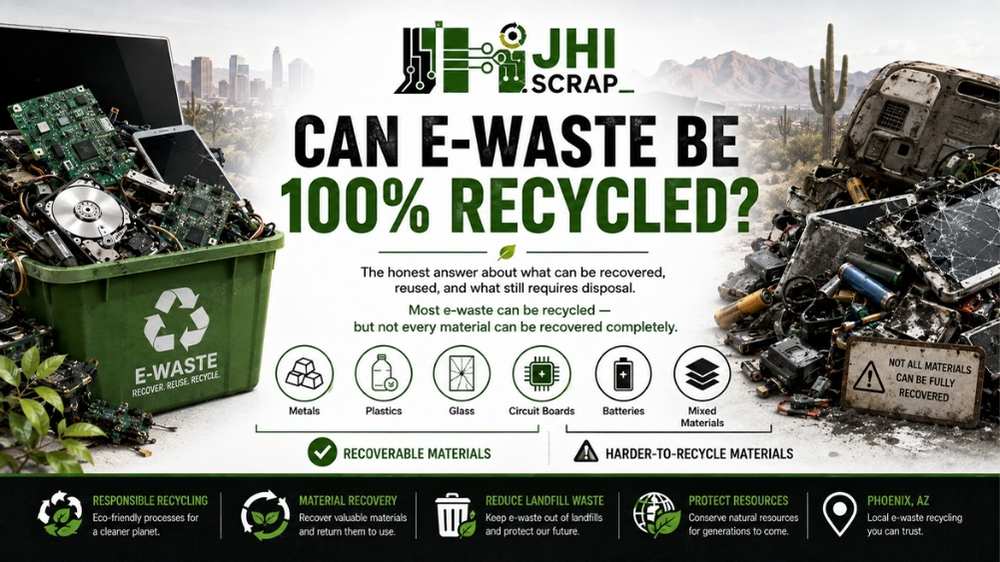
No, e-waste cannot be recycled 100% in today’s real-world system. Many materials can return to use. Others become waste during sorting, treatment, or refining. That honest answer matters in Phoenix. Old devices can hold valuable metals and risky materials. They may also contain private data. The best result is not a shiny percentage. It is documented reuse, recovery, and safe handling. Here is what that looks like.
What “100% Recycled” Really Means
“100% recycled” can describe several very different outcomes. Collection, recovery, and landfill diversion are not interchangeable. In Phoenix, mirages teach us that labels are not always outcomes.
Electronic waste includes discarded products with plugs, batteries, or electronic parts. Yet one device may contain dozens of materials. Can every screw, chip, coating, and battery become new material again?
Three numbers help separate promise from proof:
- Collection rate: The share of discarded electronics reaching a formal program.
- Reuse rate: The share of equipment or parts used again.
- Material recovery rate: The share becoming usable metal, plastic, or glass feedstock.
- Diversion rate: The share kept away from landfill, sometimes through other treatment.
The global picture shows the collection gap. The Global E-waste Monitor 2024 reported 62 million metric tons in 2022. Only 22.3% was formally collected and recycled.
That figure does not set one device’s recovery rate. It shows how much material never reaches documented recycling. Good recycling starts before any machine begins sorting.
What Parts of E-Waste Are Actually Recoverable?
Metals are usually the strongest recovery candidates in e-waste. Plastics, glass, batteries, and composite parts bring more limits. Around the Valley, every ounce matters when a load gets heavy.
The U.S. EPA names metals, plastics, and glass as valuable electronic resources. One million recycled phones may yield 35,000 pounds of copper. They may also yield 772 pounds of silver and 75 pounds of gold.
| Material or part | Common examples | Likely recovery path | Main limit |
|---|---|---|---|
| Steel and iron | Cases, frames, racks | Magnetic separation and metal refining | Coatings and mixed attachments |
| Aluminum | Housings, heat sinks | Sorting, melting, and new aluminum products | Alloys and attached materials |
| Copper | Cables, motors, circuit boards | Granulation, smelting, and refining | Fine wire and insulation losses |
| Gold, silver, palladium | Chips, connectors, circuit boards | Specialized precious-metal refining | Tiny amounts and complex chemistry |
| Reusable components | Servers, test gear, memory, power supplies | Testing, resale, repair, or parts harvesting | Age, damage, demand, and data risk |
| Plastics | Cases, keyboards, printer bodies | Polymer sorting and plastic reprocessing | Mixed resins, labels, and flame retardants |
| Glass | Flat panels and older screens | Specialized glass treatment | Coatings, lead, and weak local markets |
| Lithium-ion batteries | Laptops, phones, backup units | Separate battery processing | Fire risk and changing battery chemistry |
| Rare or critical materials | Magnets, displays, small components | Specialized recovery when practical | Low concentration and limited capacity |
The device type changes the result. A metal-heavy server differs from a glued tablet. Our guide to what counts as e-waste helps sort the pile first.
JHI Scrap focuses on industrial electronics and valuable electronic surplus. That includes servers, circuit boards, cables, test equipment, and electronic components. JHI does not list CRT computers among accepted items.
Why Can’t Every Last Material Be Recovered?
Some electronic materials resist safe and practical separation. Modern devices pack many layers into little space. That design can turn one product into a tightly tied knot.
Mixed plastics create a major barrier. Cases may contain several resins and flame retardants. Labels, paint, foam, and metal inserts add more work.
Tiny material amounts can cost too much to isolate. A chip may contain valuable metals. Yet recovery still needs enough volume and suitable refining.
Hazardous parts need controlled treatment. Lead, mercury, and some flame retardants need special care. The World Health Organization warns against unsafe burning and crude dismantling.
Damage can remove reuse options. Heat, moisture, swollen batteries, and broken boards reduce value. Phoenix garages can become ovens during summer
Local markets affect the final path. A material needs an approved downstream buyer. What good is a recycling claim without a clear downstream path?
This is where the rubber meets the road, even near Loop 202. A trustworthy recycler explains both recoveries and leftovers. It does not hide behind one perfect number.
How Responsible E-Waste Recycling Works in Phoenix
Responsible recycling follows a planned path from intake through final records. Good sorting keeps sand from clogging every gear. Each step protects value, safety, or data.
- Inventory and intake: Staff record equipment types, counts, and condition.
- Reuse review: Working assets may qualify for resale, repair, or parts recovery.
- Data handling: Storage devices receive wiping or physical destruction when required.
- Safe removal: Batteries, lamps, and other sensitive parts leave the main stream.
- Dismantling: Workers separate boards, metals, cables, plastics, and reusable parts.
- Commodity processing: Specialized partners refine or reprocess separated materials.
- Reporting: Business customers receive records suited to their project needs.
JHI’s electronics recycling services cover computers, servers, networking gear, and industrial electronics. The service also covers circuit boards, components, cables, and selected test equipment.
Want a closer look after intake? See what happens to your electronics after reuse and recycling decisions begin. The path depends on condition, demand, safety, and material value.
Ready to clear a Phoenix electronics pile? Request a free evaluation from JHI. Call first, describe the load, and ask what the team can accept.
Why Reuse Comes Before Recycling
Reuse often preserves more value than breaking a working device apart. Use it up before breaking it down. That is plain desert sense.
A working server may support another operation. Test equipment may still have a buyer. Components may help repair another machine.
This path also avoids new manufacturing for a while. Recycling still matters when reuse fails. The best plan makes that decision item by item.
Businesses should ask about value recovery before shredding everything. Data rules may still require sanitization. Records should follow any resale or reuse path.
Which Items Need Separate Handling?
Batteries, screens, lamps, refrigerants, and data media need special planning. These items should not ride loose in a mixed load. As locals know, the sun forgives little careless storage.
Lithium-ion batteries can start fires when damaged or crushed. The EPA advises keeping them out of household garbage and curbside recycling. Tell the recycler about swollen, hot, or damaged batteries.
Older CRT screens may contain substantial lead. JHI’s current service page excludes CRT computers. Ask another qualified program before transporting them.
Lamps and some displays may contain mercury. Keep them intact and separate. Do not break them to save space.
Cooling equipment may contain refrigerants. It needs a suitable appliance or refrigerant program. Do not assume every electronics recycler accepts it.
Drives and phones may hold private data. Deleting files is not always enough. Review the importance of data destruction before planning a business cleanout.
How to Choose an Honest Phoenix E-Waste Recycler
Choose a recycler that can explain each step and every likely fee. Trust, but verify, works on McDowell Road too. Clear answers protect your budget and reputation.
Ask these questions before booking:
- Which exact items do you accept or reject?
- Will any item create a handling fee?
- Which assets may qualify for resale or value recovery?
- How do you protect drives and other data media?
- Can you describe your downstream recycling partners?
- What documents can you provide after processing?
- Do you handle pickup, drop-off, or both?
- Is public drop-off available without an appointment?
The Arizona Department of Environmental Quality encourages certified electronics recycling. It names R2 and e-Stewards as voluntary programs. The EPA also recommends certified recyclers for businesses and governments.
Certification can strengthen review, but buyers should still ask questions. Service scope and accepted items vary. So do data services, fees, and downstream routes.
Create one disposal plan for the whole project. It should cover reuse, data, pickup, records, and rejected items. That plan helps organize an office, school, or facility cleanout.
How to Prepare Electronics for Pickup or Drop-Off
Good preparation protects people, data, and recoverable value. Beat the heat before the heat beats your load. Phoenix summer storage needs extra care.
- List each device category and estimated quantity.
- Mark working equipment separately from broken equipment.
- Back up needed data before releasing any device.
- Ask how drives should arrive for secure handling.
- Isolate loose batteries and damaged battery devices.
- Keep equipment dry and away from direct sun.
- Do not crush screens, batteries, or circuit boards.
- Photograph valuable or serialized business assets.
- Confirm fees, appointment rules, and pickup details in writing.
JHI is open Monday through Friday, from 8:00 a.m. to 4:30 p.m. Public access is by appointment only. Call before visiting the McDowell Road facility.
That quick call prevents a wasted trip. It also helps the team plan space and handling. A smooth handoff starts with an accurate list.
FAQ: E-Waste Recovery in Phoenix
These short answers cover the most common recovery decisions. Phoenix rule of thumb says to call before loading the truck. Accepted items and fees can change by recycler.
Can a computer be completely recycled?
Not usually in the strictest sense. Metals and working parts may have strong recovery paths. Plastics, coatings, glass, and fine residues may not.
Does zero landfill mean 100% recycling?
No. Zero landfill describes one disposal outcome. It does not prove every material became new feedstock.
Are circuit boards worth recycling?
Often, yes. Boards may contain copper and precious metals. Value changes with board type, volume, condition, and current markets.
Can businesses recover money from old electronics?
Sometimes. Reusable equipment and valuable components may offset costs. A recycler should evaluate the load before promising payment.
Should batteries stay inside devices?
Ask the recycler first. Never force out a swollen or damaged battery. Keep damaged devices cool, isolated, and protected from impact
Does JHI accept walk-in e-waste?
JHI lists public access by appointment only. Call (602) 272-4033 before visiting. Describe every unusual, damaged, or oversized item.
The Honest Answer on 100% E-Waste Recycling
E-waste is not 100% recyclable under normal real-world conditions. Strong programs still recover substantial metals, parts, and reusable equipment. They also manage difficult fractions responsibly.
Many hands make light work, even under a desert sun. Your part is choosing a clear, accountable path. The recycler’s part is proving what happens next. JHI has managed industrial electronic surplus in Phoenix since 1980. Request a free evaluation or schedule a pickup discussion. Call (602) 272-4033 before bringing materials to the facility.