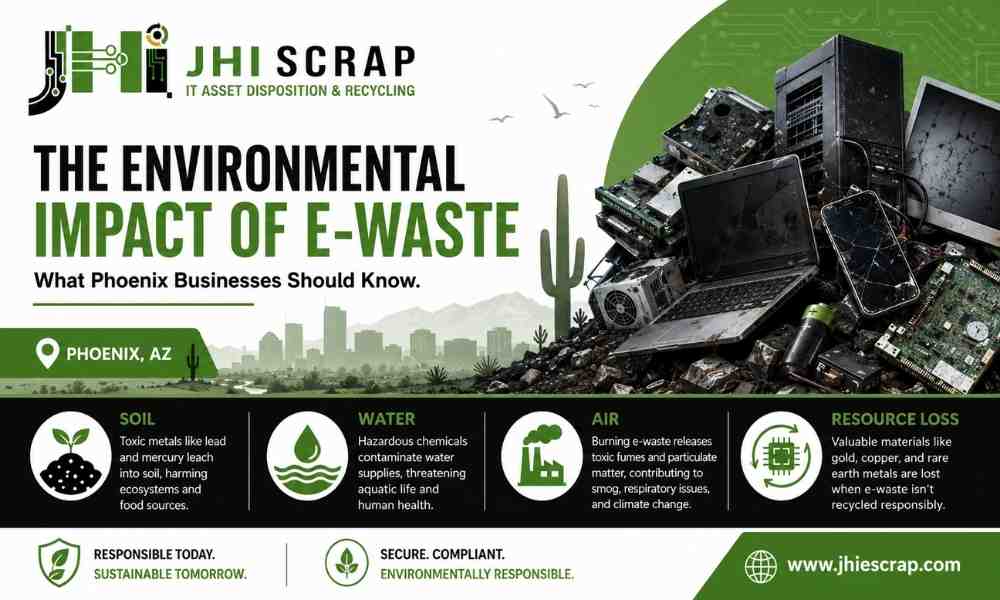
The Environmental Impact of E-Waste What Phoenix Businesses Should Know
What happens to an old laptop after it leaves your office? Most people never find out. It gets boxed up, hauled off, and forgotten. But old electronics do not vanish. They pile up, break down, and leak into the world around us.
E-waste is now one of the fastest-growing waste streams on the planet. Every upgraded server, retired phone, and dead monitor adds to it. And the impact reaches far beyond the trash bin. Electronic waste can poison soil, contaminate water, and foul the air we breathe.
For Phoenix businesses, this is more than an environmental headline. It is a question of responsibility, risk, and reputation. The good news? Once you see where e-waste really goes, the path to a cleaner choice gets a lot clearer.
What Is E-Waste?
Many people think e-waste means a couple of old computers. The reality is much bigger.
E-waste is any electronic device or equipment that has reached the end of its useful life. If it has a plug, a battery, or a circuit board, it likely counts. That includes the gear sitting in your storage closet right now.
And here is the part most folks miss. E-waste is not just a consumer problem. Businesses generate huge amounts of it through office upgrades, equipment refreshes, and aging IT systems. A single company can produce more electronic waste in one refresh cycle than a household makes in a decade.
That is why responsible electronics disposal matters for both homes and offices. The wider you define e-waste, the more clearly you see the scale of the issue.
Common Examples of E-Waste
The smartphone in your desk drawer may already be e-waste. So might half the gear in your server room. Common examples include:
- Laptops, desktops, and workstations
- Servers, storage systems, and data center hardware
- Routers, switches, and networking equipment
- Monitors, screens, and displays
- Circuit boards, processors, and components
- Cables, connectors, and copper wiring
- Phones, tablets, and old peripherals
If it powered on once and no longer earns its keep, it belongs in this list.
Why Electronics Become Waste So Quickly
Today’s newest device often becomes tomorrow’s waste. That is not an accident.
Technology moves fast, and devices are built to be replaced. Faster chips, better screens, and new software push old gear out of date in just a few years. Businesses feel this even harder, since slow or unsupported equipment can drag down productivity.
Planned obsolescence plays a role too. Many products are designed with short lifespans and limited repair options. Add shrinking replacement cycles, and the result is a steady flood of discarded electronics that keeps growing year after year.
Why E-Waste Is Different From Regular Trash
A cardboard box and a circuit board may both end up in a dumpster. But they do not create the same risk.
Regular trash mostly breaks down. E-waste does not. Electronics contain hazardous materials like lead, mercury, cadmium, and lithium. When they sit in a landfill, those materials do not disappear. They leach, leak, and spread.
Batteries can catch fire. Circuit boards can release toxins. And because many regions now restrict how electronics get tossed, treating e-waste like ordinary garbage can also create compliance headaches. This is exactly why you can’t just throw electronics in the trash in Phoenix.
Why Is E-Waste Bad for the Environment?
E-waste does not disappear when you throw it away. It simply changes location. And wherever it lands, it brings trouble with it.
The environmental damage from e-waste is wide and lasting. Toxic materials build up in the ground. Pollutants seep into water supplies. Harmful fumes drift into the air. And valuable resources get buried instead of reused.
Here is the short version of what e-waste puts at risk:
- Soil that grows our food and supports ecosystems
- Water that travels far beyond the original dump site
- Air that carries fumes and fine particles
- Resources like gold, copper, and silver that get lost for good
Each one of these connects to the next. Pollution in one place rarely stays put. The rest of this guide walks through each impact so you can see the full picture.
E-Waste Can Release Toxic Heavy Metals
The greatest risks are often the ones you cannot see.
Electronics are packed with heavy metals, and many of them are toxic. Lead shows up in older screens and solder. Mercury hides in certain switches and lamps. Cadmium lives in batteries and coatings. Each one carries serious health and environmental concerns.
When devices break apart or sit exposed, these metals can escape. They settle into soil and water and stay there for years. The danger is not loud or dramatic. It builds slowly, which is exactly what makes proper e-waste disposal so important.
Electronics Do Not Break Down Safely in Landfills
One discarded device can start a chain reaction that reaches far beyond the landfill.
Most electronics never break down the way organic waste does. They sit. They crack. And as they degrade, the toxic materials inside start to escape into the surrounding ground.
Rain makes it worse. Water moves through the waste, picks up contaminants, and carries them deeper. That toxic mix can then travel toward groundwater, which we will cover in the water section below. One buried monitor may seem small. Multiply it by thousands, and the landfill becomes a long-term pollution source.
Improper Recycling Can Create More Pollution
Recycling helps only when it is done correctly.
Not all recycling is equal. Informal operations often strip electronics in unsafe ways. They burn cables to reach the copper. They dump leftover materials with no controls. The result can pollute more than a landfill would.
Responsible recyclers work very differently. They use controlled processes, proper containment, and certified methods. That is the gap between a true environmental solution and a hidden problem. When you choose a certified e-waste recycling process, you make sure the cure does not become the cause.
Valuable Materials Are Lost When Electronics Are Thrown Away
Many discarded electronics hold materials that are far too valuable to bury.
Inside that old gear is real value. Circuit boards and components contain recoverable metals like:
- Gold
- Copper
- Silver
- Palladium
- Rare earth metals
Toss the device, and you toss all of it. Recover it, and those materials get a second life. In fact, you might be surprised how much gold is hidden in a ton of e-waste. This is where environmental harm and resource loss meet, and where smart recycling pays off twice.
How E-Waste Pollutes Soil
Pollution does not always start in rivers or the air. Sometimes it begins one layer beneath our feet.
When electronics break down in or near the ground, their contaminants move into the soil. At first you see nothing. The surface looks fine. But below it, heavy metals and toxins are settling in and spreading.
This matters more than most people realize. Soil is the foundation for plants, crops, and entire ecosystems. Once it is contaminated, the damage can pass into the food we eat and the water we drink. The sections below break down how it happens.
Heavy Metals Can Leach Into the Ground
The most dangerous pollutants are often the ones you never see.
As electronics corrode, the metals inside them seep into nearby soil. Lead, mercury, and cadmium are common culprits. Rain and moisture speed the process by pulling these toxins out of the waste and into the dirt.
The contamination is slow and quiet. It can take years to spread, and even longer to notice. By then, the affected soil may already be degraded. That is why covering multiple contaminants matters, since e-waste rarely leaks just one.
Circuit Boards, Batteries, and Screens Create Special Risks
A plastic bottle and a lithium battery may look similar in a trash bin. Their environmental impact is worlds apart.
Some components carry far more risk than others. Here are a few of the worst offenders:
- Batteries: lithium and other cells can leak corrosive, toxic chemicals and even ignite
- Circuit boards: packed with heavy metals and flame retardants
- Screens and displays: older units may contain lead and mercury
Different electronics demand different handling. That is why sorting and processing them correctly is not optional. It is the whole point of doing recycling right.
Soil Pollution Can Affect Plants, Animals, and People
What happens underground rarely stays underground.
Contaminated soil sets off a chain that reaches all of us. Plants absorb toxins through their roots. Animals eat those plants. People eat both. Step by step, pollution that started in the dirt works its way up the food chain.
It can also reach drinking water and farmland. That turns a local disposal mistake into a community health issue. When you protect the soil, you protect the people and wildlife that depend on it.
How E-Waste Pollutes Water
Like a stone dropped into a pond, pollution spreads farther than most people expect.
E-waste contamination does not stay where it starts. Toxins from soil and landfills move with water. They travel into groundwater, rivers, and the systems that supply our taps. A problem that began at one dump site can end up miles away.
This is closely tied to soil pollution. Contaminants leach into the ground, then water carries them onward. The reach is wide, and the cleanup is hard. The sections below show how the spread happens.
Landfill Leachate Can Reach Groundwater
Water can carry pollutants long after the electronics themselves are out of sight.
When rain filters through buried e-waste, it creates a toxic liquid called leachate. That leachate picks up heavy metals and chemicals as it moves. Then it sinks deeper, heading toward the groundwater below.
Groundwater feeds wells and drinking supplies for many communities. Once it is contaminated, fixing it is slow and expensive. That direct link to drinking water is what makes this risk feel so personal, and so worth preventing.
Informal Recycling Can Contaminate Rivers and Drainage Areas
Recycling is not automatically good for the environment. The process matters.
Unsafe recycling can pour pollution straight into waterways. Informal operations often rinse, burn, or strip electronics with no containment. The toxic runoff flows into drains, streams, and rivers nearby.
This is the clearest line between a responsible recycler and a careless one. A certified electronics recycler contains and treats these materials. An informal operator simply moves the pollution downstream.
Water Pollution Can Harm Aquatic Life
When waterways suffer, entire ecosystems pay the price.
Toxic water does more than look dirty. It disrupts life. Heavy metals build up in fish and other aquatic animals. Over time, that throws whole ecosystems out of balance and threatens biodiversity.
The harm does not stop at the water’s edge. Polluted fish populations affect the animals and people who rely on them. Healthy water keeps the whole system alive, which is one more reason recovery and responsible recycling matter so much.
How E-Waste Pollutes the Air
When people picture e-waste, they think of landfills. Few realize some of the damage ends up in the air we breathe.
Air pollution is the quiet part of the e-waste story. It does not pile up where you can see it. Instead, fumes and fine particles drift off during burning, shredding, and careless handling. Then they spread.
This side of the problem gets overlooked, but it deserves attention. Airborne pollutants can travel far and affect people who never touched the waste themselves. The sections below explain how it happens.
Burning Electronics Releases Toxic Fumes
What rises into the air does not simply disappear.
Burning electronics is one of the worst things you can do with them. Informal operators often torch cables and boards to reach the metal inside. That releases a toxic mix into the air.
The plastics, flame retardants, and metal components in electronics create dangerous fumes when burned. These pollutants harm air quality and public health for everyone nearby. Proper disposal keeps these materials out of the fire entirely.
Shredding and Dismantling Can Release Dust and Particles
Recycling protects the environment only when the process itself is controlled.
Even legitimate recycling can create airborne risks if it is done poorly. Shredding and dismantling break electronics into pieces. That process can throw dust and fine particles into the air, along with the toxins they carry.
Here is the difference. Controlled facilities use filtration, ventilation, and safety systems to capture that dust. Informal operations do not. The result is cleaner air and safer workers at one site, and exposure at the other.
Some Electronics Can Contribute to Climate Impact
The way electronics are handled today shapes tomorrow’s environmental footprint.
E-waste connects to the bigger climate picture too. Poor disposal wastes energy and releases emissions. Mining new materials to replace lost ones adds even more carbon to the total.
Recycling flips the equation. Recovering metals from old devices cuts the need for new mining and its emissions. So responsible recycling does not just reduce pollution today. It helps build a greener path forward.
Human Health Risks Connected to E-Waste Pollution
E-waste pollution is not only an environmental issue. It is also a human health issue.
The same toxins that harm soil, water, and air can harm people. Lead, mercury, and cadmium are linked to serious health effects. They can enter the body through contaminated air, water, food, or direct contact during unsafe handling.
Some groups face far more exposure than others. Workers who process e-waste are on the front line. Children and pregnant women are especially vulnerable. And entire communities can feel the effects when pollution spreads. This is the part of the story that hits closest to home, and it is a big reason responsible recycling matters. The sections below explain who is most at risk and why.
Workers Face the Highest Exposure Risk
Behind every recycling process are people who interact directly with discarded electronics.
Workers handle e-waste up close, so they carry the most risk. In informal settings, they may touch toxic materials with no protection, breathe in fumes, and work without safety controls. Over time, that exposure adds up.
Controlled recycling facilities change the picture completely. Proper equipment, ventilation, and procedures protect the people doing the work. Choosing a responsible recycler is also a choice to protect the workers behind the process.
Children and Pregnant Women Are More Vulnerable
Communities often measure environmental safety by how well they protect their most vulnerable members.
Some people are more sensitive to toxic exposure than others. Children are still developing, so heavy metals can do more damage to their growing bodies and brains. Pregnant women face risks that can reach the developing baby too.
This is not about fear. It is about prevention. When e-waste is handled correctly, these exposures drop sharply. Protecting the most vulnerable starts with keeping toxins out of the environment in the first place.
Possible Health Effects From Toxic Exposure
The effects of pollution rarely stop at the point of exposure.
Exposure to e-waste contaminants is linked to a range of health concerns, including:
- Respiratory problems from fumes and dust
- Neurological effects tied to lead and mercury
- Heavy metal buildup in the body over time
- Developmental risks for children and infants
The exact effect depends on the toxin, the amount, and the length of exposure. But the takeaway is simple. Less pollution means healthier communities, and responsible recycling is how we get there.
The Hidden Resource Loss of E-Waste
Many discarded electronics contain resources that are more valuable than people realize.
Throwing out electronics does not just create pollution. It throws away value. Every device holds materials that took energy and mining to produce. Bury it, and all of that is gone for good.
This is where the conversation shifts from harm to opportunity. The same gear that pollutes a landfill could fuel a circular economy instead. Recovered materials get reused, demand for new mining drops, and waste turns back into resource. Let’s look at what that really means.
Electronics Contain Precious and Industrial Metals
The value hidden inside old electronics often surprises people.
Your old gear is part metal mine. Inside those boards and components you will find:
- Gold in connectors and contacts
- Silver in conductors and solder
- Copper in wiring and boards
- Rare earth metals in magnets and specialty parts
These are not trace amounts when you add up volume across a business. Recovering them keeps real value in play instead of in the ground.
Throwing Away Electronics Increases the Need for Mining
Every material buried today may need to be mined again tomorrow.
Waste and mining are two sides of the same coin. When we discard recoverable metals, we have to dig up fresh ones to replace them. Mining is land heavy, energy heavy, and pollution heavy.
Recycling breaks that loop. Each pound of recovered metal is a pound that does not need to come out of a new mine. So responsible disposal protects natural resources twice over, once by saving what we have and once by reducing what we take.
Recycling Helps Recover Materials for Reuse
The good news is that many of these materials can be recovered and used again.
Recycling turns end of life into a new beginning. Certified recyclers extract metals and materials so they can go back into manufacturing. That same gold or copper gets a second life in a new product.
This is the heart of the circular economy. Materials stay in use instead of becoming waste. It is the practical fix that solves the environmental problem and the resource problem at the same time.
Environmental Benefits of Responsible E-Waste Recycling
Every recycled device represents one less environmental burden and one more recovered resource.
Responsible recycling is the clear win in this whole story. It takes everything we have covered and flips it from problem to solution. Toxins stay contained. Resources get recovered. Pollution drops across soil, water, and air.
For businesses, it is also a chance to lead. Recycling responsibly shows customers, staff, and partners that you take your impact seriously. Here is what the upside looks like in practice. You can also see the top benefits of e-waste recycling laid out in more detail.
Keeps Toxic Materials Out of Landfills
Responsible recycling creates a barrier between hazardous materials and the environment.
The first big win is simple. The toxins stay out of the ground. Certified recycling routes heavy metals and hazardous parts into controlled processing instead of a landfill. That stops the leaching, the leakage, and the slow contamination before it ever begins.
Less toxic waste in the ground means cleaner soil, safer water, and a lower long-term burden on the whole region.
Reduces Soil, Water, and Air Pollution
Protecting soil, water, and air means protecting entire ecosystems.
Responsible recycling cuts pollution on all three fronts at once. Contained processing keeps metals out of the soil. No dumping means no toxic runoff into water. No open burning means no fumes in the air.
It is one decision with three layers of benefit. When you recycle the right way, you are not solving one problem. You are heading off several at the same time.
Supports Resource Recovery and Circular Economy
In a circular economy, materials stay in use instead of becoming waste.
Recycling feeds resources back into the system. Recovered gold, copper, and rare metals return to manufacturing. That lowers the demand for new mining and keeps valuable materials in circulation.
This is the cycle working as it should. Old devices become raw materials for new ones. Nothing useful gets wasted, and the environment carries a lighter load.
Helps Businesses Manage Electronics More Responsibly
Responsible recycling protects both environmental goals and business operations.
For companies, recycling is also good operations. It clears out old gear, supports sustainability goals, and reduces risk. With IT asset disposition done right, you also protect data and recover value along the way.
It turns a messy chore into a clean, repeatable process. You meet your environmental commitments and keep your operation running smoothly. That is a win on both sides of the ledger.
Why Businesses Should Not Throw Electronics in the Trash
What leaves your office can still create problems long after it leaves your building.
For businesses, tossing electronics in the trash is a bigger gamble than it looks. The environmental risks are real. So are the operational, financial, and compliance risks. Business electronics come in volume, often carry sensitive data, and may fall under disposal rules you do not want to ignore.
This is the point where awareness turns into decision making. It is worth taking a hard look at how your company handles old equipment today. Many Phoenix businesses are surprised by how much risk a simple dumpster toss can create. The sections below break down the four big reasons to rethink it.
Business E-Waste Often Comes in Large Volumes
A household may replace one computer. A business may replace hundreds.
Scale changes everything. When you do an office upgrade, a data center refresh, or a full equipment replacement, the e-waste piles up fast. What is a small task at home becomes a real logistics challenge at work.
That volume is hard to handle through normal trash channels. It needs a process built for bulk. Working with a recycler who handles commercial loads keeps the whole thing organized and efficient.
Data Security Can Be a Concern
Deleting files is not always the same as destroying data.
Old business devices often hold sensitive information. Customer records, financials, and internal files can linger on drives long after you think they are gone. A simple delete or even a factory reset may not erase everything.
Toss a drive in the trash and that data can walk out the door with it. Responsible recycling includes secure data destruction, so you get peace of mind along with a clean conscience. If you want proof it worked, here is how to verify a hard drive wipe.
Compliance and Reputation Matter
Responsible disposal reflects how seriously a company takes its responsibilities.
How you dispose of electronics says a lot about your business. Environmental regulations are tightening, and improper disposal can create compliance exposure. It can also dent your reputation if customers or partners notice.
The flip side is a real advantage. Responsible recycling supports your sustainability goals and shows that your company keeps its commitments. If you operate locally, it helps to know Arizona’s e-waste regulatory landscape before you choose a path.
Many Electronics Still Have Recoverable Value
Some discarded electronics contain more value than businesses expect.
That old equipment may be worth more than scrap. Working units can be resold or redeployed. Even broken gear holds recoverable metals and components. Throw it away, and you throw away that value too.
Smart disposal treats electronics as assets, not just waste. With proper asset recovery, you can offset disposal costs and sometimes turn old gear back into cash.
Common Business E-Waste JHI Scrap Can Help With
Most businesses generate more recyclable electronics than they realize.
JHI Scrap handles the full range of business electronics. From server rooms to supply closets, the gear your company retires has a responsible path forward. Here are the categories we see most often, and the value hiding inside each one.
Servers and Data Center Equipment
Data centers generate some of the highest value e-waste streams. Rack servers, storage systems, and data center hardware are dense with recoverable materials and often carry sensitive data. JHI Scrap processes them with secure data handling and full material recovery, so you protect both your information and the environment in one move.
Routers, Switches, and Network Equipment
Even small networking devices add up quickly across an organization. Routers, switches, and telecommunications equipment tend to retire in batches during upgrades. Recycling them keeps a steady stream of metals and components out of the landfill and back into use.
Laptops, Computers, and Workstations
The most common business electronics are often the most overlooked. Laptops, desktops, and workstations pile up fast during refresh cycles. JHI Scrap recycles them responsibly, wipes any stored data securely, and recovers the materials inside so nothing useful goes to waste.
Processors, Circuit Boards, and Components
Small components often contain surprisingly valuable materials. Processors, circuit boards, and electronic components are rich in precious metals like gold and palladium. We recover these materials through controlled processing instead of letting them disappear into a dumpster.
Cables, Connectors, and Copper Wiring
Materials hidden inside wiring often stay valuable long after equipment becomes obsolete. Cables, connectors, and copper wiring hold real recoverable value. JHI Scrap recovers the copper and other metals cleanly, with none of the unsafe burning that informal operations rely on.
How to Reduce the Environmental Impact of E-Waste
The good news is that reducing e-waste often starts with simple decisions.
You do not need a huge overhaul to make a real difference. A few smart habits can cut your impact fast. The idea is to move down the chain in order. Reuse first, then resell or donate, then recycle what is left, and always work with a recycler you trust.
Here is the practical playbook, step by step. You can also dig into how to reduce corporate e-waste for more business-focused tactics.
Reuse or Repair Electronics When Possible
Sometimes the greenest device is the one you already own.
Before you replace, ask if you can repair. A new battery, a memory upgrade, or a simple fix can add years to a device. That is the single best environmental move you can make, because it skips waste entirely. Extending device lifespan keeps gear out of the recycling stream and saves money at the same time.
Donate or Resell Working Equipment
One company’s outdated equipment may still be valuable to someone else.
If a device still works, give it another life. Donate it to a school or nonprofit, or resell it to recover value. Either way, you extend the useful life of the equipment and keep it out of the waste stream. It is a clear win for your budget and the planet, and it supports circular economy goals.
Recycle Broken or Obsolete Electronics Properly
Recycling works best when the right materials reach the right facilities.
When a device truly reaches the end, recycle it the right way. Skip the dumpster and skip the random drop box. Choose a certified recycler that uses controlled, responsible processes. That is the difference between real environmental protection and pollution in disguise. The right facility keeps toxins contained and recovers the value inside.
Work With a Responsible Local Recycler
Environmental solutions often start close to home, and local recycling is no exception.
A trusted local recycler makes the whole thing easy. They know the regional rules, they handle pickup, and they keep your e-waste in safe, certified hands from start to finish. For Phoenix businesses, that means less hassle and more confidence.
It also keeps the environmental benefit close to home. Local recycling supports a cleaner Phoenix and a stronger local economy. Recycle with a partner you can count on, and the process stops feeling like a chore.
E-Waste Recycling in Phoenix, AZ
Environmental challenges may be global, but many solutions begin at the local level.
For Phoenix businesses, responsible e-waste recycling is right here and ready. You do not have to choose between doing the right thing and doing the easy thing. Local recycling makes them the same choice.
This is the moment to turn understanding into action. You know where e-waste goes and what it costs. Now you can put your old electronics on a cleaner path and help build a healthier city in the process. Local action really does add up.
Why Local Recycling Matters
The environmental health of a city often reflects the choices made by the businesses operating within it.
Local recycling keeps the benefit close to home. Electronics get handled nearby instead of shipped far away. That cuts transport impact, supports local jobs, and keeps your community cleaner.
It also builds trust. When you recycle through a local partner, you can see the process and stand behind it. Every Phoenix business that recycles responsibly helps shape the environmental health of the whole region.
How Phoenix Businesses Can Prepare Electronics for Recycling
Preparing electronics for recycling is often easier than many businesses expect.
A little prep makes pickup smooth. Follow these simple steps:
- Inventory your equipment so you know what you are recycling
- Separate reusable assets from broken or obsolete gear
- Remove sensitive data or flag drives for secure destruction
- Organize a pickup with your recycler for bulk loads
That is it. With a few minutes of sorting, you turn a daunting pile into an easy, organized handoff. For larger jobs, ITAD services in Phoenix can handle the heavy lifting for you.
Why Choose JHI Scrap for Business E-Waste
Businesses often need more than recycling. They need a partner that helps manage electronics responsibly.
JHI Scrap is built for business e-waste in Phoenix. Here is the challenge most companies face. They have volume to clear, data to protect, and value to recover, all at once. Handling that alone is tough.
That is where we come in. JHI Scrap brings secure data destruction, responsible recycling, and asset recovery under one roof. You clear out old gear, protect your information, and recover value, all while meeting your environmental goals. The result is simple. Peace of mind and a cleaner footprint. Reach out to JHI Scrap to set up your business e-waste recycling today.
Final Thoughts: E-Waste Is an Environmental Problem With a Practical Solution
The choices made today decide whether old electronics become pollution or valuable resources.
E-waste is a serious problem, but it is not a hopeless one. You have seen how it pollutes soil, water, and air. You have seen the health risks and the lost value. And you have seen the fix. Responsible recycling solves the environmental problem and recovers real resources at the same time.
The path forward is clear and within reach. Reuse what you can. Resell or donate what still works. Recycle the rest with a partner you trust. For Phoenix businesses, that path starts locally and pays off in cleaner surroundings and lower risk.
Old electronics do not have to become tomorrow’s pollution. With the right choice, they become tomorrow’s resources instead.
Old Electronics Should Not Become Landfill Waste
Throwing electronics away does not make their environmental impact disappear. It just moves the problem out of sight. The toxins still leach, the value is still lost, and the damage still spreads. Keeping old gear out of the landfill is the simplest way to reduce environmental harm and protect your community.
Recycling Protects the Environment and Recovers Value
Responsible recycling benefits both the environment and the organizations that take part. It is a true win-win. You keep toxins contained, cut pollution across soil, water, and air, and recover the gold, copper, and silver hiding inside old devices. For businesses, that environmental upside comes with real value recovery too.
Phoenix Businesses Can Take Action Today
Small actions taken by many businesses can create meaningful environmental change. You can be one of them. Phoenix companies have a local, certified partner ready to make responsible e-waste recycling simple. Start with one pickup, protect your data, recover your value, and help create a cleaner Phoenix. Contact JHI Scrap to take the first step today.
FAQs About the Environmental Impact of E-Waste
What is the environmental impact of e-waste?
E-waste pollutes soil, water, and air with toxic materials. When electronics break down in landfills, heavy metals like lead, mercury, and cadmium leach into the ground and spread to water supplies. Burning releases harmful fumes into the air. E-waste also wastes valuable resources like gold and copper that could be recovered and reused, which is why responsible recycling matters.
Why is e-waste dangerous?
E-waste is dangerous because it contains toxic materials that harm people and the environment. Electronics hold heavy metals like lead, mercury, and cadmium, plus hazardous battery chemicals. These toxins can leach into soil and water, release fumes when burned, and cause health problems through exposure. Regular trash mostly breaks down. E-waste does not, so it needs specialized handling.
How does e-waste affect soil?
E-waste contaminates soil when heavy metals leach out of discarded electronics. As devices corrode, lead, mercury, and cadmium seep into the ground, often pushed deeper by rain. Polluted soil then affects plants, animals, and the food chain. The damage is slow and hard to see, which makes proper disposal the best way to prevent it.
How does e-waste affect water?
E-waste pollutes water when toxins travel from landfills and soil into groundwater and rivers. Rain creates a toxic liquid called leachate that carries heavy metals into underground water supplies. Informal recycling can dump runoff straight into waterways. This contamination harms drinking water and aquatic life, often far from the original disposal site.
How does e-waste affect air quality?
E-waste harms air quality mainly through burning and poorly controlled processing. When electronics are burned to recover metals, plastics and flame retardants release toxic fumes. Shredding and dismantling can also create dust and fine particles. These airborne pollutants affect public health and can travel far from where the waste was handled.
Why should businesses recycle electronics?
Businesses should recycle electronics to manage risk, protect data, and meet compliance and sustainability goals. Company e-waste comes in large volumes and often holds sensitive data that a simple delete will not erase. Improper disposal can create compliance exposure and reputation damage. Responsible recycling protects information, recovers value, and supports environmental commitments all at once.
What valuable materials are found in e-waste?
E-waste contains precious and industrial metals worth recovering. Electronics hold gold in connectors, silver in conductors, copper in wiring, palladium in components, and rare earth metals in specialty parts. These materials are too valuable to bury in a landfill. Recycling recovers them so they can be reused, which also cuts the need for new mining.
Can e-waste be recycled?
Yes, most e-waste can be recycled when it reaches the right facility. Certified recyclers use controlled processes to safely extract metals and materials for reuse. This keeps toxins out of the environment and feeds resources back into manufacturing. The key is choosing a responsible recycler, since informal recycling can create more pollution than it prevents.
Where can businesses recycle e-waste in Phoenix?
Phoenix businesses can recycle e-waste with JHI Scrap, a local electronics recycling company. JHI Scrap handles servers, computers, networking gear, components, and copper wiring with secure data destruction and full material recovery. You can prepare equipment, organize a pickup, and recover value while staying compliant. Contact JHI Scrap to set up business e-waste recycling and help create a cleaner Phoenix.