
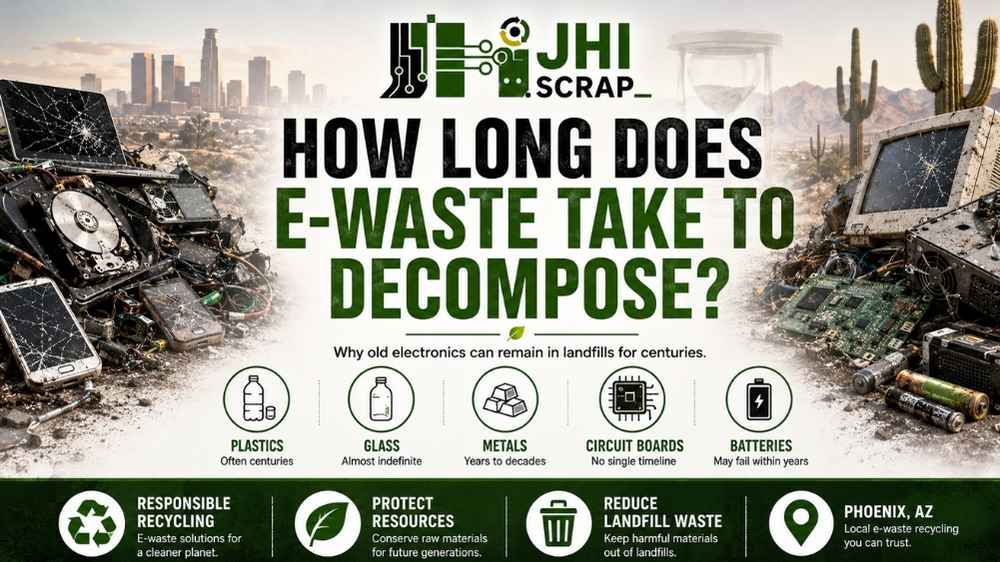
Old electronics can remain in a landfill for centuries, and some parts may never truly disappear. A phone, laptop, or server is not one material. It is a tight stack of plastic, glass, metals, resins, batteries, and chemicals.
Each layer reacts differently after disposal. Plastic may crack into smaller pieces without becoming harmless. Metals may corrode while their elements remain in the soil. Glass can survive for an almost unimaginable period.
That is the short answer. The useful answer needs more detail, especially for Phoenix homes and businesses. Around here, the desert keeps receipts. Heat, dust, and sudden monsoon moisture can punish stored electronics before anyone schedules removal.
The delay also creates risks unrelated to decay. Old drives may still hold customer records, payroll files, passwords, or family photos. Swollen batteries may become fire hazards. Mixed office equipment can lose resale value while sitting in a hot warehouse.
This guide explains the likely timeline for each major material. It also explains what can happen long before complete decomposition. You will learn how responsible recycling changes that outcome.
The direct answer: e-waste can last for centuries
E-waste can persist for hundreds of years because its parts resist natural decay. Some materials may remain much longer. There is no honest, universal countdown for one complete electronic device.
Think of e-waste as a layered time capsule. Every layer follows a different clock. A cardboard label may fade quickly. A steel frame may rust over decades. Plastic housing and glass may outlast several generations.
Scientists usually measure individual materials, not whole laptops or televisions. Device design also changes the result. A sealed phone behaves differently from a broken monitor. Landfill conditions change moisture, oxygen, sunlight, pressure, and temperature.
That makes exact claims like “a computer takes 500 years” too simple. The number sounds neat, but the product contains many materials. The better question asks what happens to each part over time.
The main material patterns are clear:
- Many electronic plastics persist for centuries and may fragment into microplastics.
- Glass changes very slowly and can remain almost unchanged on human timelines.
- Steel and aluminum corrode, but their elements do not biodegrade.
- Circuit boards contain durable resin, fiberglass, copper, and other metals.
- Batteries may leak, swell, or burn before their materials visibly break down.
- Cables combine metal with plastic insulation, so both timelines matter.
In Phoenix, “it can wait” often becomes “it has waited too long.” That local truth matters. Storage is not disposal, and age does not make a device safer.
The worldwide scale is also growing. The Global E-waste Monitor reported 62 million metric tons during 2022. Only 22.3% received documented formal collection and recycling. That broader electronic waste problem begins with everyday choices.
Why electronics do not decompose like food or paper
Electronics do not decompose normally because microbes cannot digest most device materials. Soil organisms easily process leaves, food scraps, and untreated paper. They cannot eat glass, copper, fiberglass, or flame-resistant plastic.
A landfill is storage, not a giant compost bin. Waste is packed tightly and covered. Oxygen, light, and water may stay limited. Those conditions can slow biological decay, even for ordinary organic materials.
Electronic products are also built for durability. Their cases resist drops, heat, oils, and daily handling. Circuit boards resist moisture and electrical stress. Cable coatings protect copper from abrasion and contact.
Those useful features become a problem after disposal. Durability follows the product into the waste stream. The same plastic that protects a laptop can persist after the laptop stops working.
Chemical change still happens. Sunlight can weaken exposed plastic. Water can corrode metal. Heat can damage batteries. Pressure can crack screens. Yet these changes are not the same as safe decomposition.
Breaking into smaller pieces can increase exposure. Tiny fragments can move through soil, dust, and water. Corrosion can release metal compounds. Fire can spread smoke and contaminated ash.
As the Valley saying goes, dry does not mean harmless. Phoenix has long dry periods. It also has dust, intense heat, irrigation, and seasonal storms. Conditions can change fast around sheds, loading areas, garages, and outdoor bins.
Responsible recycling avoids waiting for nature to solve an engineered product. Recyclers separate useful materials through controlled processes. Reuse, resale, parts recovery, and commodity recycling each beat indefinite storage.
E-waste decomposition time by material
E-waste decomposition time ranges from years of corrosion to centuries of persistence. Some materials never biodegrade in the usual sense. The estimates below show broad patterns, not guaranteed deadlines.
| Electronic material | What happens over time | Practical time frame |
|---|---|---|
| Plastic housings | Crack, fade, and fragment into smaller plastic pieces | Often centuries |
| Glass screens | Break physically but change very slowly | Extremely long, often treated as indefinite |
| Steel frames | Rust and corrode when moisture and oxygen reach them | Years to decades |
| Aluminum parts | Form a protective oxide layer, then corrode slowly | Decades or longer |
| Copper wiring | Tarnish and corrode, while copper remains present | Decades or longer |
| Circuit boards | Resin and fiberglass persist while metals corrode | No single reliable timeline |
| Lithium-ion batteries | Age, swell, leak, or ignite before full breakdown | Failure may begin within years |
| Rubber and cable coatings | Harden, crack, and fragment | Decades to centuries |
| Ceramic parts | Remain stable and break mainly through force | Very long or indefinite |
These ranges explain why one number fails. A desktop computer may lose its steel case first. Its glass, plastics, and board materials can remain far longer. A phone battery may become dangerous while the screen looks untouched.
Environmental conditions create wide variation. Sunlight speeds surface damage. Water supports corrosion. Low oxygen can slow many reactions. Heat can weaken adhesives and battery cells.
The material may also change shape without becoming safe. Rusted steel looks degraded, but iron remains. Powdered glass remains glass. Brittle plastic can become countless smaller plastic fragments.
Out in the Valley, time moves slowly until summer hits. That old saying fits stored electronics. A device may appear stable during winter. Then extreme garage temperatures stress its battery and seals.
Use the table for planning, not permission to delay. The risk starts before total decomposition. Data exposure, fire, leakage, and lost resale value can appear much earlier.
Plastic cases can remain for hundreds of years
Plastic electronic housings can persist for centuries because many polymers resist biological decay. Common electronics plastics include ABS, polycarbonate, PVC, and blended materials. Manufacturers may add pigments, fillers, and flame retardants.
Different formulas behave differently. Sunlight can make exposed plastic brittle. Heat can warp thin parts. Mechanical pressure can crack a case. None of those changes means the plastic became harmless.
Instead, larger pieces often become smaller pieces. Those fragments can move with dust, runoff, and landfill activity. Very small pieces may become microplastics. Their size makes collection much harder.
Electronic plastics can also be difficult to recycle together. Mixed resin types require sorting. Coatings, labels, screws, and flame retardants complicate processing. A responsible recycler separates materials or sends them to suitable downstream processors.
PVC cable insulation deserves care. Burning it can create dangerous emissions. Informal recovery sometimes burns insulation to expose copper. Controlled recycling avoids that unsafe shortcut.
Phoenix heat does not simply melt electronics away. It can speed aging without providing safe recovery. As locals know, the sun can cook a dashboard. It can also weaken stored plastic and adhesives.
Keep unused devices indoors when possible. Avoid direct sunlight and wet areas. Do not leave loose batteries in hot vehicles. Schedule recycling before brittle cases and damaged cells create extra handling problems.
Glass screens may remain almost indefinitely
Glass screens may remain for extremely long periods because glass resists biological decomposition. A broken screen becomes smaller glass, not soil. Its sharp edges can also create handling hazards.
Modern displays use more than ordinary glass. They may include coatings, polarizing films, adhesives, liquid crystal layers, backlights, or touch sensors. Older cathode-ray tube displays contain specialized glass and require careful management.
The screen can crack quickly during transport or compaction. Chemical change takes much longer. That difference matters. Physical breakage is not environmental disappearance.
Cracked displays can release loose fragments and dust. Damaged older equipment may contain materials needing specialized handling. Workers should not smash screens for easier storage. Breaking them can make safe processing harder.
Recycling routes vary by display type. Flat panels, phones, tablets, and older monitors need different steps. A recycler should identify the equipment before choosing a downstream path.
In Phoenix, glass can handle heat better than many battery cells. Adhesives and internal films may not. When the pavement shimmers, treat old displays gently. Heat-weakened assemblies can separate during movement.
Pack cracked screens upright when practical. Protect sharp edges. Tell the recycler about damage before pickup. Clear information helps crews bring suitable containers and protective gear.
Metals corrode, but they do not vanish
Metals in electronics corrode over time, but their elements remain in the environment. Steel becomes rust. Copper forms surface compounds. Aluminum develops an oxide layer. Precious metals resist corrosion longer.
Corrosion depends on air, water, salts, acids, and temperature. A dry indoor server rack may change slowly. A device near a roof leak may corrode much faster. Outdoor dumping creates even less predictable exposure.
Electronics contain useful metals. Copper appears in wiring and motors. Aluminum appears in frames and heat sinks. Steel supports cases and racks. Circuit boards can contain gold, silver, palladium, tin, and other metals.
Those materials have recovery value. Sending them to landfill wastes that value. It also increases demand for newly mined materials. Recycling keeps existing resources moving through the economy.
Not every old device produces a payment. Labor, testing, transport, sorting, and processing all affect value. Clean, organized business equipment may offer better recovery options than broken mixed waste.
The dust settles everywhere in Phoenix, but metal value can still hide underneath. That local saying works here. Good sorting helps a recycler identify reusable units, parts, wire, boards, and metal fractions.
Do not strip equipment without training. Sharp edges, charged capacitors, and damaged batteries can injure people. Leave difficult dismantling to a qualified team with proper equipment.
Circuit boards have no single decomposition deadline
Circuit boards have no reliable decomposition deadline because they combine many durable materials. A board may contain fiberglass, epoxy resin, copper, solder, coatings, ceramics, and mounted components.
The fiberglass and resin structure resists ordinary biological decay. Copper traces may corrode. Solder joints may change. Components may detach. Yet the complete board does not transform safely into natural material.
Printed circuit boards can also contain valuable metals. Their concentrations and values vary by board type. Telecom, server, industrial, and consumer boards may differ greatly. Age and condition also matter.
This complexity makes responsible processing important. Mechanical separation can recover metal-rich fractions. Specialized facilities may use controlled thermal or chemical processes. Environmental controls protect workers and surrounding communities.
Informal burning and acid treatment create serious risks. They can release harmful fumes, contaminated liquids, and toxic residues. EPA guidance on e-waste warns about unsafe handling and toxic exposure.
Circuit boards from Phoenix businesses may also carry value beyond raw metal. Some remain usable. Others provide working components. Testing and resale can preserve more value than immediate shredding.
As we say around the Valley, do not throw shade on hidden value. A qualified evaluation can separate reusable inventory from true scrap. That step supports both recovery and better environmental results.
Batteries can fail long before they decompose
Batteries can swell, leak, short, or burn years before their materials decompose. Their condition matters more than a distant decay estimate. Damaged lithium-ion batteries require immediate care.
Heat speeds chemical aging. Phoenix garages, storage containers, and parked vehicles can reach punishing temperatures. A battery may look normal while internal damage develops.
Warning signs include swelling, unusual heat, odor, hissing, leakage, or a cracked case. Stop using a device showing these signs. Do not charge it. Keep it away from flammable materials.
Never place loose lithium batteries beside keys, tools, or metal scrap. Contact between terminals can create a short circuit. Cover exposed terminals with nonconductive tape when appropriate.
Do not crush, puncture, or bend battery cells. Water does not make every battery fire safe. Emergency guidance varies by battery type and situation. Call emergency services for an active or spreading fire.
Different batteries need different recycling routes. Laptops, phones, power backups, tools, and industrial equipment may use different chemistries. Tell the recycler what you have.
When summer turns up the dial, battery risks rise with it. That is Phoenix common sense. Move retirement planning forward before devices sit through another extreme season.
For business loads, make a separate battery count. Note damaged units. Share that information during the quote. Accurate details help the recycler plan containers, transport, and processing.
Environmental harm starts before complete decomposition
Environmental harm can begin as soon as discarded electronics break, burn, or contact water. Complete decomposition is not required. Leakage, dust, smoke, and runoff can move contaminants earlier.
E-waste may contain lead, mercury, cadmium, nickel, and certain flame retardants. The exact mix depends on product type and age. Newer products do not all contain the same substances.
Improper handling increases exposure. Open burning releases smoke and ash. Crushing creates dust and sharp fragments. Acid stripping creates contaminated liquids. Outdoor dumping exposes equipment to weather and unauthorized scavenging.
Landfill placement also wastes reusable materials. Working devices may lose their second-life potential. Repairable parts become damaged. Metals become mixed with ordinary waste. Recovery becomes harder and costlier.
Arizona’s dry image can create false comfort. Monsoon rain still moves quickly across hard ground. As locals say, when it rains here, it pours. Runoff can carry loose dust and fragments.
Responsible recycling changes the sequence. Equipment gets assessed before destruction. Reusable items can move toward remarketing. Data-bearing media receives planned treatment. Remaining materials enter controlled recovery channels.
Readers wanting deeper hazard context can review why e-waste is dangerous. That guide explains how toxic materials can affect people, soil, water, and food chains.
Data may outlive the device around it
Data can remain recoverable after a device stops working or its case becomes damaged. Deleting files may not remove every recoverable copy. A factory reset may not satisfy business security needs.
Old equipment can contain customer lists, health information, tax records, passwords, contracts, and employee files. Printers may store scanned documents. Servers may hold backups. Phones may keep account access.
Data security needs a documented decision. Reuse may call for verified sanitization. Failed media may need physical destruction. Business rules, contracts, and regulations can shape the method.
Data on a discarded drive can be an unlocked front door. That is one useful analogy. The computer may look dead, yet its storage can still expose valuable information.
Chain of custody matters during pickup and processing. Businesses should know who handled each asset. They should also know which method addressed each drive. Clear records reduce doubt during audits or incidents.
Do not assume removing a drive solves every issue. Some devices use soldered storage. Others contain several drives or memory cards. Network appliances, copiers, and medical equipment may store unexpected data.
Phoenix businesses move fast, but loose ends travel faster. That familiar warning fits retired IT. Build data handling into the retirement plan before equipment leaves company control.
JHI explains practical options in its guide to data destruction. Ask which method fits your media, reuse plan, risk level, and documentation needs.
Responsible recycling stops the landfill clock
Responsible recycling stops the landfill clock by separating equipment into safe recovery paths. It does not wait for plastic, glass, or metal to decay. It puts each material into a managed process.
The first step is evaluation. Working assets may support reuse or resale. Repairable units may receive testing. Valuable parts may be recovered. True end-of-life material moves toward recycling.
The next step is data control. Data-bearing assets need identification. Approved wiping or physical destruction follows the chosen policy. Documentation should match the business need.
Then comes dismantling and sorting. Workers separate batteries, boards, wire, steel, aluminum, plastics, and other parts. Each stream can follow a suitable downstream process.
This sequence improves recovery. It also reduces unsafe mixing. Batteries do not belong loose inside shredded metal. Data drives should not disappear into an undocumented pile.
For businesses, IT asset disposition services can connect logistics, security, reuse, and recycling. That combined approach reduces handoffs and confusion.
As Phoenix folks say, make hay while the sun shines. Early planning protects asset value. It also keeps retirement work from colliding with a move, audit, lease ending, or equipment refresh.
Ready for a clear next step? Request a free evaluation from JHI. Call (602) 272-4033. Share your item list, location, timeline, and data needs. You will know what the project requires before pickup day.
What electronics can be evaluated for recycling?
Many computers, industrial electronics, test devices, and network assets can receive a recycling evaluation. Final acceptance depends on item type, condition, volume, and available processing routes.
Common business equipment includes:
- Desktop computers, laptops, workstations, and small servers.
- Racks, network switches, routers, communication gear, and power supplies.
- Hard drives, solid-state drives, tapes, and other storage media.
- Printers, scanners, monitors, peripherals, and office electronics.
- Test equipment, laboratory devices, controls, sensors, and industrial electronics.
- Circuit boards, ICs, semiconductors, connectors, wire, and electronic components.
- Surplus inventory, obsolete parts, overstock, and manufacturing scrap.
Some items need special planning. Damaged batteries require clear disclosure. Very large equipment may need rigging. Refrigerant equipment may follow separate rules. Mixed household loads may not match an industrial recycler’s process.
Photos help during early evaluation. Show model labels, pallet counts, damage, and storage access. A spreadsheet helps with larger IT projects. Include asset tags when tracking matters.
Do not hide problem items inside gaylords or boxes. Surprises slow everyone down. They can also change handling needs and pricing.
In the Valley, a clear trail beats a dusty guess. That saying applies to inventories. Better information supports safer handling, faster quotes, and fewer changes later.
JHI has managed electronic surplus since 1980. The JHI homepage describes industrial surplus, precious-metal recovery, and ongoing electronics programs. Call before visiting because public access is by appointment.
What affects an e-waste recycling quote?
An e-waste recycling quote depends on the equipment, volume, labor, logistics, security, and recovery value. A trustworthy quote explains those drivers. It should not hide major conditions.
Equipment type matters first. Newer servers may retain resale value. Mixed broken peripherals may require more sorting. CRT displays, batteries, and specialty equipment may create separate processing costs.
Condition matters next. Complete devices may be testable. Water-damaged equipment may have limited reuse value. Missing parts can reduce value. Broken screens and swollen batteries increase handling needs.
Volume affects transportation and labor. Ten laptops require a different plan than fifty pallets. Loading docks, stairs, elevators, narrow halls, and security gates also change the work.
Data requirements can change pricing. Standard wiping, serialized reporting, witnessed destruction, and physical shredding require different resources. Define the need before asking for a final number.
Sorting also matters. Clean, labeled pallets usually cost less to assess than mixed loose material. Asset lists reduce counting time. Separate batteries prevent additional handling.
Recovery value may offset project costs. It depends on age, model, condition, demand, and commodity markets. No honest buyer can promise equal value for every load.
As we say in Phoenix, there is no free shade at noon. Every service uses labor and equipment. A fair quote shows where value offsets cost and where special work remains.
Ask whether the quote covers pickup, containers, labor, data services, certificates, and downstream fees. Get assumptions in writing. Confirm what could cause a price change.
How pickup and drop-off work in Phoenix
Pickup and drop-off begin with an item review, scheduling, and clear access instructions. The exact plan depends on volume and equipment type. Businesses should call before moving anything.
For a pickup, share the address, loading conditions, item count, and preferred timing. Mention stairs, elevators, security desks, docks, and restricted hours. Report damaged batteries or broken displays.
Ask who provides pallets, containers, wrapping, or labor. Confirm whether your team must disconnect equipment. Decide when asset custody transfers. Keep a copy of any pickup record.
For drop-off, confirm acceptance first. JHI’s contact page states that public access is by appointment only. Hours are Monday through Friday, 8:00 a.m. to 4:30 p.m.
The facility address is 3334 W McDowell Road, Unit 17, Phoenix, Arizona 85009-2414. Calling ahead prevents wasted travel. The phone number is (602) 272-4033.
Phoenix traffic can turn a short run into a long afternoon. Locals know the drill. Confirm the appointment, entrance, suite number, and unloading plan before leaving.
Businesses in Scottsdale, Tempe, Mesa, Chandler, Glendale, Peoria, and other Valley communities should discuss logistics. Distance, volume, and route planning can affect pickup options.
If you are still comparing routes, review how to recycle electronics in Arizona. Then confirm current details directly, because programs and accepted items can change.
How to choose a trustworthy electronics recycler
A trustworthy electronics recycler explains handling, data security, pricing, and downstream outcomes in plain language. Good answers should be specific. Vague promises deserve more questions.
Start with the business identity. Confirm the legal name, address, phone number, and operating history. Check whether the team serves your equipment type and project size.
Ask what happens after pickup. The recycler should explain evaluation, reuse, dismantling, sorting, and downstream processing. They should not treat every device as identical scrap.
Review data procedures. Ask which media types they identify. Ask how they wipe or destroy storage. Confirm available documentation. Match the answer to your company policy.
Discuss environmental controls. Ask how batteries, screens, boards, and mixed plastics are handled. Ask how downstream vendors are selected. Be wary of unexplained export or landfill claims.
Request clear pricing. A quote should list included services and important assumptions. Ask about pickup charges, minimum volumes, labor, special items, data work, and value credits.
Check communication. Reliable pickup windows matter. So do honest updates when conditions change. One missed truck can disrupt a move, refresh, or warehouse cleanout.
Better safe than sorry is a Valley rule too. Why gamble with data and compliance for a vague promise? Choose the provider that answers hard questions before taking custody.
Use this checklist during calls:
- What equipment do you accept?
- Which items require special fees or preparation?
- How do you track data-bearing assets?
- Which wiping or destruction methods are available?
- What documents will we receive?
- Who handles downstream recycling?
- Can reusable equipment receive an evaluation?
- What could change the quote?
- How will pickup timing and access work?
- Who should we call if the load differs?
What to do before recycling old electronics
Prepare electronics by inventorying assets, protecting data, separating hazards, and confirming logistics. A little planning prevents most pickup-day problems. It may also preserve more value.
1. Build a simple inventory
List devices by category, quantity, model, and condition. Add serial numbers when required. Note missing parts, locked accounts, cracked screens, and damaged batteries.
For large projects, group items by room or department. Mark pallets clearly. Keep data-bearing devices separate when policy requires tighter control.
The Phoenix rule is simple: label it before the dust covers it. Clear labels save recounting. They also reduce mistakes during loading and processing.
2. Decide the data outcome
Choose reuse, verified wiping, or destruction before equipment leaves. Confirm which devices contain storage. Remember printers, copiers, network appliances, and embedded systems.
Do not rely on ordinary file deletion. Follow your company’s approved process. Keep required approvals and records with the project file.
An ounce of prevention is worth a pound of cure. That old line fits data perfectly. Early decisions cost less than breach response.
3. Separate damaged batteries
Identify swollen, leaking, hot, cracked, or recalled batteries. Do not bury them inside mixed boxes. Photograph damage and tell the recycler before transport.
Protect terminals when appropriate. Keep cells from metal contact. Follow emergency guidance for active heat, smoke, hissing, or fire.
When Phoenix heat bears down, do not push your luck. Move suspect batteries away from occupied areas. Get qualified guidance quickly.
4. Preserve resale and reuse value
Keep reusable equipment complete, dry, and reasonably clean. Include power supplies, rails, cables, and accessories when they belong together. Avoid careless stacking that cracks screens.
Do not strip valuable assemblies without a plan. A complete working unit may be worth more than loose parts. Testing can also reveal reuse opportunities.
As the local saying goes, do not sell the saddle before checking the horse. Evaluate first. Dismantle only when that path makes sense.
5. Confirm the written scope
Review the accepted items, pickup window, labor plan, pricing, data work, and documents. Share access restrictions. Confirm the contact person for both teams.
Recount major items before loading. Record unexpected additions. Update the scope if the actual load changes. Clear changes prevent later disputes.
Measure twice, load once. That workshop idiom travels well in Phoenix. A final check keeps the truck, staff, and containers aligned.
Frequently asked questions about e-waste decomposition
These answers cover common timing, safety, value, and Phoenix recycling questions. When in doubt, call first. That is the safest Valley habit.
Does e-waste ever fully decompose?
Most e-waste does not fully decompose like food, leaves, or paper. Its plastic, glass, metal, and ceramic parts follow separate processes. Many can persist for centuries.
The device may fall apart first. That creates fragments, corrosion, and exposed components. It does not prove the material became harmless.
Time does not heal every gadget. That twist on an old saying matters. Recycling removes useful materials before uncontrolled damage spreads them.
How long does a computer take to decompose?
A computer has no single verified decomposition time because it contains many materials. Plastic and glass may persist for centuries. Metals corrode over shorter or longer periods.
Circuit boards and cable coatings also resist decay. Batteries may fail earlier. Conditions inside a landfill or storage area change every rate.
In Phoenix, the clock runs hot. Heat can damage batteries and adhesives quickly. It still does not safely decompose the whole computer.
How long does a cell phone take to decompose?
A cell phone can persist for centuries because its glass, plastics, metals, and ceramics decay slowly. The battery may fail much earlier. Its data may remain readable too.
Small size does not mean small impact. Phones contain concentrated materials and complex parts. Millions of discarded devices create a large combined waste stream.
Good things come in small packages, and risks can too. That familiar idiom fits phones. Store them safely and recycle them through a responsible route.
Do electronics break down faster in Phoenix heat?
Some electronic parts age faster in Phoenix heat, especially batteries, adhesives, seals, and plastics. Faster damage does not equal safe decomposition. It may increase risk instead.
Direct sun can weaken cases. High temperatures can speed battery aging. Dust can enter broken housings. Monsoon moisture can support corrosion.
If you cannot stand the heat, leave the garage. Old electronics should follow that local joke. Move them to safer storage until scheduled recycling.
Can old electronics go in a regular trash bin?
Regular trash is a poor choice because electronics contain recoverable and potentially hazardous materials. Batteries create added fire concerns. Local rules and service options may vary.
Call the waste provider or recycler before disposal. Describe the item and battery type. Businesses should also consider data, records, and company policy.
One person’s trash can hold another person’s data. That updated idiom makes the point. Secure handling matters even when the device appears worthless.
Is broken e-waste still recyclable?
Broken e-waste can often be recycled because metals, boards, wires, and other parts retain value. Damage can change the safest handling method. It can also reduce reuse value.
Tell the recycler about cracked glass, water exposure, swollen batteries, or missing parts. Photos help. Never conceal damaged cells inside a mixed load.
Every cloud has a silver lining, sometimes literally. Electronics can contain silver and other recoverable metals. A proper evaluation finds the best remaining path.
Should I remove the hard drive first?
Drive removal depends on your data policy, equipment design, and recycling plan. Some businesses keep drives for separate destruction. Others transfer complete assets under documented custody.
Removing a drive can reduce resale value or damage equipment. Some devices contain hidden or soldered storage. Ask the recycler before disassembly.
Keep your cards close to your chest, but track every drive. That idiom suits secure retirement. Records should show where each data-bearing asset went.
Can a business receive value for old electronics?
A business may recover value from reusable equipment, parts, metals, or surplus inventory. Value depends on model, age, condition, quantity, demand, and processing costs.
Clean inventories improve evaluation. Complete equipment may support testing. Sorted components can reduce labor. Damaged mixed loads may offer less recovery value.
Do not count your chips before they are tested. That Phoenix-friendly twist fits electronics. Request an evaluation before budgeting any credit.
What is the fastest safe way to clear an office?
The fastest safe method is an inventory-led pickup with defined data and access plans. Group equipment by type. Separate hazards. Confirm the written scope.
Avoid last-minute dumping into mixed boxes. That slows counting and creates safety problems. Assign one decision-maker for changes on pickup day.
Many hands make light work, but one plan keeps them aligned. That old idiom holds true. Start before the lease deadline or moving truck arrives.
Recycle e-waste before centuries become the plan
Recycling is the practical answer because e-waste can remain for centuries without becoming harmless. Plastic fragments. Glass persists. Metals corrode. Batteries can fail much sooner.
Waiting also threatens data, storage space, safety, and asset value. Those risks matter today. They do not wait for a landfill timeline.
Phoenix households and businesses face an extra reason to act. Extreme heat can punish stored batteries and electronics. Monsoon moisture can reach damaged equipment. Dust hides labels and condition.
The best path starts with a clear inventory. Next, define the data outcome. Then compare handling, pricing, documentation, and recycling routes. Keep promises in writing.
JHI has served Phoenix and Maricopa County since 1980. The team evaluates electronics, industrial surplus, and IT assets. Public access is by appointment, so call before visiting.
There is no time like the present, especially under the Arizona sun. Request a free evaluation from JHI at (602) 272-4033. Ask about pickup, data handling, accepted items, and possible recovery value.